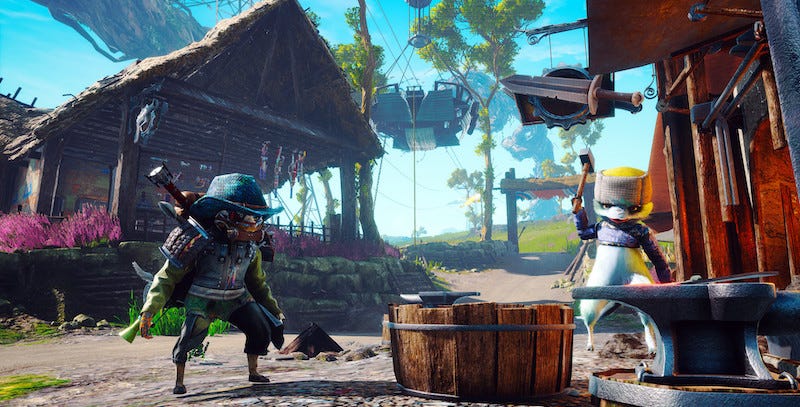
The newsletter focuses on identifying which premium PC and console titles are positioned for success or already performing well, using a mix of automated data scrapes and manual chart reviews. Key findings highlight Biomutant as the top Steam hype title, ranking second among unreleased games by wishlist count and boasting 182,000 followers; its development history and potential console crossover are noted. Steam revenue snapshots show Biomutant, Days Gone, Mass Effect Remaster, Resident Evil Village, and Subnautica: Below Zero dominating sales, with Elite Dangerous: Odyssey appearing near the top despite mixed reviews and technical issues. Other notable releases include Just Die Already, SnowRunner, Siege Survival: Gloria Victis, and Knockout City, each with early review metrics indicating varying reception.
On Nintendo Switch, the analysis of UK eShop rankings reveals a trend toward complex 3D titles such as Subnautica, Subnautica: Below Zero, and SnowRunner, alongside a resurgence of first‑party visual novel remakes like Famicom Detective Club. The newsletter also introduces a new Epic Games Store Top 25 list, updated biweekly, noting that AAA exclusives and high‑profile launches (e.g., Days Gone, Elite Dangerous) often drive revenue spikes on the platform.
Methodologically, the report relies on Steam Hype data (wishlist and follower counts), real‑time revenue charts, and curated top‑seller lists from Switch eShop and Epic Games Store. The scope covers global PC and console markets, with a particular emphasis on upcoming releases and early post‑launch performance. The analysis is presented in a neutral, data‑driven tone aimed at informing publishers and developers about market traction and consumer interest.
This analysis examines current trends in game discovery and sales performance on Steam, specifically focusing on the relationship between player reviews and actual revenue. The primary thesis suggests that traditional metrics for estimating sales based on review counts are often inaccurate during a game’s launch window. While historical data from 2020 suggests a ratio of 20 to 60 sales per review, data from recent high-profile launches indicates that early-stage ratios are significantly higher, often ranging from 40 to 80 sales per review within the first 48 hours.
The scope of the analysis covers the global PC gaming market via Steam, with additional observations on the Nintendo Switch eShop and Epic Games Store. It highlights the "pop" in visibility and engagement that occurs when titles transition from Early Access to a 1.0 full release. Case studies of games like Tainted Grail: Conquest and Legend of Keepers demonstrate that a successful 1.0 launch can generate a surge in concurrent users and reviews that rivals or exceeds the initial Early Access debut, provided there is sustained developer perseverance and organic streamer interest.
Methodologically, the findings rely on proprietary Hype algorithms, Steam Charts data, and internal surveys of developers. The analysis also touches upon the evolving return on investment for paid advertising on platforms like Reddit, Facebook, and YouTube. While concrete ROI remains difficult to track due to a lack of pixel tracking for Steam wishlists, the data suggests a softening of previously skeptical stances toward paid spend for premium titles. Current market leaders identified include Necromunda: Hired Gun and Going Medieval, both of which maintained top-five global seller status shortly after release despite not being established household names.
The complexities of video game sales tracking are explored through the various "lenses" of platform-specific charts, revealing that public rankings often provide an incomplete picture of commercial success. Steam’s global top sellers chart, for instance, ranks individual SKUs separately and excludes in-app purchases from its primary view, though its free-to-play charts do aggregate total gross revenue. Other platforms utilize entirely different metrics: the Epic Games Store ranks by total purchases including DLC, the Nintendo Switch eShop tracks download volume over a rolling 14-day period, and Xbox increasingly prioritizes "most played" metrics to align with its subscription-based business model.
The analysis of these data sources suggests that real-time revenue charts can be volatile and misleading if viewed in isolation. Cross-referencing tag-specific charts on Steam reveals that established "evergreen" titles with heavy DLC or microtransaction components often outearn new premium releases, even when those new releases appear higher on the global front-page charts. This discrepancy highlights the difficulty of estimating true revenue without internal accounting data, as platform algorithms frequently omit certain titles based on user filters, ownership status, or geographic location.
Marketing and discovery strategies are further examined through a case study of the indie title Mind Scanners, which secured 40,000 wishlists prior to launch. Success was attributed to a multi-phase promotional strategy involving public demos, private betas with influencer coverage, and strategic subreddit engagement. The findings indicate that hitting Steam’s "Popular Upcoming" chart can generate several thousand additional wishlists, though these may be of lower conversion quality. Finally, the industry is noted to be shifting toward more collaborative sales models, evidenced by Steam’s introduction of DIY multi-developer bundles, reflecting a broader trend of increased investment and digital-first audience growth.
The emergence of Publisher as a Service (PaaS) represents a strategic shift in how independent PC and console developers bring titles to market. This model, exemplified by agencies like popagenda, allows developers to retain intellectual property and a higher percentage of revenue by replacing traditional publishing deals with fee-based specialized services. Unlike standard PR firms, PaaS providers offer deep operational support, including marketing strategy, trailer production, social media management, and complex release management tasks such as navigating console certification and coordinating with porting houses.
Data from industry practitioners suggests that this trend is driven by increased access to non-equity funding and a growing body of public knowledge regarding self-publishing. By utilizing an hourly rate or flat-fee structure rather than a permanent revenue share, developers can reduce long-term overhead and studio burn rates. This approach has been successfully applied to diverse titles such as Nobody Saves the World, TOEM, and Cozy Grove. Key findings indicate that while quality remains paramount, success in the current market is heavily dependent on genre-specific "hooks," optimized release timing, and maintaining direct relationships with platform holders.
Beyond the PaaS model, the industry is seeing a transition in monetization for long-term "Games as a Service" (GaaS) titles. Developers of established hits, such as The Long Dark, are moving from "pay once" models toward season passes and paid DLC to ensure financial sustainability after years of free updates. This shift mirrors successful mobile strategies where recurring payments for content updates help independent studios remain self-sustaining. Additional industry observations note that while consolidation remains a dominant force, these alternative service and monetization models provide essential pathways for studios to maintain independence in an increasingly competitive landscape.
The shift toward subscription-based models is fundamentally altering the landscape of PC and console game discovery, moving the industry toward a structure reminiscent of the traditional retail era where market entry is increasingly difficult. Analysis suggests that for many independent developers, the future involves a trade-off: subscription services offer a more stable, "comfortable living" but significantly reduce the likelihood of achieving massive breakout profits. This transition mirrors the evolution of the music and film industries, where consumer habits have shifted almost entirely to ad-supported or subscription-based access.
Key data points highlight the impact of these services on game reach and revenue. For instance, the title Scarlet Nexus doubled its total player base to two million through Game Pass, despite shipping one million units in traditional sales. Furthermore, platform deals and minimum guarantees can account for as much as 80-85% of a game’s total revenue, providing a critical financial safety net even for titles with mediocre critical reception. While the transition to a subscription-dominant market is expected to be gradual—potentially taking 10 to 15 years to fully mature—it is already driving developers toward "Games as a Service" (GaaS) models to maintain engagement and upsell opportunities within these ecosystems.
The scope of this analysis covers the global PC and console segments during the early 2020s, with specific focus on major platforms including Xbox Game Pass, PlayStation Plus, and Steam. Insights are derived from industry expert interviews, specifically with Spry Fox CEO David Edery, alongside market data from recent game launches and platform updates. The findings conclude that while subscription services provide stability for established IPs and prominent indies, they may eventually necessitate total exclusivity or more aggressive monetization strategies to offset the decline in premium individual sales.
The current digital games landscape presents significant discoverability hurdles for short, niche, and narrative-focused titles. While platforms like Steam utilize algorithms that favor high concurrent user counts, replayability, and consistent review activity—traits common in Games as a Service—one-off experiences often struggle to maintain momentum. This structural bias is evident in the pivot of subscription services like Apple Arcade toward evergreen titles and the dominance of replayable games on Xbox Game Pass.
Analysis of Steam "Hype" data, which aggregates followers and wishlist rankings, confirms that genre-specific trends heavily influence visibility. In the city-builder segment, for instance, top-performing unreleased titles like Humankind and Dwarf Fortress leverage established brand recognition or significant mechanical depth to secure hundreds of thousands of followers. Conversely, smaller "one and done" games lack the post-release updates and streaming longevity required to trigger major algorithmic recommendations, often resulting in slow initial sales despite critical acclaim.
To address this imbalance, several potential solutions exist, including dedicated "hidden gem" editorial sections within storefronts or bespoke subscription models specifically for short-form innovation. While niche titles may not offer a compelling short-term business case compared to mass-market hits, they remain vital for the long-term health and diversity of the industry. Current market data suggests that while high-quality niche games can eventually find an audience through "staying power," the deck remains stacked against them in an era defined by engagement-heavy metrics.
Yacht Club Games provides a rare, transparent look into the financial realities of independent game development, revealing that the Shovel Knight franchise has generated approximately $40 million in net revenue against a $9 million development cost. Despite this success, the studio maintains a high burn rate of $5 million per year, highlighting the significant financial pressure on U.S.-based indie developers. Data shows that while the core Shovel Knight series was a massive success, subsequent spinoffs like Pocket Dungeon sold a more modest 35,000 units in its first two months, with a heavy 70% concentration on Nintendo Switch.
The analysis also examines the performance of the Yacht Club-published title Cyber Shadow, which reached 85,000 sold units in its first year. Notably, the game reached an additional 300,000 players through its day-one inclusion on Xbox Game Pass, totaling nearly 400,000 players. This comparison suggests that the original Shovel Knight may have been a market outlier due to its release timing and viral word-of-mouth, whereas newer titles face a more saturated market and steeper sales drop-offs after the first week.
Beyond specific studio data, the findings identify critical inflection points for discovery on Steam. Reaching a threshold of ten user reviews triggers a significant jump in algorithmic referrals, sometimes increasing inbound traffic by 30 times. Furthermore, external traffic from influencers or demos creates a positive feedback loop, sustaining internal Steam discovery for weeks after the initial spike. These insights emphasize that while platform tools like tags are useful, organic interest and external momentum remain the primary drivers of long-term visibility in the modern PC and console gaming landscape.
This analysis examines current market trends and sales performance for PC and console titles, focusing on the Steam, Nintendo Switch, and Epic Games Store platforms during late May 2021. By utilizing proprietary Hype data, wishlist tracking, and real-time revenue charts, the findings identify which upcoming and recently released titles are gaining traction in an increasingly crowded digital marketplace.
A primary focus is placed on Steam’s upcoming release slate, led by the colony builder Going Medieval, which entered Early Access with approximately 300,000 wishlists. Other high-interest titles include the first-person shooter Necromunda: Hired Gun and the social simulation game Hokko Life. The data suggests that "pastoral" games and tactical RPGs with significant gameplay depth continue to resonate with Steam’s core demographic. However, the analysis also highlights the risks of high-budget "AA" titles like Biomutant, which, despite strong pre-launch hype, faced criticism regarding its $60 price point and perceived lack of depth, potentially impacting its long-term sales tail.
On the Nintendo Switch, multiplayer and high-concept titles such as Knockout City and Maneater are showing strong upward mobility in the UK eShop charts. The success of these titles indicates that third-party games can effectively compete with first-party Nintendo software when they offer unique gameplay hooks. Meanwhile, the Epic Games Store is seeing significant chart disruption due to its Mega Sale, where deep discounts and coupons have propelled older titles like NBA 2K21 and Red Dead Redemption 2 back to the top of the sales rankings.
The broader industry trend reveals that the upper echelons of digital storefronts are becoming dominated by "Games as a Service" (GaaS) models and AA-tier titles with high replayability. Success in this environment is increasingly tied to effective use of free trials, strategic discounting, and managing player expectations to maintain positive review scores.
This analysis explores methodologies for forecasting Steam and console game sales, providing two distinct spreadsheet models designed to help developers establish financial expectations. The primary thesis is that while perfect prediction is impossible, combining pre-release metrics like Steam wishlists with post-release data such as pricing and sales ratios can yield indicative revenue ballparks. The scope covers the global PC and console markets, specifically focusing on the 2020–2021 period and the transition from launch to long-term tail revenue.
The first methodology, developed by GameDiscoverCo, offers a basic prediction model. It utilizes a game’s launch wishlists and average global price to extrapolate first-week sales and subsequent three-year net revenue. Key data points indicate that first-week sales typically range from 0.03 to 1.0 sales per wishlist. This model assumes a conservative 3x ratio for Year 1 revenue relative to Week 1 sales and provides a high-level estimation for console market share.
The second methodology, provided by narrative publisher Fellow Traveller, offers a more sophisticated month-by-month forecasting template. This model shifts the primary metric to the Month 1 sales-to-wishlist ratio, allowing for variables between 10% and 90%. It incorporates granular details such as launch discounts, regional price weighting, and the specific revenue lifts associated with Steam seasonal sales and spotlight promotions.
Beyond forecasting, the analysis examines 2021 industry trends, noting that Steam release volume increased by approximately 25% year-over-year as of June 2021, with some months exceeding 1,000 new titles. Conversely, Nintendo Switch release volume remained flat at approximately 135 games per month. The findings conclude that transparency in data and the use of post-launch "real-world" baselines are essential for developers to accurately predict the long-term financial tail of their products.
This analysis examines the commercial performance and "long tail" sustainability of video games on Steam, focusing on how initial launch momentum translates into long-term sales. By comparing first-week review data from June 2021 against average weekly reviews six months post-launch, the report identifies significant variance in how titles maintain player interest and revenue.
Key findings indicate that while most games maintain their relative ranking over time, specific titles exhibit dramatic shifts. For example, Dungeons & Dragons: Dark Alliance saw a significant "tailoff" due to a buggy launch, dropping from a top-ten debut to minimal active users. Conversely, Operation: Tango demonstrated a strong long tail, rising in the charts through word-of-mouth and streamer appeal. High-performing outliers like Guilty Gear Strive and Doki Doki Literature Club Plus! maintained impressive averages of approximately 500 reviews per week, which translates to roughly 15,000 to 20,000 units sold weekly months after release.
The scope of the data covers the global PC market via Steam, with additional snapshots of the Nintendo Switch eShop, Xbox, PlayStation, and Epic Games Store (EGS) as of late 2021. Methodology relies on the GameDiscoverCo "post-release chart" tool, which uses Steam reviews as a proxy for sales volume, typically applying a multiplier of 30-40 sales per review to estimate total units.
Beyond Steam, the analysis notes the surprising staying power of Farming Simulator 22 on Xbox and the success of the EGS partnership with Genshin Impact following the integration of Epic’s payment systems. The report concludes that long-term success is often driven by genre-specific appeal—such as online co-op or tactical shooters—and the ability to convert initial "hype" into sustained community engagement.
This analysis examines the performance and market expectations for premium PC and console games during the third week of May 2021. Utilizing a proprietary "Hype" metric—which aggregates Steam wishlists, follower counts, and social media traction—the report identifies THQ Nordic’s Biomutant as the period's most anticipated release. With approximately 182,000 Steam followers and an estimated two million wishlists, the title demonstrates significant AAA-level interest despite being produced by a relatively small development team of twenty people.
The scope of the data covers major digital storefronts including Steam, the Nintendo Switch eShop, and the Epic Games Store (EGS). On Steam, Sony’s PC port of Days Gone showed strong initial momentum, securing over 3,000 positive reviews within four days. Conversely, the launch of Elite Dangerous: Odyssey faced significant headwinds, debuting with only 36% positive reviews due to technical bugs and performance issues. Other notable Steam performers include Mass Effect Legendary Edition and Resident Evil Village, which maintained high revenue positions.
On the Nintendo Switch, there is a growing trend of technically complex 3D ports finding commercial success, evidenced by the simultaneous Top 20 appearances of Subnautica and Subnautica: Below Zero in the UK charts. This suggests a potential shift in the Switch market away from its traditional reliance on "cute 2D indie" titles toward more demanding 3D experiences like SnowRunner.
Methodologically, the findings rely on data scrapes from Steam, Twitch, and manual chart tracking for the Switch and EGS. The re-introduction of EGS chart monitoring highlights a correlation between Steam and EGS revenue spikes for major releases like Days Gone, though the EGS rankings are currently influenced by the platform's "Mega Sale" event. Overall, the analysis underscores the difficulty of monitoring premium game performance across fragmented platforms while highlighting the critical role of pre-release "hype" in predicting commercial outcomes.
This analysis examines Steam’s top-grossing titles of 2021 to identify the underlying economic trends and product characteristics driving success on the platform. By cross-referencing Valve’s tiered rankings—Platinum, Gold, Silver, and Bronze—with external sales data from titles like Valheim and Rust, the study estimates revenue thresholds for these categories. Platinum status likely represents gross revenue exceeding $100 million, while the Bronze tier encompasses games earning between $20 million and $30 million.
The central thesis posits that the "Games as a Service" (GaaS) model is the primary driver of high-level financial performance. Of the top 24 games in the Platinum and Gold tiers, 92% utilized in-app purchases or downloadable content. Conversely, premium standalone titles without recurring monetization were largely relegated to the Bronze tier. The data also reveals significant market entrenchment; over half of the top 24 titles were released prior to 2021, suggesting that established hits with consistent updates maintain a competitive advantage over new releases.
Beyond the Steam ecosystem, the scope extends to the broader hardware and streaming landscape at the end of 2021. It highlights a significant surge in virtual reality adoption, evidenced by the Oculus app reaching the top of the iOS App Store charts during the holiday season and a 363% week-over-week increase in downloads. This growth is attributed to the Quest 2’s accessible price point and standalone form factor. Methodologically, the findings rely on a combination of Valve’s empirical rankings, GameDiscoverCo’s proprietary tracking spreadsheets, and third-party mobile analytics from Sensor Tower and Quartz. The analysis concludes that while indie titles are increasing their presence among top releases, the highest revenue echelons remain dominated by persistent, monetized ecosystems.