The emergence of high-fidelity, solo-developed titles using Unreal Engine 5 represents a significant shift in the indie development landscape. Rooftops & Alleys: The Parkour Game serves as a primary case study, having sold 70,000 units on Steam within its first month of release in May 2024. Developed by a single individual in approximately one year, the project achieved success by targeting an underserved "vanilla" parkour niche and leveraging AI-assisted animation tools like Cascadeur to achieve professional-grade visual quality.
Marketing for the title relied heavily on organic social media traction, with approximately one million likes on TikTok and 400,000 views on its debut YouTube video. This success highlights a broader trend where "micro-indies" punch above their weight by focusing on smooth "game feel" and sandbox mechanics rather than complex progression systems. Data indicates that the player base for such physics-heavy titles overlaps significantly with fans of games like BattleBit Remastered and Boneworks.
Broader industry surveys provide context for shifting consumer habits across global markets. Research involving 73,000 participants reveals that Gen Alpha and Gen Z players are increasingly motivated by vast open worlds and social engagement, with adventure and open-world genres outperforming traditional puzzle games favored by older demographics. In the Chinese market, Steam remains the dominant premium PC platform, used by nearly 80% of premium gamers, while the mobile "Mini Game" segment has expanded to 650 million users.
Platform trends show Steam reaching new heights with nearly 37 million concurrent users, though the market remains competitive and prone to clones, as seen with recent supermarket simulation titles. While alternative platforms like Itch.io offer lower friction for creators, Steam continues to provide significantly higher revenue potential for independent developers.
This analysis examines the legal complexities of Valve’s market position and the commercial performance of the "simulator" subgenre on Steam. The primary focus is the ongoing antitrust litigation brought by Wolfire Games, which alleges that Valve maintains a monopoly through restrictive price parity requirements. While the lawsuit suggests that Steam’s "Most-Favored Nation" (MFN) policies prevent developers from offering lower prices on competing storefronts, legal precedent in the United States has historically viewed such clauses as pro-competitive rather than inherently illegal.
Evidence from unredacted court documents and depositions indicates that Valve’s pricing policy is largely informal and inconsistently enforced. Valve representatives characterize their approach as a desire for customers to receive a "fair deal" comparable to other platforms, typically penalizing price discrepancies by withdrawing curated marketing support rather than removing games from the store entirely. The findings suggest that for the lawsuit to succeed, the plaintiffs must prove a "rule of reason" violation or the existence of a horizontal price-fixing cartel, both of which appear unlikely given the lack of contractual mandates and the sheer volume of games on the platform.
Beyond legal issues, the data highlights the significant commercial rise of first-person simulation games. This segment, often overlooked by traditional indie developers, has produced major hits such as Supermarket Simulator, which exceeded two million units sold and $20 million in gross revenue within months of its 2024 release. Analysis of the broader "Simulator" category on Steam shows a healthy median gross of approximately $70,000 for new titles, with top performers frequently originating from development hubs in Turkey and Poland. The report concludes that while the genre is becoming increasingly crowded, it remains an underserved market for developers willing to embrace casual, management-heavy gameplay.
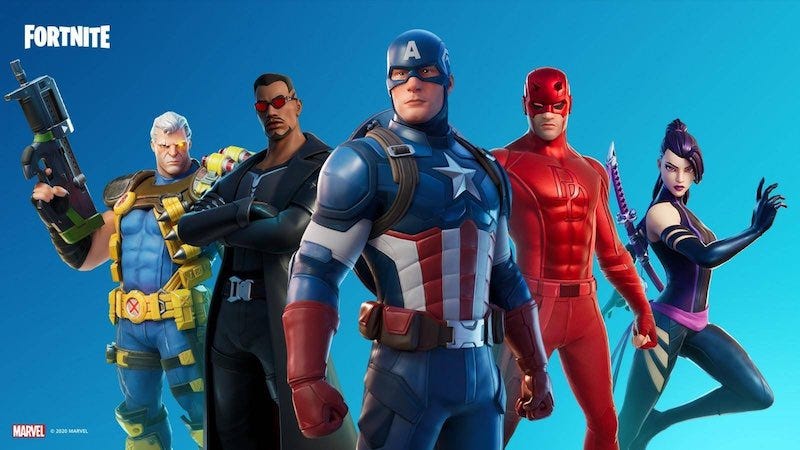
This analysis explores the performance of third-party intellectual property (IP) within Fortnite, utilizing data from Fortnite-Replay.info and Fortnite.gg to track skin usage across PC game replays. By measuring the percentage of players using a specific skin during its launch patch, the study identifies which external brands and celebrities resonate most effectively within the game’s ecosystem.
The findings reveal a significant dominance of superhero culture, with Marvel and DC characters accounting for 14 of the top 20 most-used Battle Pass skins. Beyond traditional superheroes, the data highlights the strong cross-generational appeal of IPs like Rick & Morty and Star Wars. In the category of "item shop" skins—those purchased individually rather than earned through a Battle Pass—real-world celebrities lead the charts. Musicians Travis Scott and Eminem hold top positions, followed closely by sports figures like Lewis Hamilton and gaming personalities like Bugha. Notably, Japanese media also shows a strong presence through Naruto and Dragon Ball collaborations.
The scope of the research extends to broader industry trends, including Steam wishlist conversion rates and the impact of social media marketing. Data indicates that the median conversion from launch wishlist balance to first-week sales is 0.20x, though this varies by genre, with RPGs and simulations seeing higher medians of 0.28x. Additionally, case studies of titles like Fruitbus and Cabernet demonstrate that TikTok virality significantly boosts daily wishlists, even if direct tracking via UTM codes remains difficult due to users switching from mobile apps to desktop Steam clients.
Methodologically, the Fortnite data relies on thousands of uploaded PC replays, categorized by patch cycles to account for the natural usage decline of older skins. The broader industry insights are drawn from survey results of approximately 50 to 500 games, depending on the granularity of the subgenre analysis. Overall, the findings underscore the high value of celebrity and established IP in driving player engagement within platform-based games.
Analysis of the 2024 PC and console market reveals a significant shift in player behavior, characterized by the overwhelming dominance of older titles over new releases. Data from Newzoo indicates that games six years or older accounted for 61% of total playtime in 2023, a sharp increase from 45% in 2021. A mere five established franchises—Fortnite, Roblox, League of Legends, Minecraft, and Grand Theft Auto V—represented 27% of all industry playtime. This trend creates a "no-reset" environment where catalog revenue remains strong, but the window for new titles to gain traction is narrowing despite continued high levels of investment in new development.
The remaining playtime for new releases is highly concentrated among annual franchises and a few breakout hits. Of the 23% of playtime attributed to games released within the last two years, 60% was captured by yearly titles like Call of Duty and EA Sports FC. Only 8% of total market playtime was left for non-annual new releases, with five major titles—Diablo IV, Hogwarts Legacy, Baldur’s Gate 3, Elden Ring, and Starfield—claiming nearly half of that segment. Furthermore, the market for new free-to-play live services has become increasingly difficult, with only three such titles reaching the top 48 games by playtime in the US and UK.
Case studies of niche successes, such as the strategy card game WitchHand, illustrate the modern discovery lifecycle for independent developers. While the game achieved a respectable 750 concurrent players and over $84,000 in net revenue, its success was heavily dependent on initial streamer virality and a specific "microgenre" appeal. Such titles often face a steep decline after the launch window, relying on long-tail sales through discounts rather than sustained explosive growth. This underscores a broader industry reality: even well-crafted new games struggle to compete for attention in a market saturated by permanent, evolving platforms.
The Triple-I Initiative represents a strategic shift in the digital showcase landscape, specifically designed to highlight high-quality independent titles—often referred to as "iii" games—outside the shadow of major AAA marketing cycles. Organized collectively by studios like Evil Empire, the initiative distinguishes itself through a non-profit, collaborative model where production costs are shared among participants based on trailer runtime. The showcase prioritizes a compact, 45-minute "no-fluff" format, excluding traditional hosting segments and advertisements to focus entirely on game reveals from acclaimed creators of titles such as Slay the Spire and Vampire Survivors.
Beyond the showcase space, current market data reveals a maturing and increasingly competitive landscape for Virtual Reality. Analysis of the Meta Quest store indicates a significant shift in player engagement metrics; while titles released in 2021 saw one star rating per 108 players, 2023 releases saw a higher density of one rating per 71 players. Despite this engagement, the financial ceiling for new VR entries appears to be tightening. Research suggests that no third-party titles launched in 2023 surpassed $10 million in gross revenue on Quest, with top performers like Assassin’s Creed Nexus VR falling into the $3 million to $7 million range. This contrasts sharply with established "evergreen" titles like Golf+ and Blade & Sorcery: Nomad, which have approached $100 million in lifetime gross revenue.
The broader industry outlook remains cautious as funding for independent studios tightens. Industry veterans note that the era of lucrative exclusivity deals and guaranteed Game Pass funding has largely subsided, leading to budget cuts and canceled projects for mid-sized teams. Simultaneously, platform holders are pivoting toward hardware iterations, such as rumored disc-less Xbox consoles and "enhanced" PlayStation 5 Pro specifications, while mobile giants like Supercell and King focus on aggressive live-service optimization to sustain long-term revenue growth.
The primary focus of this analysis is the unprecedented commercial breakout of Palworld and a broader examination of current sales trends across PC and console platforms during the third week of January 2024. By synthesizing storefront data, concurrent player counts, and social media metrics, the report evaluates how specific game mechanics and marketing strategies translate into market success.
Palworld serves as the central case study, having surpassed one million units sold on Steam within its debut window while reaching 370,000 concurrent users. This performance significantly exceeded initial projections of 200,000 to 300,000 units. Key drivers for this success include a potent genre mash-up of creature collection and survival crafting, a robust codebase inherited from the developer's previous title, Craftopia, and an aggressive early-access influencer campaign that generated 400,000 Twitch viewers. Despite technical unpolishedness and controversial creature designs, the game’s deep systems and visual "hook" of monsters with firearms secured a rare front-page takeover on Steam.
Beyond the Palworld phenomenon, the scope covers several other notable debuts and ongoing trends. In the PC segment, Three Kingdoms Zhao Yun and New Cycle showed strong regional and genre-specific traction, while the solo-developed The Last Flame demonstrated the high potential of strategic auto-battlers. Looking ahead, the report identifies Enshrouded and high-priced sequels like Tekken 8 and Like a Dragon: Infinite Wealth as the primary contenders for the upcoming week, noting that $70 price points remain a significant topic of discussion among Steam users.
Geographically focused on the U.S. market for consoles, the findings indicate that established franchises like Call of Duty: Modern Warfare III and Marvel’s Spider-Man 2 continue to dominate PlayStation and Xbox charts. Prince of Persia: The Lost Crown saw a successful multi-platform debut, particularly topping the Epic Games Store grossing charts. In the VR sector, data derived from Meta Quest star ratings suggests steady but moderate growth for titles like Big Ballers VR and Asgard’s Wrath 2, while niche arcade racers struggle to find an audience.
This analysis examines the commercial success of the medieval city builder Manor Lords, which sold over two million units on Steam within three weeks of its April 2024 Early Access debut. Utilizing internal data provided by publisher Hooded Horse, the report explores how a title primarily developed by a single individual achieved Starfield-level anticipation, launching with 3.2 million wishlists. The geographic data reveals a strong affinity for the strategy genre in Europe, with Germany alone accounting for 14% of total sales.
The primary thesis attributes this success to a unique "hook" that blends high-fidelity, immersive "day in the life" observation modes with robust city-building and tactical combat. This combination creates a grander sense of scale than traditional top-down simulators. Furthermore, the developer’s transparent communication regarding the game’s unfinished state fostered a supportive community willing to overlook Early Access bugs in favor of a clear, ambitious vision. Strategic business decisions, such as delaying the launch to meet rising player expectations and withholding pricing until release to thwart gray-market resellers, were also instrumental in maintaining the game's momentum.
Beyond this case study, the scope extends to broader industry shifts affecting AAA publishers like Square Enix. Expert commentary suggests that the traditional "Hollywood-style" release model is being disrupted by the high switching costs of live-service titles like Fortnite. To maintain return on investment, major publishers are expected to pivot toward fewer, higher-priced premium titles ranging from $70 to $150, while simultaneously developing their own platform-based live services. This leaves the $30 to $60 mid-tier market increasingly to independent developers and smaller publishers who can leverage organic discovery and deep community engagement.
Analysis of Steam debut performance for April 2024 reveals that concurrent player (CCU) retention serves as a primary indicator of a title's long-term commercial viability. While CCU does not correlate perfectly with sales, it effectively illustrates player engagement patterns. Data indicates that most games typically drop to less than 10% of their peak launch CCU within two to four weeks; however, several April releases have defied this trend. Notable examples include Bellwright, which maintained 85% of its peak CCU ten days after launch, and No Rest For The Wicked, which retained 33% of its peak after 16 days due to frequent early access patching.
The findings suggest that games with longer average playtimes, such as the idle game Rusty’s Retirement or the JRPG Eiyuden Chronicle, often take five to six days to reach peak CCU rather than the standard one to three days. This delayed peak is frequently driven by repeated play from early adopters rather than a surge in new sales. Other strong performers include Rotwood, which saw significant engagement in the Chinese market, and Another Crab’s Treasure, which benefited from viral marketing and word-of-mouth to maintain 85% of its peak CCU after nine days.
Beyond April debuts, the tactical shooter Gray Zone Warfare emerged as a major late-month success, reaching 67,000 CCU despite technical performance issues. On console platforms, Stellar Blade currently leads the PlayStation charts in the United States, while Another Crab’s Treasure has seen a significant performance boost on the Nintendo eShop. Looking forward to early May, Little Kitty, Big City leads upcoming Steam releases with over 27,000 followers, followed by the highly anticipated indie title Animal Well. This analysis relies on proprietary GameDiscoverCo tracking tools, Steam DB metrics, and public storefront rankings across PC, PlayStation, Xbox, and Meta Quest.
This analysis examines the performance of the indie title SENTRY during the October 2023 Steam Next Fest to identify the factors that contribute to a successful game demo and discovery phase. By utilizing internal data from Fireblade Software, the study explores how a specific "hook"—in this case, a rare subgenre combination of First-Person Shooter and Tower Defense—drives player interest and wishlist velocity.
The findings reveal that a Top 30 performance in the festival resulted in approximately 20,000 additional Steam wishlists, a 30% increase for the title. The demo saw 41,000 downloads and 28,000 unique players over an 11-day period. Despite these strong numbers, the data suggests a "winner-takes-most" dynamic on the platform; the top two performing games in the festival accounted for 43% of the total follower growth among the top 12 titles. Furthermore, while influencer outreach was successful—securing coverage from 32 YouTubers and 36 Twitch streamers—the sheer volume of high-wishlist competitors makes breaking onto the festival's front page increasingly difficult for smaller studios.
The scope of the analysis covers the PC gaming market, specifically the Steam ecosystem, during late 2023. It also incorporates broader industry trends, such as Valve’s transition to USD-based pricing in hyper-inflationary regions like Argentina and Turkey, and Microsoft’s record-breaking Game Pass engagement following the launch of Starfield.
Methodologically, the findings are based on direct developer telemetry, Steam store rankings, and third-party surveys of consumer behavior, including a semi-annual study of U.S. teens. The conclusion emphasizes that a game’s "catchiness" relies on a balance of familiarity and novelty, and that for leanly staffed micro-studios, achieving 100,000 wishlists can provide a sustainable path to financial break-even and long-term profitability.
This analysis examines the commercial trajectory of Wales Interactive’s Sker Ritual, illustrating how a strategic 1.0 release can transform an underperforming Early Access title into a significant success. While the game debuted in 2022 with a modest peak of 237 concurrent users, its full launch in April 2024 saw a 2,400% increase to nearly 6,000 concurrent users on Steam. This surge propelled the indie title into Steam’s top ten global grossers and resulted in sales figures well into the hundreds of thousands across PC, PlayStation 5, and Xbox Series X/S.
The primary thesis suggests that Sker Ritual succeeded by identifying and filling a specific market gap: the demand for traditional, round-based cooperative zombie shooters, a subgenre popularized by older Call of Duty titles but recently underserved by AAA franchises. Methodology for this assessment includes SteamDB concurrent user tracking, GameDiscoverCo console sales estimates, and qualitative interviews with the development team. Findings indicate that the game’s success was driven by a "dry powder" strategy—limiting marketing during Early Access to ensure a polished 1.0 product—and leveraging hyper-focused influencer outreach. By sponsoring niche YouTube creators dedicated to the zombie genre, the developers triggered organic coverage from major streamers like xQc and Lirik, resulting in over 325,000 hours watched on Twitch within a month.
The scope of the analysis also extends to broader industry trends, including the efficacy of Epic Games Store (EGS) giveaways. Data suggests a significant conversion gap between "claimers" and "players," with high-profile titles like Ghostrunner reaching 1.4 million players despite much higher claim numbers. Regional data for Sker Ritual confirms that its audience mirrors the Call of Duty market, with high penetration in North America and Europe and lower engagement in Asia. Ultimately, the findings demonstrate that small, five-person teams can successfully compete with multi-billion dollar franchises by focusing on iterative development and precise product-market fit.
This analysis examines the performance of recent video game releases and upcoming market trends across Steam, PlayStation, Xbox, and Nintendo Switch for the mid-April 2024 period. The primary focus is on the utility of peak concurrent user (CCU) counts as a metric for commercial success, noting that while CCU is a strong indicator of general interest, it can be misleading for shorter or "dip-in" titles compared to long-session games like the gamified focus tool Spirit City: Lofi Sessions, which achieved a surprising 4,200 CCU.
Market data reveals a diverse range of performance among new Steam releases. Infection Free Zone emerged as a significant hit, surpassing 13,000 CCU, while the premium revival of Gigantic reached 6,100 CCU, suggesting a dedicated niche for the former free-to-play title. Conversely, the highly-hyped Broken Roads suffered a poor launch with mostly negative reviews and low engagement. The report also highlights the continued dominance of established hits, noting that Rimworld surged to 44,000 CCU following a new DLC release, and Content Warning successfully transitioned from a free giveaway to selling 700,000 paid units.
Geographic and platform-specific trends show strong performance for MLB The Show 24 and Helldivers 2 on PlayStation in the United States, while Balatro continues to lead third-party downloads on the Nintendo Switch eShop. In the VR sector, Ghosts of Tabor maintains high engagement on the Meta Quest store. Looking ahead, the industry focus shifts to the high-profile Early Access launch of No Rest for the Wicked and the visually distinct Harold Halibut, though the latter faces market skepticism regarding its premium pricing for the point-and-click genre. The analysis concludes that while the Steam market remains dynamic and filled with micro-niches, success is increasingly driven by genre-specific demand and viral visibility on platforms like TikTok.
The analysis examines the performance of recent video game releases and upcoming trends across major platforms, focusing on Steam, PlayStation, Xbox, and Nintendo Switch during late March 2024. The primary thesis highlights the success of genre-hybridization, exemplified by the breakout title Outpost: Infinity Siege. This title successfully blends tower defense, extraction shooter, and roguelite elements, achieving over 13,000 concurrent users (CCU) despite technical "teething problems" and criticisms regarding co-op progression.
Key findings indicate a strong influence from the Chinese market, with titles like Outpost: Infinity Siege and Ender Magnolia: Bloom in the Mist seeing high engagement and majority Simplified Chinese reviews. On Steam, other notable debuts include Palia, which reached 11,500 CCU as a free-to-play title, and South Park: Snow Day!, which achieved 6,700 CCU despite mixed fan reactions to its genre shift. In the AAA space, Dragon’s Dogma 2 and Helldivers 2 continue to dominate global top-grossing charts, with Dragon’s Dogma 2 specifically leading recent paid downloads on both PlayStation and Xbox in the United States.
The scope of the data covers global Steam trends and specific regional performance for consoles, primarily the U.S. market. Methodology relies on proprietary tracking metrics, including Steam Hype scores, follower counts, and peak CCU, alongside public ranking data from the PlayStation Store, Xbox Store, and Nintendo eShop. Looking forward, the analysis identifies Sons of Valhalla and Pixel Gun 3D: PC Edition as high-interest upcoming releases based on follower growth and existing mobile popularity. The findings suggest that while established IPs like South Park and Star Wars maintain high visibility, indie titles with unique "hooks" or low price points, such as Buckshot Roulette, are increasingly effective at capturing influencer and player attention.