Game File
Media115 documents
Documents
Article
Did You Hear About Awaysis?
The development of Awaysis, a top-down dungeon crawler by the independent studio 17-Bit, serves as a case study for the visibility challenges facing modern game developers. The project, which has been in production since 2022, emphasizes a physics-based combat system designed to provide characters with realistic momentum and weight. By blending design philosophies from classic titles such as Chrono Trigger and Super Mario 64, the studio aims to deliver a modern, tactile experience that distinguishes itself through gameplay feel rather than visual spectacle alone.
The broader industry context highlights the difficulty of gaining market traction in an environment where over 10,000 new games are released annually. Despite securing promotional support through various industry showcases, including Day of the Devs and an Xbox-hosted demo, the studio continues to struggle with audience awareness. This highlights the persistent tension between high-quality development and the saturated nature of the current gaming market, where even established indie teams face significant hurdles in capturing consumer attention amidst a constant stream of industry events and competing titles.
The project is notable for its unconventional funding arrangement with Microsoft and the involvement of a prominent Nintendo composer, elements intended to bolster its profile. However, the primary takeaway remains the struggle for discovery in a crowded digital landscape. The experience of 17-Bit underscores the reality that technical innovation and strategic partnerships are often insufficient to guarantee visibility, forcing developers to navigate an increasingly noisy and competitive ecosystem to reach their target audience.
- The current gaming market is highly saturated, with over 10,000 new titles released annually, making audience discovery a primary challenge for developers.
- Independent studio 17-Bit has struggled to gain market traction for its dungeon crawler 'Awaysis' despite being in production since 2022.
- Technical innovation, such as the physics-based combat system in 'Awaysis', is often insufficient to guarantee visibility in a crowded digital ecosystem.
- Strategic partnerships and high-profile support, including funding from Microsoft and the involvement of a prominent Nintendo composer, have not secured the necessary audience awareness for the project.
- Promotional efforts through industry showcases like Day of the Devs and Xbox-hosted demos have failed to overcome the persistent difficulty of capturing consumer attention.
+1
Game FileApr 2026
Article
News Round-up: Gunzilla Drama, FAA Recruitment, Sunset Visitor's Next Game
This news summary provides a mid-April 2026 update on various developments within the global video game industry, focusing on corporate shifts, labor disputes, and upcoming software releases. The primary purpose is to synthesize disparate industry headlines into a concise briefing for readers interested in the business and cultural aspects of gaming.
Key industry developments include significant service reductions at Amazon’s Luna platform, which will cease support for a la carte game purchases, third-party game stores, and external subscription services by June 10, 2026. In the labor sector, Gunzilla Games faces scrutiny following reports of delayed employee payments, a situation the company’s CEO characterized as a cash-flow management strategy rather than a failure to compensate staff. Additionally, the United States Federal Aviation Administration is renewing efforts to recruit gamers for air traffic control roles, a move that follows a period of significant political tension regarding the agency’s staffing levels.
The report also highlights emerging creative projects and media adaptations. Sony Pictures has initiated discussions with filmmakers to potentially adapt the Metal Gear Solid franchise, while Epic Games is reportedly developing an extraction shooter featuring Disney intellectual property. On the independent front, the studio Sunset Visitor has announced its next title, Prove You’re Human, a game centered on themes of digital identity and corporate testing. The summary concludes with a schedule of notable game releases for the week of April 13, 2026, including titles such as Moves of the Diamond Hand, Dosa Divas, and Replaced.
- Amazon’s Luna platform will terminate support for a la carte game purchases, third-party stores, and external subscriptions effective June 10, 2026.
- Gunzilla Games is under scrutiny for delayed employee payments, which the CEO has officially attributed to cash-flow management strategies.
- The U.S. Federal Aviation Administration is actively recruiting gamers to fill air traffic control roles amid ongoing agency staffing pressures.
- Epic Games is reportedly developing an extraction shooter title that will feature intellectual property licensed from Disney.
- Sony Pictures has entered preliminary discussions with filmmakers regarding a potential live-action adaptation of the Metal Gear Solid franchise.
+1
Game FileApr 2026
Article
A Family Sword Fight, a Brain-Eating Adventure, and Some Creepy Farming
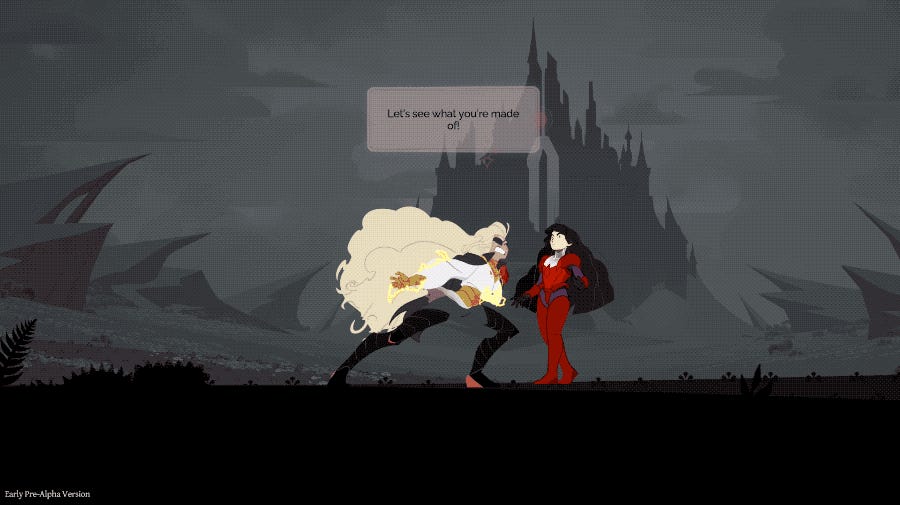
This analysis provides previews of three upcoming video games, highlighting the diverse creative output currently emerging from the global independent development scene. The featured titles include At Fate’s End, a 2D fantasy drama from Montreal-based Thunder Lotus; Blighted, a top-down action game from Toronto’s Drinkbox Studios; and Crop, a dark farming simulation developed by Norway’s Carbonara Games and published by Poland’s 11 Bit Studios.
The findings emphasize distinct mechanical and narrative approaches within these projects. At Fate’s End focuses on a complex family dynamic and ancestral history, utilizing a unique skill tree that doubles as a lineage map. Blighted incorporates a "frenzy" mechanic that dynamically adjusts difficulty and enemy behavior based on player performance, while prioritizing extensive external play-testing to refine gameplay friction. Crop distinguishes itself through a deliberate, slow-paced investigative loop set against a bleak, atmospheric backdrop, signaling a strategic shift for its publisher toward mechanically satisfying gameplay.
The scope of these previews reflects the international nature of the modern gaming industry, with developers spanning Canada, Norway, and Poland. The methodology relies on direct interviews with creative directors and studio founders conducted at recent industry showcases in San Francisco. These insights illustrate a broader trend of studios leveraging previous financial successes to fund ambitious, narrative-driven projects, while maintaining a commitment to rigorous quality assurance and unique thematic storytelling.
- Thunder Lotus (Montreal), Drinkbox Studios (Toronto), and Carbonara Games (Norway) are leading a trend of independent studios using past financial successes to fund ambitious, narrative-driven projects.
- At Fate’s End by Thunder Lotus features a 2D fantasy drama where the skill tree functions as a lineage map to explore complex family dynamics.
- Drinkbox Studios is developing Blighted, a top-down action game that utilizes a 'frenzy' mechanic to dynamically adjust enemy behavior and difficulty based on player performance.
- 11 Bit Studios (Poland) is publishing Carbonara Games’ Crop, a dark farming simulation that marks a strategic shift for the publisher toward prioritizing mechanically satisfying, slow-paced investigative gameplay.
- Drinkbox Studios is prioritizing extensive external play-testing for Blighted to refine gameplay friction and ensure quality assurance.
+2
Game FileApr 2026
Article
Netflix’s Virtual Game Controller App: iOS U.S. Chart Performance
The Netflix Game Controller app experienced a significant, unexpected surge in popularity within the United States during early April 2026, briefly becoming the most-downloaded free application on the iOS App Store. This performance represents a notable deviation from typical app store trends, as the utility application—which enables users to transform mobile devices into controllers for Netflix’s library of streamed multiplayer games—outperformed major mainstream platforms, including ChatGPT, TikTok, and the primary Netflix application.
The application’s ascent began on April 3, 2026, when it entered the top 25 free iOS apps. By April 5, it reached the number one position, maintaining a high ranking for several days before beginning a gradual decline. Despite this rapid growth, there is no evidence of coordinated promotional activity or paid advertising campaigns driving the downloads. Industry analysis suggests that the spike may be linked to seasonal behavioral patterns, specifically holiday gatherings where families utilize Netflix’s game-streaming features for social entertainment.
The scope of this phenomenon is limited to the U.S. iOS market during the first week of April 2026. While the application has been available since 2023 and received a broader push in late 2025 to support the company's "Game Night" suite of titles, the recent surge occurred without official comment or marketing support from Netflix. The data indicates that the app’s performance is likely driven by organic user demand during periods of increased social interaction rather than traditional marketing efforts.
- The Netflix Game Controller app reached the number one position on the U.S. iOS App Store free charts on April 5, 2026, outperforming major platforms like TikTok and ChatGPT.
- The app’s rapid ascent began on April 3, 2026, when it entered the top 25 free iOS apps before peaking two days later.
- The surge in downloads occurred without any coordinated promotional activity or paid advertising campaigns from Netflix.
- Industry analysis attributes the spike to organic user demand during the first week of April 2026, likely driven by holiday gatherings and social entertainment usage.
- The performance anomaly was geographically restricted to the U.S. iOS market and did not reflect a global or platform-wide trend.
+1
Game FileApr 2026
Article
Here Is a "5D" Video Game
Screenbound is an innovative indie video game currently in development that utilizes a unique dual-perspective mechanic, which its creators playfully market as a 5D experience. The game allows players to navigate a 3D world while simultaneously controlling a 2D version of the same environment via a handheld device held by the protagonist, Pavi. This design requires players to manage information across two distinct visual planes, where certain hazards, items, and paths are exclusively visible in either the 2D or 3D view.
The project originated from a conceptual visualization by developer Josh Presseisen of Crescent Moon Games, who was inspired by the experience of playing portable games while walking through a forest. The game is currently being co-developed by Crescent Moon and Radical Forge, with a projected release window of late 2026 for PC, PlayStation, and Xbox platforms. To ensure the dual-screen interface remains intuitive, the development team has drawn design inspiration from the Nintendo DS, focusing on keeping the primary 3D view as the central point of player attention.
The game is being published by Digital Pajamas, a startup that utilizes non-traditional investment models, including capital from real estate investors, to fund its projects. Beyond Screenbound, the industry landscape continues to evolve with other notable indie titles, such as the bracket-themed puzzle game Tournamentris and the physics-based rolling game Tire Boy. These developments highlight a broader trend of experimental gameplay mechanics within the independent sector, as studios continue to explore novel ways to engage players through unconventional perspectives and interactive formats.
- Screenbound is an upcoming indie title featuring a dual-perspective mechanic that requires players to navigate a 3D world while simultaneously managing a 2D version of the same environment.
- The game is scheduled for a late 2026 release on PC, PlayStation, and Xbox platforms.
- Development is a collaborative effort between Crescent Moon Games and Radical Forge, with design inspiration drawn from the Nintendo DS to maintain focus on the primary 3D view.
- The project is published by Digital Pajamas, a startup utilizing non-traditional funding sources such as capital from real estate investors.
- The game's core concept was visualized by Josh Presseisen of Crescent Moon Games, inspired by the experience of playing portable games in outdoor environments.
+1
Game FileApr 2026
Article
Quick Thoughts About the Super Mario Galaxy Movie
The Super Mario Galaxy film is characterized as a lightweight cinematic experience that prioritizes action and franchise references over narrative depth, character development, or thematic substance. While the film succeeds in providing an amusing experience for younger audiences, it lacks the emotional or structural complexity found in other contemporary children’s media. The film’s reliance on superficial game-based elements suggests a strategic choice by Nintendo and Illumination to mirror the action-oriented, narrative-light nature of the source material rather than adapting it into a more traditional, character-driven story.
Observations from the viewing experience highlight a recurring trend in the Mario film franchise where the titular characters, Mario and Luigi, are overshadowed by the more compelling narrative potential of Princess Peach and Bowser. This critique draws a sharp contrast between the film’s flimsy storytelling and more sophisticated animated works, raising questions about whether the current creative direction is a deliberate mandate from Nintendo to keep its intellectual property void of thematic texture, or simply a reflection of the studio's assessment of the brand's cinematic requirements.
The analysis is based on qualitative observations from an April 2026 theatrical viewing, supplemented by audience discourse regarding the franchise's trajectory. The discussion reflects a broader industry debate concerning the adaptation of video games into film, specifically whether such projects should aim for the multi-layered storytelling seen in Pixar productions or remain faithful to the gameplay-first, narrative-light design of the original titles. As the industry looks toward future adaptations, such as the upcoming Zelda film, the Mario series serves as a primary case study for the limitations of prioritizing brand recognition over narrative substance.
- The Super Mario Galaxy film prioritizes action and franchise references over narrative depth, character development, or thematic substance.
- Nintendo and Illumination appear to have made a strategic choice to mirror the gameplay-first, narrative-light nature of the source material rather than pursuing a character-driven adaptation.
- The film’s storytelling is characterized as flimsy compared to sophisticated animated works, raising questions about whether Nintendo is intentionally keeping its intellectual property void of thematic texture.
- Princess Peach and Bowser offer more compelling narrative potential than Mario and Luigi, who are consistently overshadowed in the franchise's current cinematic direction.
- The film serves as a primary industry case study for the limitations of prioritizing brand recognition over narrative substance, particularly as the industry looks toward future projects like the upcoming Zelda film.
+1
Game FileApr 2026
Article
Back Next Week
This update serves as a brief industry briefing during a scheduled hiatus, providing a snapshot of the current state of the video game sector as of late March 2026. The primary focus is on the ongoing instability within the industry, characterized by widespread layoffs and studio closures, alongside personal impressions of recent game releases and upcoming industry developments.
The industry continues to face significant economic headwinds, with recent reports highlighting 124 job cuts at Eidos Montreal, layoffs at Polyarc, and the closure of Ivy Road. Industry veterans describe the current climate as more severe than the market crash of the 1980s, noting that few professionals remain unaffected by the instability. Corporate responses to these challenges vary; for instance, Nexon has signaled a shift toward a more conservative investment strategy, prioritizing fewer, higher-conviction projects that demonstrate long-term player retention and clear margin potential. Additionally, the lifecycle for new game releases has shortened, with titles like PUBG Blindspot and Highguard being pulled from the market within two months of their early access launches.
Beyond the financial landscape, the update touches on consumer experiences with upcoming titles, including Nintendo’s Tomodachi Life: Living the Dream and various indie projects. Looking ahead to early April 2026, the industry anticipates the release of titles such as People of Note and the PlayStation port of Starfield. The content concludes by highlighting the author’s recent participation in the Naavik Gaming Podcast, where the discussion centered on the evolving nature of games journalism and the transition to independent, reader-supported media models.
- The video game industry is experiencing severe instability as of late March 2026, marked by significant layoffs at Eidos Montreal and Polyarc, and the closure of Ivy Road.
- Industry veterans characterize the current economic climate as more severe than the market crash of the 1980s, with few professionals remaining unaffected.
- Nexon is shifting to a conservative investment strategy that prioritizes fewer, high-conviction projects with proven long-term retention and margin potential.
- The lifecycle for new game releases has shortened significantly, evidenced by titles like PUBG Blindspot and Highguard being pulled from the market within two months of their early access launches.
- Upcoming industry milestones for early April 2026 include the release of People of Note and the PlayStation port of Starfield.
Game FileMar 2026
Article
The Developers of Clair Obscur Gave Me an Interview and Some Advice
This account details a journalist’s intensive, week-long effort to complete the 2025 role-playing game Clair Obscur: Expedition 33 in preparation for an interview with its creators at the 2026 Game Developers Choice Awards. The narrative serves as both a personal reflection on the experience of rushing through a complex title and a professional inquiry into the game’s narrative structure and design philosophy.
The core findings center on the game’s thematic focus on individual agency and the human cost of decision-making. Lead writer Jennifer Svedberg-Yen and lead programmer Tom Guillermin confirm that the game’s dual-ending structure was intentional from the start, designed to be understood as a duality rather than a choice between a right or wrong path. The developers emphasize that there is no canonical ending, intentionally leaving the ramifications of the player's final choice open-ended. Data from informal developer polling suggests a player preference for the character Verso over Maelle, though the team maintains no official tracking of these outcomes.
Beyond narrative, the interaction provides technical insights into the game’s mechanics. The lead programmer offers a live consultation on the journalist’s character build, highlighting the strategic value of specific perks like the "Painted Power" Picto, which allows players to exceed standard damage caps. The discussion also touches on the game’s accessibility, noting that the combat system is designed to accommodate varying playstyles, including those who prefer to avoid complex mechanics like parrying.
The scope of this report is limited to the development and reception of a single high-profile title during the March 2026 GDC Festival of Gaming. The methodology relies on qualitative, first-hand reporting, including a direct interview with the game’s leads and personal gameplay observations, supplemented by informal social media polling data provided by the developers.
- Clair Obscur: Expedition 33 features a dual-ending narrative structure intentionally designed to avoid a canonical path, leaving the moral ramifications of the final decision open-ended.
- Lead developers Jennifer Svedberg-Yen and Tom Guillermin confirmed that the game’s core thematic focus centers on individual agency and the human cost of player decision-making.
- Internal developer polling indicates a player preference for the character Verso over Maelle, though the studio does not officially track or record these player outcomes.
- The game’s combat mechanics include specific high-level perks like the 'Painted Power' Picto, which allows players to bypass standard damage caps.
- The combat system is engineered for accessibility, allowing players to progress without mastering complex mechanics such as parrying.
Game FileMar 2026
Article
For Nex's Upstart Console: The Buzz Is Good and the Game Budgets Are Low
Nex, the developer of the motion-controlled Playground console, is navigating a complex growth phase characterized by strong consumer demand balanced against significant supply chain volatility. Despite achieving notable market success—including a holiday performance that saw the console outsell Xbox in the United States and a projected milestone of one million units sold by April 2026—the company has been forced to increase the retail price of the Playground from $249 to $299, effective April 1, 2026.
The primary driver for this price adjustment is the rising cost of essential hardware components, specifically DDR memory and eMMC storage. The broader electronics industry is currently experiencing a "memory crisis" as AI-focused companies prioritize the production of newer DDR5 RAM, which has constrained the supply and increased the costs of the older DDR4 components utilized by the Playground. Nex leadership has indicated that while they have secured sufficient supply for the current year, the company is exploring potential technological pivots, such as transitioning to more available memory types, to ensure long-term sustainability and service for their user base.
Beyond hardware challenges, the company is cultivating a unique ecosystem for its platform. Nex is currently engaging with major global publishers to expand its software library, supported by a development model that emphasizes lean, six-figure game budgets. This strategy highlights the company's focus on maintaining a responsible, manageable business model as it attempts to scale its presence in the competitive home console market.
- Nex is increasing the retail price of its Playground console from $249 to $299, effective April 1, 2026.
- The price hike is driven by a 'memory crisis' where AI-focused demand for DDR5 RAM has increased costs and constrained supply for the DDR4 components used in the Playground.
- Despite supply chain volatility, the Playground console outperformed Xbox in U.S. holiday sales and is projected to reach one million units sold by April 2026.
- Nex is exploring technological pivots, such as transitioning to more available memory types, to ensure long-term hardware sustainability.
- The company is pursuing a lean software strategy by prioritizing game development with six-figure budgets.
+1
Game FileMar 2026
Article
Whoops. I Just Tried to Use ChatGPT to Help Me With a Nintendo Article and It Got a Key Detail Wrong
The provided text serves as a critical case study on the limitations of generative AI in journalistic research. The author, a veteran video game reporter, tests ChatGPT’s ability to identify and rank the longest Nintendo game titles from a provided wiki page. The primary thesis is that reliance on AI for data-heavy tasks is counterproductive, as the technology frequently produces inaccurate information, struggles with basic counting, and requires extensive manual verification that negates any potential time savings.
The analysis highlights significant failures in the AI’s performance, including the initial omission of a prominent, long-titled game and subsequent errors in character counting. Despite multiple prompts and the AI’s attempts to correct its own output, it provided inconsistent data, including an incorrect character count of 96 for a title that actually contained 78 or 79 characters. The AI’s methodology—relying on visual estimation rather than programmatic extraction—led to unreliable rankings and flawed data sets.
The scope of this experiment is limited to a specific, real-world task involving Nintendo game titles as of March 2026. The methodology involved a direct, iterative interaction between a human journalist and the AI, using a specific URL as the source material. The findings underscore a broader industry concern: the conversational, confident tone of generative AI often masks fundamental logical and computational errors. Ultimately, the author concludes that human oversight remains essential, as the effort required to fact-check and correct the AI’s output renders the tool inefficient for professional reporting.
- Generative AI frequently fails at precise data-heavy tasks, such as counting characters or ranking lists, due to its reliance on visual estimation rather than programmatic extraction.
- The author's experiment revealed that ChatGPT provided an incorrect character count of 96 for a Nintendo game title that actually contained only 78 or 79 characters.
- AI-generated data is often unreliable and inconsistent, requiring extensive manual fact-checking that negates any potential time savings for professional journalists.
- The conversational and confident tone of generative AI models can mask fundamental logical and computational errors, making the output deceptively persuasive.
- Human oversight remains an essential component of journalistic research, as AI tools currently lack the accuracy required for reliable data processing in professional reporting.
+1
Game FileMar 2026
Article
A Plan to Stop Video Game Industry Leaks, With the Help of AI
The video game industry is increasingly exploring advanced technological solutions to mitigate the persistent issue of unauthorized information leaks, such as internal memos, unannounced trailers, and confidential game assets. A primary development in this space involves the application of AI-powered steganography, a method designed to embed nearly imperceptible digital watermarks into game builds and corporate documents. By uniquely marking individual copies of sensitive materials, companies aim to trace the source of leaks back to specific internal users, thereby deterring potential leakers through increased accountability.
Presented at the 2026 Game Developers Conference (GDC) by the firm EchoMark, this approach represents a shift toward proactive security measures. The technology utilizes AI to apply sophisticated alpha-blend overlays that remain invisible to the human eye while providing a forensic trail for publishers. This methodology seeks to address the vulnerabilities inherent in pre-release environments, where developers, testers, and media partners often handle proprietary content that is susceptible to unauthorized distribution.
While the broader efficacy of AI in game development remains a subject of ongoing debate, the deployment of AI-driven watermarking signals a strategic pivot for studio security teams. By automating the identification of leak sources, firms hope to reduce their reliance on reactive legal actions and litigation against leakers. This technological advancement suggests a future where publishers can maintain tighter control over their intellectual property and marketing timelines, potentially altering the landscape of industry transparency and the traditional flow of information to the public.
- The firm EchoMark introduced AI-powered steganography at the 2026 Game Developers Conference to combat unauthorized leaks of game assets and internal documents.
- This technology embeds invisible digital watermarks into sensitive materials, allowing publishers to trace leaked content back to specific internal users.
- The system uses AI-driven alpha-blend overlays to create a forensic trail that is imperceptible to the human eye.
- By automating the identification of leak sources, studios aim to shift from reactive legal litigation toward proactive security measures.
- The deployment of this technology targets vulnerabilities in pre-release environments where developers, testers, and media partners handle proprietary information.
+1
Game FileMar 2026

Article
The Best and Worst Blue Prince Puzzles, According to Blue Prince’s Lead Creator
This analysis explores the design philosophy behind the 2025 puzzle game Blue Prince through an interview with its lead creator, Tonda Ros. The discussion centers on the developer’s perspective regarding the game’s most successful and problematic puzzles, providing insight into the creative process of balancing logical rigor with player experience.
The creator identifies his favorite puzzle as one involving 44 letters, noting that its uniqueness stands out in a genre often reliant on familiar tropes. Conversely, he highlights a specific parlor room puzzle as the game’s least successful design. This parlor puzzle, which requires players to deduce the location of gems based on conflicting statements from three boxes, is criticized for its unintentional ambiguity and clumsy complexity. While the developer expresses an appreciation for puzzles that incorporate "cheeky" or playful logic—such as one where an ambiguous solution serves as a narrative wink from an in-game character—he acknowledges that the problematic parlor puzzle lacks such charm and requires future refinement through patching.
The analysis highlights the distinction between intentional design choices that challenge players through intellectual leaps and unintentional design flaws that hinder gameplay. By examining these specific examples, the creator illustrates the difficulty of maintaining consistent logic across dozens of puzzle variations. This reflection serves as a case study in iterative game design, emphasizing the importance of clarity and the developer's ongoing commitment to polishing the player experience long after a game's initial release.
- The lead creator of the 2025 game Blue Prince, Tonda Ros, identifies a puzzle involving 44 letters as the title's most successful design due to its unique departure from genre tropes.
- A parlor room puzzle requiring players to deduce gem locations from three boxes of conflicting statements is cited as the game's least successful design.
- The parlor puzzle is slated for future refinement via patches because its complexity is perceived as unintentionally ambiguous rather than intellectually challenging.
- The developer distinguishes between 'cheeky' puzzles that use ambiguity as a narrative device and flawed puzzles that hinder the player experience through poor design.
- Maintaining consistent logic across dozens of puzzle variations remains a primary challenge in the iterative design process for Blue Prince.
+2
Game FileMar 2026