Game File
Media115 documents
Documents
Article
An Interview with Take-Two CEO Strauss Zelnick
The interview with Take‑Two chairman Strauss Zelnick, conducted by Stephen Totilo ahead of an iIcon panel in Las Vegas, offers a concise glimpse into the executive’s leadership style and Take‑Two’s strategic priorities. Zelnick, who has overseen flagship franchises such as NBA 2K, Grand Theft Auto, BioShock and Red Dead Redemption for nearly two decades, describes a lean senior‑management structure that meets weekly to coordinate business decisions. He emphasizes calmness and clear separation between personal emergencies and corporate challenges, noting that he rarely “freaks out” in business contexts. The conversation touches on recent delays, including the November 2025 postponement of GTA VI to November 2026, and reveals that updates are communicated directly within the tight executive team rather than through external emails.
The interview also hints at broader industry trends: rising development costs, the status of BioShock, Take‑Two’s mobile ambitions, and the company’s stance on microtransactions in NBA 2K. Zelnick briefly discusses the fate of a multi‑game NFL deal, the company’s perspective on Switch 2, and offers a cautious nod to potential PC releases for future titles. While no concrete pricing or release dates are disclosed, the dialogue underscores Take‑Two’s focus on disciplined project management and strategic alignment across its portfolio. The interview, limited to 20 minutes, provides a snapshot of Zelnick’s executive demeanor and the operational framework guiding one of the gaming industry’s most enduring publishers.
- Take-Two has officially postponed the release of Grand Theft Auto VI from November 2025 to November 2026.
- CEO Strauss Zelnick maintains a lean senior-management structure that coordinates all major business decisions through weekly meetings rather than external email communication.
- Take-Two is actively managing the industry-wide challenge of rising game development costs while maintaining a focus on disciplined project management across its portfolio.
- The company is pursuing strategic growth through mobile gaming initiatives and continues to evaluate the potential for future PC releases of its titles.
- Take-Two maintains its established business model regarding microtransactions within the NBA 2K franchise.
Game FileMay 2026
Article
Vampire Survivors' New Spin-Off Has Hooked Me
The article examines the transition from the 2022 indie hit Vampire Survivors to its first spin‑off, Vampire Crawlers, and proposes a similar card‑based mechanic in the upcoming city‑builder Combolands. It argues that while Survivors delivers a slot‑machine style, mindless progression loop, Crawlers introduces strategic depth through card combos and mana‑cost sequencing, transforming gameplay from passive to thoughtful. The author recounts personal experience, noting initial skepticism and eventual appreciation of the combo system’s requirement for deck building and tactical decision‑making. The piece highlights how Crawlers retains the familiar progress bar and audio cues yet demands active choice, thereby mitigating addictive tendencies. It then promotes Combolands, a PC demo that applies a similar card‑driven approach to city building, where structures and timelines are managed through virtual cards. The article situates both games within the broader trend of “Balatro‑for‑X” mechanics, citing examples such as Habby’s Archero and Dicero. It concludes by suggesting that the card‑based framework could extend to other genres, offering a fresh layer of strategy while preserving accessible progression. The narrative is framed as an informal review rather than a formal study, relying on the author’s firsthand playthroughs and observations.
- The spin-off Vampire Crawlers evolves the core Vampire Survivors formula by replacing passive progression loops with strategic, card-based mechanics like mana-cost sequencing.
- Vampire Crawlers shifts gameplay from mindless repetition to active decision-making by requiring players to engage in deck building and tactical combo management.
- The industry is seeing a broader trend of 'Balatro-for-X' mechanics, where card-driven systems are being integrated into diverse genres to add depth while maintaining accessible progression.
- The upcoming PC demo Combolands applies this card-based framework to the city-builder genre, tasking players with managing structures and timelines through virtual cards.
- Despite the shift toward strategic depth, Vampire Crawlers retains familiar elements from the 2022 original, such as progress bars and specific audio cues, to maintain brand continuity.
+2
Game FileMay 2026
Article
Sonic Movie Producers, Tomb Raider, Streets of Rage, and Planet of Lana Film Adaptations
The article reports on a panel at the inaugural iicon event in Las Vegas where Story Kitchen co‑founder Dmitri Johnson discussed his company’s enthusiasm for adapting several video‑game franchises into film and television. Johnson highlighted the long‑standing ambition to bring Sega’s Streets of Rage to the screen, noting that Sonic The Hedgehog served as a “gateway drug” for securing rights to other Sega titles. He emphasized Story Kitchen’s strategy of selecting intellectual property that the team is passionate about and of involving original game creators in the adaptation process to preserve authenticity.
Johnson also previewed a live‑action movie based on the 2023 indie title Planet of Lana, describing it as a “beautiful post‑robot‑invasion side‑scroller.” The company’s broader slate includes projects such as Shinobi, Toejam & Earl, Grow a Garden, Steal a Brainrot, Sleeping Dogs, Vampire Survivors, and Sifu. While acknowledging that not every project will reach production, the panel underscored Story Kitchen’s commitment to collaborating with writers, directors, and actors who understand gaming culture.
The piece also briefly mentions encouraging statements from Capcom regarding Pragmata’s future and Niantic about Pikmin Bloom, contextualizing Story Kitchen’s efforts within a wider industry trend of game‑to‑screen adaptations. The coverage is focused on North American and global entertainment markets, with no specific survey data or statistical analysis presented.
- Story Kitchen is actively developing film and television adaptations for a diverse slate of titles, including Streets of Rage, Shinobi, Toejam & Earl, Sleeping Dogs, Vampire Survivors, and Sifu.
- The 2023 indie title Planet of Lana is officially slated for a live-action movie adaptation.
- Story Kitchen utilizes the success of the Sonic the Hedgehog franchise as a strategic 'gateway' to secure rights for additional Sega intellectual properties.
- The company’s production strategy prioritizes the involvement of original game creators to ensure the authenticity of their adaptations.
- Story Kitchen focuses on recruiting writers, directors, and actors who possess a demonstrated understanding of gaming culture to lead their projects.
Game FileApr 2026
Article
Sony Clarifies Recent PlayStation DRM Update
Sony’s recent PlayStation DRM update introduces a 30‑day online check that applies to newly purchased digital games on PS4 and PS5. The update’s purpose is to prevent loss of access if a console remains offline for more than a month, while still allowing long‑term ownership after an initial verification. A Sony representative clarified that the system requires only a single online check following purchase; once confirmed, the game receives a perpetual license and no further check‑ins are needed. This explanation aligns with community testing that showed the 30‑day timer can be overridden after a one‑time online activation, typically occurring within 15 days of purchase. The update appears designed to address potential refund‑system exploits, though Sony has not confirmed this motive.
The coverage focuses on the North American market and applies to all PlayStation 4 and 5 digital titles purchased after mid‑April 2026. No survey or statistical data are presented; the analysis relies on user reports from forums and social media, as well as a Sony spokesperson’s email. The article contextualizes the change by recalling Microsoft’s 2013 Xbox One DRM controversy, noting that Sony’s approach is less restrictive. Overall, the update promises continued offline playability for digital purchases while maintaining a single online verification step to secure licensing.
- Sony has implemented a 30-day online check-in requirement for all digital games purchased on PS4 and PS5 consoles after mid-April 2026.
- The system requires only a single online verification following purchase to grant a perpetual license, after which no further check-ins are necessary.
- Community testing indicates the 30-day timer can be permanently overridden after the initial online activation, which typically occurs within 15 days of purchase.
- The update is intended to ensure long-term ownership and offline playability while potentially addressing refund-system exploits.
- This policy change applies specifically to the North American market for all digital titles acquired after the mid-April 2026 threshold.
Game FileApr 2026
Article
EA CEO: AI Is Augmenting Jobs, Not Displacing Them
Electronic Arts’ chief executive, Andrew Wilson, addressed concerns about artificial intelligence displacing staff during a keynote at the newly launched iicon event in Las Vegas. Wilson emphasized that AI currently serves primarily as an augmentative tool, particularly within the company’s quality assurance (QA) division. He cited internal data suggesting that roughly 85 % of QA tasks—such as basic system checks, boot‑up sequences, and crash detection—are now performed by machine‑learning algorithms. Despite this automation, EA continues to expand its QA workforce, arguing that human analysts are still required to interpret and act on AI‑generated findings. When asked whether any roles might be fully replaced by AI, Wilson maintained that the impact has been “almost entirely augmentation” to date.
The iicon gathering, organized by the Entertainment Software Association after its departure from E3 in 2023, aims to bring together leaders across gaming, technology, entertainment, and sports. While the event’s profile is lower than that of E3, its attendee roster includes high‑level executives from major studios and related industries. The discussion at iicon reflects a broader industry trend of integrating AI to streamline repetitive tasks while preserving human oversight, suggesting that the current trajectory favors complementary rather than replacement roles in game development and support functions.
- Electronic Arts currently utilizes machine-learning algorithms to perform approximately 85% of quality assurance tasks, including crash detection, boot-up sequences, and basic system checks.
- Despite high levels of automation in QA, EA is continuing to expand its human workforce rather than reducing it.
- EA CEO Andrew Wilson maintains that AI is currently functioning as an augmentative tool rather than a replacement for human staff.
- Human analysts remain essential at EA to interpret and act upon the data generated by AI-driven quality assurance processes.
- The integration of AI at EA reflects a broader industry trend of using technology to streamline repetitive development tasks while maintaining human oversight.
+1
Game FileApr 2026
Article
22 Uneven Hours with Saros
The article evaluates Housemarque’s latest PlayStation 5 exclusive, Saros, and briefly touches on a legal update concerning the release date of Subnautica 2. The review positions Saros as a continuation of Housemarque’s signature bullet‑hell formula, echoing the looping gameplay mechanics that defined 2021’s Returnal. The protagonist awakens repeatedly on the alien world of Carcosa, confronting waves of enemies that unleash dense projectile patterns. The author notes that while the game feels “distractingly and at times disappointingly similar” to its predecessor, it ultimately delivers an engaging experience, largely due to the “mesmerizing” enemy bullets that provide visual and rhythmic variety.
The piece highlights the developer’s long history of shoot‑em‑up titles, emphasizing that Saros represents a return to form after a period of experimentation. The narrative structure—death, revival, and repetition—is used to illustrate the game’s core loop, which both challenges players’ reflexes and rewards persistence. The review also mentions that the game’s difficulty curve is steep but fair, encouraging repeated attempts to master enemy patterns.
In addition to the gameplay analysis, the article briefly reports on a new development in the Subnautica 2 legal saga, noting that the release date has been affected by ongoing disputes. The author does not provide detailed legal data but signals that the issue remains unresolved.
Overall, the piece offers a concise appraisal of Saros’s design choices and situates it within Housemarque’s broader portfolio, while also alerting readers to a contemporaneous industry legal matter.
- Housemarque’s new PlayStation 5 exclusive, Saros, utilizes a bullet-hell, looping gameplay formula that is heavily inspired by the studio's 2021 title, Returnal.
- Saros features a core loop centered on death and revival on the alien world of Carcosa, requiring players to master complex projectile patterns.
- The game is characterized by a steep but fair difficulty curve that rewards player persistence and reflex mastery.
- Saros marks a strategic return to Housemarque’s traditional shoot-em-up design roots following a period of experimentation.
- The release date for Subnautica 2 remains uncertain due to ongoing, unresolved legal disputes.
Game FileApr 2026
Article
Interview Transcript: Game File x Xbox
The provided text serves as a transcript of a 28-minute interview conducted with Xbox CEO Asha Sharma and Chief Content Officer Matt Booty. The primary purpose of the dialogue is to offer insight into the strategic direction and leadership vision of the Xbox division under its current executive team. By facilitating a direct conversation, the exchange aims to clarify the company's operational priorities and provide stakeholders with a deeper understanding of the leadership’s perspective on the evolving gaming landscape.
The content focuses on the internal management and content strategy of Xbox, reflecting the perspectives of two key figures responsible for the brand's global trajectory. While the transcript itself is gated behind a subscription model, the context establishes that the discussion covers significant organizational themes, including the integration of content development and the broader business objectives of the Xbox platform. The interview serves as a primary source for analyzing the company's current executive communication style and its stated commitment to its gaming ecosystem.
The scope of the discussion is limited to the strategic outlook of Xbox as of April 2026. The methodology relies on a qualitative, semi-structured interview format, allowing for conversational detours and follow-up questions that provide nuance beyond standard corporate press releases. By capturing the direct responses of Sharma and Booty, the material functions as a record of the leadership’s priorities, offering a professional, analytical window into the decision-making processes governing one of the industry's most prominent hardware and content entities.
- As of April 2026, Xbox leadership is prioritizing the integration of content development with the broader business objectives of the platform.
- The strategic direction of the Xbox division is currently being defined by CEO Asha Sharma and Chief Content Officer Matt Booty.
- The leadership team is focused on managing the brand's global trajectory and operational priorities within the evolving gaming landscape.
- The 28-minute interview serves as a primary record of the current executive communication style and decision-making processes at Xbox.
- The company's stated commitment to its gaming ecosystem remains a central theme of its current organizational strategy.
Game FileApr 2026

Article
The Big Things That We're Thinking About: Xbox Interview
In an April 2026 interview, new Xbox CEO Asha Sharma and Chief Content Officer Matt Booty outlined a strategic pivot for Microsoft’s gaming division, emphasizing a return to core fundamentals and a renewed focus on the Xbox brand. The leadership team aims to stabilize the Xbox Series console ecosystem, which has faced years of declining hardware revenue, by investing in performance, reliability, and new console features. This shift includes retiring the "This is an Xbox" marketing campaign in favor of a strategy that reinforces the centrality of the console hardware.
A primary objective is the fortification of the Game Pass subscription service through sustainable economics. Recent adjustments include a price reduction and the exclusion of new Call of Duty titles from day-one availability, a move intended to improve subscriber retention and long-term value. Furthermore, the leadership is prioritizing a robust, predictable five-year slate of high-quality game releases to better compete for industry accolades and player engagement.
The organization is currently reevaluating its stance on platform exclusivity, windowing, and the integration of artificial intelligence. While no definitive policy changes were announced, leadership emphasized a data-driven, long-term approach to these decisions. The division also intends to explore more flexible pricing models and potential platform openness, though specific details regarding future hardware storefronts remain under development. By positioning Xbox as a "challenger" in a rapidly evolving market, the leadership team seeks to restore growth and address player frustration by focusing on core product quality and accessibility across its full-stack platform.
- Xbox is pivoting away from its 'This is an Xbox' marketing campaign to re-emphasize the centrality of its dedicated console hardware following years of declining revenue.
- Game Pass is undergoing a structural shift that includes a price reduction and the removal of day-one availability for new Call of Duty titles to improve long-term subscriber retention.
- Leadership is prioritizing a predictable five-year roadmap of high-quality game releases to improve industry standing and player engagement.
- The division is actively reevaluating its policies on platform exclusivity, windowing, and the integration of artificial intelligence using a data-driven, long-term approach.
- Xbox is exploring more flexible pricing models and potential platform openness, including the development of future hardware storefront strategies.
+1
Game FileApr 2026
Article
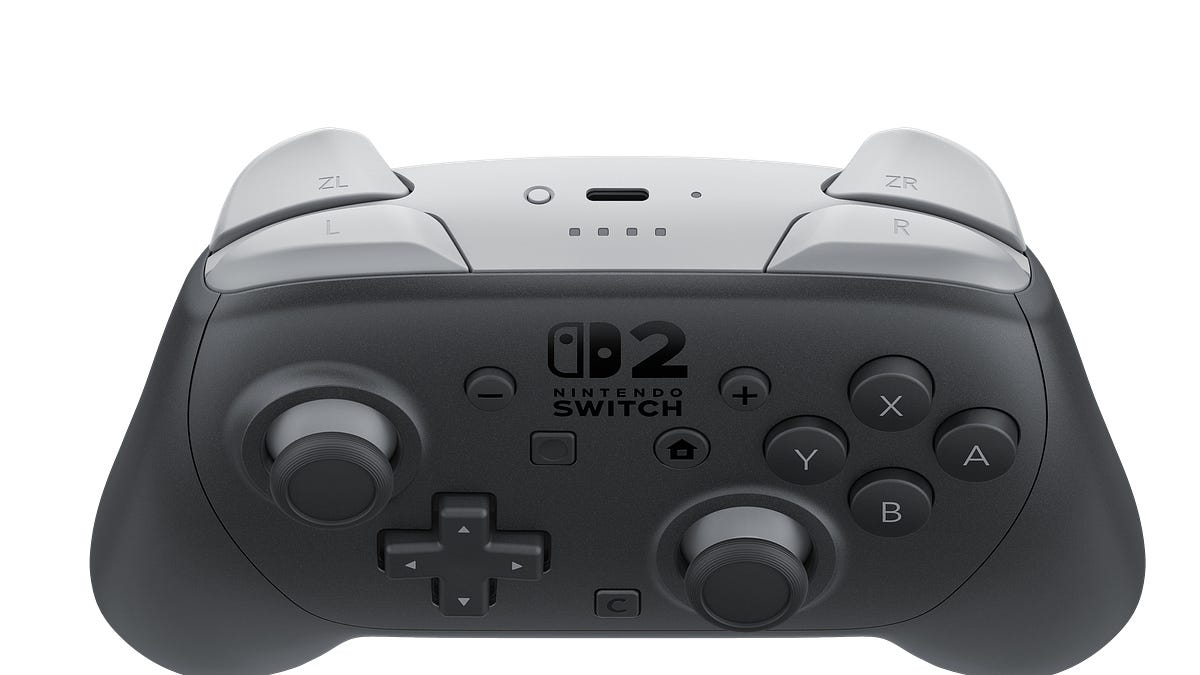
Gamers Sue Nintendo Over Tariff Refunds
A class action lawsuit has been filed against Nintendo by two U.S. consumers, alleging that the company is engaging in unjust enrichment by seeking federal tariff refunds. The plaintiffs argue that because Nintendo previously increased the prices of hardware and accessories to offset the cost of tariffs implemented in 2025, the company should not be permitted to recover those same costs from the U.S. government. The lawsuit, filed in the Western District of Washington, seeks to represent all U.S. customers who purchased price-hiked Nintendo products between February 1, 2025, and February 24, 2026.
The legal action follows a February 2026 Supreme Court ruling that struck down the tariffs as illegally implemented. In response, Nintendo initiated its own legal proceedings to secure a refund from the federal government, a process that could involve significant financial recovery for the company. While Nintendo executives previously acknowledged that tariff costs were incorporated into consumer pricing, the company has not committed to passing any potential government refunds back to its customers.
Legal experts have expressed skepticism regarding the viability of the case, noting that companies are generally under no legal obligation to maintain specific profit margins or return government-issued refunds to consumers. The lawsuit against Nintendo mirrors similar litigation targeting other major corporations, such as FedEx and UPS, which have also faced pressure to distribute tariff-related refunds to their customers. As the federal government begins the process of distributing up to $160 billion in potential refunds, the outcome of this case may set a precedent for how businesses manage the intersection of consumer pricing and government regulatory reversals.
- A class action lawsuit filed in the Western District of Washington alleges Nintendo engaged in unjust enrichment by seeking federal tariff refunds after passing those costs to consumers through price hikes.
- The lawsuit seeks to represent all U.S. customers who purchased Nintendo hardware and accessories at increased prices between February 1, 2025, and February 24, 2026.
- The litigation follows a February 2026 Supreme Court ruling that invalidated the tariffs, triggering a federal refund process that could distribute up to $160 billion to affected companies.
- Nintendo has acknowledged that tariff costs were incorporated into consumer pricing but has not committed to passing any recovered government refunds back to its customers.
- Legal experts are skeptical of the case's success, noting that companies are generally not legally obligated to return government-issued refunds or maintain specific profit margins for consumers.
Game FileApr 2026
Article
Microsoft Lowers Game Pass Prices, Drops Call of Duty from Day-One Offerings
Microsoft has implemented a strategic restructuring of its Game Pass subscription service, characterized by a global price reduction and a significant shift in its content release strategy. This pivot follows internal assessments suggesting that the service had become prohibitively expensive for a portion of its user base. The adjustments arrive just six months after the company’s most significant price increase, signaling a reactive shift in leadership’s approach to market positioning and consumer value.
Under the new pricing structure, Game Pass Ultimate has been reduced from 29.99 to 22.99 per month, while PC Game Pass has decreased from 16.49 to 13.99 per month. These changes represent an annual savings of 84 for Ultimate subscribers. However, this cost reduction is coupled with the removal of day-one access for the Call of Duty franchise. Moving forward, new entries in the series will be withheld from the service until the holiday season following their initial launch, effectively delaying their inclusion by approximately one year.
This policy change marks a notable evolution in the integration of Activision Blizzard assets following Microsoft’s acquisition. By decoupling the annual 70 Call of Duty release from the immediate subscription offering, the company appears to be recalibrating the service to better align with broader consumer demand, particularly for subscribers who do not prioritize the franchise. While the company has not disclosed updated subscriber figures since early 2024, when it reported 34 million users, these adjustments reflect a broader effort to optimize the service’s value proposition in a competitive gaming landscape.
- Microsoft has reduced the monthly price of Game Pass Ultimate from 29.99 to 22.99 and PC Game Pass from 16.49 to 13.99.
- New Call of Duty titles will no longer be available on Game Pass at launch, with releases now delayed until the holiday season of the following year.
- The price reduction follows internal assessments that the previous subscription costs were prohibitively expensive, occurring just six months after a major price hike.
- The policy change effectively decouples the 70 annual Call of Duty release from the immediate subscription offering to recalibrate the service's value proposition.
- The price adjustments result in an annual savings of 84 for Game Pass Ultimate subscribers.
+2
Game FileApr 2026

Article
The Amazing Mail Sent to a Video Game Publisher
The video game publisher Panic has successfully revitalized a 1980s-era promotional strategy, fostering a unique and deeply personal connection with its player base. Inspired by Activision’s historical practice of rewarding players with physical patches for completing specific game milestones, Panic implemented a similar program for titles such as Thank Goodness You’re Here, Arco, and the Playdate gaming system. By including a link in game credits that directs players to an instructional comic on how to submit a self-addressed stamped envelope, the company has received thousands of pieces of mail since mid-2024.
The initiative has evolved beyond a simple rewards exchange, transforming the publisher’s Portland, Oregon office into a hub of fan engagement. Players frequently include heartfelt, handwritten notes alongside their requests, sharing personal stories about how the games have impacted their lives, strengthened relationships, or provided comfort during difficult times. The physical nature of this correspondence has proven unexpectedly powerful for the development teams, offering a tangible, human connection that contrasts sharply with typical digital-only feedback.
The scope of the mail received is remarkably diverse, ranging from standard thank-you cards and drawings to eccentric items like needlepoint crafts, custom music playlists, and even accidental inclusions like a child’s lost tooth. While the program faced minor logistical hurdles—such as managing international postage and the physical thickness of envelopes—it has successfully cultivated a dedicated community. By encouraging players to share their thoughts, Panic has turned a routine administrative task into a meaningful, two-way dialogue that reinforces the value of creative, human-centric engagement in the modern gaming industry.
- Publisher Panic has successfully revitalized a 1980s-era physical rewards program, receiving thousands of pieces of mail since mid-2024 for titles including Thank Goodness You’re Here, Arco, and the Playdate system.
- The initiative utilizes a link in game credits that directs players to an instructional comic on how to submit a self-addressed stamped envelope to receive physical rewards.
- The program has transformed the company's Portland, Oregon office into a hub of fan engagement, with players sending handwritten notes, drawings, needlepoint, and other personal items.
- The physical nature of the correspondence provides development teams with a tangible, human-centric form of feedback that contrasts with standard digital-only communication.
- Despite logistical challenges regarding international postage and envelope thickness, the program has effectively fostered a dedicated community through two-way dialogue.
+1
Game FileApr 2026
Article
13 Exquisitely-Paced Hours with Pragmata: Review
Pragmata serves as a compelling case study in efficient game design, demonstrating how a focused 13-hour runtime can maximize player engagement by avoiding the common industry pitfall of artificial padding. While many contemporary titles struggle to maintain momentum, this Capcom-developed action game succeeds by prioritizing a tight, evolving gameplay loop over excessive length. The core thesis posits that quality of experience is independent of total playtime, provided that developers continuously iterate on mechanics rather than relying on repetitive content to justify production budgets.
The gameplay centers on a cooperative combat system featuring the protagonist, Hugh, and his android companion, Diana. The mechanics require players to synchronize offensive maneuvers, where Diana performs hacking sequences to expose enemy vulnerabilities that Hugh then exploits with precision shooting. This system evolves from simple introductory tutorials into increasingly complex challenges, ensuring that the player remains intellectually and mechanically stimulated throughout the entire experience. By layering these systems, the game avoids the stagnation often found in longer-form action titles that fail to introduce meaningful mechanical growth.
Set within a lunar base environment, the title represents a high-budget effort that balances narrative simplicity with sophisticated, novel gameplay interactions. The analysis highlights a shift away from the industry trend of bloated playtimes, suggesting that a well-paced, shorter experience provides greater value than a longer game that loses its creative spark. By focusing on a refined, 13-hour arc, the title achieves a level of polish and pacing that stands in contrast to other recent releases that suffer from pacing issues or repetitive design elements.
- Capcom’s Pragmata achieves high player engagement through a focused 13-hour runtime, successfully avoiding the industry trend of artificial content padding.
- The game’s core combat loop centers on a cooperative system between the protagonist, Hugh, and his android companion, Diana, requiring synchronized hacking and shooting maneuvers.
- Mechanical complexity scales throughout the 13-hour experience by layering systems rather than relying on repetitive content to extend playtime.
- The title demonstrates that high-budget action games can maintain quality and momentum by prioritizing continuous mechanical iteration over excessive length.
- Set in a lunar base, the game serves as a strategic counter-example to contemporary titles that suffer from pacing issues and creative stagnation due to bloated playtimes.
Game FileApr 2026