Esports Charts
Research186 documents
Documents
Article
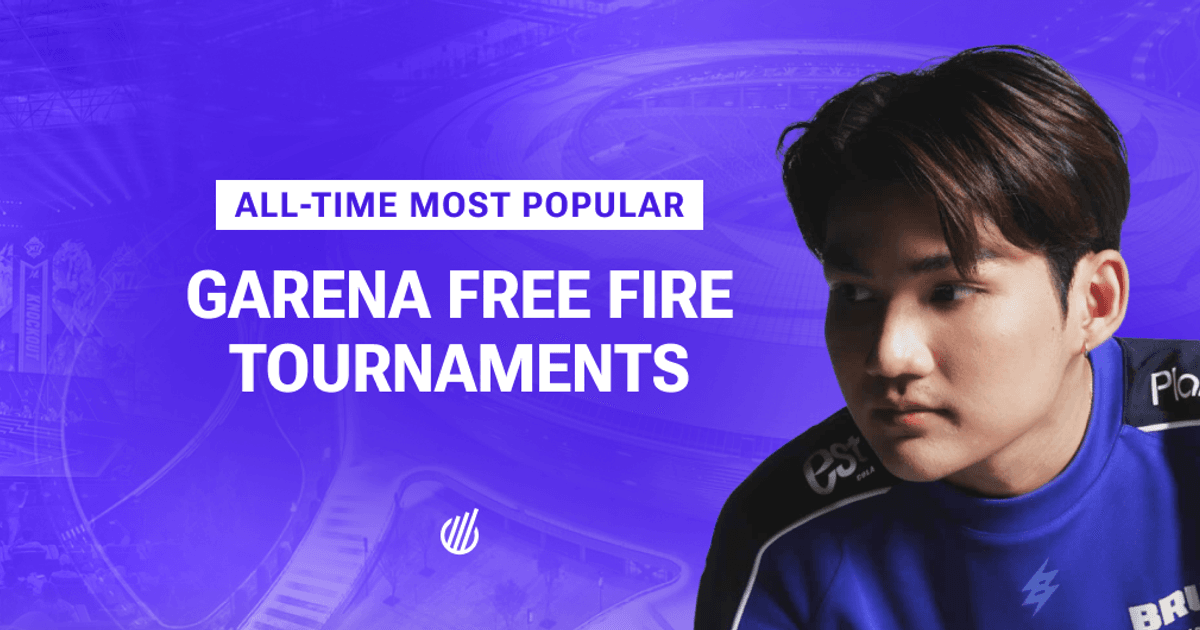
Most-Watched Free Fire Tournaments: FFWS 2021 and Brazil Dominance
Free Fire stands as a foundational pillar in the mobile esports landscape, having achieved unprecedented viewership milestones that redefined the industry's growth potential. The Free Fire World Series 2021 Singapore remains the definitive benchmark for the title, securing an all-time record of 5.41 million peak concurrent viewers and 18.43 million hours of total watch time. By becoming the first esports title to surpass both the 4 million and 5 million concurrent viewer thresholds, the game solidified its status as a global phenomenon, particularly within the mobile-first gaming sector.
While international championships generate the highest spikes in peak viewership, regional leagues provide the essential foundation for long-term engagement. Brazil and Southeast Asia serve as the primary hubs for this sustained activity, where extended, multi-month tournament structures consistently drive high cumulative watch time. This regional dominance is largely attributed to the game’s accessible design, which features low hardware requirements and beginner-friendly mechanics, ensuring a stable and dedicated player base across diverse economic markets.
Although recent data indicates a stabilization in viewership following the initial period of explosive growth, the title maintains a robust presence within the competitive ecosystem. The current industry landscape continues to track these trends through 2026, monitoring how regional leagues and international events adapt to evolving audience behaviors. Ultimately, the game’s historical performance serves as a critical case study in how mobile accessibility and localized competitive structures can foster a massive, enduring esports community.
- The Free Fire World Series 2021 Singapore set an all-time esports record of 5.41 million peak concurrent viewers.
- Free Fire was the first esports title to surpass both the 4 million and 5 million concurrent viewer thresholds.
- The 2021 Singapore tournament generated a total of 18.43 million hours of watch time.
- Brazil and Southeast Asia function as the primary hubs for sustained viewership, driven by multi-month regional league structures.
- The game's market dominance is underpinned by high accessibility, specifically low hardware requirements and beginner-friendly mechanics.
+3
Esports ChartsApr 2026
Article
VCT 2026 Americas Stage 1: How to Watch, Teams & Favorites
The VCT 2026 Americas Stage 1 tournament serves as a critical qualifying event for the VALORANT Masters London 2026, determining which three teams from the Americas region will advance to the international stage. Hosted at the Riot Games Arena in Los Angeles, the competition spans from April 10 to May 24, 2026. The event structure utilizes a rigorous two-stage format, beginning with a group stage that transitions into a double-elimination playoff bracket to ensure a high level of competitive integrity.
Twelve professional teams are participating in this tournament, with the field characterized by a mix of established regional leaders and rising contenders. NRG and G2 Esports enter the competition as the primary favorites, with NRG carrying significant momentum following a standout performance at Masters Santiago. Other notable organizations, including FURIA Esports and the tactically disciplined roster of Evil Geniuses, are positioned as key challengers capable of disrupting the expected hierarchy.
This tournament functions as a central pillar of the 2026 professional VALORANT circuit, providing a platform for data-driven analysis of team performance and regional strength. By narrowing the field to only three qualifying spots, the event emphasizes high-stakes gameplay and serves as a primary indicator of the current competitive landscape within the Americas. The tournament remains a focal point for industry observers tracking team statistics, roster development, and the broader trajectory of the professional VALORANT ecosystem.
- VCT 2026 Americas Stage 1 will take place at the Riot Games Arena in Los Angeles from April 10 to May 24, 2026.
- The tournament serves as a qualifier for VALORANT Masters London 2026, with only three teams from the Americas region advancing.
- Twelve professional teams are competing in a two-stage format consisting of an initial group stage followed by a double-elimination playoff bracket.
- NRG and G2 Esports are the primary favorites to win the tournament, with NRG entering the event following a strong performance at Masters Santiago.
- FURIA Esports and Evil Geniuses are identified as the key challengers capable of disrupting the established competitive hierarchy.
+1
Esports ChartsApr 2026
Article
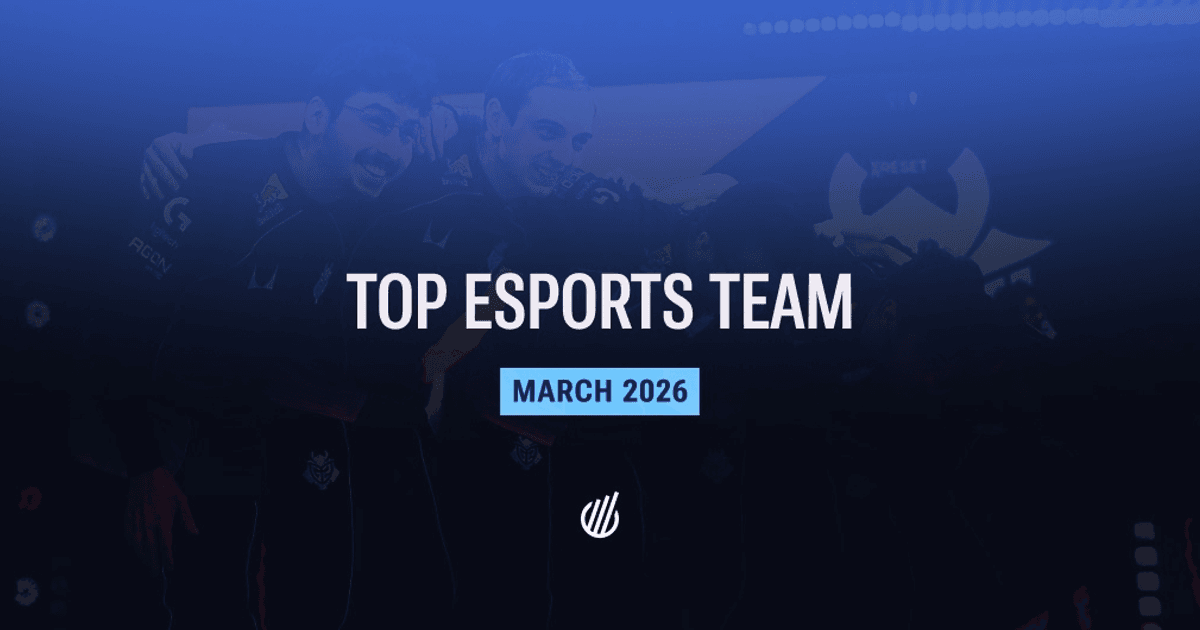
G2 Esports: Top Esports Team in March 2026
G2 Esports established itself as the premier organization in the global competitive gaming landscape during March 2026. This dominance was primarily fueled by a high-level performance in the League of Legends circuit, characterized by a championship victory in the LEC 2026 Versus and a notable runner-up finish at the First Stand 2026 tournament. These achievements solidified the organization’s standing as the top-performing team for the month, reflecting a period of sustained competitive excellence and operational success.
The competitive success of G2 Esports coincided with a broader trend of increased audience engagement within the esports ecosystem. The First Stand 2026 tournament, in particular, served as a key indicator of market health, recording a 35 percent growth in viewership compared to its inaugural iteration. This surge in interest underscores the expanding reach of major tournaments and the significant influence that top-tier teams exert on overall industry metrics.
Beyond individual team performance, the broader industry environment in early 2026 remains characterized by rapid evolution and data-driven growth. Developments such as the viewership surge at BLAST Rivals Spring 2026 and the integration of new content into titles like Counter-Strike 2 highlight a dynamic landscape. Professional stakeholders continue to rely on advanced analytics and comprehensive tournament data to navigate these shifts, emphasizing the importance of granular performance tracking in maintaining a competitive edge within the global esports market.
- G2 Esports was the top-performing global esports organization in March 2026, driven by a championship win at the LEC 2026 Versus and a runner-up finish at First Stand 2026.
- The First Stand 2026 tournament recorded a 35 percent year-over-year growth in viewership, signaling significant expansion in audience engagement.
- The esports industry in early 2026 is defined by rapid, data-driven growth, evidenced by high viewership at events like BLAST Rivals Spring 2026.
- Professional stakeholders are increasingly leveraging advanced analytics and granular performance tracking to navigate the evolving competitive landscape.
- Content updates in titles such as Counter-Strike 2 are contributing to the dynamic growth and shifting metrics of the global esports market.
Esports ChartsApr 2026
Article
Top Esports Tournaments: March 2026
The global esports landscape in March 2026 demonstrated robust growth and shifting engagement patterns, characterized by a diverse array of professional circuits and emerging creator-led initiatives. Major titles such as League of Legends, Counter-Strike 2, Dota 2, and Mobile Legends: Bang Bang anchored the industry, with the latter two titles—specifically MPL Indonesia and the League of Legends First Stand—surpassing the critical threshold of one million peak viewers. This period underscored a significant expansion in regional reach, evidenced by record-breaking engagement metrics for the FFMIC 2026 Spring tournament in India and a notable 20 percent viewership surge for the BLAST Rivals Spring 2026 event.
A primary driver of this competitive environment is the evolving media ecosystem, where both publisher-led channels and third-party organizers utilize integrated viewership rewards to sustain audience retention across major streaming platforms like Twitch and YouTube. While professional leagues continue to command the largest share of total viewership, the influence of creator-led programming has become increasingly pronounced. Notably, independent events, such as Jynxzi’s Counter-Strike tournament, successfully outperformed several major international championships within the English-speaking market, signaling a diversification of content consumption preferences among esports audiences.
These findings reflect a broader trend toward data-driven decision-making within the industry, as stakeholders increasingly rely on granular analytics to track team performance and tournament efficacy. The current market environment highlights the necessity for comprehensive tracking tools to navigate the complexities of global viewership, particularly as the distinction between traditional professional circuits and influencer-driven content continues to blur. By leveraging advanced statistical insights, organizations can better capitalize on these shifting engagement trends to maintain a competitive edge in an increasingly crowded digital entertainment space.
- MPL Indonesia and the League of Legends First Stand both surpassed one million peak viewers in March 2026, marking them as top-tier industry anchors.
- BLAST Rivals Spring 2026 experienced a 20 percent surge in viewership, contributing to a broader trend of regional expansion alongside record-breaking engagement for India's FFMIC 2026 Spring tournament.
- Creator-led programming is increasingly competitive, as evidenced by Jynxzi’s independent Counter-Strike tournament outperforming several major international championships in the English-speaking market.
- Publisher-led and third-party organizers are successfully sustaining audience retention on Twitch and YouTube by utilizing integrated viewership rewards.
- The esports industry is shifting toward data-driven decision-making, with stakeholders prioritizing granular analytics to navigate the blurring lines between traditional professional circuits and influencer-driven content.
+1
Esports ChartsApr 2026

Article
Most-Watched PUBG Mobile Tournaments: PMGC Season 0 and PMWC 2025
PUBG Mobile has solidified its position as a dominant force in the global esports landscape, consistently outperforming its PC counterpart in viewership metrics. The primary objective of the current competitive ecosystem is to maintain high engagement levels through a structured hierarchy of regional circuits, such as the PUBG Mobile Super League and the Peacekeeper Elite League, which function as essential qualifiers for premier international competitions. These events serve as the backbone for tracking market trends, team performance, and the overall health of the mobile gaming sector.
Historical data underscores the immense scale of these tournaments, with the PUBG Mobile Global Championship Season 0 in 2020 remaining the most significant event in the title's history. That inaugural championship achieved a record-breaking 64.5 million hours watched and a peak concurrent viewership of 3.8 million. While these figures were bolstered by the unique circumstances of pandemic-era lockdowns, the recent PUBG Mobile World Cup 2025 has successfully revitalized global interest, signaling the highest levels of popularity the game has experienced in over four years.
Spanning the last decade, the evolution of PUBG Mobile esports demonstrates a successful transition from a burgeoning mobile title to a cornerstone of the professional gaming industry. By leveraging a robust database of live statistics and performance analytics, the ecosystem continues to refine its reach across diverse geographic regions. The sustained growth of these tournaments confirms that mobile-first competitive gaming has achieved long-term viability, effectively capturing massive audiences and setting new benchmarks for engagement within the broader esports market.
- The 2020 PUBG Mobile Global Championship Season 0 remains the title's most-watched event, recording 64.5 million hours watched and a peak concurrent viewership of 3.8 million.
- The PUBG Mobile World Cup 2025 has revitalized global interest, marking the game's highest popularity levels in over four years.
- PUBG Mobile consistently outperforms its PC counterpart in global esports viewership metrics.
- The competitive ecosystem is sustained by a structured hierarchy of regional circuits, including the PUBG Mobile Super League and the Peacekeeper Elite League, which act as essential qualifiers for international events.
- The evolution of PUBG Mobile esports over the last decade confirms the long-term commercial viability and market dominance of mobile-first competitive gaming.
+2
Esports ChartsMar 2026
Article
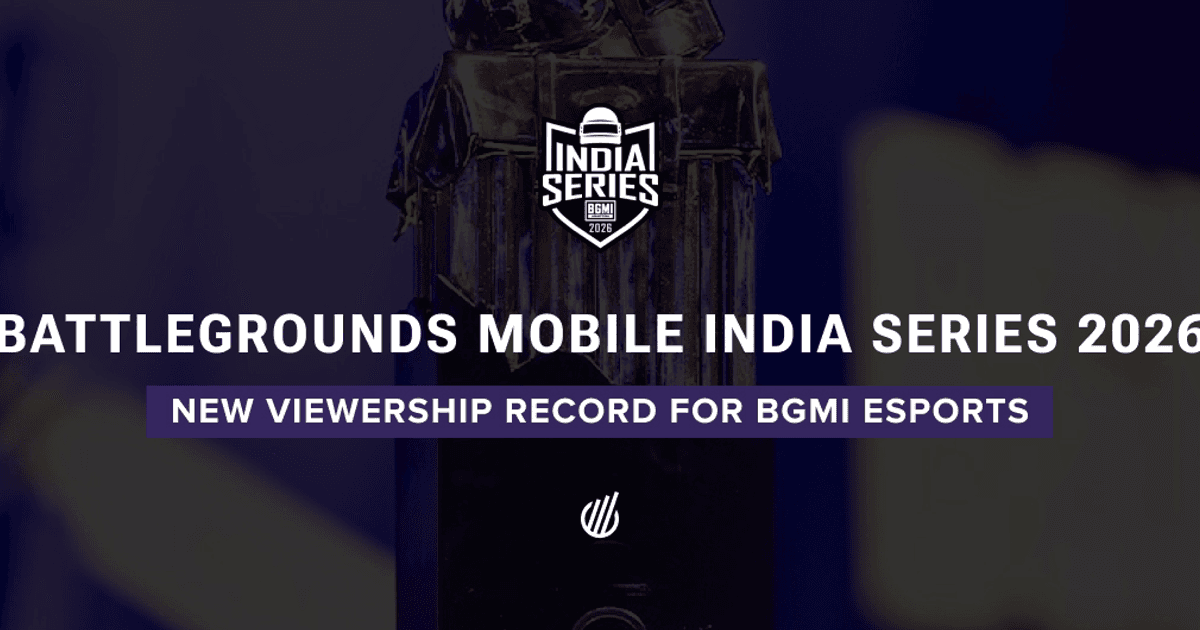
BGIS 2026 Sets New Viewership Record for BGMI Esports
The Battlegrounds Mobile India Series 2026 has solidified its position as a dominant force in the mobile esports sector by establishing a new all-time viewership record for the title. This milestone underscores the enduring popularity of Battlegrounds Mobile India and confirms a significant upward trajectory for the game’s competitive ecosystem within the Indian market. By achieving a peak concurrent viewership of 577,685 during the Grand Finals, the event demonstrates the immense drawing power of top-tier professional organizations and the sustained engagement of the regional player base.
The surge in viewership is largely attributed to a 15.77% increase in Hindi-language concurrent engagement, reflecting a successful expansion of the game’s reach among domestic audiences. This growth trajectory suggests a robust recovery and long-term stability for the title, positioning it as a primary driver of esports consumption in India. The success of this series, alongside other recent high-profile events like BGMS Season 4, highlights a broader trend of increasing professionalization and fan investment in the local competitive landscape.
These findings illustrate a thriving ecosystem where high-stakes tournament play continues to capture significant market attention. As the industry evolves, the ability of major events to consistently attract large-scale audiences serves as a critical indicator of the health and commercial viability of mobile esports. The data confirms that Battlegrounds Mobile India remains a central pillar of the competitive gaming industry, with its influence continuing to expand across diverse demographics and regional viewership segments.
- The Battlegrounds Mobile India Series 2026 reached a new all-time viewership record for the title, peaking at 577,685 concurrent viewers during the Grand Finals.
- Hindi-language concurrent engagement grew by 15.77%, serving as the primary driver for the event's record-breaking viewership.
- The record-setting performance of the 2026 series confirms the sustained commercial viability and long-term stability of the Battlegrounds Mobile India competitive ecosystem.
- High-profile events like the 2026 series and BGMS Season 4 demonstrate a broader trend of increasing professionalization and fan investment within the Indian esports market.
- Battlegrounds Mobile India maintains its status as a central pillar of the regional esports industry, with influence expanding across diverse demographics and viewership segments.
+2
Esports ChartsMar 2026
Article
Top 10 Mobile Legends: Bang Bang Esports Tournaments of All Time by Viewership
Mobile Legends: Bang Bang has established itself as the preeminent discipline within the global mobile esports landscape, characterized by unprecedented audience engagement and a robust, tiered competitive structure. The ecosystem is anchored by the annual M-Series World Championships, which represent the pinnacle of professional play, alongside the regional Mobile Legends Professional Leagues. These events collectively drive the industry’s viewership metrics, with the M7 World Championship currently serving as the benchmark for success, having achieved a record-breaking peak of over 5.68 million concurrent viewers and accumulating 135.5 million hours of total watch time.
The geographic concentration of this viewership remains heavily centered in Southeast Asia, where the game maintains a dominant cultural and competitive footprint. Within this regional framework, MPL Indonesia stands out as the most popular professional league, consistently delivering the highest viewership density and serving as a critical engine for the game’s sustained growth. This success is supported by a sophisticated data-tracking infrastructure that monitors real-time performance, organizational metrics, and broader industry trends as of early 2026.
The competitive hierarchy, ranging from localized professional leagues to global championship events, ensures a consistent pipeline of high-stakes content that fuels long-term audience retention. As the discipline continues to expand into emerging global markets, the integration of these regional leagues with the flagship M-Series remains the primary strategy for maintaining its status as the most-watched mobile esports title. The data underscores a clear correlation between the prestige of the tournament tier and the resulting viewership volume, confirming that the current ecosystem effectively leverages both regional loyalty and international championship prestige to maximize its global reach.
- The M7 World Championship set a record for Mobile Legends: Bang Bang with a peak of over 5.68 million concurrent viewers and 135.5 million total hours watched.
- Southeast Asia remains the primary driver of global viewership, with MPL Indonesia identified as the most popular and influential professional league in the ecosystem.
- The competitive structure relies on a tiered model that integrates regional professional leagues with the flagship annual M-Series World Championships to maximize audience retention.
- As of early 2026, data-tracking infrastructure confirms a direct correlation between tournament prestige and viewership volume, validating the current hierarchical event strategy.
- The ecosystem maintains its status as the leading mobile esports discipline by leveraging regional fan loyalty alongside the high-stakes appeal of international championship events.
+2
Esports ChartsMar 2026
Article
Top 10 Most Popular Valorant Esports Tournaments of All Time
The Valorant Champions Tour serves as the definitive global esports circuit for Riot Games, structured around a tiered system of international leagues that culminate in the annual Champions world championship. Mid-season Masters events function as critical international LAN tournaments, providing essential opportunities for teams to secure prize money, championship points, and qualification status for the season-ending world title. This competitive ecosystem is designed to sustain high levels of engagement throughout the calendar year by balancing regional league play with high-stakes international showdowns.
Viewership data confirms that the Valorant competitive scene maintains significant global reach, with specific tournaments setting industry benchmarks for audience retention and peak interest. The 2022 Champions event currently holds the record for total consumption, amassing 60.7 million hours watched. Conversely, the 2024 Masters Madrid tournament achieved the highest peak concurrent viewership, surpassing 1.68 million simultaneous viewers. These figures demonstrate that while the annual Champions event retains its status as the most prestigious title, the Masters series frequently rivals or exceeds it in immediate popularity, often driven by strategic scheduling and the participation of high-engagement organizations such as Sentinels.
The broader landscape of Valorant esports analytics highlights a dynamic relationship between tournament prestige and audience behavior. Industry data suggests that viewership trends are heavily influenced by the competitive intensity of the VCT structure and the presence of popular teams. As the circuit continues to evolve, the interplay between these international events remains the primary driver of growth for the title’s professional ecosystem, establishing a consistent pattern of high-volume viewership that defines the current state of the tactical shooter’s competitive market.
- The 2022 Valorant Champions event holds the all-time record for total engagement, accumulating 60.7 million hours watched.
- Masters Madrid 2024 achieved the highest peak concurrent viewership in the game's history, exceeding 1.68 million simultaneous viewers.
- While the annual Champions tournament remains the most prestigious event, the Masters series frequently rivals or exceeds it in peak popularity.
- Tournament viewership is significantly driven by the participation of high-engagement organizations such as Sentinels.
- The Valorant Champions Tour (VCT) utilizes a tiered structure of regional leagues and international LAN events to maintain consistent year-round audience retention.
+3
Esports ChartsMar 2026
Article
Top 10 Most-Watched Dota 2 Tournaments of All Time
The International series represents the absolute pinnacle of professional Dota 2, consistently serving as the primary driver for the game’s global viewership records. The International 10, held in 2021, remains the definitive benchmark for the esport, establishing an enduring standard with 107.2 million hours of total watch time and a peak concurrent viewership of 2.74 million. Even as the competitive landscape evolves and prize pool structures shift, the brand maintains its prestige, with subsequent iterations like The International 2025 confirming that the event remains the central focus for the global audience.
Professional Dota 2 competition is structured around two distinct tiers: The International and the Major circuit. The International functions as the sport’s premier event, distinguished by its massive, crowdfunded prize pools and its status as the ultimate career milestone for professional players. Complementing this, the Major tournaments provide a high-stakes environment that historically served as the essential qualification pathway for the professional circuit. Together, these tiers define the hierarchy of the game’s competitive ecosystem.
While the broader esports industry experiences constant fluctuations in viewership and engagement, the data confirms that Dota 2’s top-tier events retain significant cultural and commercial influence. The sustained interest in these tournaments underscores the effectiveness of the game’s long-standing competitive model. By prioritizing high-stakes, marquee events, the professional scene continues to command substantial attention from a worldwide audience, solidifying its position as a cornerstone of the modern esports landscape.
- The International 10 (2021) holds the all-time Dota 2 viewership record with 107.2 million hours of total watch time and a peak concurrent audience of 2.74 million.
- The International series serves as the primary driver for Dota 2's global viewership and remains the central focus for the game's competitive audience.
- Dota 2’s competitive ecosystem is defined by a two-tier hierarchy consisting of The International, which features crowdfunded prize pools, and the Major circuit.
- The Major tournaments function as the essential qualification pathway for the professional circuit and provide a high-stakes environment for players.
- Despite broader industry fluctuations, Dota 2’s top-tier events maintain significant cultural and commercial influence by prioritizing marquee, high-stakes competition.
+1
Esports ChartsMar 2026
Article
Top 10 Most-Watched Counter-Strike Tournaments of All Time
Counter-Strike esports has reached unprecedented levels of global engagement, with viewership metrics driven by a combination of high-stakes Valve-sponsored Majors and elite Tier-S events. The current landscape is defined by a record-breaking 76.1 million hours watched for the BLAST.tv Austin Major 2025, while the PGL Major Stockholm 2021 continues to hold the all-time peak concurrent viewership record of over 2.7 million spectators. These figures underscore the enduring appeal of top-tier professional competition and the increasing ability of non-Major events, such as IEM Kraków 2026, to rival the popularity of world championships.
Natus Vincere stands as the primary catalyst for this viewership growth, consistently attracting massive audiences through a combination of historical prestige and star-studded rosters. The influence of major tournament organizers like PGL and ESL remains central to the industry, as their high-production events serve as the primary vehicles for record-setting engagement. The data suggests that the competitive ecosystem is evolving, with fan interest increasingly concentrated around specific powerhouse organizations that possess deep, global fanbases.
This analysis covers the global Counter-Strike professional circuit, focusing on the most significant tournaments held through the mid-2020s. By tracking peak concurrent viewers and total hours watched, the industry demonstrates a clear trend toward sustained growth in digital viewership. The findings highlight a shift where Tier-S events are successfully bridging the gap between standard professional play and the massive, event-driven spikes typically reserved for official Majors, signaling a robust and expanding market for competitive Counter-Strike.
- The PGL Major Stockholm 2021 holds the all-time peak concurrent viewership record for Counter-Strike with over 2.7 million spectators.
- The BLAST.tv Austin Major 2025 set a record for total engagement, reaching 76.1 million hours watched.
- Natus Vincere is the primary driver of viewership growth, consistently attracting large audiences due to their historical prestige and star-studded rosters.
- Tier-S events, such as the IEM Kraków 2026, are increasingly rivaling official Valve-sponsored Majors in popularity and viewership scale.
- The competitive Counter-Strike ecosystem is shifting toward a model where fan interest is heavily concentrated around specific powerhouse organizations with global fanbases.
+2
Esports ChartsMar 2026

Article
Top 10 Most-Watched LoL Esports Tournaments: All-Time Records
League of Legends esports continues to demonstrate unprecedented growth in global viewership, cementing its status as a premier competitive gaming title. The 2024 World Championship stands as the definitive benchmark for the industry, establishing all-time records with 190.1 million total hours watched and a peak concurrent viewership of 6.85 million. These figures underscore the effectiveness of Riot Games’ strategic initiatives, particularly the integration of community co-streaming, which has significantly expanded the reach and accessibility of major broadcasts.
The sustained popularity of the sport is heavily influenced by the presence of high-profile organizations, most notably T1, whose consistent performance remains a primary driver of audience engagement. Beyond the annual World Championship, regional leagues are evolving to capture larger shares of the market. The LCK 2025 season serves as a prime example of this trend, securing a top-three position in all-time viewership rankings following structural format changes and an increase in total airtime. This shift indicates that strategic adjustments to tournament scheduling and broadcast delivery are successfully converting casual interest into sustained, high-volume viewership.
These findings reflect a broader trend of professionalization and data-driven growth within the global esports ecosystem. By leveraging granular performance metrics and audience analytics, stakeholders are better positioned to optimize tournament structures and maximize engagement across diverse international markets. As the industry matures, the ability to maintain these record-breaking levels of interest will depend on the continued synergy between developer-led initiatives, the star power of legacy organizations, and the ongoing refinement of competitive formats to meet the demands of a global audience.
- The 2024 League of Legends World Championship set all-time industry records with 190.1 million total hours watched and a peak concurrent viewership of 6.85 million.
- Riot Games’ integration of community co-streaming has been a primary driver in expanding the reach and accessibility of major broadcast events.
- The LCK 2025 season achieved a top-three position in all-time viewership rankings following structural format changes and increased airtime.
- High-profile organizations, specifically T1, remain a critical factor in driving consistent audience engagement for League of Legends esports.
- The esports industry is shifting toward data-driven growth, utilizing granular performance metrics to optimize tournament structures and maximize international market engagement.
+1
Esports ChartsMar 2026
Article
How to Watch VCT 2026: EMEA Stage 1
The Valorant Champions Tour 2026 EMEA Stage 1 serves as a critical competitive milestone, functioning as the primary qualification pathway for the upcoming Valorant Masters London tournament. Hosted at the Riot Games Arena in Berlin, the event spans from April 1 to May 17, 2026, and features 12 professional teams vying for three coveted qualification spots. The tournament structure utilizes a rigorous two-stage format, beginning with a group stage and culminating in a double-elimination playoff bracket to determine the final representatives.
A notable development in the competitive landscape is the debut of Eternal Fire, an organization that entered the league following the acquisition of the roster previously known as ULF Esports. This roster transition highlights the ongoing evolution of team branding and organizational investment within the EMEA region. The event acts as a focal point for regional viewership and competitive analysis, drawing significant attention from the global esports community as teams compete for international standing.
Comprehensive coverage of the tournament is facilitated through centralized digital platforms that provide real-time schedules, team rosters, and broadcast information. These resources are increasingly integrated with advanced analytical tools, offering stakeholders and fans access to granular viewership statistics and comparative performance metrics. By tracking these high-stakes matches, observers can gain deeper insights into the shifting power dynamics of the professional Valorant circuit as the season progresses toward its international conclusion.
- VCT 2026 EMEA Stage 1 takes place in Berlin from April 1 to May 17, 2026, serving as the primary qualifier for Valorant Masters London.
- The tournament features 12 professional teams competing for three available qualification spots.
- The competition structure consists of an initial group stage followed by a double-elimination playoff bracket.
- Eternal Fire has entered the league following its acquisition of the former ULF Esports roster, marking a shift in regional organizational investment.
- Tournament coverage is supported by centralized digital platforms that integrate real-time schedules with advanced analytical tools for tracking performance metrics.
+1
Esports ChartsMar 2026