AppAgent
Prague-based mobile games marketing agency covering user acquisition, creative production and app store optimisation. Publishes guides and conference talks on mobile game growth.
Connections
Each row is a game or company named alongside AppAgent, each column a document, oldest first. A mark means that document names it. Select a row to see those documents.
Documents
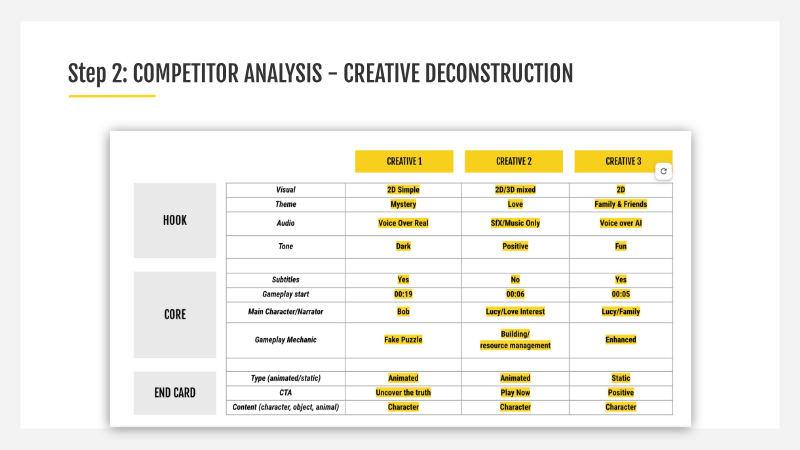
How to Develop Creative Strategy: GameCamp 2024
This presentation from GameCamp 2024, delivered by Peter Fodor of AppAgent, outlines a framework for developing creative strategies in mobile game marketing.
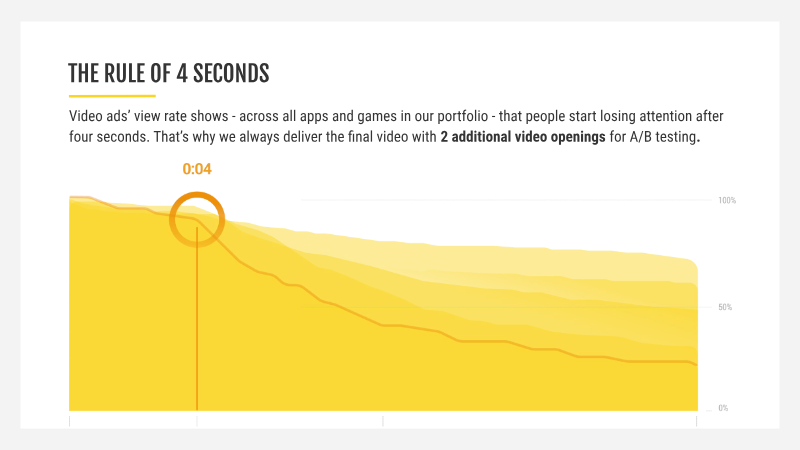
- The document states that across all apps and games in its portfolio, video ads' view rate shows people start losing attention after four seconds, which is why the final video is always delivered with 2 additional video openings for A/B testing.
- The recommended iteration framework suggests a specific volume of testing: three hook iterations, two basic iterations, and one advanced iteration.
- The document says a great hook should be straight to the point, add movement, evoke curiosity, create humorous, shocking or wow moments, and use all the tools.
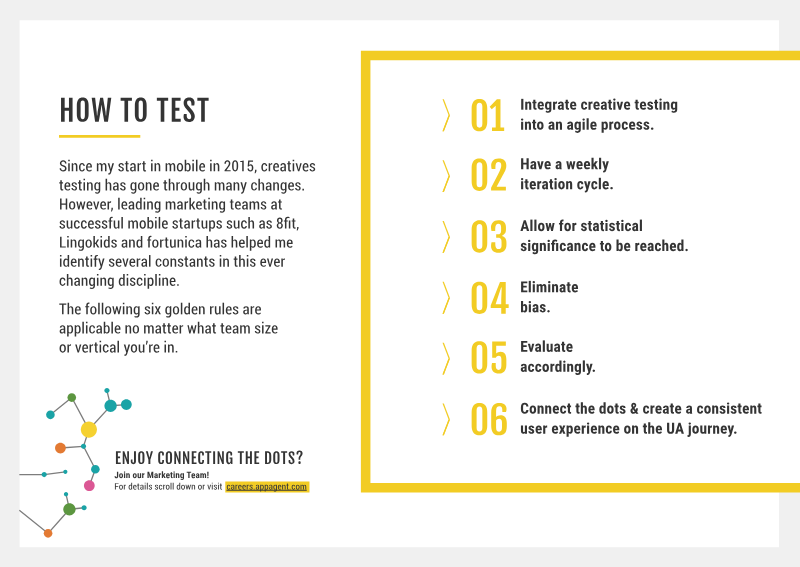


Scaling Mobile User Acquisition with Ad Creatives Testing
PURZLES IZZLES LEMPIRS PLAYNOW!
Reports about AppAgent
3 documents by other writers name AppAgent in the title or summary.
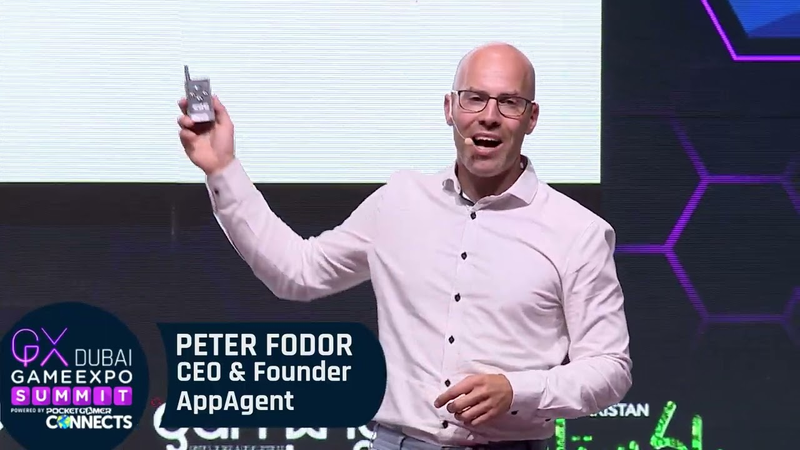
Practical Use Cases of AI in Marketing Communication - Peter Fodor, CEO & Founder, AppAgent
The integration of artificial intelligence into marketing communication serves as a powerful catalyst for operational efficiency and creative output within the mobile gaming industry.
- AI integration in mobile marketing enables teams to reduce production timelines from days to hours by automating the creation of high-volume creative assets.
- Midjourney and DALL-E are used to generate initial design concepts, icons, and backgrounds, which are then refined by human designers to ensure brand and technical standards.
- Stable Diffusion is applied to sharpen low-resolution gameplay footage and adjust character portrait realism, allowing for high-quality visuals even when source assets are limited.
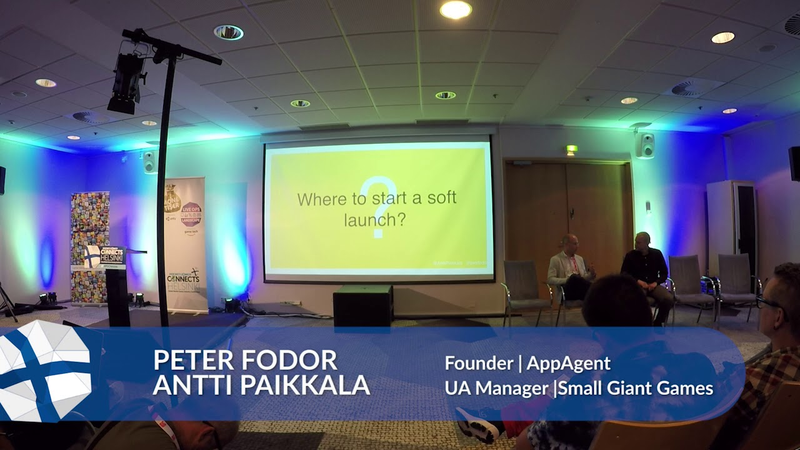
AppAgent meets Small Giant Games: How to create a media plan for a global launch
The media planning process for a global mobile game launch requires a disciplined, data-driven approach that balances product development with aggressive user acquisition strategies.
- A successful global launch requires a data-driven media plan that balances aggressive user acquisition with iterative product development based on real-time performance metrics.
- Soft launch phases must prioritize testing hypotheses and establishing baseline KPIs, such as cost per install and conversion rates, to ensure technical stability and accurate lifetime value modeling.
- If top-of-funnel performance is weak despite strong core gameplay, developers should be prepared to overhaul the game's visual identity to better align with target audience preferences.

Marketing’s Biggest Frustration: A Product That Sucks
This guest post by AppAgent founder Peter Fodor argues that mobile developers over-invest in marketing to compensate for weak products, and that no amount of acquisition optimization can rescue an app that fails to retain users.
- Improving D1 retention by 10% generates a 106% increase in profit, whereas reducing Cost Per Install (CPI) by 30% only yields a 70% profit increase.
- Product performance offers significantly higher growth potential than marketing, as CPI is limited by market CPMs while LTV can theoretically be improved by 10x or more.
- Marketing cannot compensate for a poor product; spending on acquisition for a product with low retention results in wasted budgets and failed profitability.
Do you work at AppAgent? Get a free report of how these documents are read and cited here.