Ni no Kuni: Cross Worlds
4 documents in the library are about Ni no Kuni: Cross Worlds, from writers such as Netmarble and Game World Observer, the newest from 2023. Each has a summary and key insights with the page they come from.

Ni no Kuni: Cross Worlds is an upcoming role-playing video game developed by Netmarble and published by Level-5. It will be released for Android and iOS in Japan in 2020, and will be created using the Unreal Engine 4 game engine. The game follows a beta tester for "Project N", a fictional virtual reality game. It will also include five character classes, and well as a multiplayer kingdom feature with player versus player combat.
- Released
- Jun 10, 2021
- Developers
- LEVEL-5, Netmarble Neo
- Publisher
- Netmarble Games
- Genres
- Role-playing (RPG), Simulator, Adventure
- Platforms
- Android, PC (Microsoft Windows), iOS
- Links
- Official site, Wikipedia
Game data from IGDB.com
Key figures
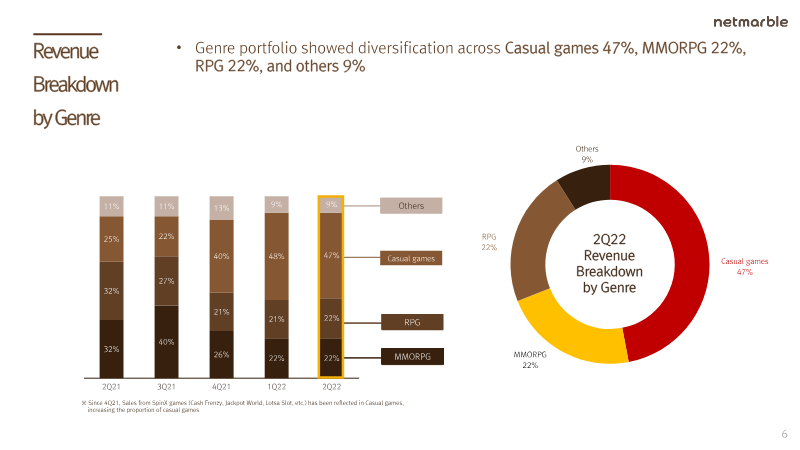
The revenue portfolio is heavily weighted toward casual games at 47%, followed by MMORPGs and RPGs at 22% each, supported by key titles like Ni no Kuni: Cross Worlds and the SpinX portfolio.
Netmarble, 2022 · Netmarble 2Q 2022 Earnings Results, p. 7
Netmarble reported 3Q 2021 revenue of KRW 607.0 billion, a 5.2% quarter-over-quarter increase driven by the launch of 'MARVEL Future Revolution' and the full integration of 'Ni no Kuni: Cross Worlds'.
Netmarble, 2021 · Netmarble 3Q 2021 Earnings Results, p. 4
Documents about Ni no Kuni: Cross Worlds

Netmarble Ends 2022 with Net Loss of $714 Million
Netmarble’s 2022 financial performance highlights a significant period of volatility for the South Korean mobile developer and publisher.
- Netmarble reported a net loss of ₩906 billion ($714.8 million) in 2022, a sharp reversal from the ₩249 billion ($196.4 million) profit recorded in 2021.
- Despite the net loss, total annual revenue grew 6.6% year-over-year to reach ₩2.67 trillion ($2.1 billion).
- The company’s EBITDA declined by 57.6% year-over-year to ₩127.8 billion ($100.8 million), reflecting significant pressure on operational profitability.

Netmarble 2Q 2022 Earnings Results
Netmarble’s second-quarter 2022 earnings results reflect a period of revenue growth tempered by significant profitability challenges.
- Netmarble reported a Q2 2022 revenue of KRW 660.6 billion, a 14.4% year-over-year increase, but suffered an operating loss of KRW 34.7 billion and a net loss of KRW 120.5 billion.
- The company's profitability was negatively impacted by an 8.1% quarter-over-quarter rise in operating expenses, driven by a 28% surge in marketing costs and increased labor and commission fees.
- International markets remain the primary revenue driver, accounting for 85% of total revenue, with North America alone contributing 49%.

Netmarble 1Q 2022 Earnings Results
Netmarble’s first-quarter 2022 earnings results reflect a challenging period characterized by a decline in both revenue and profitability.
- Netmarble reported an operating loss of KRW 12 billion and a net loss of KRW 52 billion for 1Q 2022, driven by a lack of new game launches and declining performance of existing titles.
- Quarterly revenue reached KRW 632 billion, reflecting a 10.7% year-over-year increase but a 16.1% decrease compared to the previous quarter.
- International markets remain the primary revenue driver at 84% of total earnings, with North America alone accounting for 49% of the company's revenue.
Netmarble 3Q 2021 Earnings Results
Netmarble’s third-quarter 2021 earnings report outlines the company’s financial performance and strategic trajectory within the global gaming market.
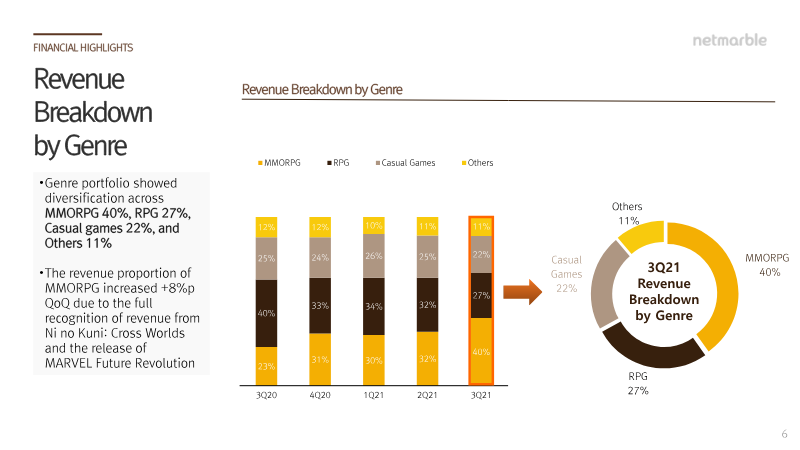
- Netmarble reported 3Q 2021 revenue of KRW 607.0 billion, a 5.2% quarter-over-quarter increase driven by the launch of 'MARVEL Future Revolution' and the full integration of 'Ni no Kuni: Cross Worlds'.
- Operating profit dropped 69.6% year-over-year to KRW 26.6 billion, while net profit fell to KRW 35.7 billion due to higher commission costs and increased labor expenses from the acquisition of Ludia.
- North America is the company's primary market, accounting for 34% of total revenue, followed by Korea at 30%, Japan at 12%, and Southeast Asia at 11%.