Loading the document
Key insights
6 slides
Initial draw
Financial incentives effectively attract new users to blockchain games.
These incentives serve as a powerful catalyst for initial user acquisition. However, they are insufficient for long-term ecosystem stability.
Short-term gain. Financial incentives are effective for initial user acquisition but fail to provide a stable foundation for long-term ecosystem retention.

1 / 6
- 01Financial incentives are effective for initial user acquisition but fail to provide a stable foundation for long-term ecosystem retention.See it on page 11
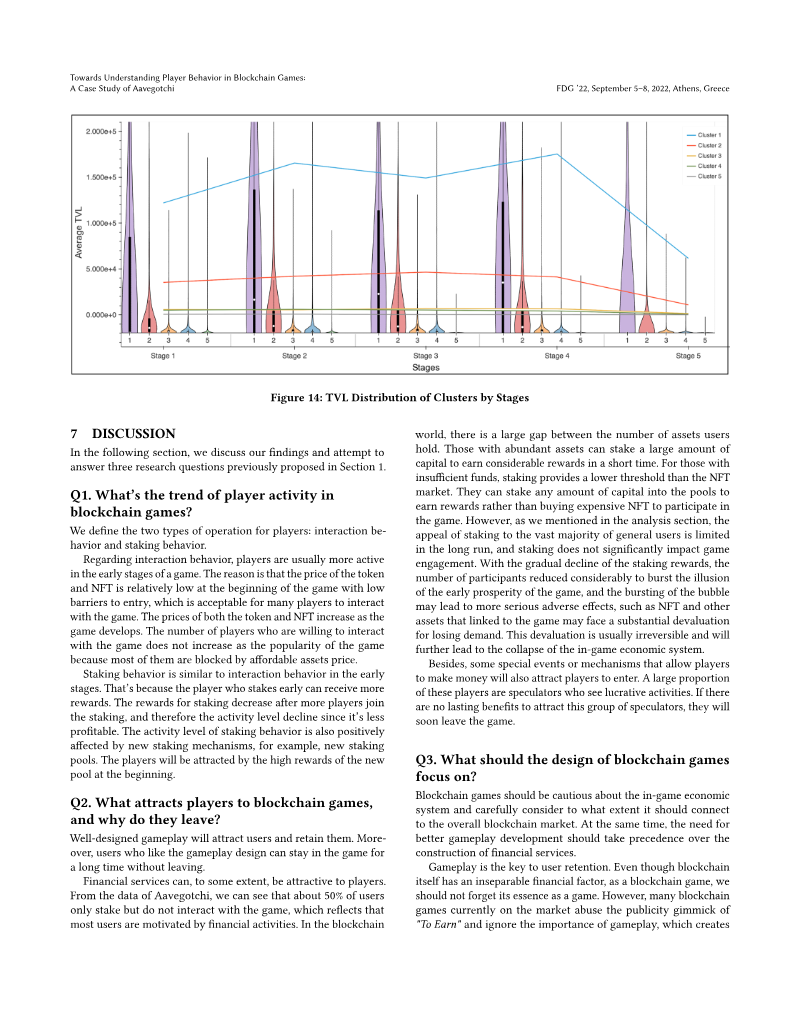
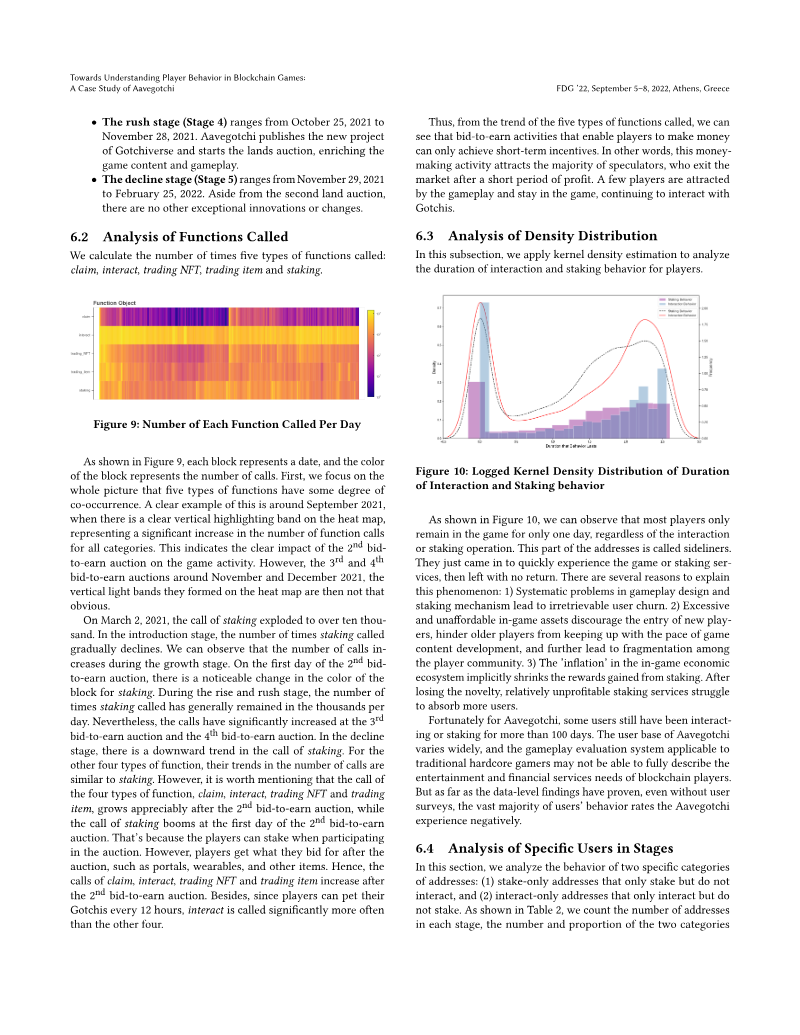
- 02Analysis of over 3.2 million transaction records from Aavegotchi shows that speculative mechanisms like bid-to-earn and staking often create unsustainable economic cycles.See it on page 7
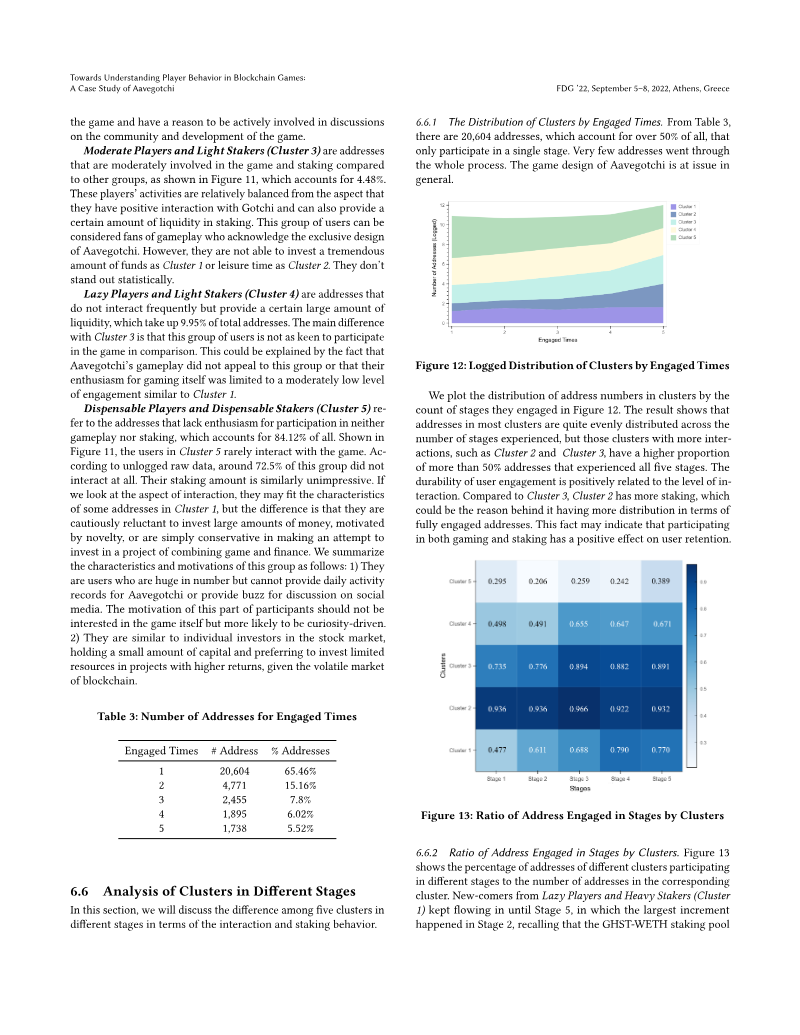
- 03Players who combine active gameplay with capital participation demonstrate significantly higher loyalty than those who engage solely in financial staking.See it on page 9
- 04Reliance on speculative incentives creates high attrition risk during cryptocurrency market downturns, as the ecosystem remains vulnerable to external market volatility.See it on page 12
- 05Long-term stability in blockchain gaming depends on a small core of highly active users rather than a broad base of speculative participants.See it on page 12
- 06Developers must prioritize high-quality, entertaining game loops over play-to-earn gimmicks to insulate the player base from systemic financial risks.See it on page 11
Ask AI about this report
Summary
The integration of financial incentives within blockchain gaming serves as a powerful catalyst for initial user acquisition, yet it remains an insufficient foundation for long-term ecosystem stability. An analysis of Aavegotchi, spanning one year of operational data and over 3.2 million transaction records, demonstrates that while mechanisms such as bid-to-earn auctions and staking services successfully attract speculators, they frequently lead to unsustainable economic cycles. The reliance on these financial levers often benefits early adopters at the expense of broader player retention, leaving the game vulnerable to the inherent volatility of the cryptocurrency market.
Quantitative clustering of user behavior reveals a distinct divide between speculative participants and those engaged in core gameplay. Retention metrics indicate that players who integrate active gameplay with capital participation exhibit significantly higher loyalty than those focused solely on financial staking. Because the game’s long-term stability relies on a small core of highly active users, the current reliance on speculative incentives creates a high risk of attrition during market downturns. Consequently, the data suggests that financial mechanisms should be viewed as secondary to the primary objective of developing compelling, high-quality gameplay experiences.
To achieve sustainable growth, developers must shift their focus away from play-to-earn gimmicks and toward balanced economic models that prioritize player engagement over speculative gain. The findings emphasize that while financial incentives are effective for short-term market activity, they cannot replace the necessity of a robust, entertaining game loop. Future success in the blockchain gaming sector depends on creating environments where gameplay quality serves as the primary driver for retention, thereby insulating the player base from the systemic risks associated with purely financialized gaming models.