1 free read left. Create a free account for unlimited reading + AI research.
Create free accountFinancial report Take-Two Interactive
1 free read left. Create a free account for unlimited reading + AI research.
Create free accountFinancial reportTake-Two Interactive
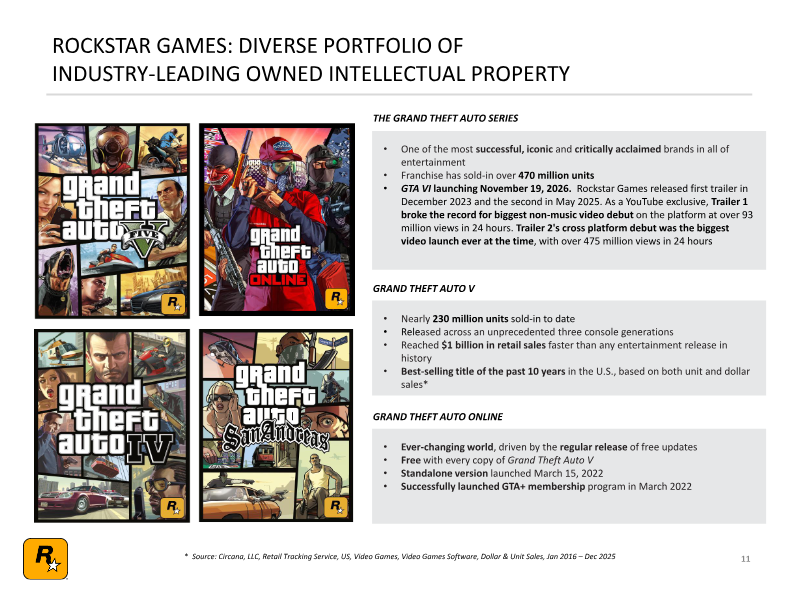
Take-Two Interactive’s 2012 annual report outlines a business strategy centered on the development of high-quality, internally owned intellectual property through its Rockstar Games and 2K labels. The company’s primary thesis is that long-term profitability is best achieved by focusing resources on a select number of high-profile, "hit" franchises, such as Grand Theft Auto, while simultaneously expanding into digital distribution, online content, and emerging Asian markets to mitigate the cyclical risks inherent in console hardware transitions.
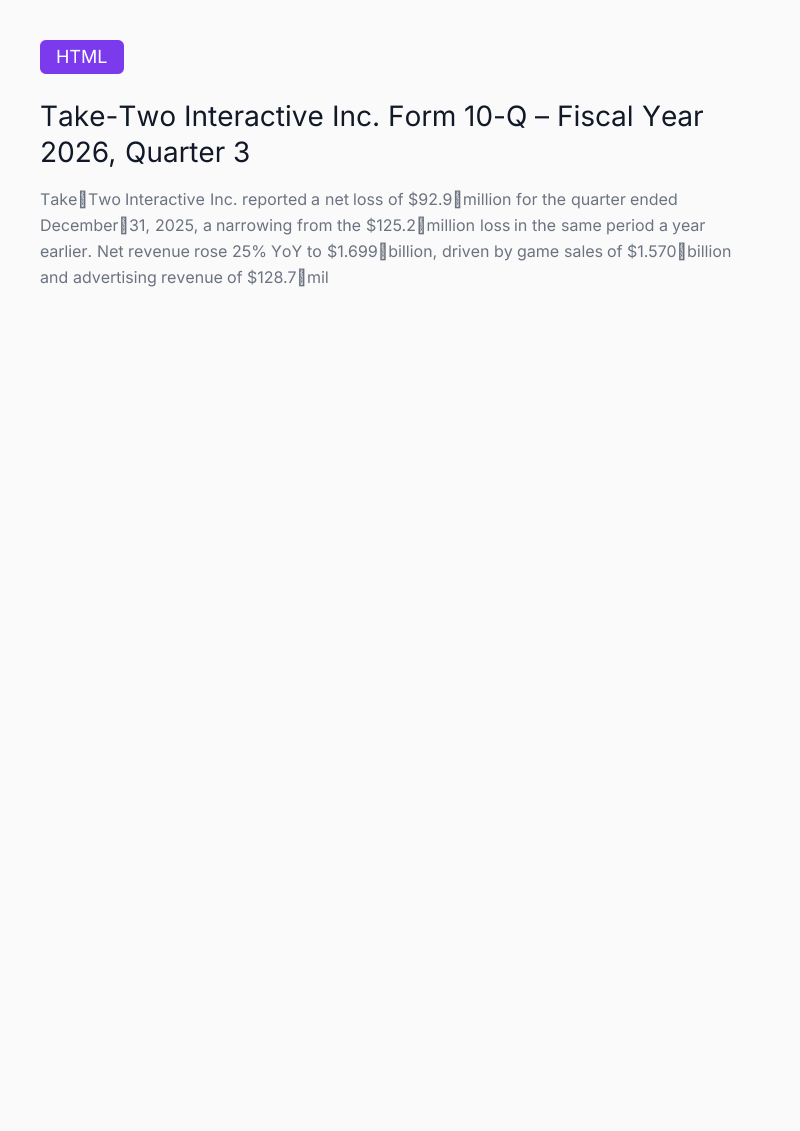
Financially, the fiscal year ending March 31, 2012, proved challenging, with the company reporting a net loss of $108.8 million on $825.8 million in revenue. This downturn represented a significant decline from the previous year, driven largely by the timing of product releases and a 27.4% decrease in net revenue as older titles reached the end of their lifecycle. Despite these losses, the company maintained a stable liquidity position, bolstered by a $420.3 million cash balance and the issuance of $250 million in convertible notes. The firm remains heavily reliant on a concentrated retail base, with its five largest customers accounting for nearly 44% of net revenue, and it faces intense competition from both major publishers and alternative entertainment forms.
The scope of the report covers Take-Two’s global operations, which include significant international exposure, accounting for 45.6% of total earnings. Operational risks are extensive, ranging from the high costs of long development cycles and dependence on third-party hardware platforms to potential security breaches and regulatory scrutiny. To manage these complexities, the company employs rigorous internal controls, sophisticated accounting models for asset impairment and stock-based compensation, and foreign currency hedging. Ultimately, the company’s performance remains highly sensitive to the release schedule of its top-tier titles and the broader economic conditions affecting consumer discretionary spending.
Take-Two Interactive · 2026
Take-Two Interactive · 2026
Take-Two Interactive · 2026
Take-Two Interactive · 2026


Take-Two Interactive · 2026


Take-Two Interactive · 2026


Take-Two Interactive · 2026
Take-Two Interactive · 2026


Take-Two Interactive · 2025
Take-Two Interactive · 2025


Take-Two Interactive · 2025


Take-Two Interactive · 2025
The Game Business · 2026