LegalPCF Group
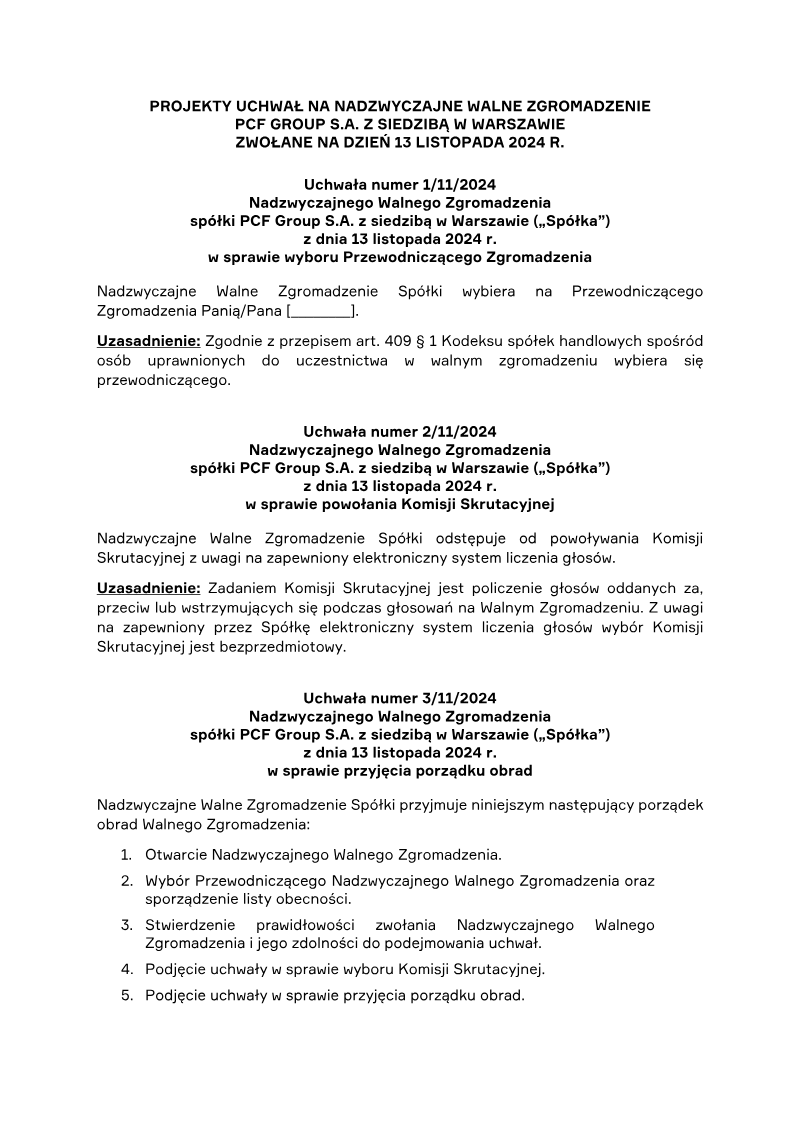
Projekty Uchwał na Nadzwyczajne Walne Zgromadzenie
13 Nov 202431 pages~54 min full read
PCF Group S.A. has initiated a strategic update to its corporate governance and operational framework, centered on an Extraordinary General Meeting scheduled for November 2024. A primary objective of these changes is the expansion of the company’s statutory business activities to include management consultancy, a move designed to streamline advisory services within the capital group. This operational shift is accompanied by the formalization of leadership roles, including the confirmation of Lidia Banach-Hoheker to the Supervisory Board and the maintenance of specific personal rights for major shareholder Sebastian Wojciechowski, who retains the authority to appoint the Board President provided he holds a 25% voting stake.
The governance structure is further defined by a share capital of 718,805.42 PLN and a conditional capital increase intended for future stock options. Control remains concentrated through a Group of Authorized Shareholders who hold the right to appoint the Board Chairman and a majority of the Supervisory Board. To ensure compliance with public interest entity regulations, the board must include at least two independent members and a dedicated audit committee. These structural provisions are reinforced by a revised remuneration policy that aligns executive compensation with the company’s long-term financial health and the competitive standards of the global gaming industry.
The updated remuneration framework introduces a performance-linked model for the Management Board, capping variable pay at five times the annual fixed salary. Performance is measured against specific financial and qualitative benchmarks, including net profit, share price performance, and game quality metrics. For the Supervisory Board, the policy now includes additional compensation for committee participation. While the current structure focuses on fixed pay and non-monetary benefits like liability insurance and medical packages, it establishes a foundation for future share-based incentive programs. These comprehensive updates aim to balance internal stability with the flexibility required to navigate the evolving capital and gaming markets.
PCF Group · 2026
PCF Group · 2026
PCF Group · 2026
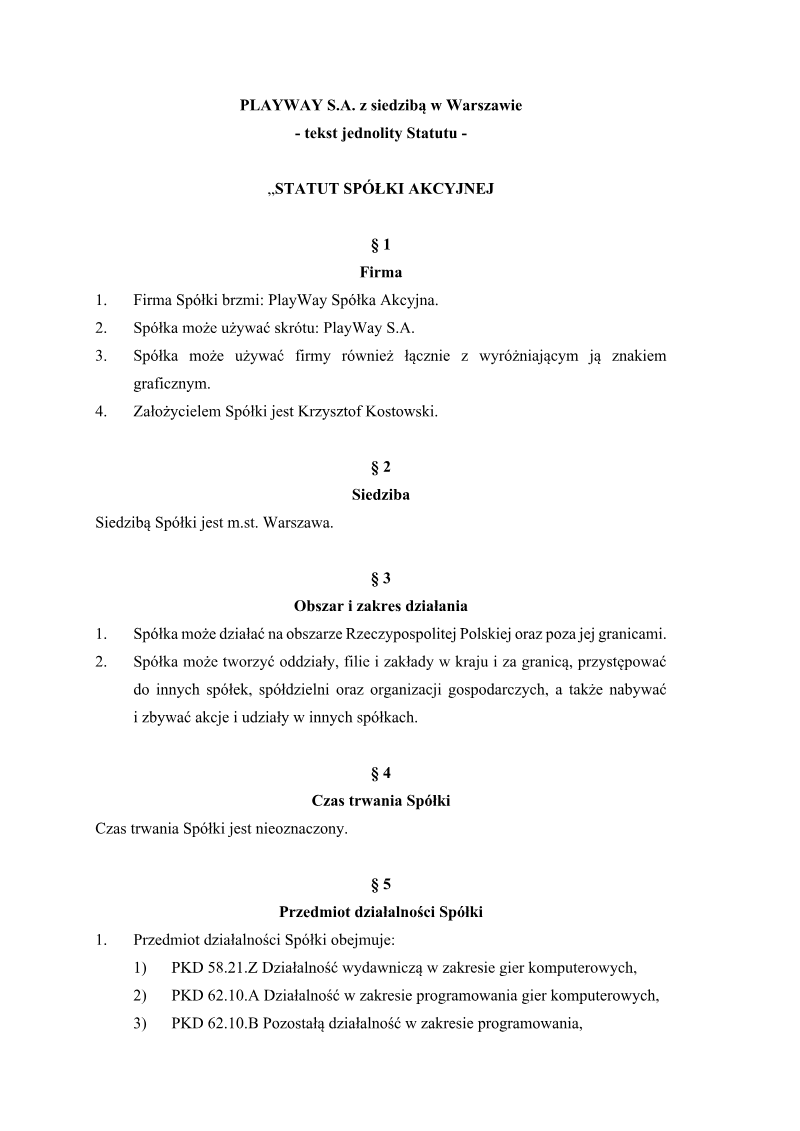
PlayWay · 2026
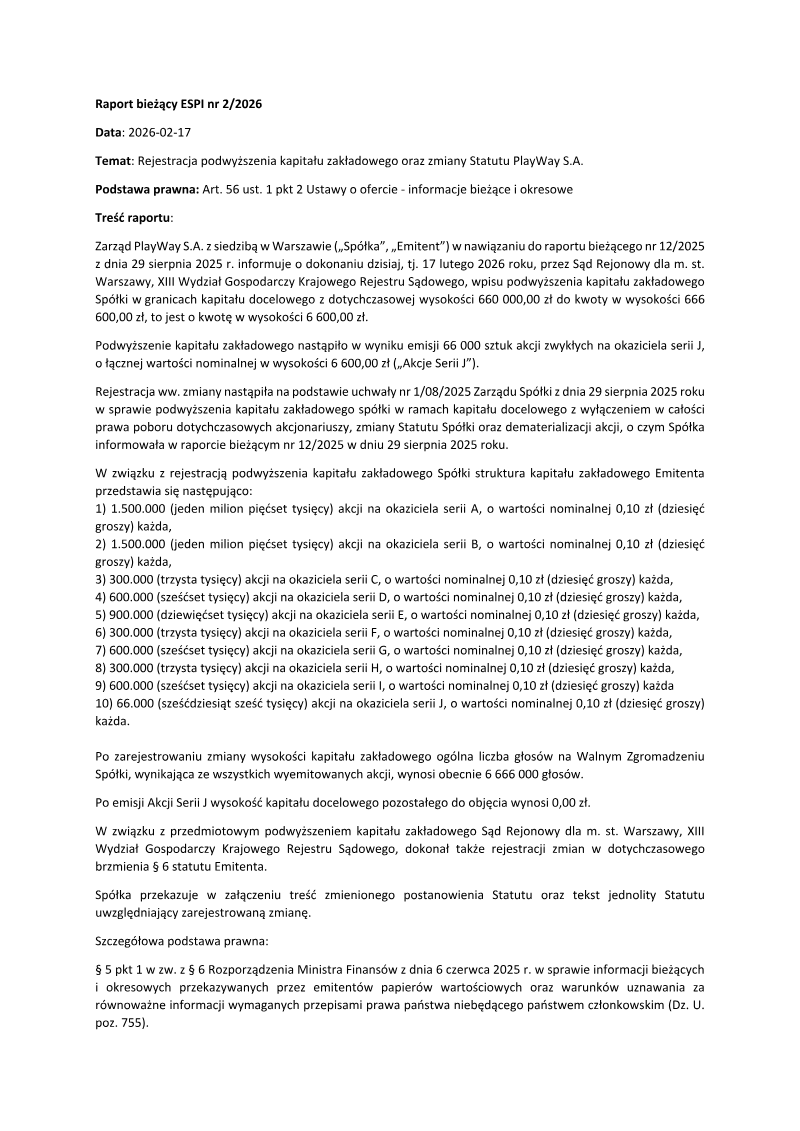
PlayWay · 2026
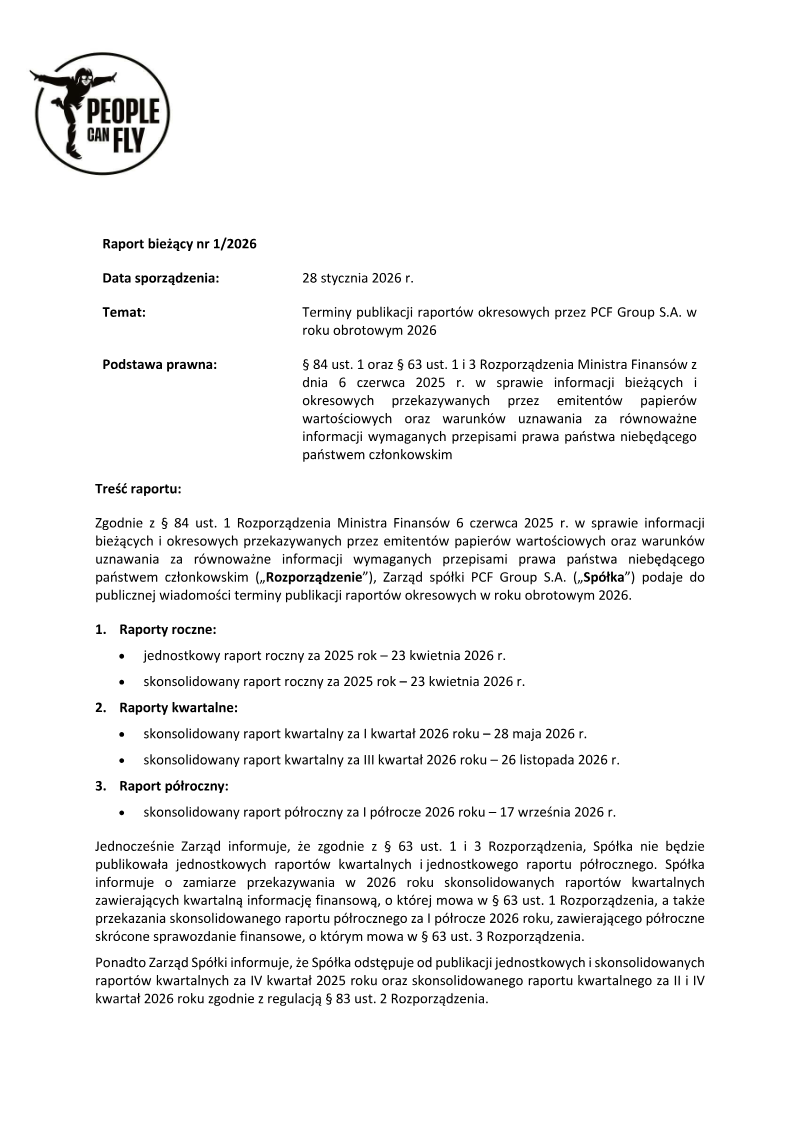
PCF Group · 2026
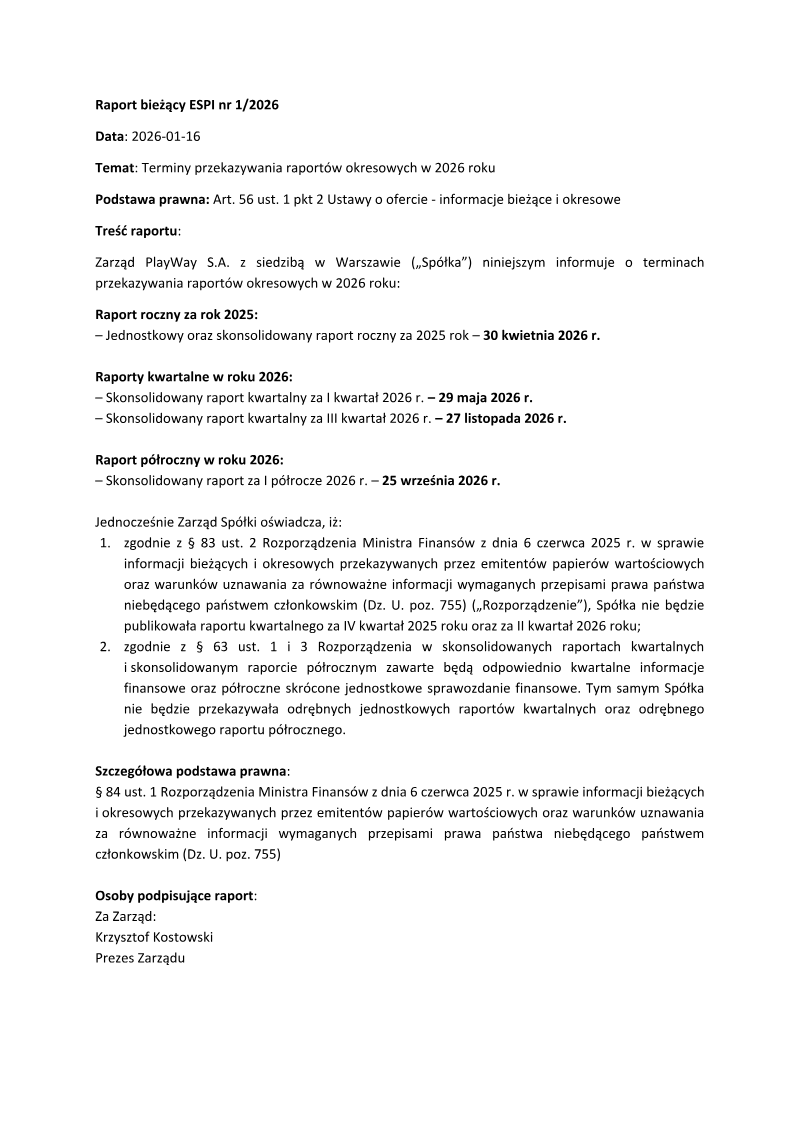
PlayWay · 2026
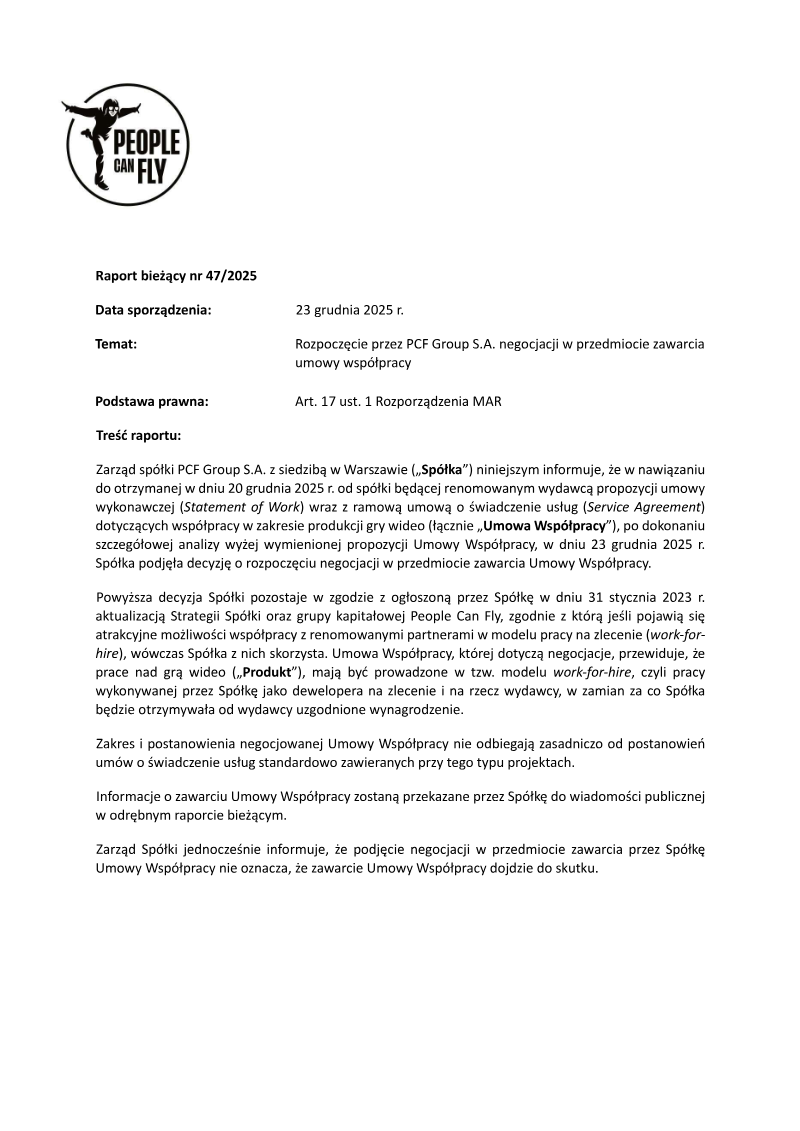
PCF Group · 2025
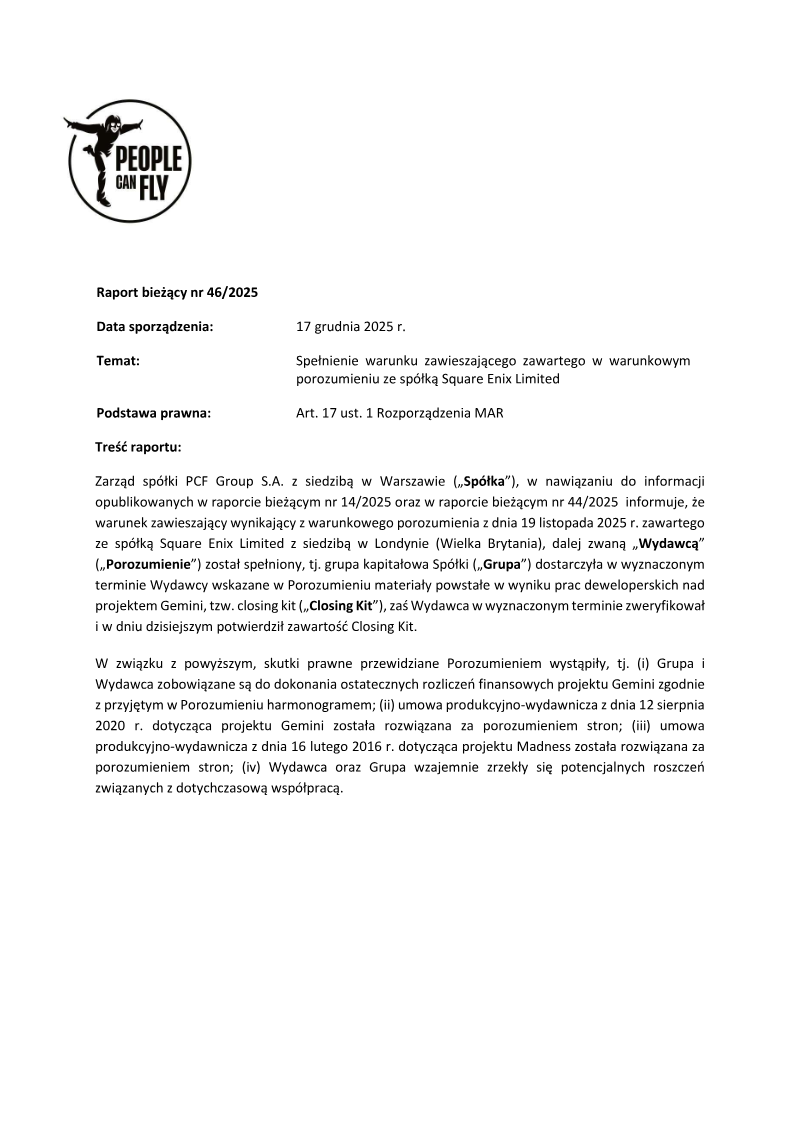
PCF Group · 2025
PCF Group · 2025
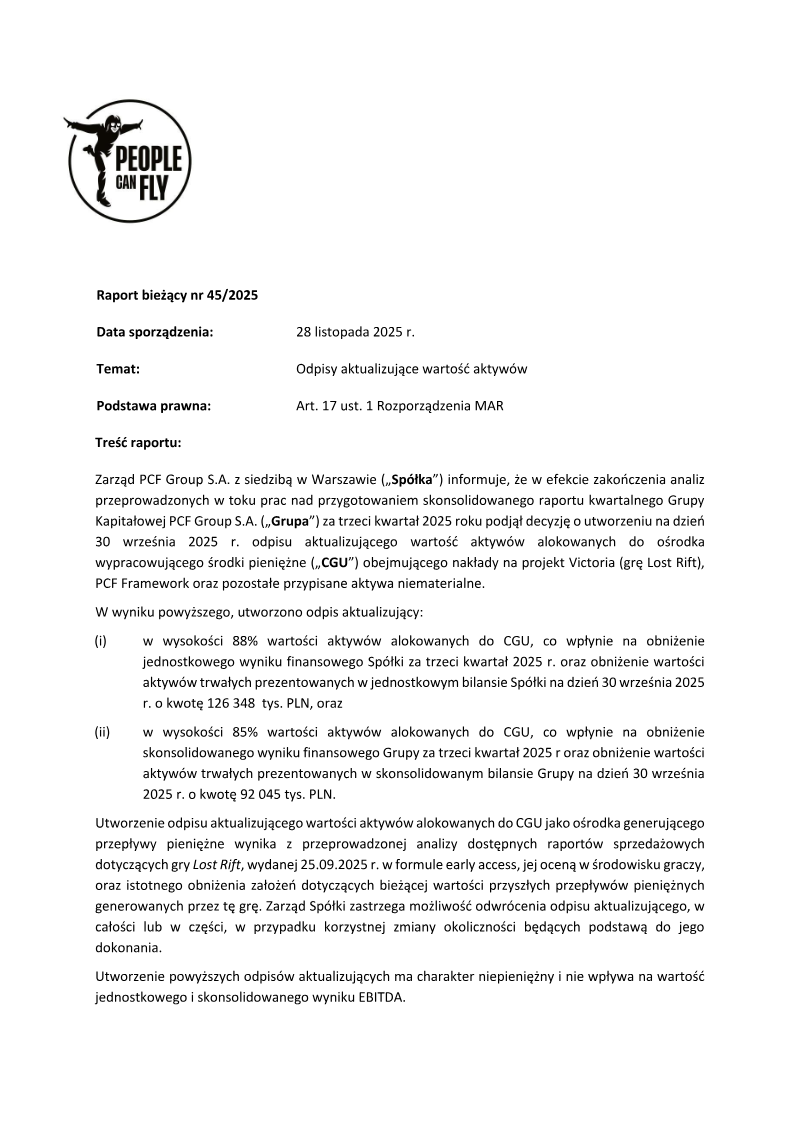
PCF Group · 2025
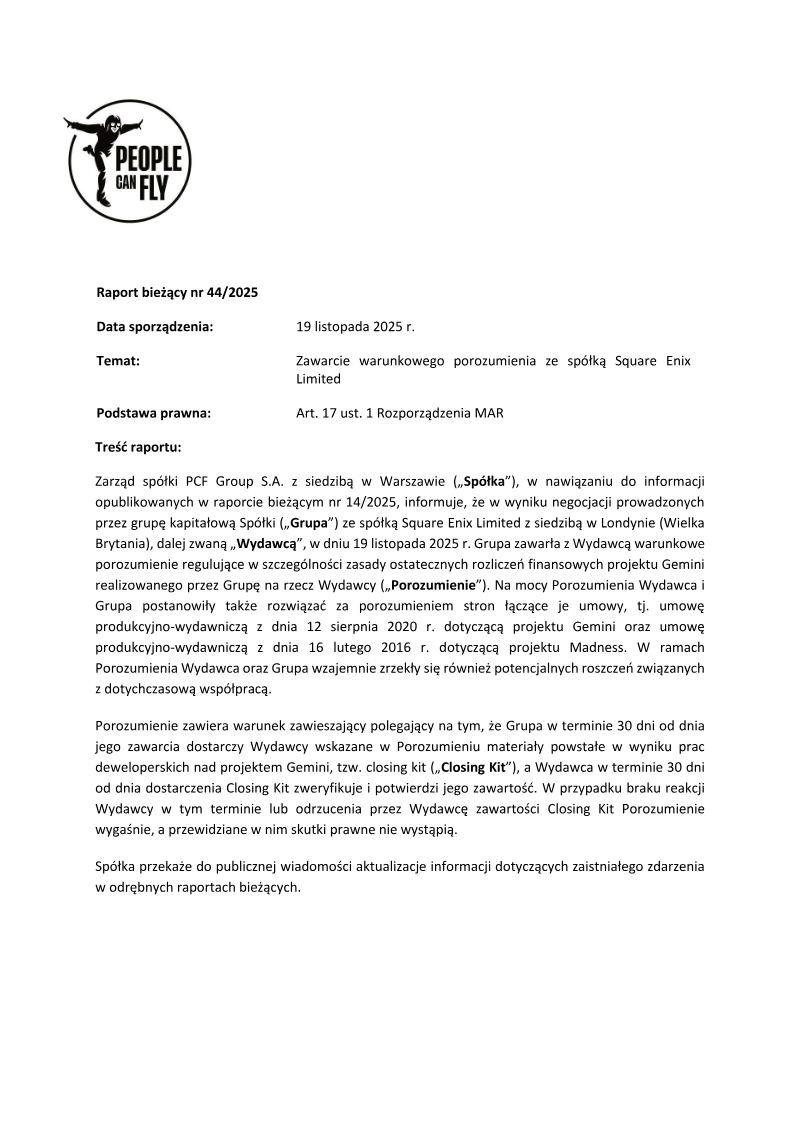
PCF Group · 2025
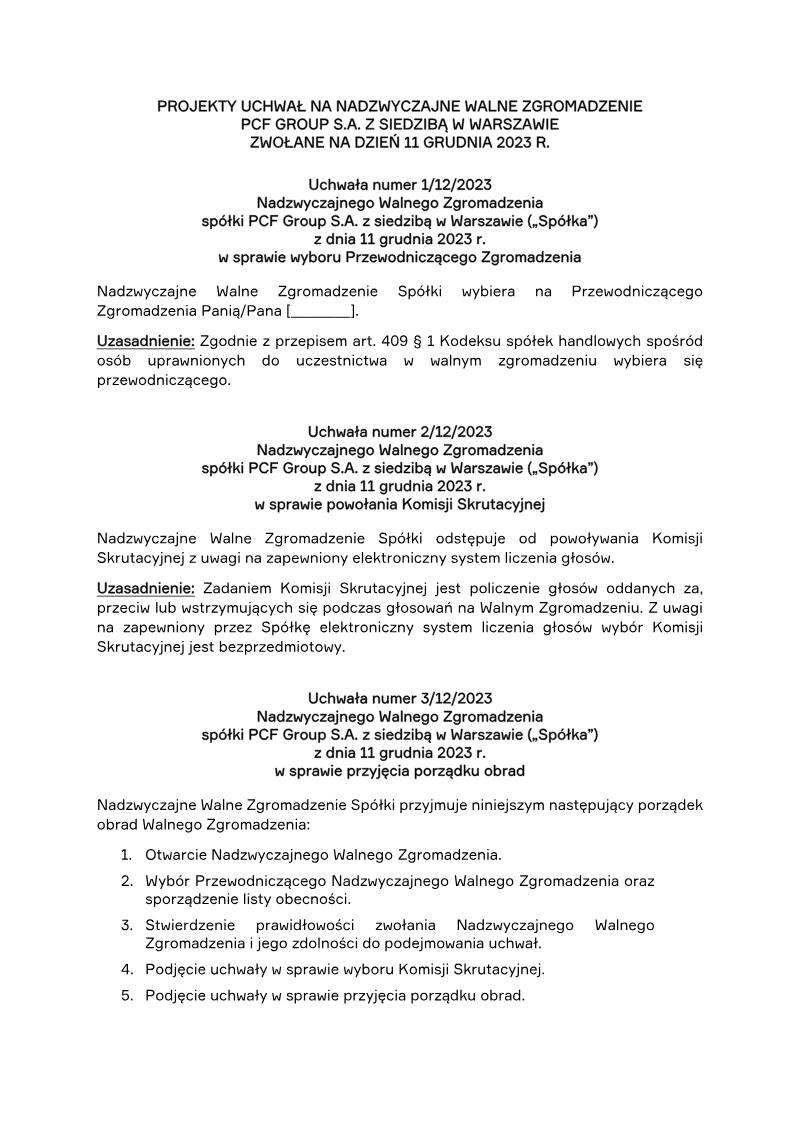
PCF Group · 2023
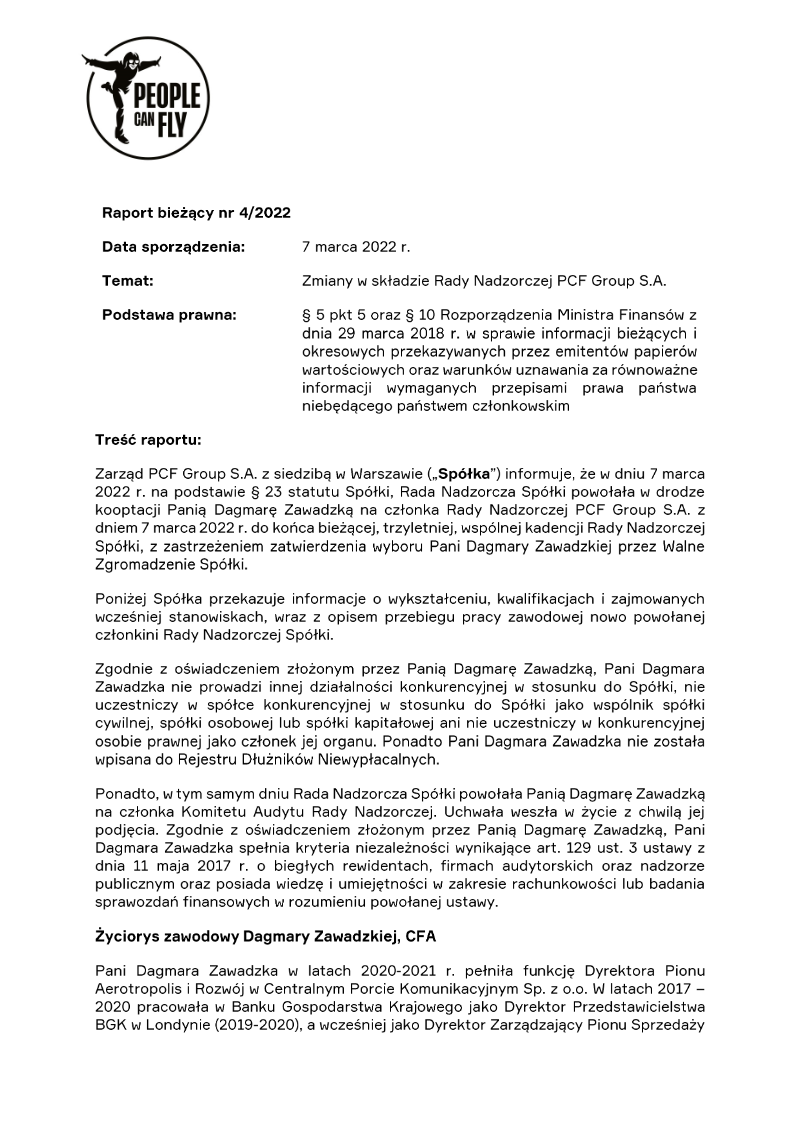
PCF Group · 2022
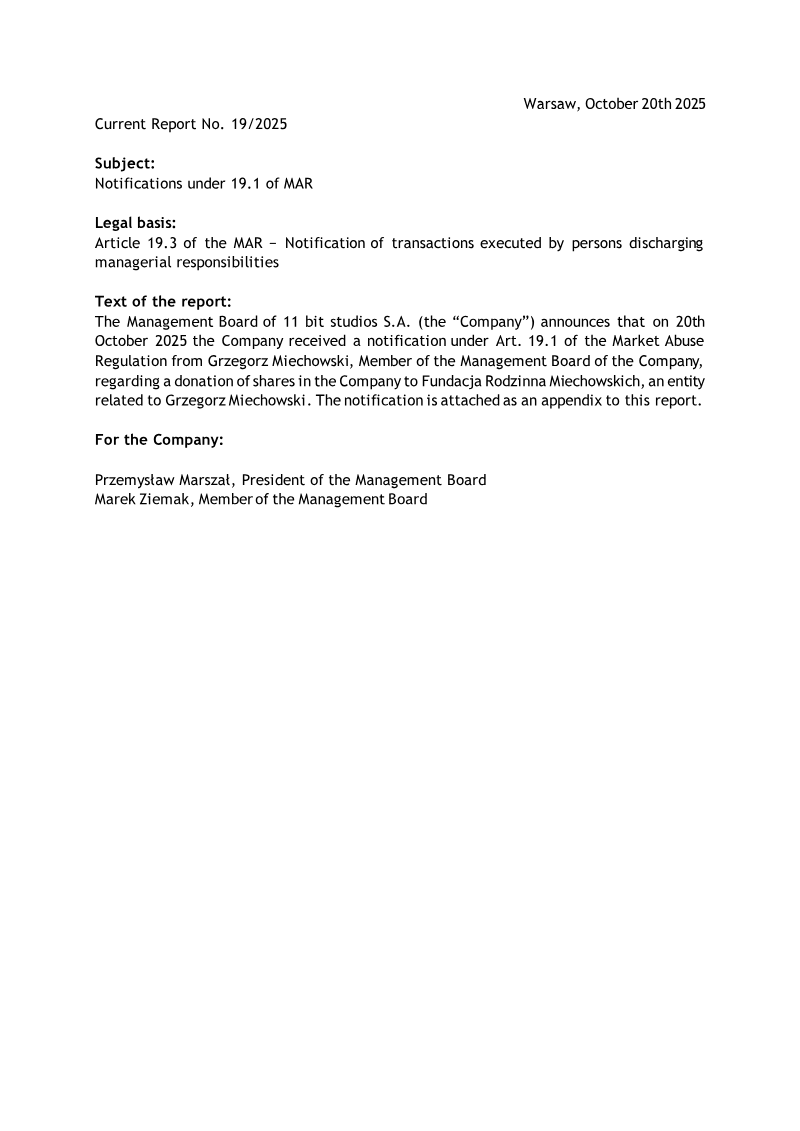
11 bit studios · 2025
PCF Group · 2025
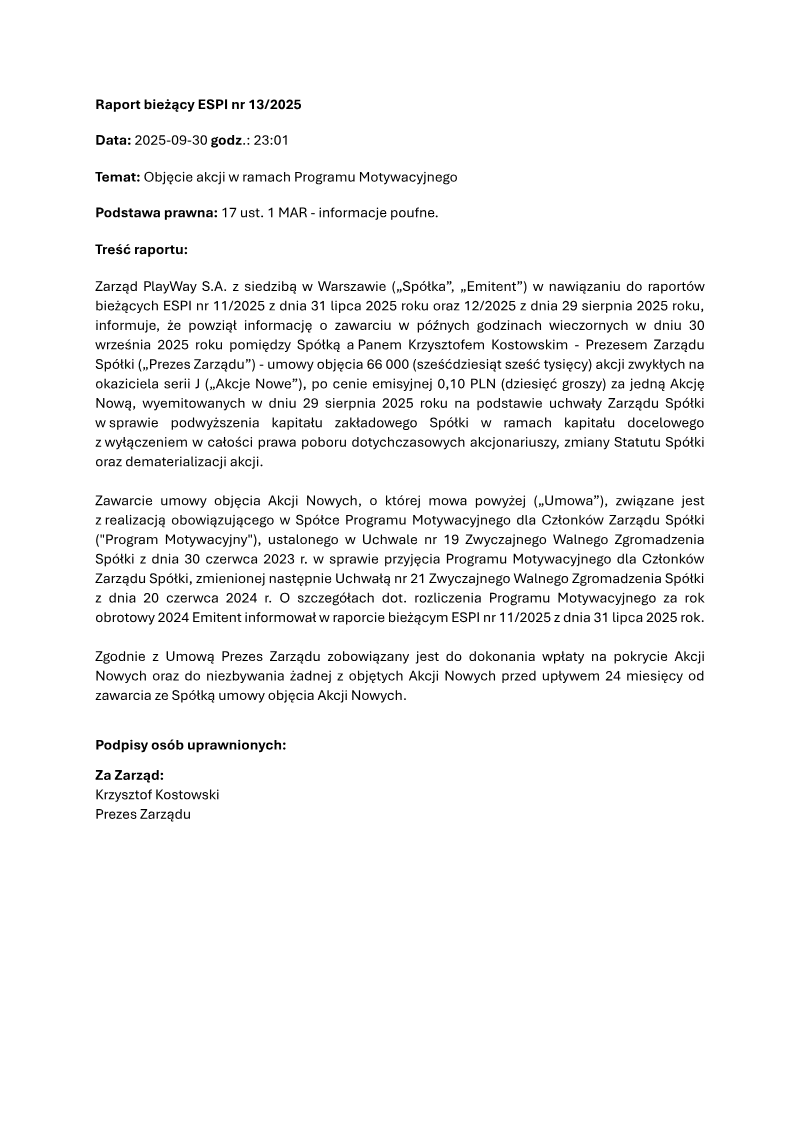
PlayWay · 2025
PCF Group · 2025
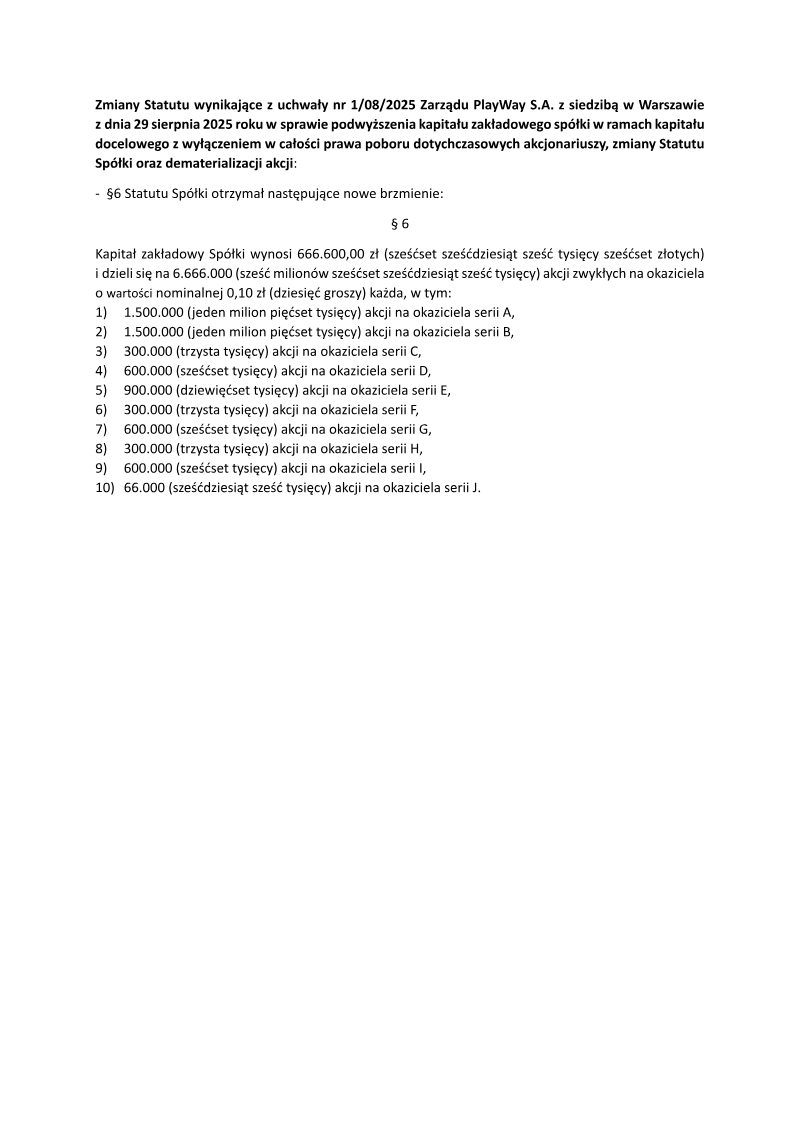
PlayWay · 2025
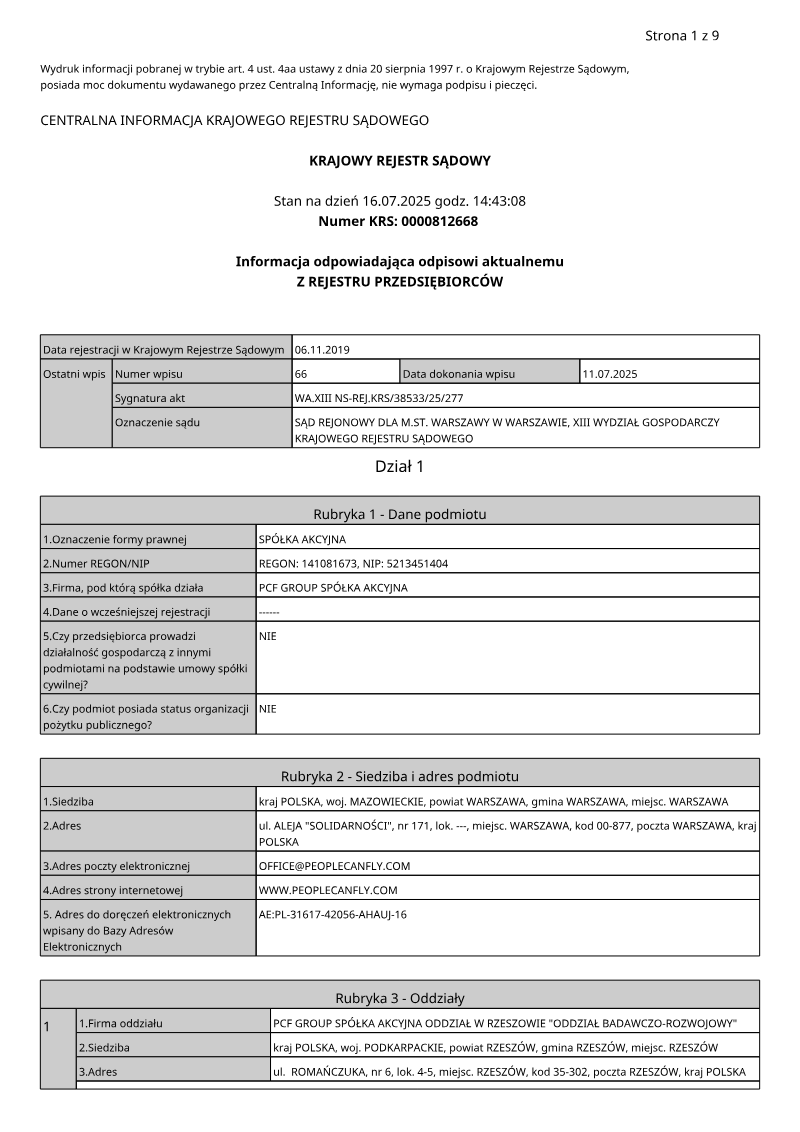
Centralna Informacja Krajowego Rejestru Sądowego · 2025
PCF Group · 2025
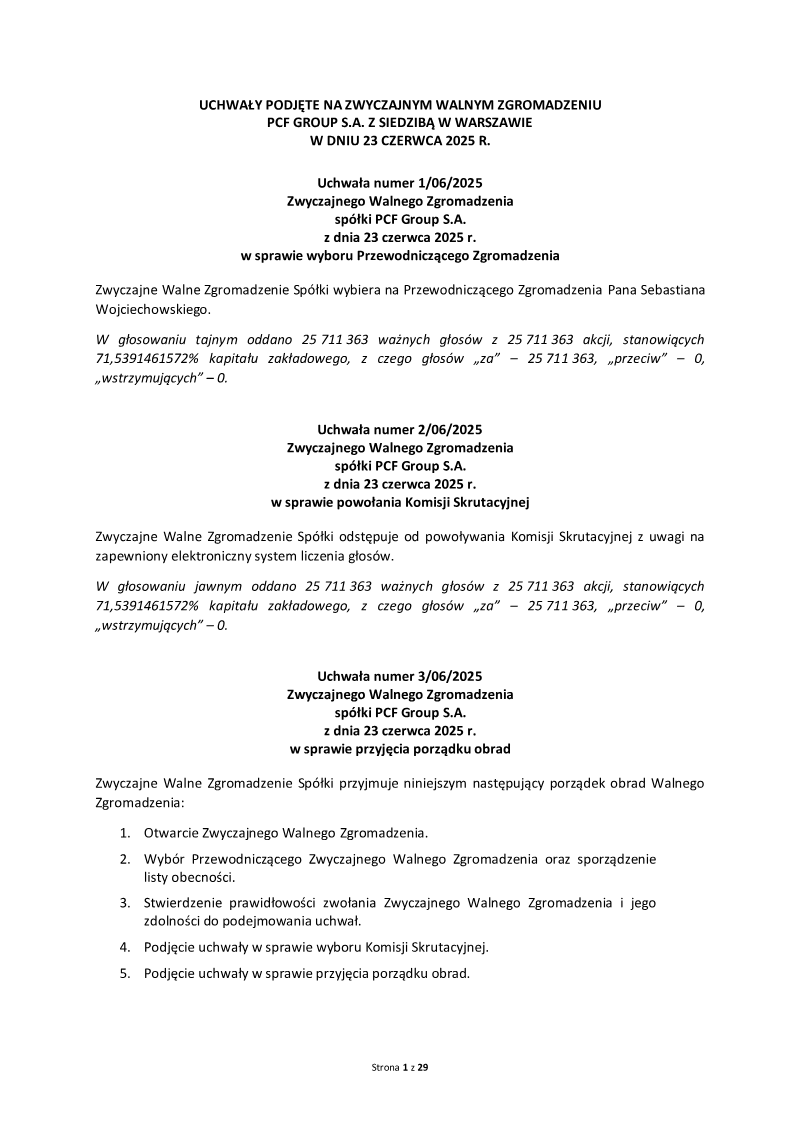
PCF Group · 2025
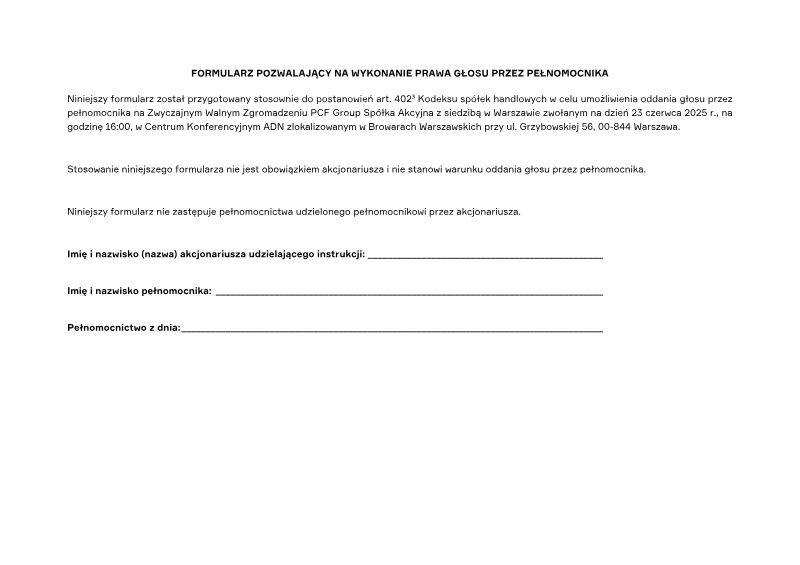
PCF Group · 2025
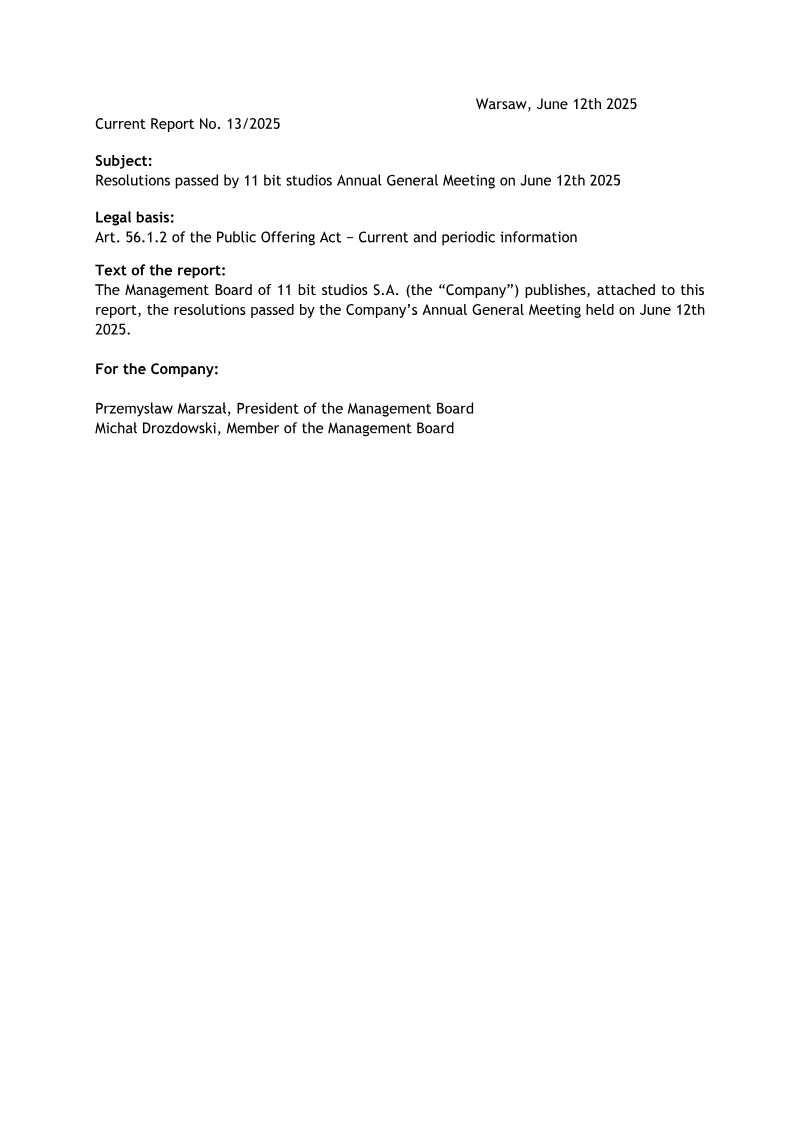
11 bit studios · 2025