Legal11 bit studios
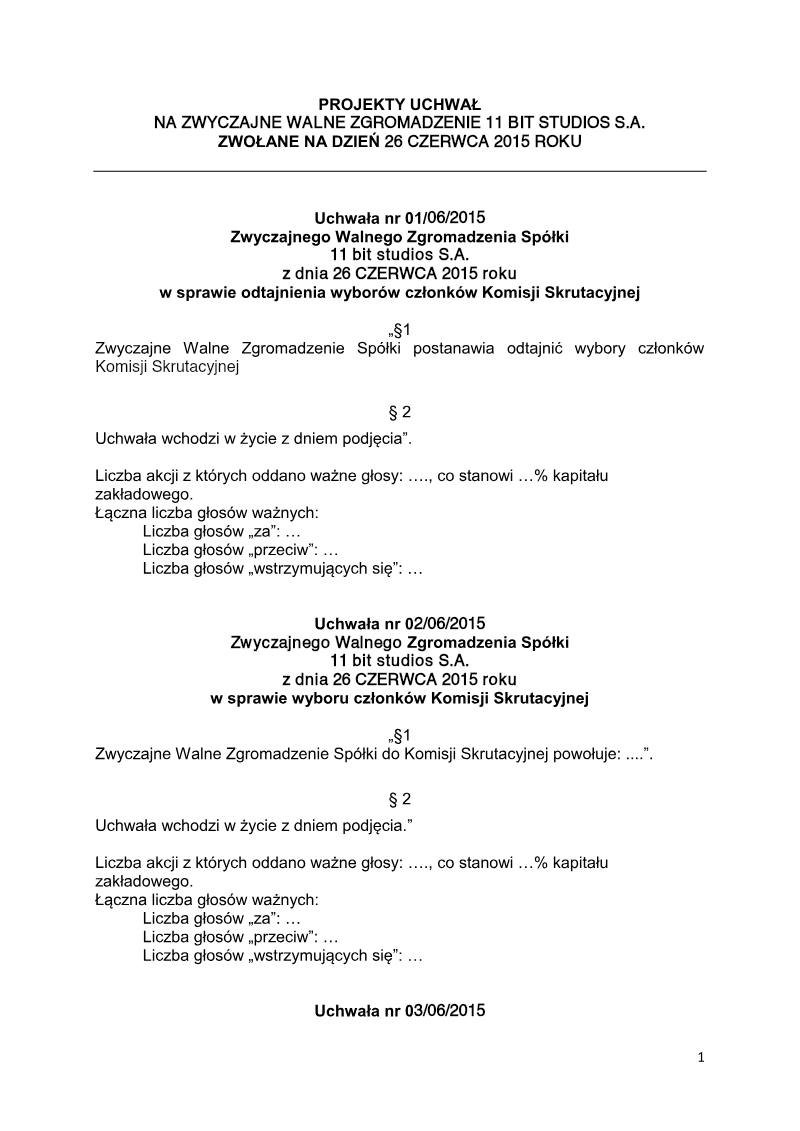
Draft Resolutions for the Ordinary General Meeting — 11 bit studios S.A. (June 2015)
26 Jun 201521 pages~28 min full read
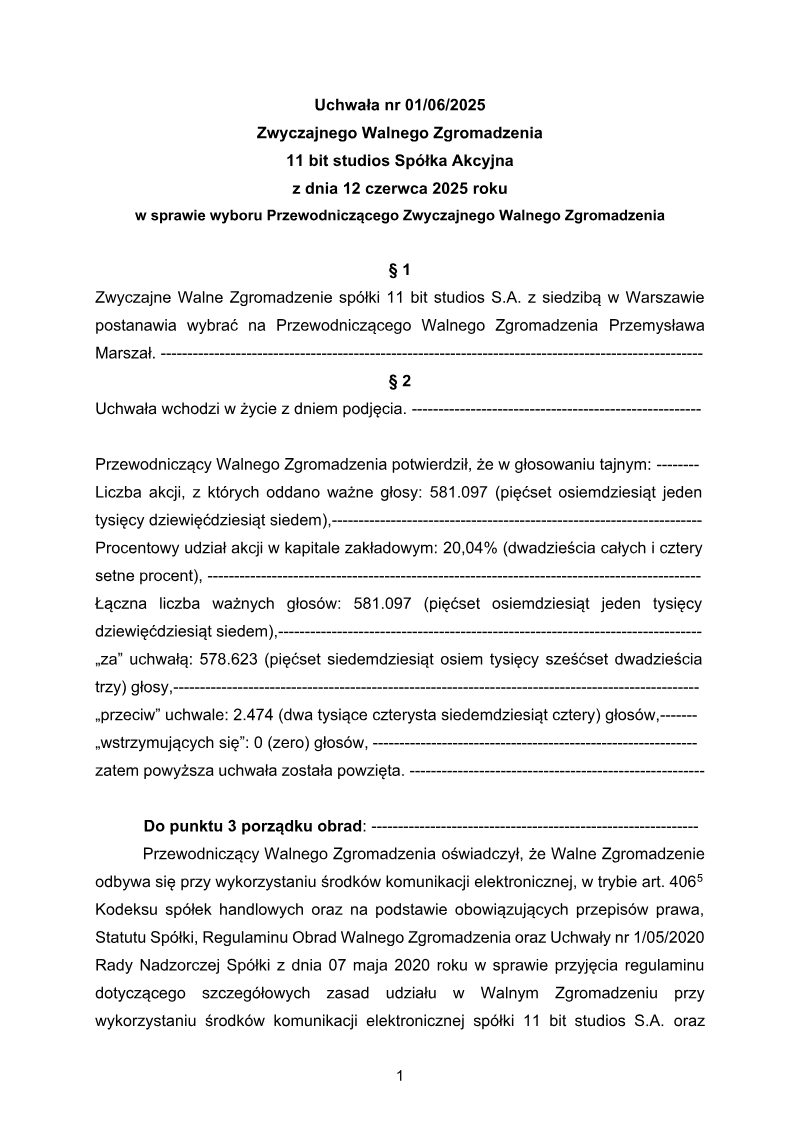
The 2014 fiscal year for 11 bit studios S.A. concluded with a strategic pivot toward institutional growth and enhanced financial transparency. Central to this transition was the decision to allocate the entirety of the 2014 net profit to reserve capital, reinforcing the company’s internal funding for future development. This period also marked the formal discharge of the Management and Supervisory Boards, signaling shareholder approval of the company’s operational performance and governance during a pivotal year in its corporate history.
A primary objective for the company involves the transition from alternative trading platforms to the main floor of the Warsaw Stock Exchange. To facilitate this, the company authorized the admission of share series A through F to regulated trading, contingent upon the filing of a formal prospectus. This move necessitates a shift in accounting practices, specifically the adoption of International Financial Reporting Standards (IFRS/IAS) for both the individual company and its capital group effective January 1, 2015. These measures align the firm’s reporting with global benchmarks required for major market listings.
To support this increased regulatory burden, the five-member Supervisory Board assumed the functions of an Audit Committee. This body is tasked with rigorous oversight of financial reporting, internal risk management systems, and the independence of external auditors. By integrating these oversight functions directly into the board’s mandate, the company established a framework for heightened fiscal accountability and compliance. These structural changes collectively prepare the organization for the increased scrutiny and liquidity associated with a regulated public market environment.
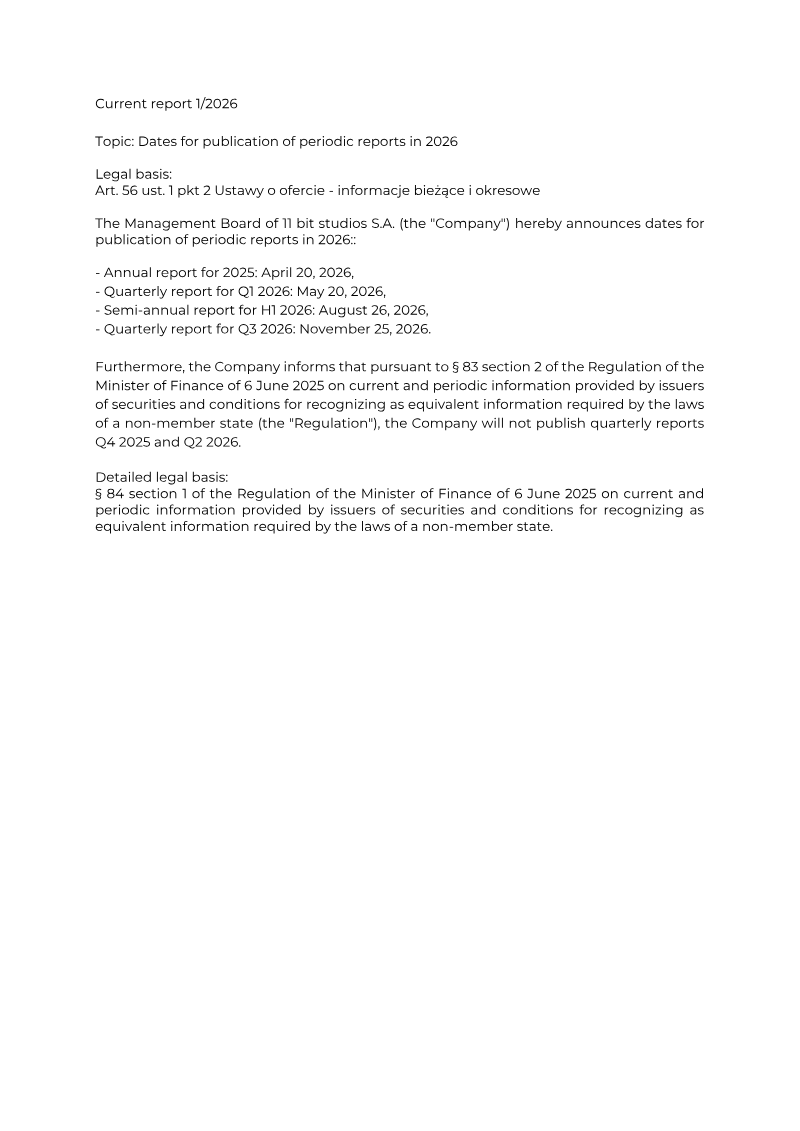
11 bit studios · 2026
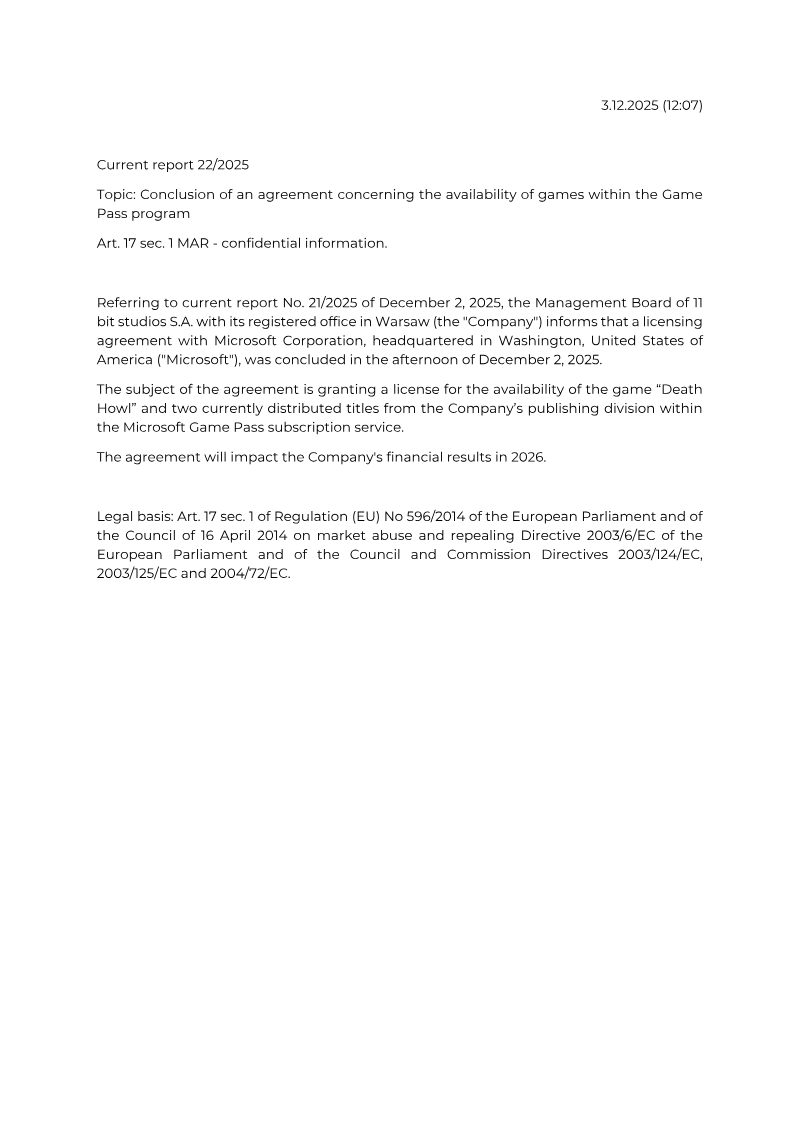
11 bit studios · 2025
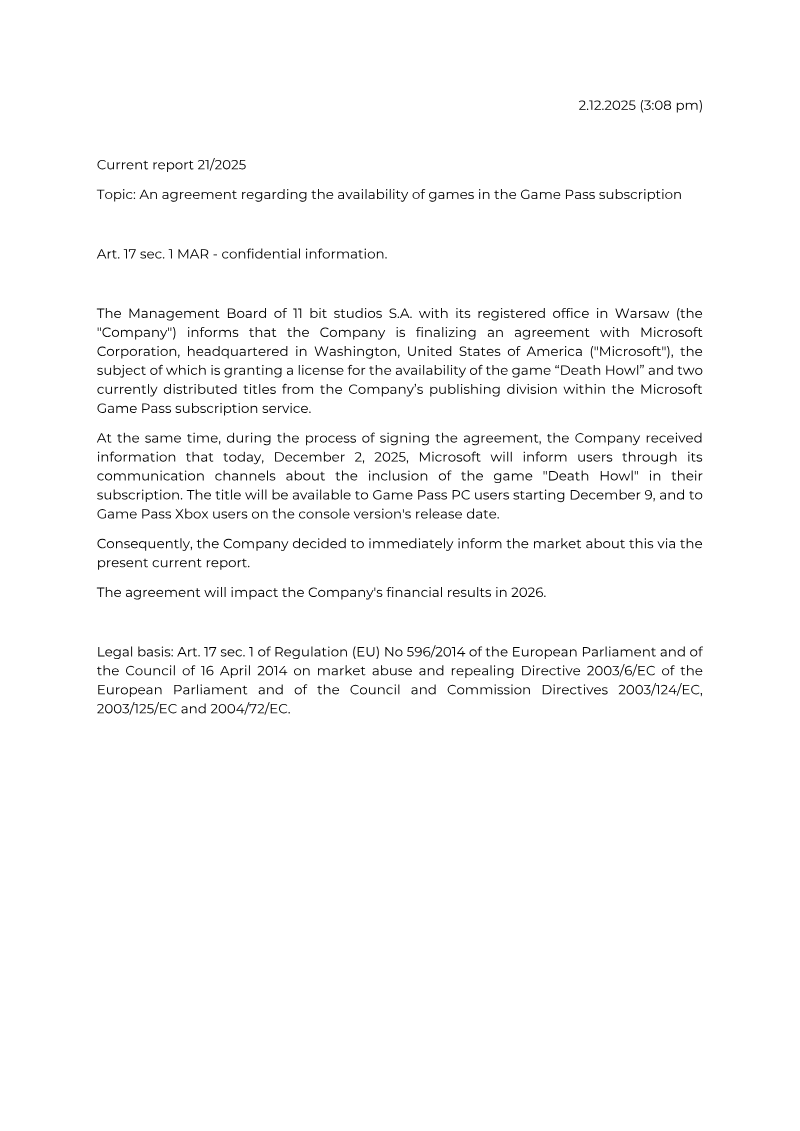
11 bit studios · 2025
11 bit studios · 2025
11 bit studios · 2025
PCF Group · 2025
11 bit studios · 2025
11 bit studios · 2025
11 bit studios · 2025
11 bit studios · 2025
11 bit studios · 2025
11 bit studios · 2025
PlayWay · 2026
11 bit studios · 2025
11 bit studios · 2025
11 bit studios · 2025
11 bit studios · 2025
11 bit studios · 2025
11 bit studios · 2024
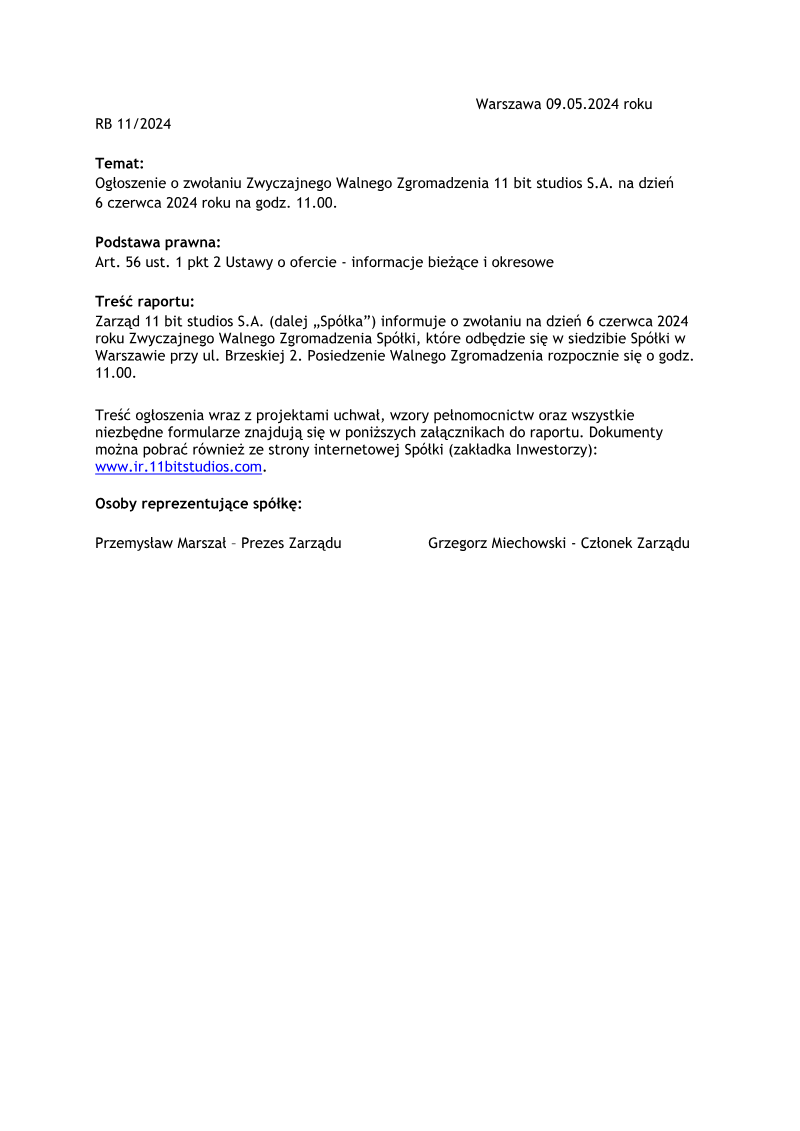
11 bit studios · 2024
11 bit studios · 2024
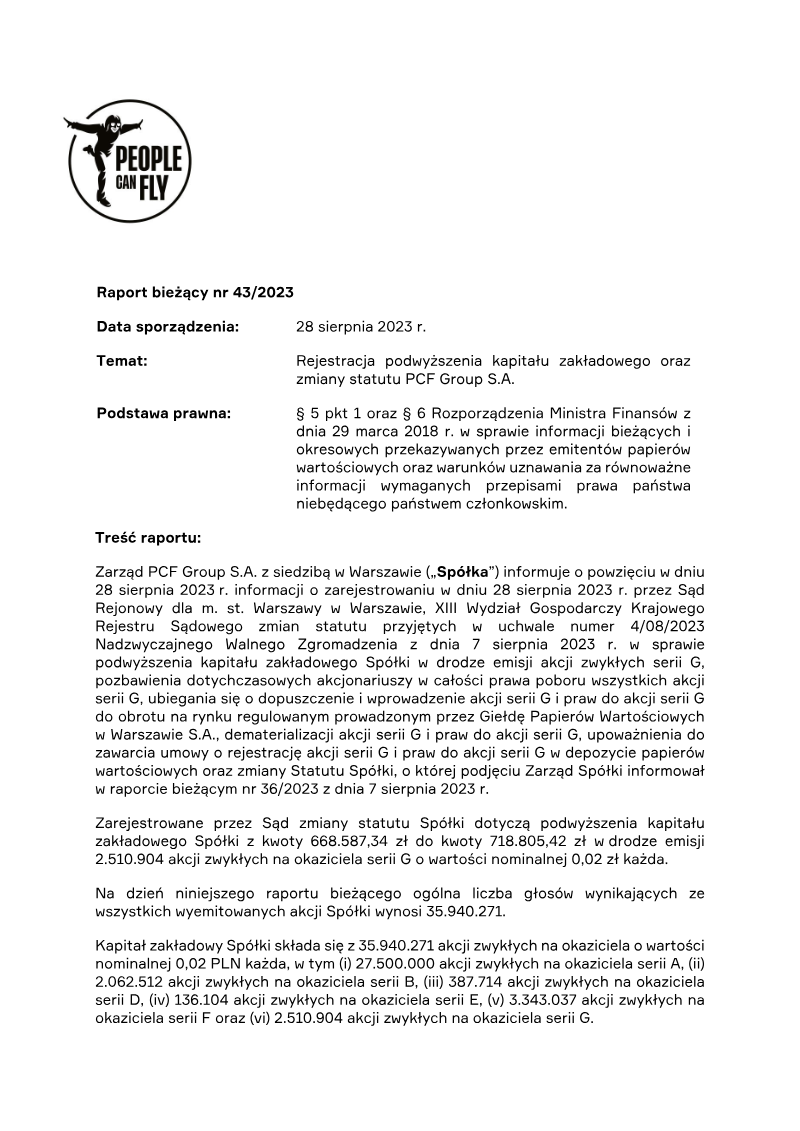
PCF Group · 2023
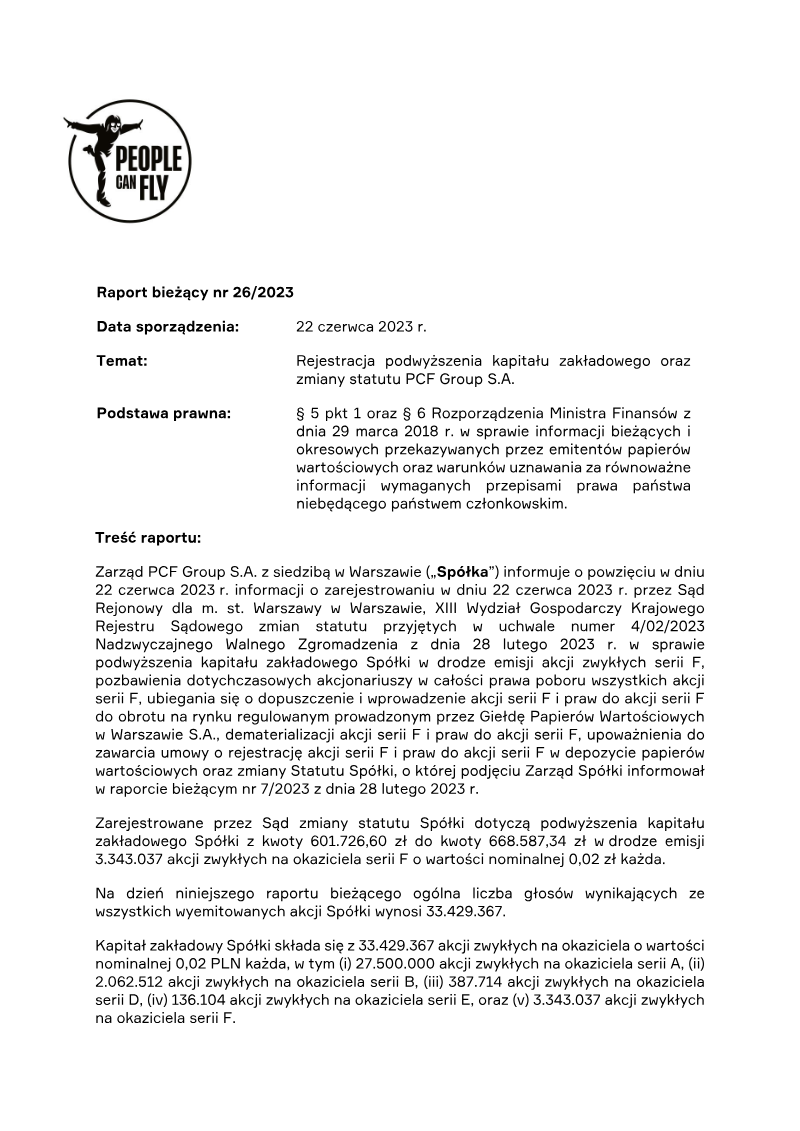
PCF Group · 2023
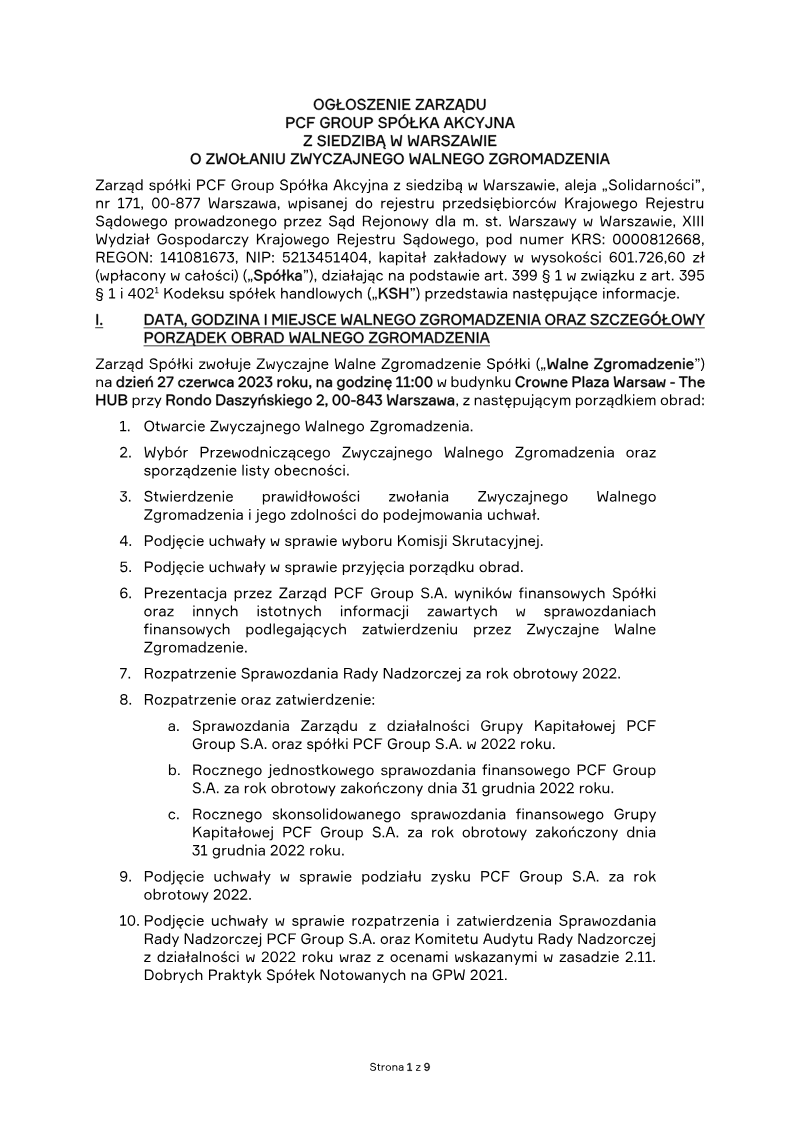
PCF Group · 2023