1 free read left. Create a free account for unlimited reading + AI research.
Create free accountFinancial report People Can Fly Group
1 free read left. Create a free account for unlimited reading + AI research.
Create free accountFinancial reportPeople Can Fly Group
The People Can Fly Group’s H1 2022 financial presentation outlines the company’s strategic progress and fiscal performance as it transitions toward becoming a leading independent global game development studio. The core strategic objective remains the release of one internally produced game annually starting in 2024, utilizing a mix of publisher-supported and self-publishing models. The company is actively expanding its capabilities through the exploration of new genres, the development of proprietary software, and strategic acquisitions, such as the integration of Incuvo to bolster its virtual reality development capacity.
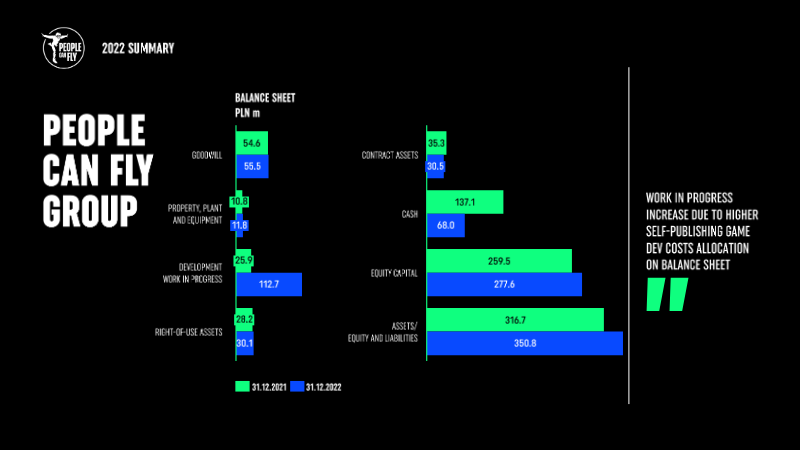
Financial results for the first half of 2022 demonstrate steady growth compared to the same period in 2021. Revenue increased by 17.2% to 90.6 million PLN, while net profit rose by 17.5% to 25.5 million PLN. EBITDA remained stable at 29.0 million PLN, with an adjusted EBITDA of 29.7 million PLN, representing a 7.6% increase. The balance sheet reflects significant investment in future growth, highlighted by a 152.9% increase in development work in progress, which reached 65.6 million PLN. Total assets grew by 17.5% to 372.2 million PLN, supported by an equity capital increase of 9.1%.
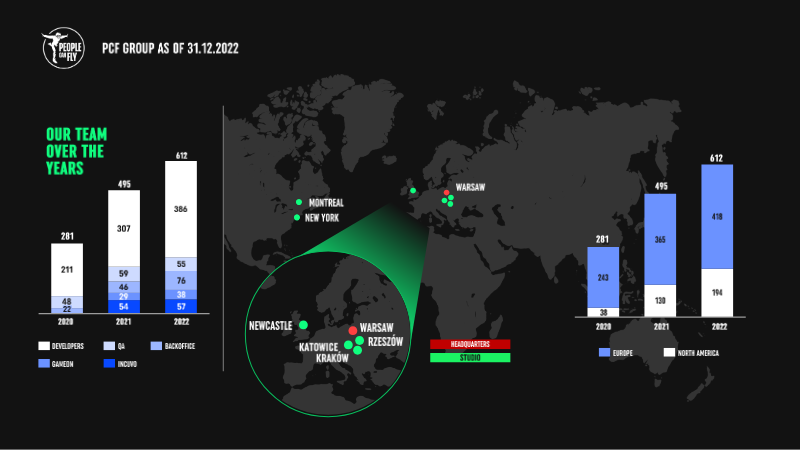
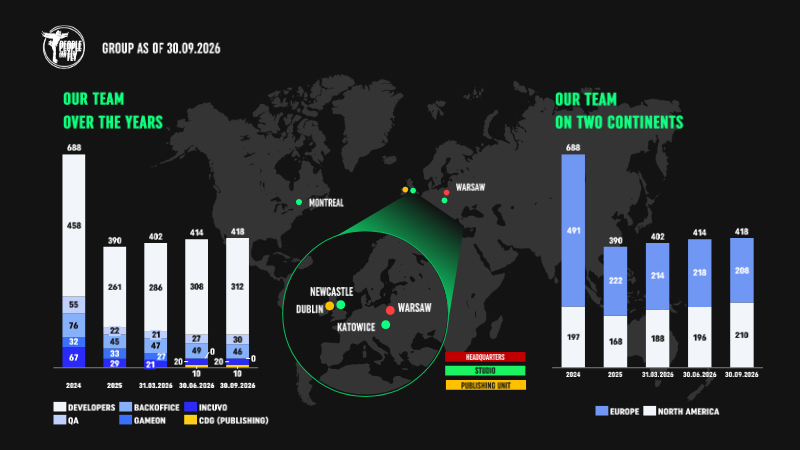
The organization has scaled its workforce significantly, growing from 495 employees at the end of 2021 to 580 by June 30, 2022. This expansion is supported by a distributed operational model that includes headquarters in Warsaw and multiple studios across Poland and North America, alongside a robust remote work infrastructure. The current project portfolio consists of seven titles, including two VR-focused projects, with five of these currently in the pre-production phase. These efforts underscore a commitment to scaling production capacity and diversifying the company’s intellectual property holdings to ensure long-term sustainability in the competitive global gaming market.

People Can Fly Group · 2025

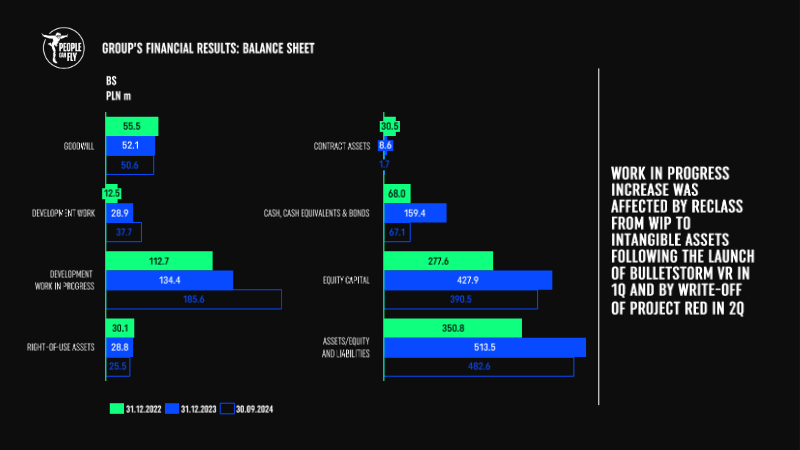

People Can Fly Group · 2024

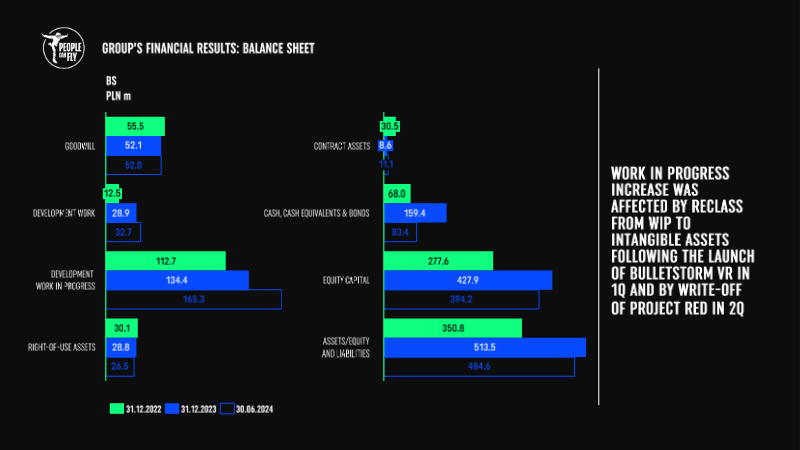

People Can Fly Group · 2024
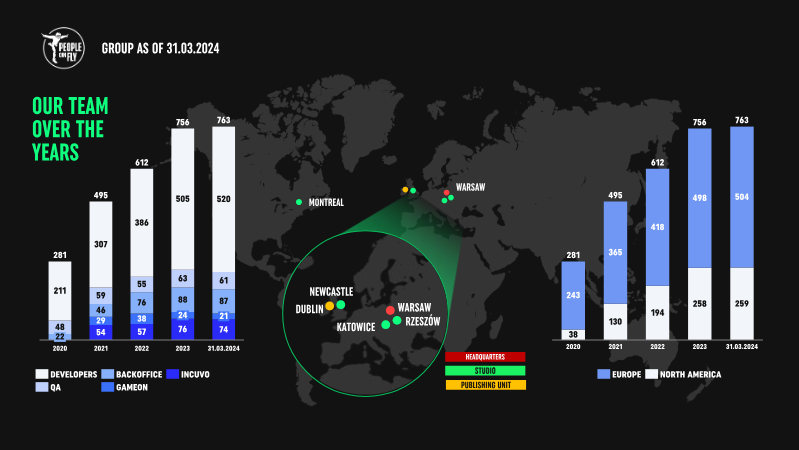


People Can Fly Group · 2024

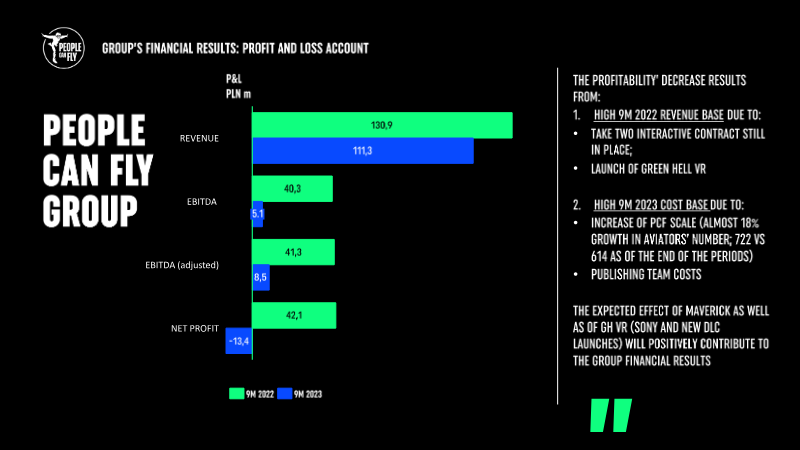

People Can Fly Group · 2023
People Can Fly Group · 2023


People Can Fly Group · 2021
PCF Group · 2026