More on Serious Games
View all

Whitepaper
eJamar and Exergames for Hand Rehabilitation: Four Case Studies
Serious Games Society · 2026

Whitepaper
Investigating the Effects of Feedback Modality on Sustained Attention and Performance in a Serious Game: A Pilot Study
Serious Games Society · 2025
Whitepaper
Breaking the News: Taking the Roles of Influencer vs. Journalist in a LLM-Based Game
University of Luxembourg · 2025

Whitepaper
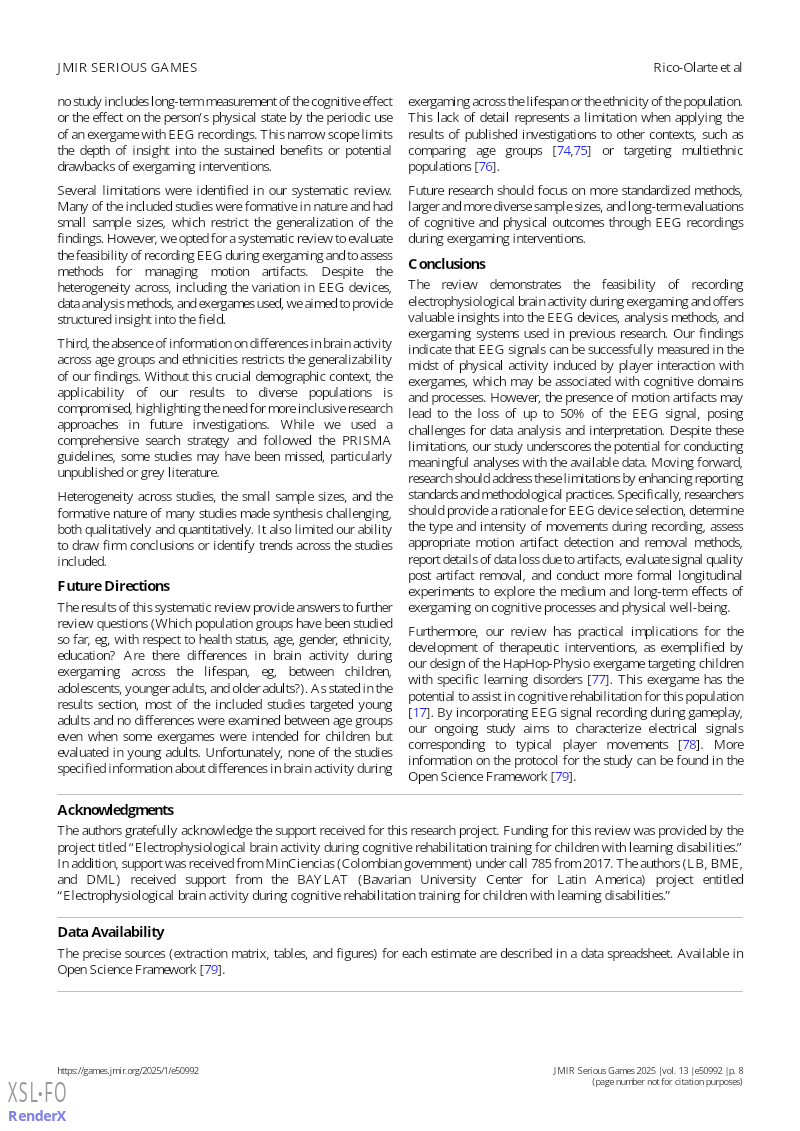
Electrophysiological Insights in Exergaming: Electroencephalography Data Recording and Movement Artifact Detection
JMIR Serious Games · 2024

Whitepaper
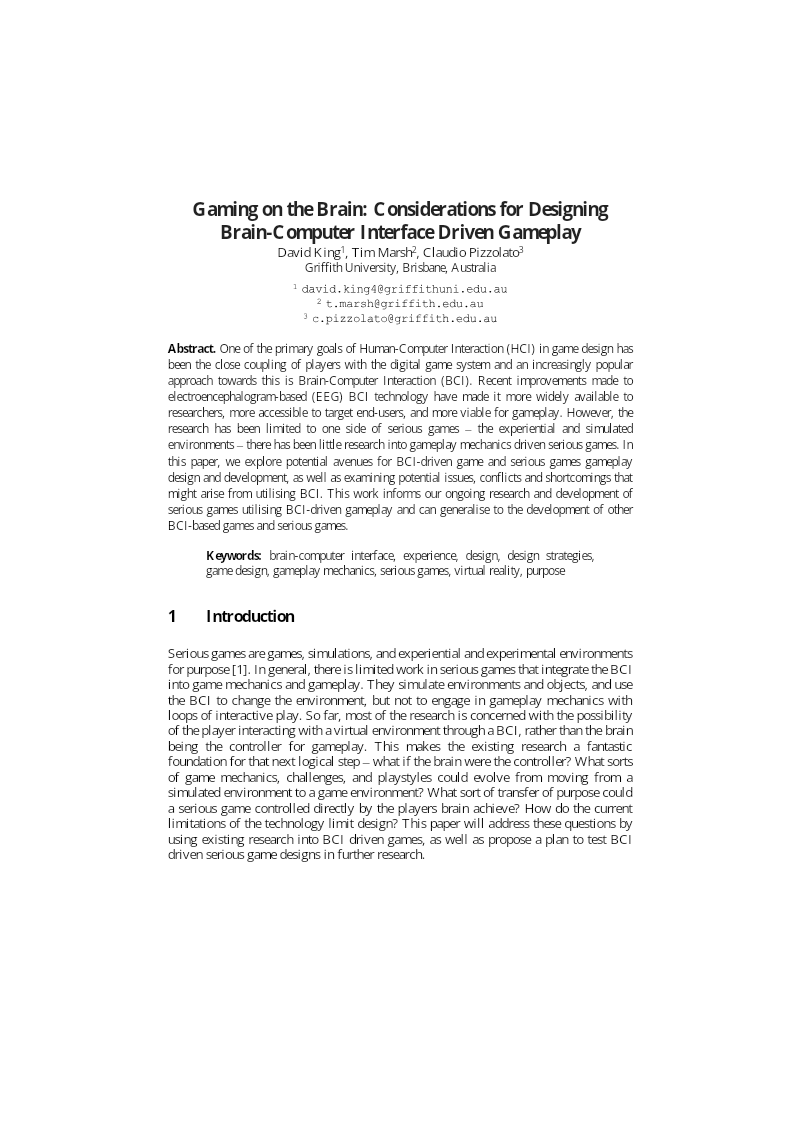
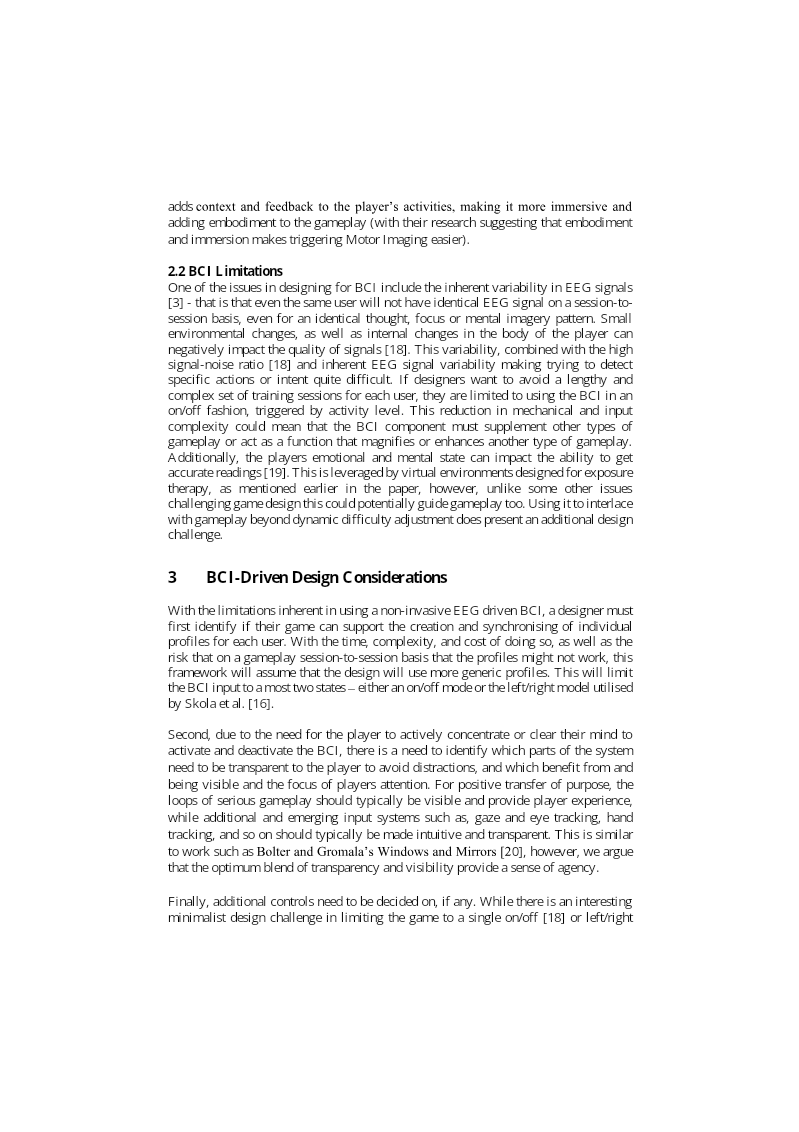
Gaming on the Brain: Considerations for Designing Brain-Computer Interface Driven Gameplay
Joint International Conference on Serious Games (JCSG) · 2024
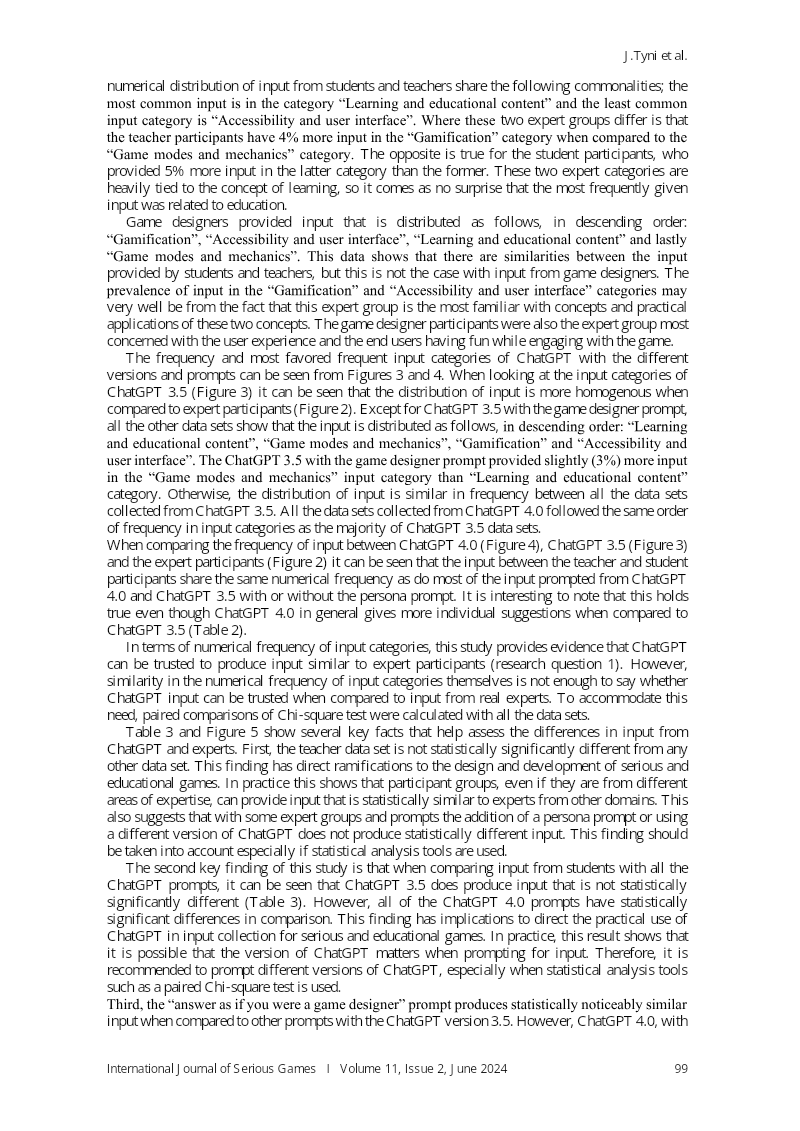
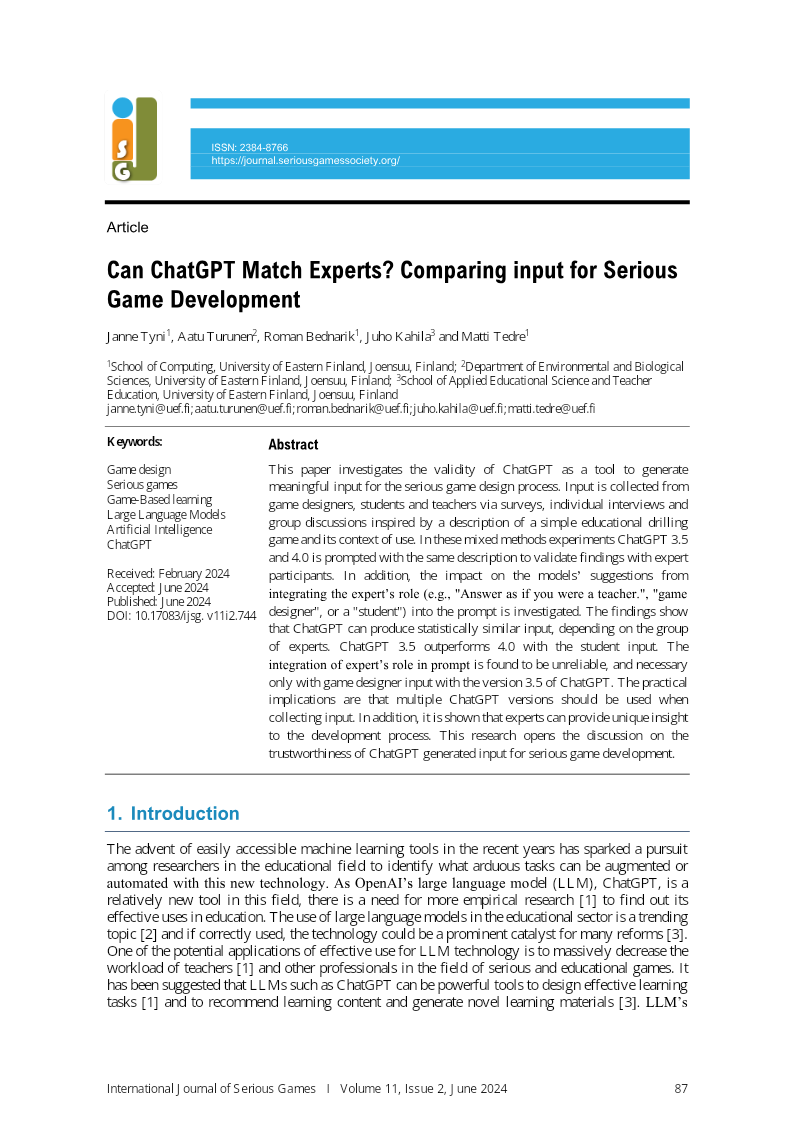
Whitepaper
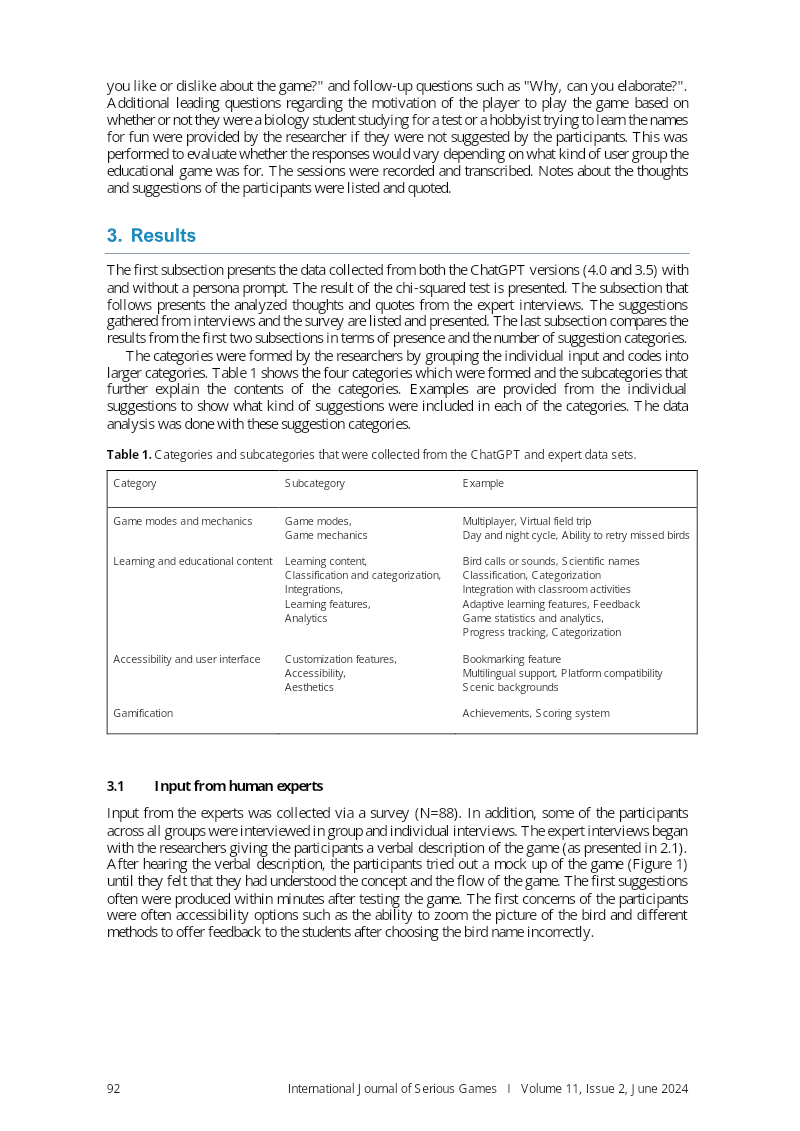
Can ChatGPT Match Experts? Comparing Input for Serious Game Development
International Journal of Serious Games · 2024
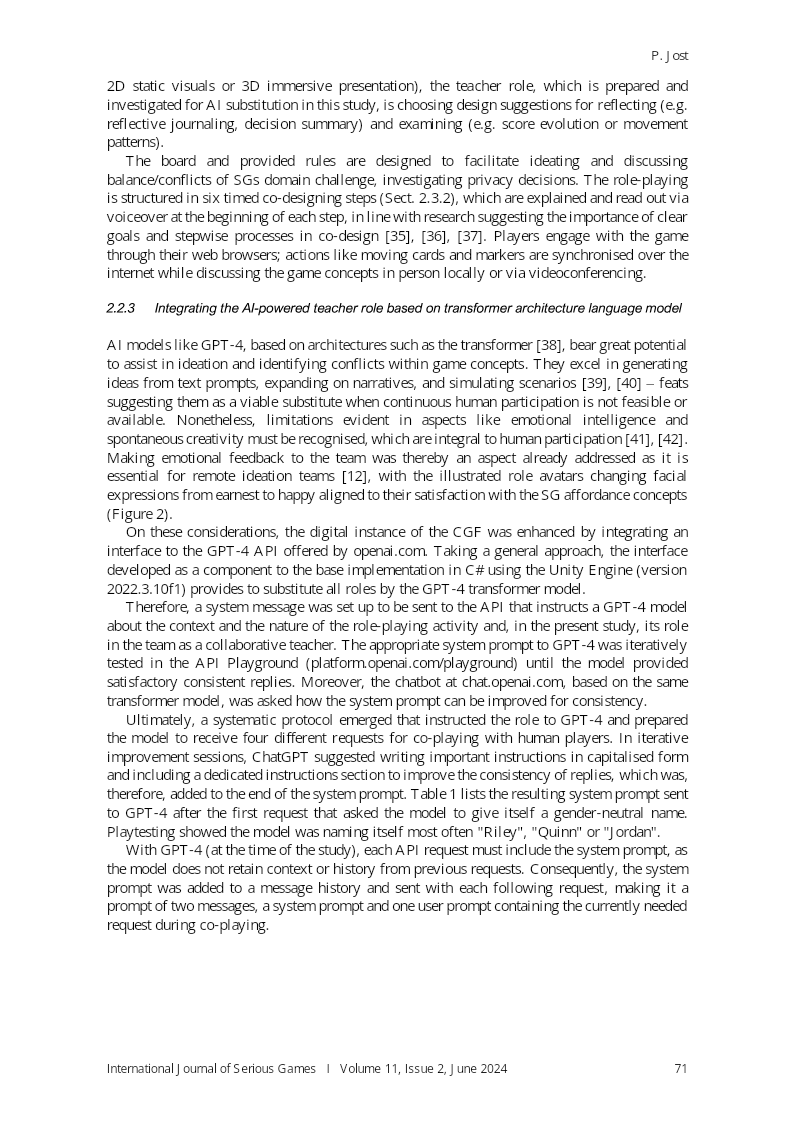
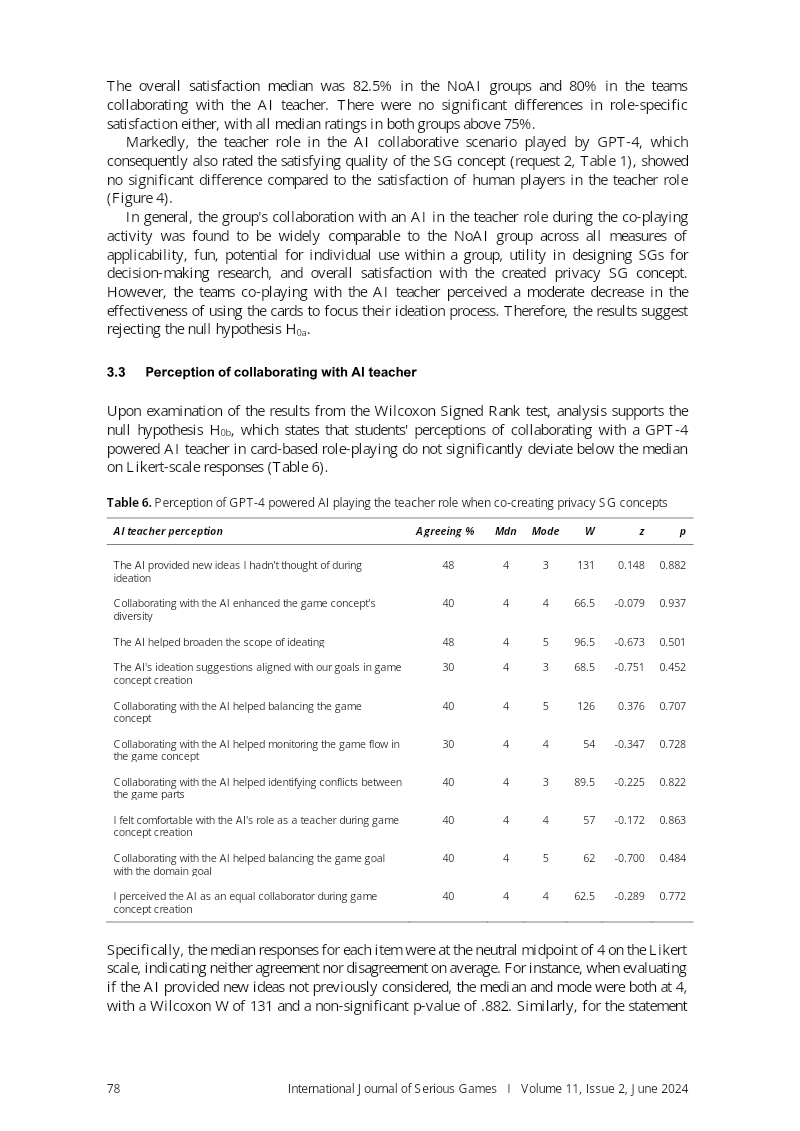

Whitepaper
AI-deation: When the Teacher is a Transformer in Role-Playing to Create Privacy Decision Serious Games
Serious Games Society · 2024
Whitepaper
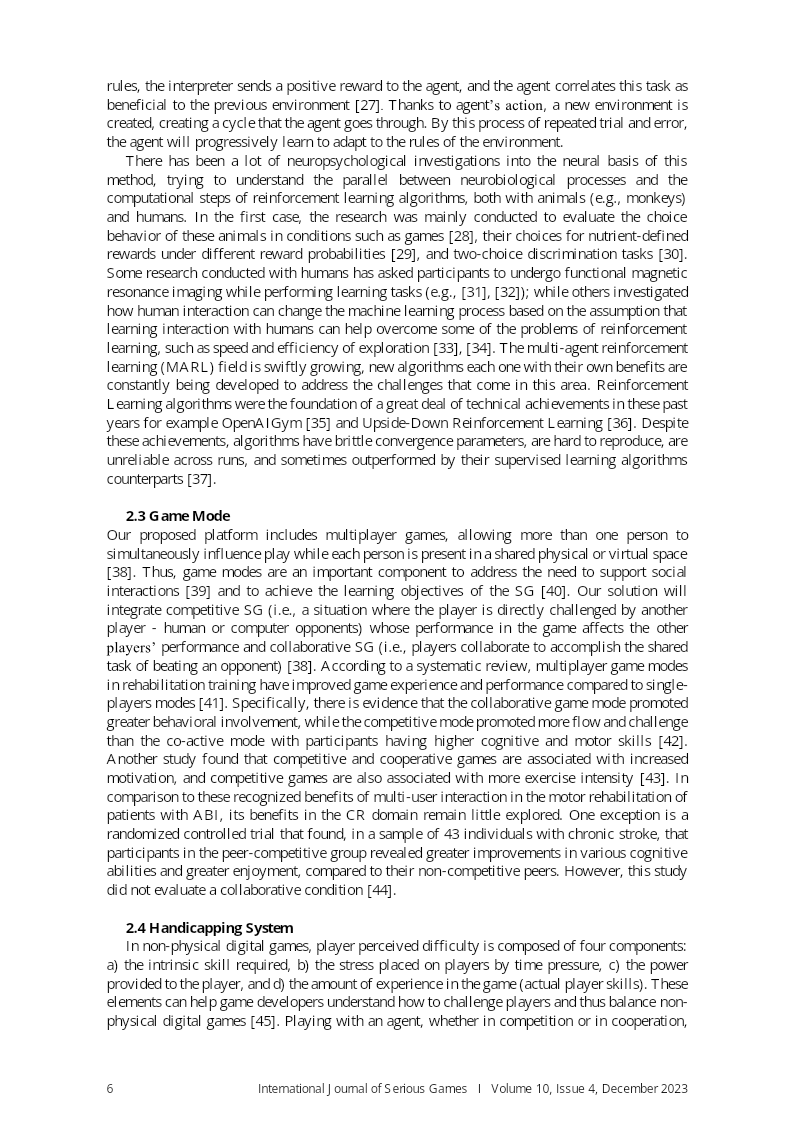
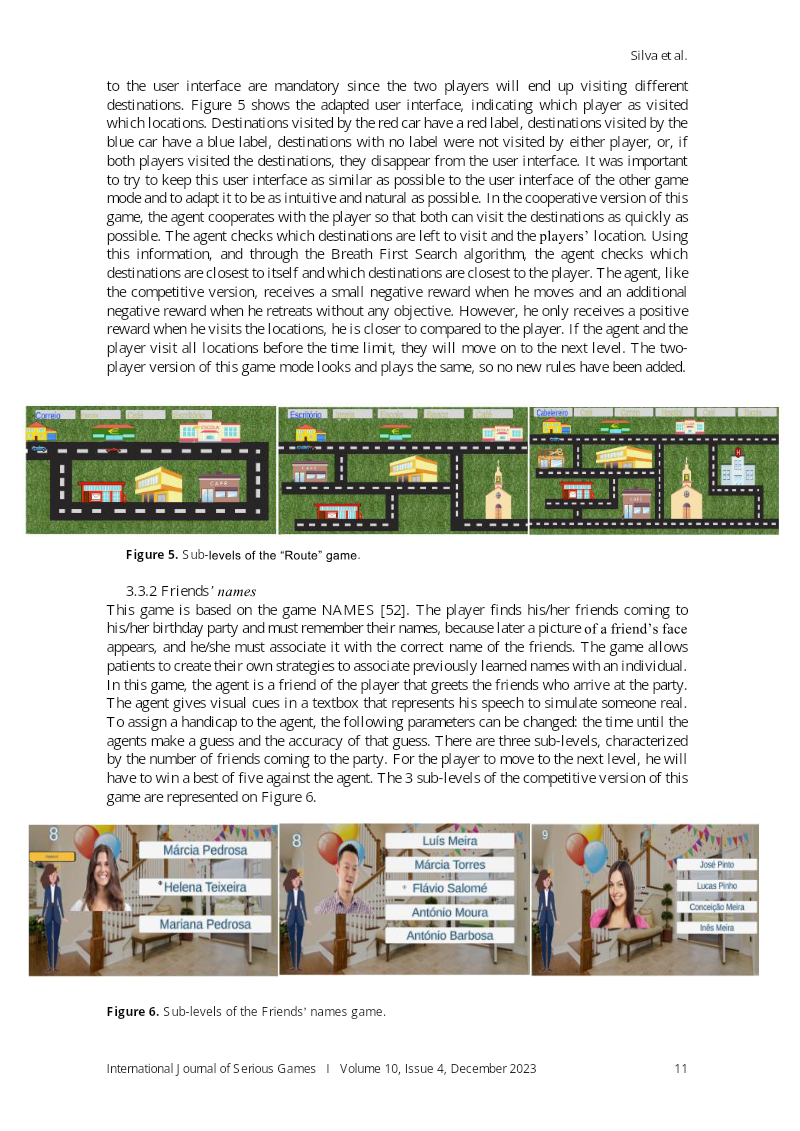
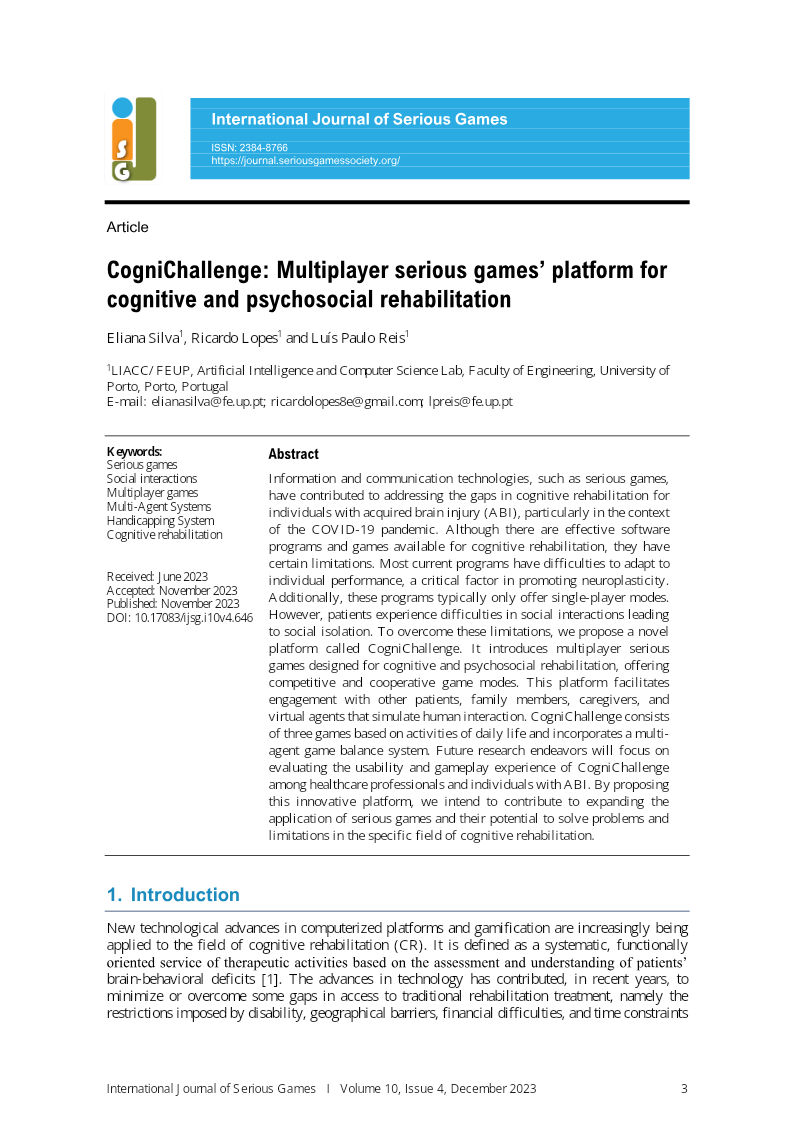
CogniChallenge: Multiplayer Serious Games' Platform for Cognitive and Psychosocial Rehabilitation
International Journal of Serious Games · 2023

Whitepaper
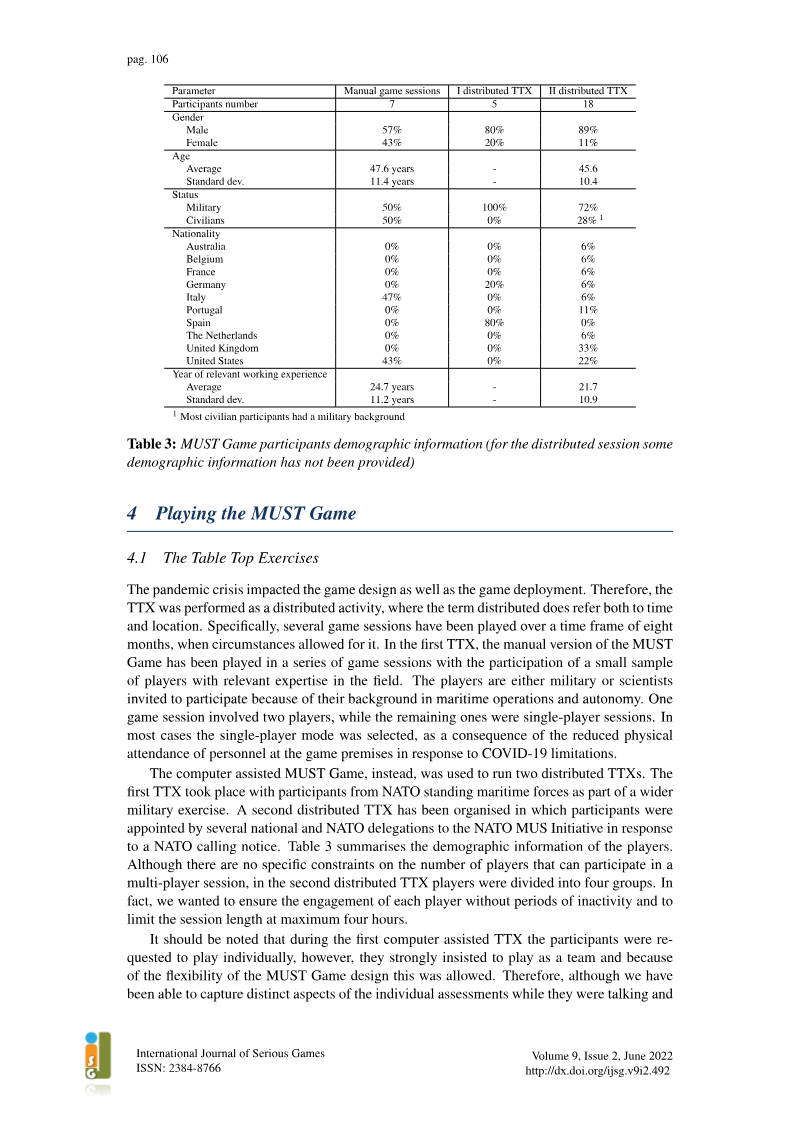
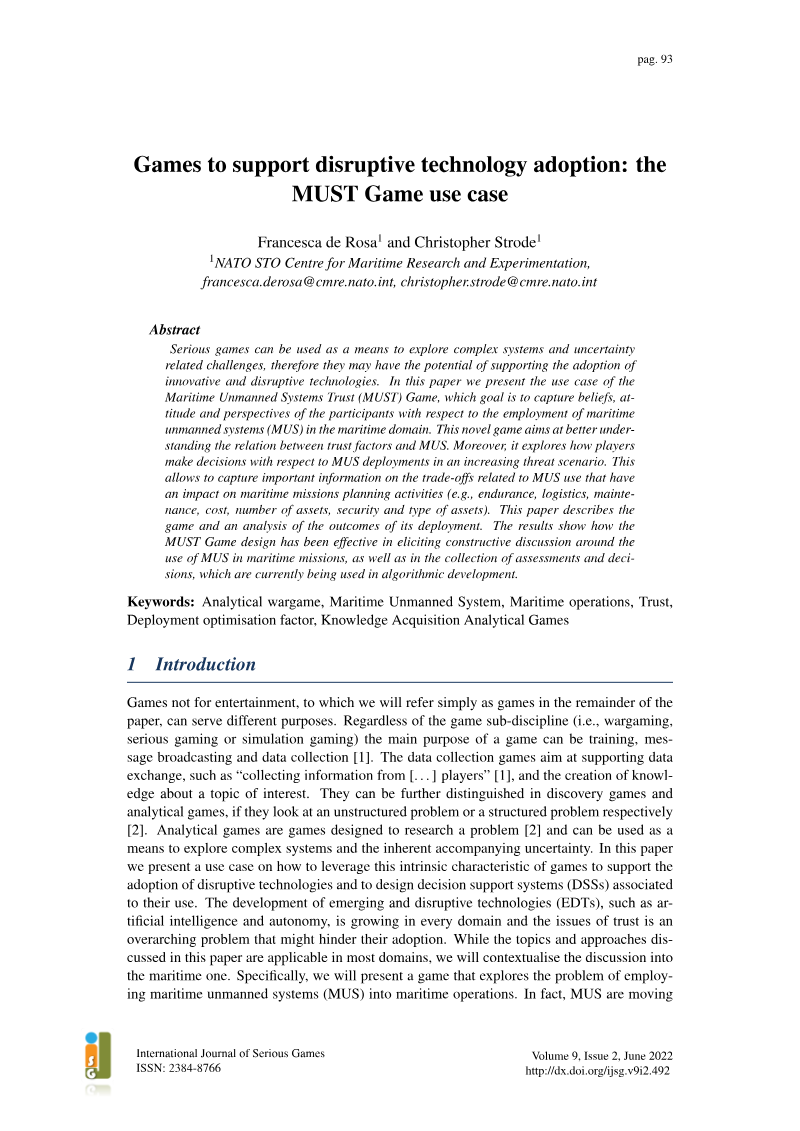
Games to Support Disruptive Technology Adoption: The MUST Game Use Case
International Journal of Serious Games · 2022
Whitepaper
Design Methodology of Analytical Games for Knowledge Acquisition
International Journal of Serious Games · 2021

Whitepaper
Designing Analytic Serious Games: An Expert Affordance View on Privacy Decision-Making
Joint International Conference on Serious Games (JCSG) · 2021

Whitepaper
Interactive Ant Colony Optimization to Support Adaptation in Serious Games
International Journal of Serious Games · 2019