1 free read left. Create a free account for unlimited reading + AI research.
Create free account
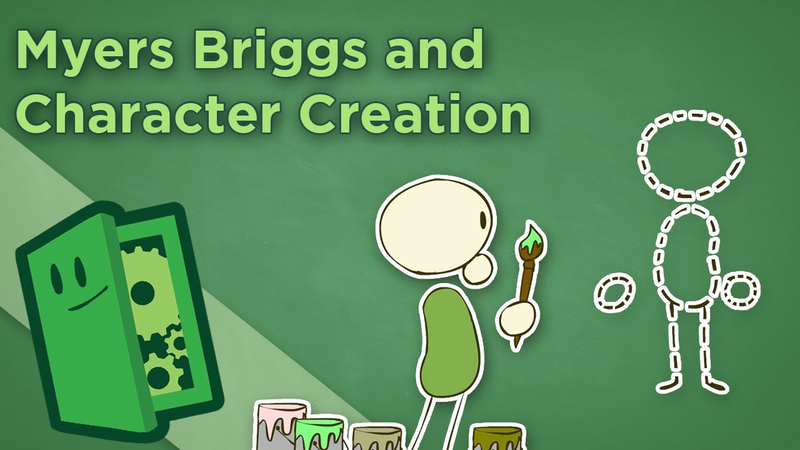
Myers Briggs and Character Creation - Psychology in Game Design - Extra Credits
Key insights
6 takeaways- 01The Myers-Briggs Type Indicator (MBTI) provides a structured framework for game designers to build multidimensional, consistent characters by establishing a foundational 'psychic makeup' that guides their reactions to narrative scenarios.
- 02These sixteen personality combinations function like 'handedness,' meaning characters can act against their dominant traits but will expend more energy and effort to do so.
- 03The MBTI framework serves as a tool to avoid flat, one-dimensional tropes by providing a reliable guide for maintaining internal consistency throughout a game’s story.
- 04The system categorizes personality through four dichotomies: introversion vs. extroversion, sensing vs. intuition, thinking vs. feeling, and judging vs. perceiving.
- 05While useful for narrative development, the MBTI should be treated as a broad design outline rather than a rigid, definitive diagnostic rule set.
- 06Designers can use these types to predict how characters approach specific challenges, such as choosing between logical efficiency or empathetic, people-oriented solutions during problem-solving.
Ask AI about this video
Transcript
Psychology helps with many aspects of game design. It's useful for understanding player behavior, knowing what motivates a person, and even working in a team. But we rarely talk about its utility in terms of character design. Today, we're going to talk about a psychological typing system that James often uses when he's working to flesh out or better understand his characters. It's called Myers-Briggs, or the Myers-Briggs Type Indicator, if you want to be all formal about it. It's based off of some of Young's work, where he starts to break down some psychological dichotomies. He felt that a person tended towards certain psychological characteristics, and when they did so, they tended away from, or were weaker with, certain other aspects of the psyche. That personality traits, or at least some of them, were balanced as if on a scale. It's usually explained like handedness. If you're right-handed, that doesn't mean you can't write with your left, or even that you can't become very proficient at writing with your left hand. It just means that it takes a lot more work and effort. That you're naturally inclined, or perhaps better put, naturally proficient with your
right, so you rely on it whenever you can. You go to it without thinking. When someone tosses you a ball, you don't think about which hand to catch it with. You automatically go after it with your dominant hand, unless you absolutely can't and are forced to try using the hand you're less used to. And in Young's view, parts of our personality, our psychic makeup, function the same way. Well, in the '40s, in order to help women figure out which wartime job they were best suited for, two women, Isabel Myers and Katherine Briggs, began expanding on and trying to apply this idea. Until in the '60s, they refined it to the point where they published what we know today as the Myers-Briggs Type Indicator. Now, before we get into what it is and how it's applicable to character design, I just want to make a couple of disclaimers. First, I'm not saying that this system is true, just that it's useful. Like any personality typing system, it paints in broad strokes. It helps you to get a handle on people or situations rapidly. It can aid understanding, but like anything that attempts to categorize people, it can often be incorrect, and even more often simply gives you a useful outline, which you'll have to fill in yourself. You don't want to take the results of these tests as a 100% accurate diagnosis of someone's personality. Doing so may well
lead you to making assumptions that are worse than simply not having the outline at all. But like I said, it's useful for the broad strokes. Second disclaimer, I'm definitely not saying that this is the only or best way to flesh out or define a character's personality. There are tons of great methods storytellers have used, but this is one good place to start and James has found it useful on many occasions. Okay, so what is Myers-Briggs? It's a set of four dichotomous psychological categories that when put together should tell you a lot about a person. The four categories are introversion versus extroversion, sensing versus intuition, thinking versus feeling, and judging versus perceiving. So let's talk a little bit about what each of those means in Myers-Briggs terms. First, introversion and extroversion. The key with Myers-Briggs is to remember that even though each category has two opposed strengths, just because you're strong in one doesn't mean you can't do the other. So in Myers-Briggs, an introvert is somebody who draws energy from quiet time alone or with small groups of close friends, whereas an extrovert is someone who finds crowds and meeting new people and group activities energizing. Both can operate in the other's field, but
they find it draining, tiring, and they have to go back to what suits them to recharge. In general, I also like to think of this dichotomy as something like asking the question, is your internal life more important to you? Your thoughts, your feelings and emotions? Or is your external life more important to you? The happenings of the world, the regard of other people, events, places, real happening things. Second is sensing and intuition. These are the perceiving functions. They define how you deal with input from the outside world. A person who's dominant in sensing trusts the things they can examine with their senses. In our modern world, they rely on data and facts. They tended to be meticulous and care about things being done right. The process is just as important as the end result. Someone who's dominant in intuition on the other hand tends to go with their gut. They're capable of fantastic leaps of logic that can bring them extraordinary results, but can also lead them astray. Often, they'll know an answer before they can even explain how they know, even with very logical subjects like math. They're much more concerned with the end result than the process and they tend to look for theories or ideas behind the data rather than finding joy in processing and utilizing data itself. Third, thinking
and feeling. These are the judging or decision-making functions. They determine how you act on the data you've taken in. Someone who's dominant in thinking is concerned with objectivity. They prefer to make decisions that they view as logical and removed, calculated. They work very well within systems or within a defined rule space, often giving themselves such a framework for their lives even if they're not consciously aware they're doing so. Someone who is more inclined to feeling tries to see a problem from multiple perspectives and is often not concerned or cannot even conceive of an objectively correct approach to many problems. Where humans are involved, they tend to put weight on the empathetic or emotive aspect of the problem. Although when creating characters, it's important to note they don't always have to be doing so in a good way. Often they'll come to a people solution to a problem where a dominant thinker would come to a logical one. And finally, judging and perceiving. This category gets pretty complicated and actually tells you about how a person uses the two previous categories. For our sake, let's just say that someone who's judging dominant likes resolution and to know where they stand. Someone who's perceiving dominant on the other hand likes to leave their options open and prefers not to close down a choice
unless they really have to. Of course, we're doing all of these categories a woeful injustice right now. What we've given here is just the barest overview. If you plan to apply this to your writing, you're going to want to dig in more and explore each of the possible types, understanding all of the subtleties that we've glossed over. But by going through each of these pairings and figuring out which of the 16 possible personality combinations your character belongs to, you'll have a strong archetype to start from. It'll give you a place where you understand your character's motivations and psychic makeup. Its purpose is to force you to think through your character and give you a starting point to work from. A stereotypical character is one-dimensional. These 16 types are highly archetypical and may all without some further adjustment seem like tropes you'll recognize, but having Myers-Briggs based characters ensures that you avoid the cardboard personality or the character who's all about one thing. And it'll give you a set of tools to use when you're making storytelling decisions. Let's say your character is at a grand ball. They're suave, charming, greeting everybody, but you know they're an introvert feeler. So, in your next scene, you have them dodging out as soon as it's tactful in order to have a meaningful conversation with a close friend on the palace grounds, and
confessing how much they miss the simpler life they had before. Or, maybe you have a scene where your character's boss asks them to up production at a factory. Are they the sensate thinker type? Then maybe they pour over the data, streamline the flow of resources, and bring in more efficient machines. Or, maybe they're an intuitive feeler. In that case, maybe they go talk to the people working the line, and then improve communication by getting the right people from disparate parts of the company talking together. For me, Myers-Briggs helps keep my characters consistent and in character without keeping them from being interesting. It gives me something to fall back on when I don't know what decision a character would make in a given circumstance, or I can't quite figure out what they do next. Unfortunately, to really use it, you're going to have to dig deeper than the gloss we've been able to give you here, but hopefully it's piqued your interest enough to look up the different types, and understand the interesting subtleties of how a character acts when they have to, or choose to work outside their type. Just remember, this is a starting point, and not an end. I'll see you next week.
Summary
The Myers-Briggs Type Indicator (MBTI) serves as a practical framework for game designers to develop nuanced, consistent, and multidimensional characters. By utilizing this psychological typing system, creators can move beyond one-dimensional tropes and establish a foundational "psychic makeup" for their characters. This approach functions as a starting point for narrative development, providing a reliable guide for how a character might react to specific scenarios, thereby ensuring internal consistency throughout a game’s story.
The methodology relies on four dichotomous categories: introversion versus extroversion, sensing versus intuition, thinking versus feeling, and judging versus perceiving. These categories operate like handedness; while individuals may possess the capacity to act outside their dominant traits, doing so requires more effort and energy. Introversion and extroversion define how a character recharges, while sensing and intuition dictate how they process external input. Decision-making is governed by the thinking and feeling dichotomy, and the judging versus perceiving category determines how a character manages structure and closure.
When applied to character design, these sixteen possible personality combinations help writers anticipate character behavior in diverse situations, such as social interactions or professional problem-solving. For instance, a character’s dominant type informs whether they prioritize logical efficiency or empathetic, people-oriented solutions. While the system is not a definitive diagnostic tool and should be used as a broad outline rather than a rigid rule set, it remains a valuable instrument for avoiding flat characterization. Ultimately, the framework encourages designers to explore the subtleties of character motivation, allowing for more authentic and engaging narrative experiences.


















Comments