FinancialCyberAgent
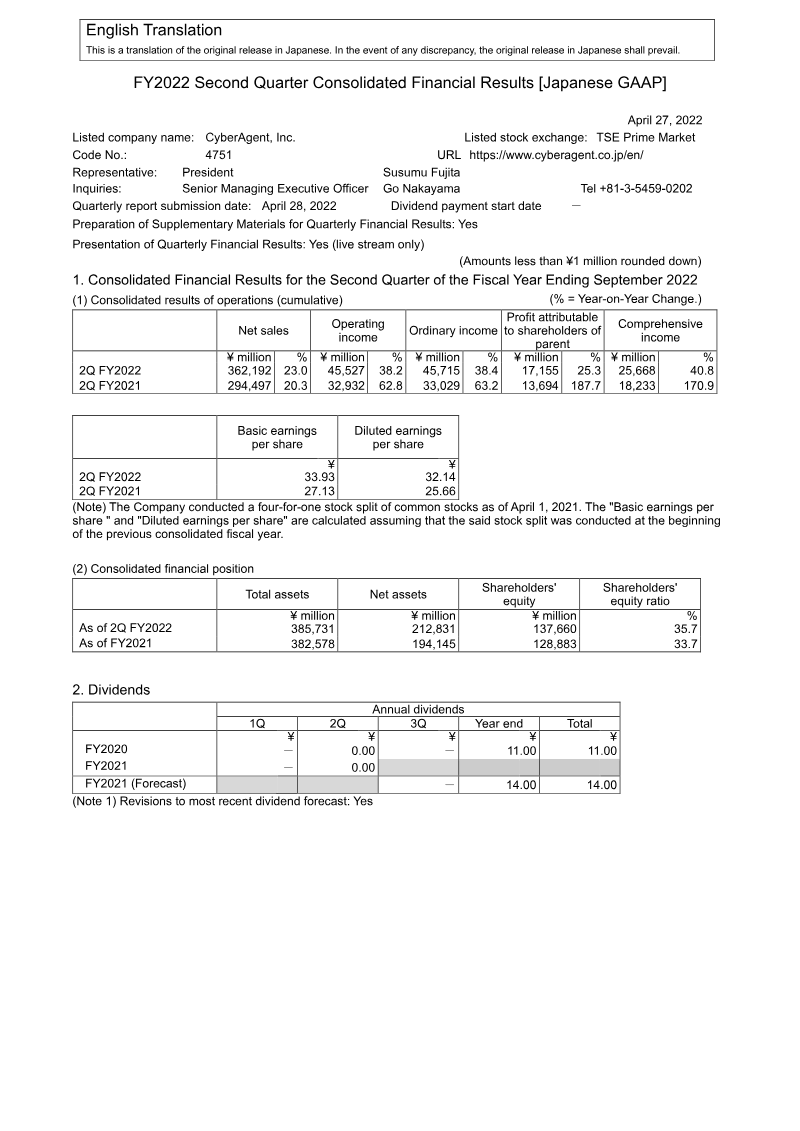
FY2022 Second Quarter Consolidated Financial Results (Japanese GAAP)
1 Apr 202210 pages~21 min full read
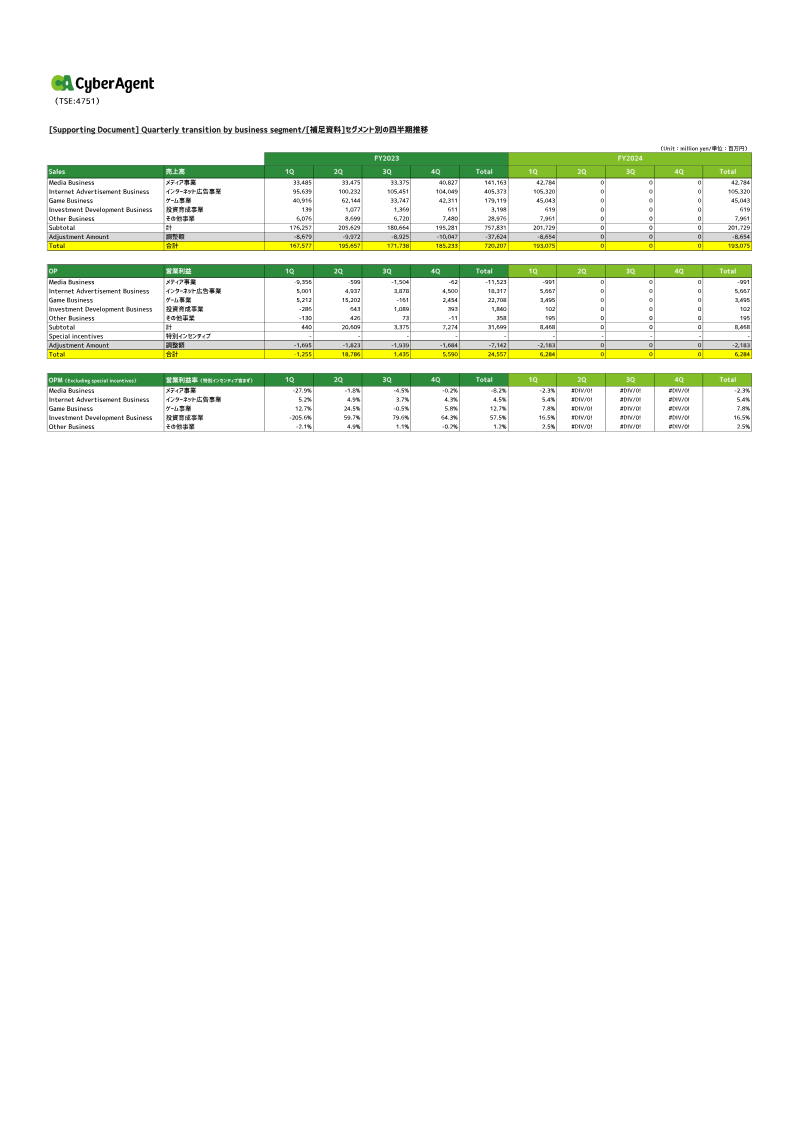
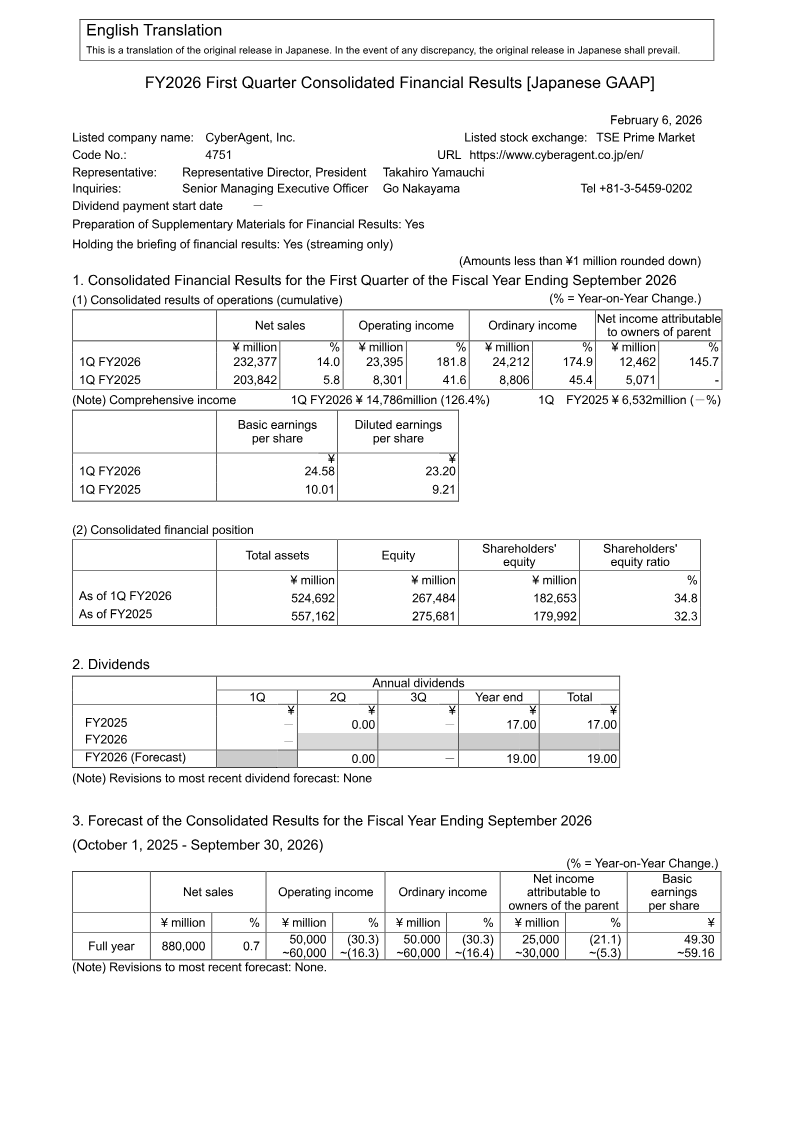
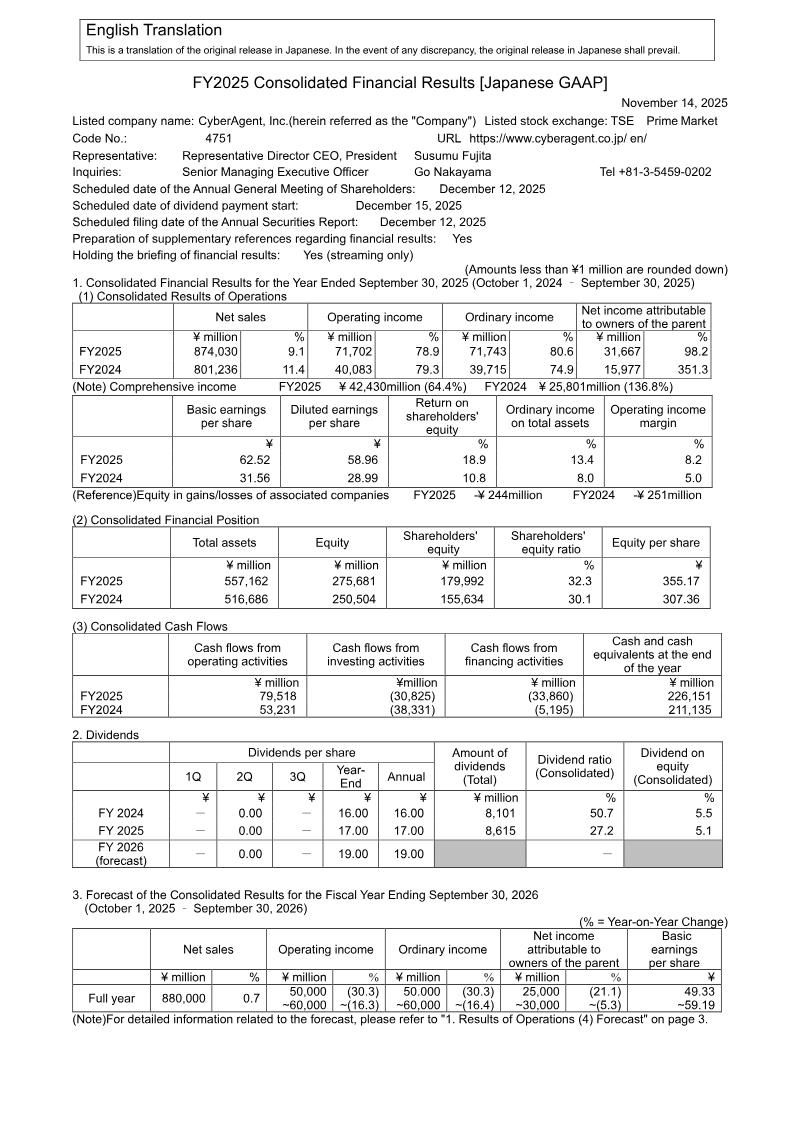
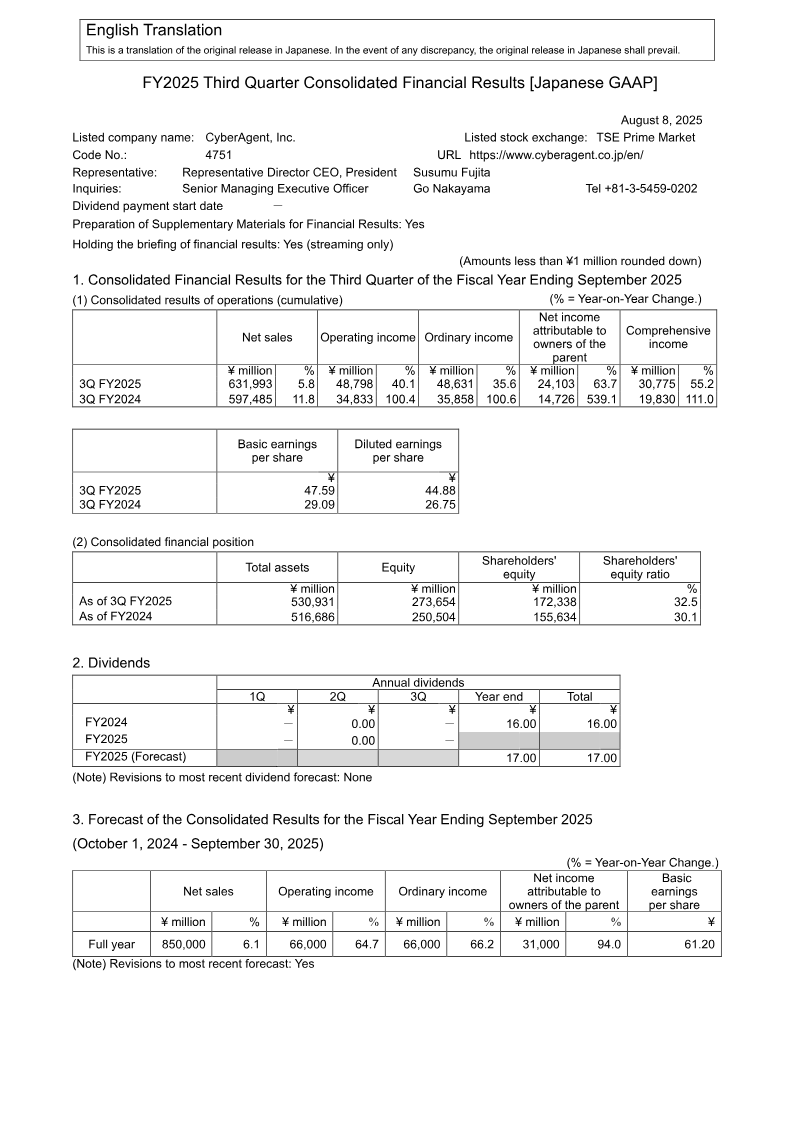
CyberAgent achieved significant financial growth during the second quarter of fiscal year 2022, characterized by a 23.0% year-on-year increase in net sales to ¥362,192 million and a 38.2% rise in operating income to ¥45,527 million. This performance was primarily anchored by the Game Business, which experienced a 58.2% surge in operating income driven by high-profile anniversary events for major titles. Simultaneously, the Internet Advertisement Business reached record-high performance levels, further stabilizing the company’s revenue base. While the Media segment, centered on the ABEMA platform, reported a loss of ¥5,804 million, this reflects a deliberate strategy of medium-to-long-term investment to scale the service.
The geographic focus remains centered on the Japanese market, with results reflecting the implementation of new revenue recognition standards. These accounting changes shifted the timing of game item charge recognition to align with estimated usage periods, though the overall impact on consolidated sales and segment income remained minor. Despite the robust quarterly figures, management maintains a conservative outlook for the remainder of the fiscal year, anticipating a potential pullback in gaming profits as the immediate impact of major events stabilizes.
The financial data reveals a stark contrast between the high-earning Game segment, which contributed ¥38,529 million in income, and the strategic losses incurred in the Media division. This disparity underscores a corporate strategy that utilizes the high margins of the gaming and advertising sectors to fund the expansion of digital media infrastructure. Overall, the results demonstrate a strong competitive position in the Japanese digital entertainment and advertising landscapes, supported by diversified revenue streams and a commitment to long-term platform growth.
CyberAgent · 2026
CyberAgent · 2026
CyberAgent · 2026
CyberAgent · 2026
CyberAgent · 2025
CyberAgent · 2025
CyberAgent · 2025
CyberAgent · 2025
CyberAgent · 2025
CyberAgent · 2025
CyberAgent · 2025
CyberAgent · 2025
Capcom Co. · 2026
Bushiroad · 2026
Nippon Ichi Software · 2025
GREE · 2025
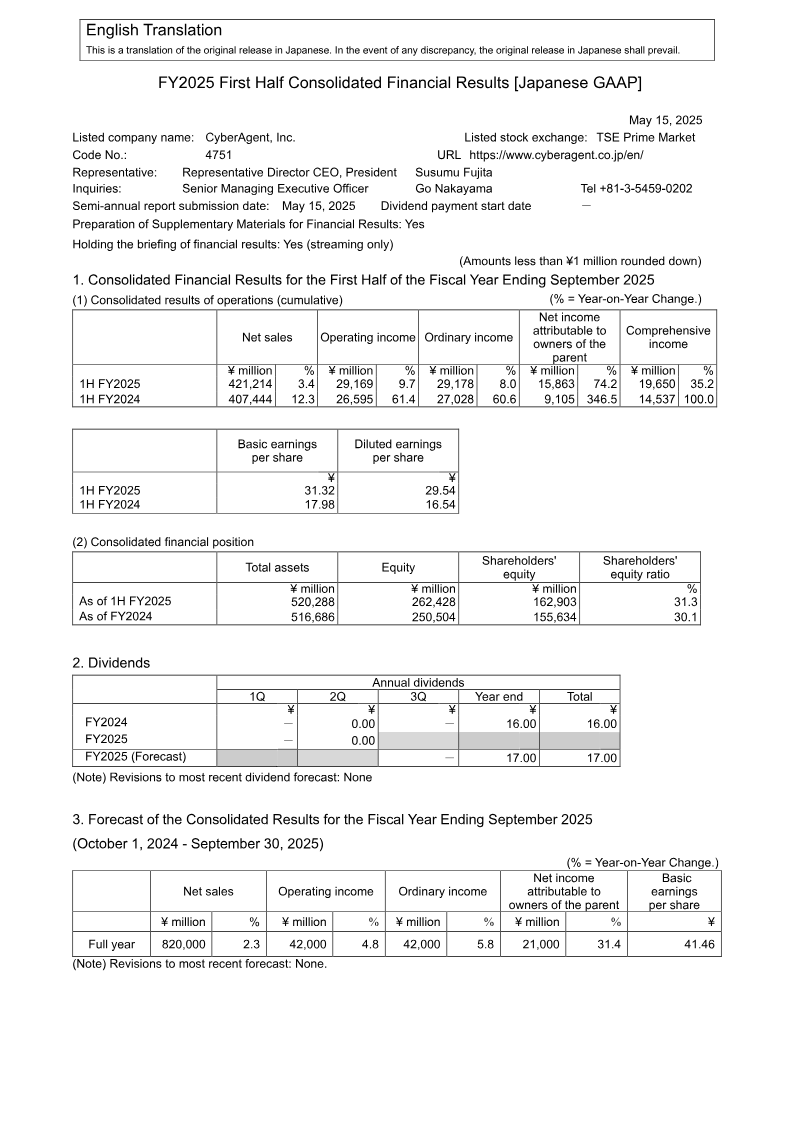
CyberAgent · 2025
Nintendo · 2025
Bandai Namco · 2024

Koei Tecmo · 2024
Capcom · 2023

Bandai Namco · 2021

Koei Tecmo · 2020
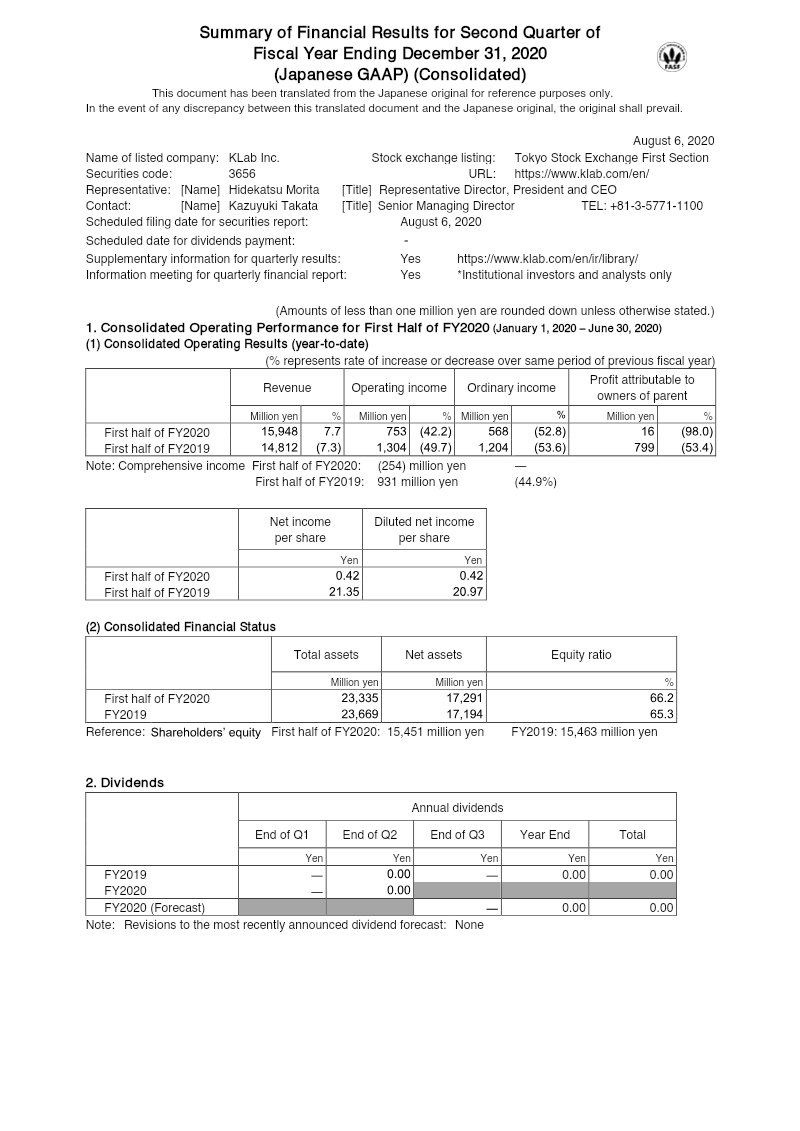
KLab · 2020