FinancialKLab
Summary of Financial Results for Fiscal Year Ending December 31, 2018 (Japanese GAAP) (Consolidated)
1 Feb 201918 pages~27 min full read
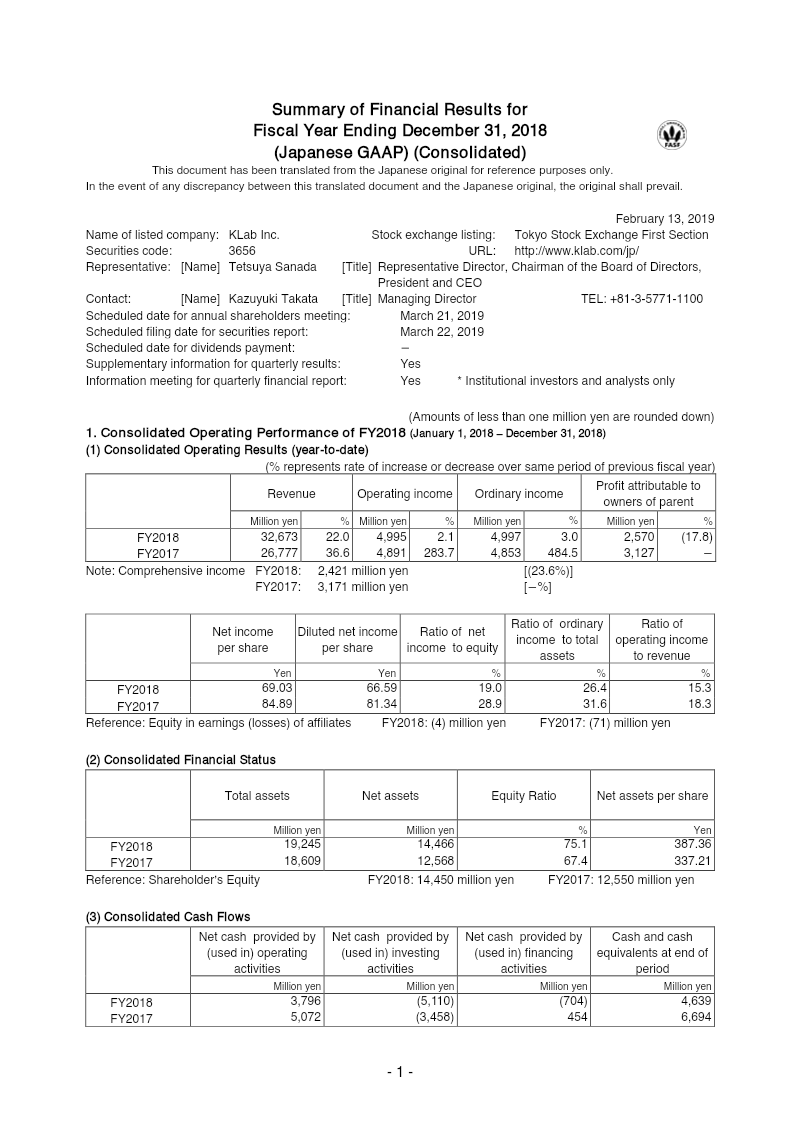
KLab Inc. achieved record-high consolidated revenue of 32.67 billion yen for the fiscal year ending December 31, 2018, representing a 22.0% year-over-year increase. This growth was primarily driven by the strong performance of key titles within the Game Business segment, specifically BLEACH Brave Souls and Captain Tsubasa: Dream Team. While operating profit rose to 4.99 billion yen, profit attributable to owners fell 17.8% to 2.57 billion yen. This divergence between top-line growth and net profitability resulted from rising royalty payments, increased promotional expenditures, and a 958 million yen extraordinary loss stemming from software impairment and asset disposal, including costs related to the title Lapis Re:LiGHTs.
The financial position remains stable, characterized by an equity ratio that improved to 75.1% and total assets valued at 19.2 billion yen. Despite the increase in total net assets to 14.47 billion yen—supported by higher retained earnings and the issuance of new shares—cash and cash equivalents decreased by approximately 2.06 billion yen. This reduction was largely attributed to higher income tax payments and intensified investment in intangible fixed assets. Consequently, net income per share declined from 84.89 yen to 69.03 yen, and the company elected not to issue a dividend for the fiscal year.
Looking toward the 2019 fiscal year, projections for revenue are set within a range of 32 billion to 40 billion yen. This forecast reflects a cautious outlook where future performance is heavily contingent upon the successful launch and monetization of new titles. While the Game Business remains the sole reportable segment and the primary engine of growth, the transition from record revenue to lower net income highlights the impact of rising operational costs and strategic asset write-downs on the bottom line.
KLab · 2026
KLab · 2025
KLab · 2025
KLab · 2025
KLab · 2025
KLab · 2024
KLab · 2024
KLab · 2024
KLab · 2024
KLab · 2023
KLab · 2023
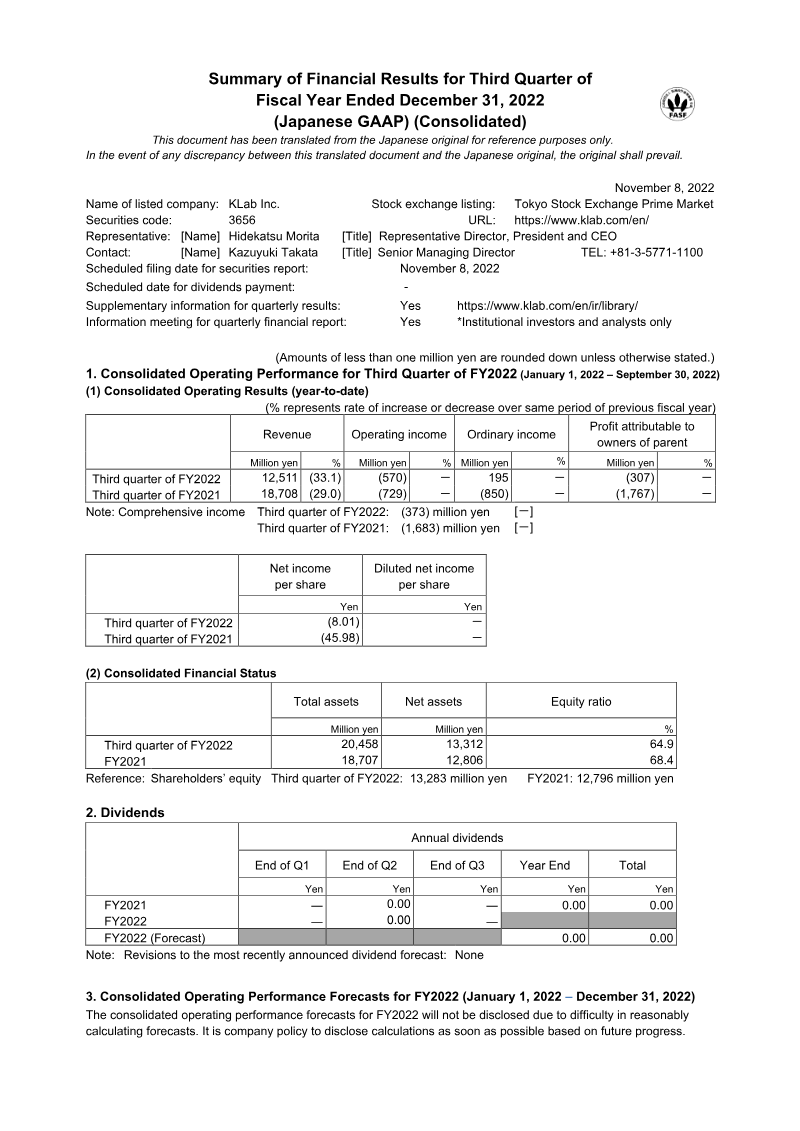
KLab · 2022
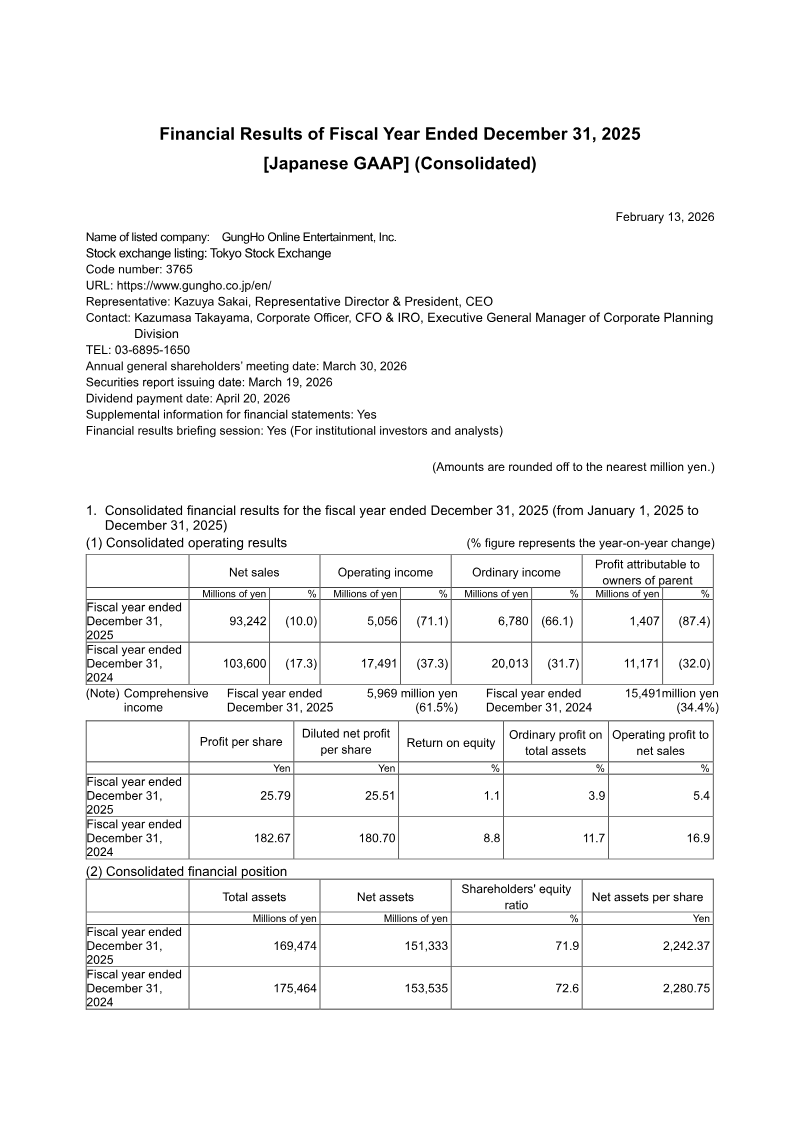
GungHo Online Entertainment · 2026
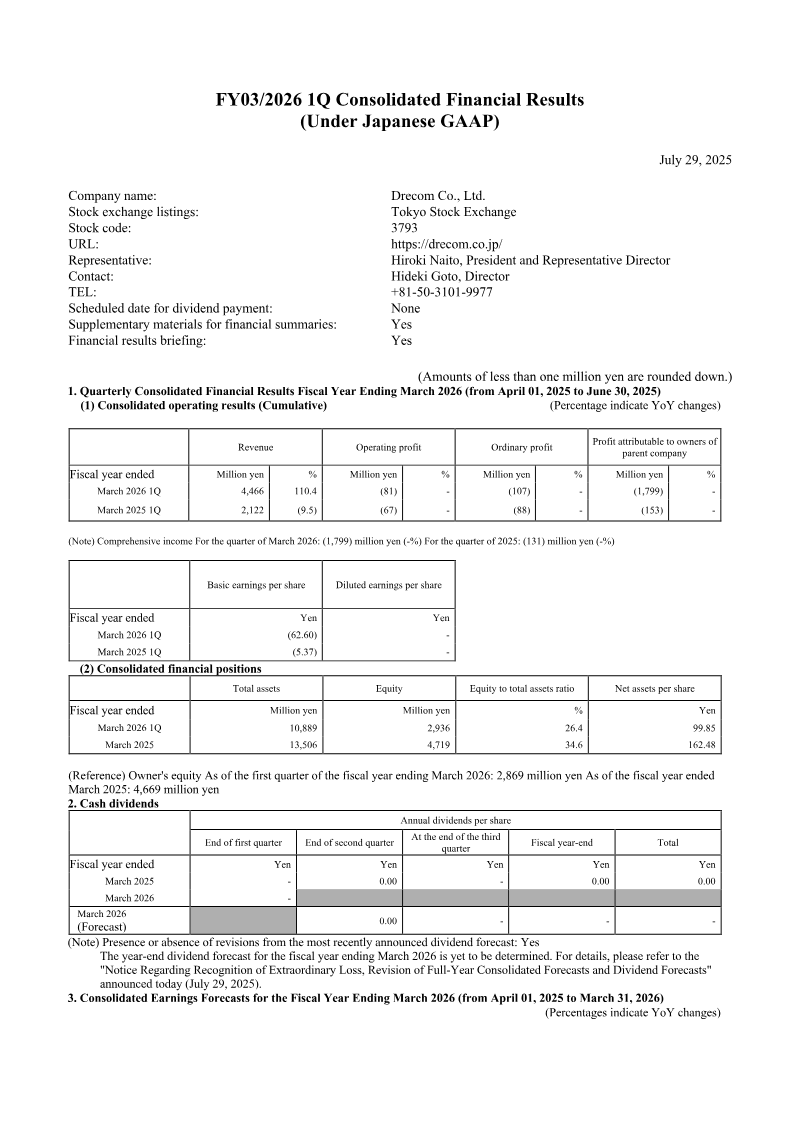
Drecom Co. · 2025
GREE · 2025
GREE · 2024
GREE · 2024
GREE · 2023
GREE · 2023
GREE · 2023