Updated Mar 2, 2026 by PCF Group
Legal · February 28, 2026
Published by PCF Group
PCF Group S.A., operating under the People Can Fly brand, has entered into a significant development and publishing agreement with Microsoft Corporation to produce a new AAA video game currently titled Project Maverick. This partnership, formalized on June 13, 2023, establishes a work-for-hire framework where the studio develops the title using intellectual property owned by Microsoft. The agreement aligns with the studio’s updated corporate strategy to pursue high-value collaborative opportunities with major industry publishers alongside its own internal projects. The financial scope of the project is substantial, with Microsoft providing a total production budget ranging between $30 million and $50 million. Funding is structured around a milestone-based payment system, where the publisher provides capital as the studio completes specific stages of development outlined in a detailed product appendix. This arrangement ensures that the entirety of the production costs is covered by the publisher, mitigating financial risk for the developer while securing a high-budget project for its production pipeline. The scope of this agreement covers the full development cycle of the game, though specific release windows or geographic target markets are not disclosed. The terms of the contract are described as standard for the industry, containing no unusual conditions or deviations from typical AAA publishing agreements. By securing this contract, People Can Fly reinforces its position as a leading global developer capable of handling large-scale, high-budget productions for major platform holders, leveraging its technical expertise within a secure financial framework provided by one of the industry's largest entities.
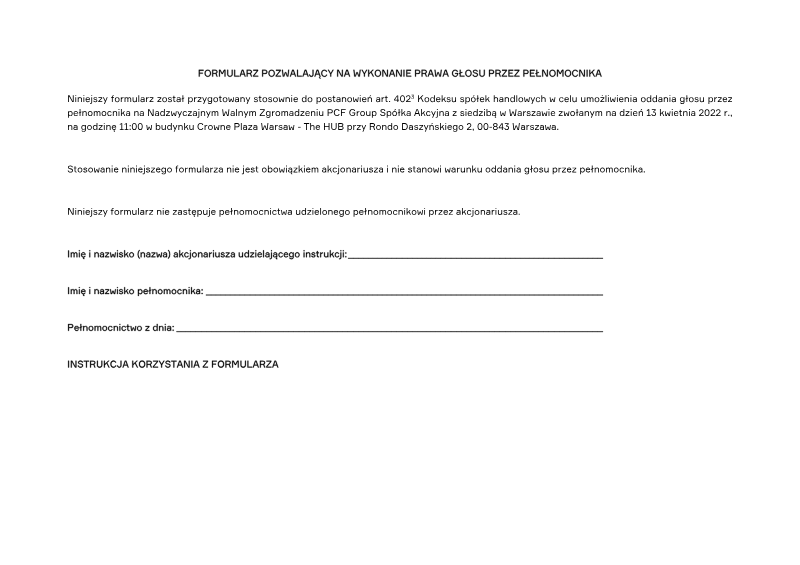
PEOPLE CAN FLY Raport bieżący nr 22/2023 Data sporządzenia: 14 czerwca 2023 r. Temat: Zawarcia umowy produkcyjno -wydawniczej z Microsoft Corporation Podstawa prawna: Art. 17 ust. 1 Rozporządzenia MAR Treść raportu: Zarząd PCF Group S.A. z siedzibą w Warszawie („ Spółka”) niniejszym informuje, że w dniu 13 czerwca 2023 r. Spółka zawarła ze spółką Microsoft Corporation z siedzibą w Redmond, Waszyngton, USA jako wydawcą („Wydawca”) umowę produkcyjno - wydawniczą (Development and Publishing Agreement ) („ Umowa”), której przedmiotem jest wyprodukowanie i dostarczenie przez Spółkę Wydawcy gry z segmentu AAA o nazwie kodowej Project Maveric k („Gra”) zgodnie z zawartą przez strony umow ą wykonawczą do Umowy ( Product Appendix) określającą harmonogram produkcji Gry uwzględniający jej kluczowe etapy (tzw. milestones). Produkcja Gry będzie realizowana przez Spółkę w modelu pracy na zlecenie ( work-for- hire), w oparciu o prawa własności intelektualnej Wydawcy, i będzie finansowana w całości przez Wydawcę w miarę realizacji przez Spółkę kontraktowanych w ramach procesu produkcyjnego kluczowych etapów produkcji Gry (milestones). Łączny budżet Wydawcy przeznaczony na produkcję Gry przez Spółkę wynosi 30 – 50 mln dolarów amerykańskich. Umowa nie zawiera postanowień określających specyficzne warunki, które odbiegałyby od warunków powszechnie stosowanych dla danego typu umów.
luczowych etapów produkcji Gry (milestones). Łączny budżet Wydawcy przeznaczony na produkcję Gry przez Spółkę wynosi 30 – 50 mln dolarów amerykańskich. Umowa nie zawiera postanowień określających specyficzne warunki, które odbiegałyby od warunków powszechnie stosowanych dla danego typu umów. Zawarcie Umowy pozostaje w zgodzie z ogłoszoną przez Spółkę w dniu 31 stycznia 2023 r. aktualizacją Strategii Spółki oraz grupy kapitałowej People Can Fly, zgodnie z którą jeśli pojawią się atrakcyjne możliwości współpracy z renomowanymi partnerami w modelu pracy na zlecenie (work-for-hire), wówczas Spółka z nich skorzysta.
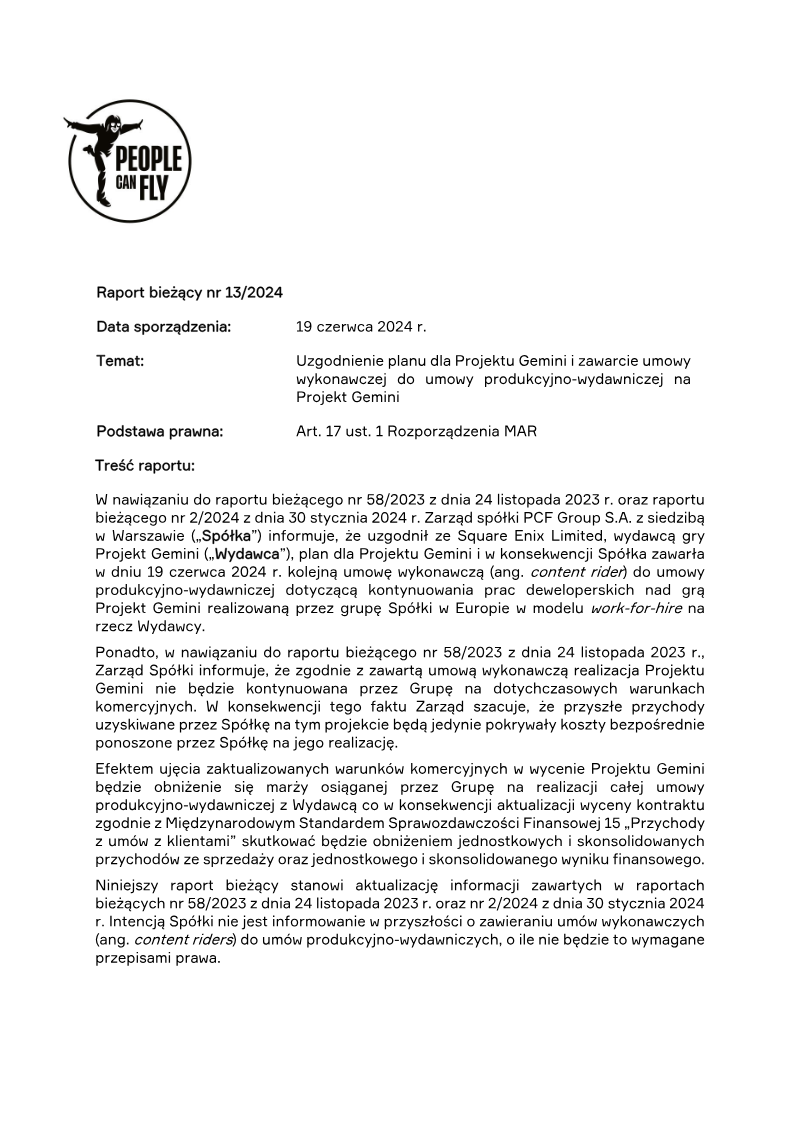
PCF Group S.A. has entered into a non-binding letter of intent with a prominent United States-based entertainment entity to develop a new virtual reality title under the code name Project Dolphin. This collaboration marks a strategic expansion into the VR action and combat genre, with the project slated for release on both current and future major virtual reality hardware platforms. The agreement outlines a work-for-hire development model, where the studio will execute the project on behalf of the publisher in exchange for fixed remuneration rather than retaining intellectual property rights. The financial scope of the production is significant for the VR segment, with an estimated development budget ranging between 16 million and 24 million USD. Under the proposed terms, the publisher will retain full ownership of the intellectual property and all associated rights resulting from the development process. This partnership aligns with the studio’s broader strategy of diversifying its project portfolio while leveraging external funding for high-fidelity production. The development timeline aims for completion by the end of 2025. While the letter of intent establishes the framework for the partnership and triggers formal negotiations for a definitive development agreement, it remains non-binding at this stage. The finalization of the contract is subject to successful negotiations, and the studio maintains a neutral outlook regarding the certainty of the final execution. This disclosure, issued in mid-2023, reflects the company's ongoing efforts to secure large-scale production contracts within the global gaming market.
The announcement confirms that PCF Group S.A., operating under the People Can Fly brand, entered into a Master Services Agreement with Krafton Inc. of Seoul on 10 September 2024 to develop and publish a new gameplay mode, code‑named Project Echo, for an existing Krafton title. The agreement adopts a work‑for‑hire structure, whereby PCF Group acts as a contracted developer and receives a pre‑negotiated fee from Krafton for the services rendered. The contract is framed as a broad, multi‑year arrangement, with specific deliverables, production timelines, and remuneration details to be defined in subsequent Statements of Work. The terms mirror standard production‑publishing agreements for similar projects, indicating no extraordinary clauses or deviations from industry norms. Geographically, the partnership links a Polish development studio with a South Korean publisher, reflecting a cross‑regional collaboration focused on a single product enhancement rather than a broader market rollout. The timing aligns with People Can Fly’s strategic update issued on 31 January 2023, which emphasized pursuing attractive work‑for‑hire opportunities with reputable partners. Overall, the agreement underscores PCF Group’s commitment to leveraging its development capabilities within a structured, fee‑based model, while reinforcing Krafton’s strategy of expanding existing game ecosystems through external studio contributions.
PCF Group S.A., the parent company of the People Can Fly studio, has officially entered negotiations with a renowned global publisher to establish a comprehensive development and publishing agreement. This move follows the receipt of a formal proposal and a draft executive agreement on May 19, 2023, concerning the production and release of a new video game. The decision to pursue this partnership aligns with the company’s updated corporate strategy announced earlier in 2023, which emphasizes the pursuit of attractive work-for-hire opportunities with reputable industry partners alongside its own internal projects. The proposed collaboration is structured as a work-for-hire model, where the studio acts as the developer for hire on behalf of the publisher. Under this framework, the studio will receive agreed-upon remuneration for its development services. The negotiation covers both a master framework agreement and a specific executive agreement that outlines the technical and financial parameters of the project. These details include a comprehensive description of the product, a defined production schedule, and the specific milestones and conditions required for the payment of developer fees. While the specific identity of the publisher and the title of the game remain confidential, the terms of the draft agreement are described as consistent with standard industry practices for high-budget production and publishing deals. The commencement of these negotiations marks a significant step in expanding the studio's project pipeline, though the final execution of the contract remains subject to successful negotiation outcomes. This development reflects a strategic balance between the studio's independent intellectual property goals and its capacity to provide high-end development services to major external stakeholders in the global gaming market.
PCF Group S.A. has entered into a production and publishing agreement with Incuvo S.A. to adapt an existing title from the People Can Fly portfolio for virtual reality platforms. This strategic partnership focuses on implementing necessary technical changes and code adjustments to ensure compatibility with all major VR hardware and software ecosystems. The agreement marks a significant expansion of the company’s intellectual property into the immersive technology segment, with a scheduled release window targeting the end of 2023. Under the financial terms of the contract, PCF Group S.A. serves as the publisher and assumes full responsibility for financing the production. Payments to Incuvo S.A. are structured around the successful completion of specific development milestones. The commercial arrangement follows a standard industry model where Incuvo S.A. becomes eligible for royalty payments only after the publisher has fully recouped its investments in production, promotion, and distribution. The specific royalty rates are tiered based on the total sales revenue generated by the VR title. The scope of this agreement is global, covering all significant virtual reality platforms available in the market. The contract does not contain unusual provisions or specific penalties that deviate from standard market practices for high-end software development and publishing. This collaboration leverages Incuvo’s technical expertise in VR porting and development to maximize the commercial reach of PCF Group’s established gaming assets within the rapidly evolving virtual reality industry.