More from SINTEF Digital
View all
More on Serious Games
View all
Whitepaper
Communicating Maritime Spatial Planning: The MSP Challenge Approach
Elsevier · 2021
Whitepaper
A Fuzzy Logic Module to Estimate a Driver’s Fuel Consumption for Reality-Enhanced Serious Games
International Journal of Serious Games · 2018



Whitepaper
Designing Educational Games in Higher Education: A Convergent Mixed-methods Pilot Evaluation
European Conference on Games Based Learning (ECGBL) · 2026



Whitepaper
Mission Profiles and Interaction Patterns in Gravitas: Evidence from a Simulation-Based Physics Learning Game
European Conference on Games Based Learning (ECGBL) · 2026



Whitepaper
Challenges of Simulations and Serious Games Embedded in Emergency Preparedness Platforms
European Conference on Games Based Learning (ECGBL) · 2026
Whitepaper
Bridging Theory and Practice: Evaluating a Game-Based VR Approach in Construction Education
European Conference on Games Based Learning (ECGBL) · 2025
Whitepaper
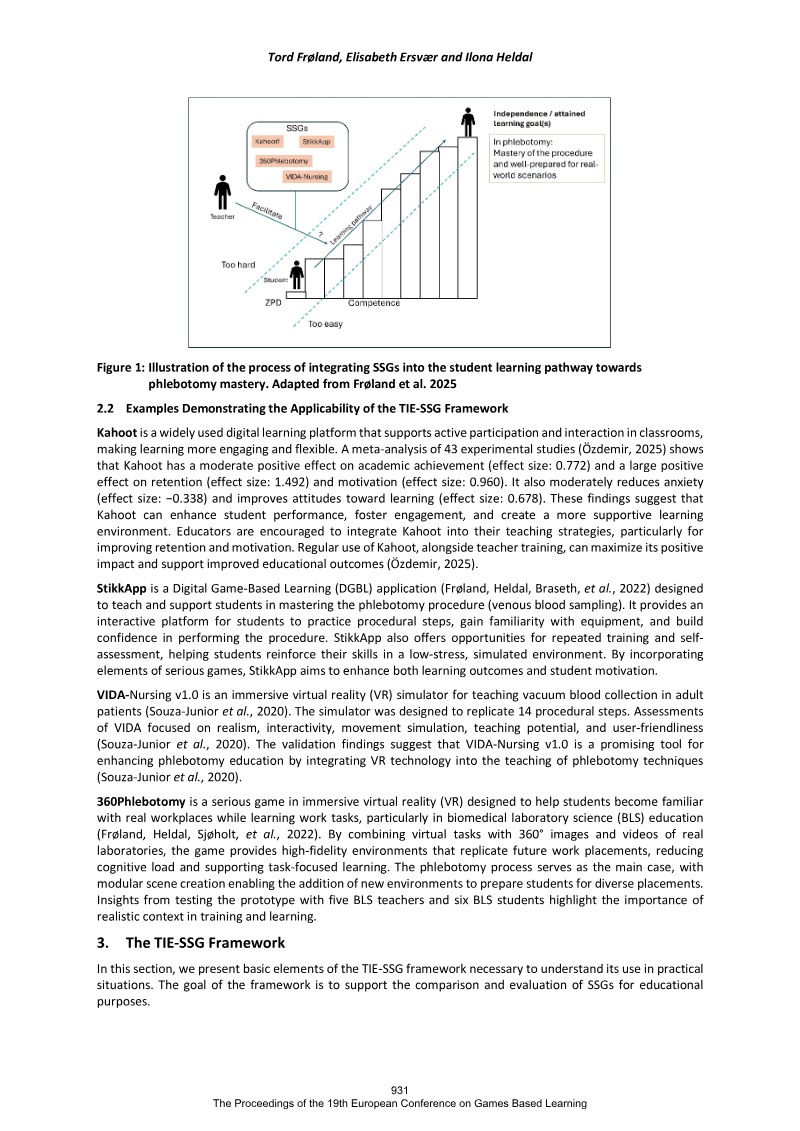
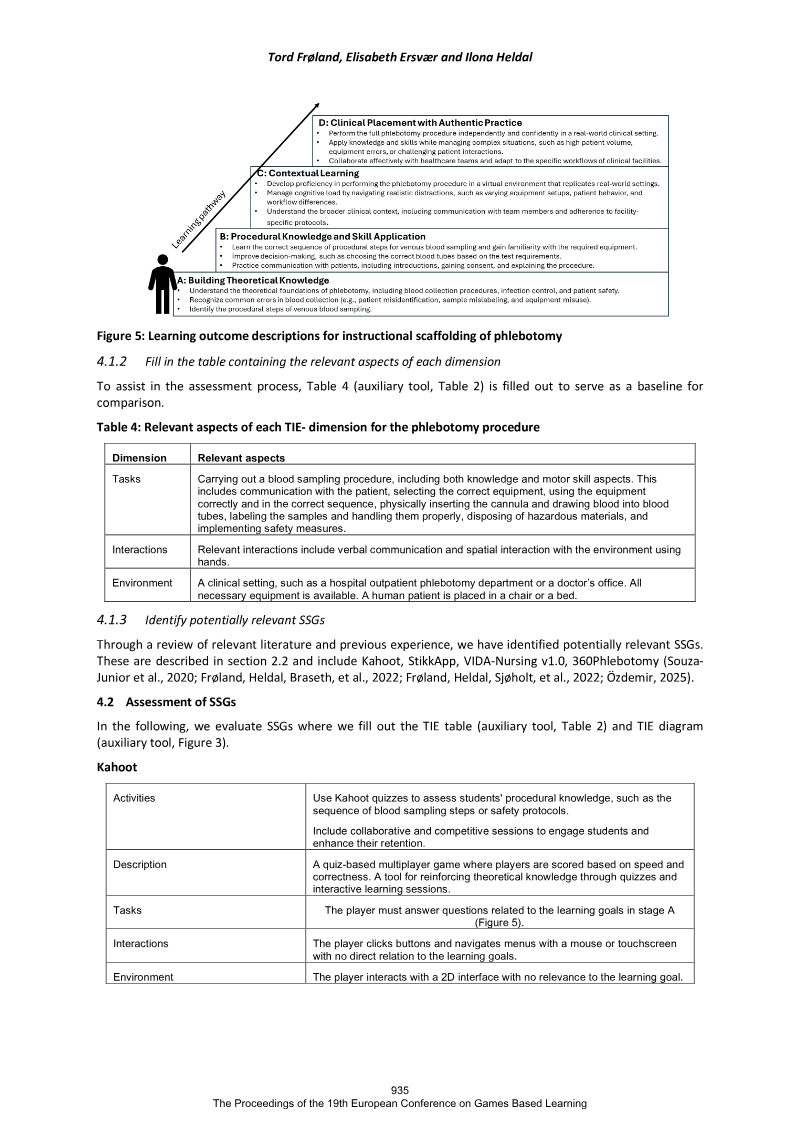
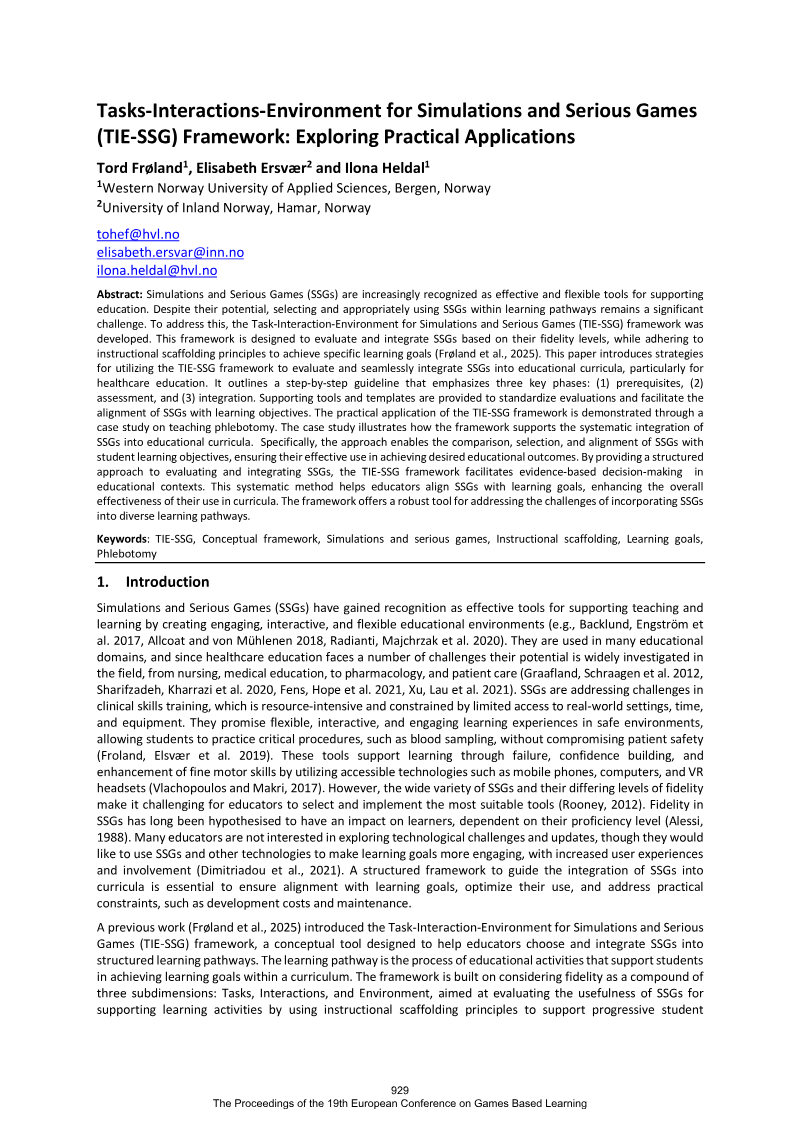
Tasks-Interactions-Environment for Simulations and Serious Games (TIE-SSG) Framework: Exploring Practical Applications
Western Norway University of Applied Sciences · 2025
Whitepaper
Enhancing Holistic Development Through Exergame-Based Learning
European Conference on Games Based Learning (ECGBL) · 2025
Whitepaper
VAFUG: A Model for Designing Educational Activities Grounded in Game Studies and Aesthetics
European Conference on Games Based Learning (ECGBL) · 2025
Whitepaper
Playing World War II: Designing a Simulation Game on the Resistance in Turin in Collaboration with the Historical Archive
Università degli Studi di Torino · 2025
Report
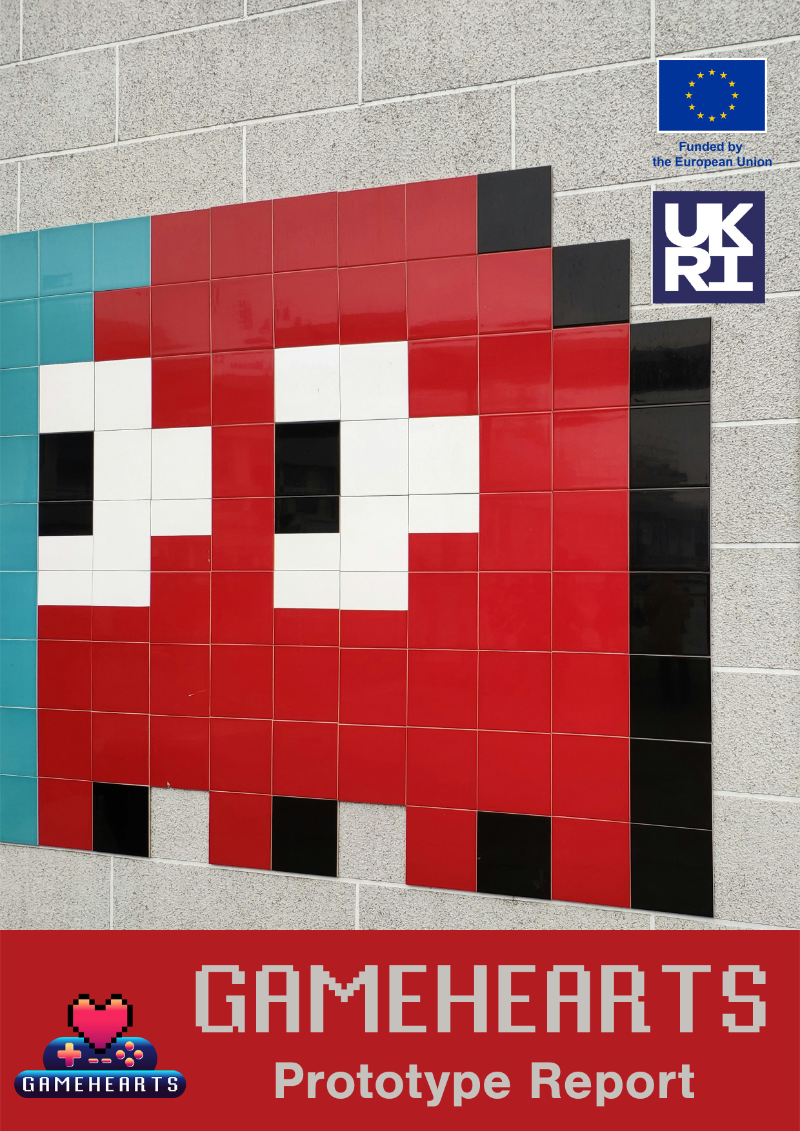
D5.3 Prototype Report: Games, Heritage, Arts, & Sport
GAMEHEARTS · 2025
Whitepaper
Gamification of a College Course: A Case Study
Homo Ludens · 2024