This strategic guide outlines the evolving framework for soft-launching mobile games in 2024, emphasizing that while the core principles of iterative development remain, privacy changes and market pressures have compressed timelines. The primary thesis is that a structured soft launch is essential for validating technical stability, retention, and monetization before a global release or a publisher pitch. In the current climate, developers typically have only three to six months to prove a game’s viability, down from the previous six-to-nine-month window.
The methodology divides the soft launch into three distinct stages: technical, retention, and monetization. The technical stage focuses on data health and crash rates. The retention stage prioritizes Day 1, Day 3, and Day 7 metrics, though it notes that long-term viability often depends on a Day 60 retention rate of 6-8%. Finally, the monetization stage utilizes ROAS-oriented campaigns to measure ARPU and payment conversion. For ad-supported games, a benchmark of 4.0 impressions per daily active user (DAU) is identified as the threshold for meaningful revenue impact.
Geographically, the guide suggests selecting territories based on target demographics rather than generic benchmarks, highlighting Poland as a strong test market for mid-core, male-oriented Android games. Regarding user acquisition, the strategy has shifted toward event-based optimization (AEO) and value optimization (VO) rather than simple install campaigns. On iOS, the post-IDFA environment requires capturing purchase data within the first 24 hours to effectively train SKAdNetwork algorithms.
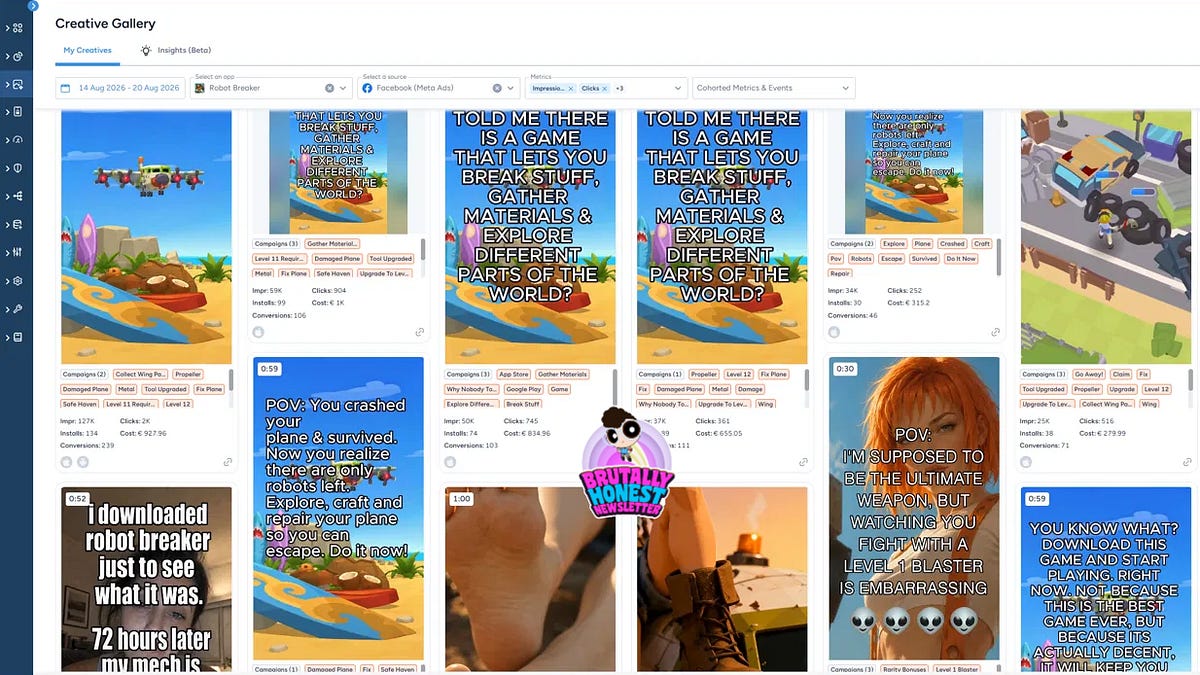
The guide concludes that developers must remain emotionally detached from their projects, using data to decide when to "kill" a game. If two to three successive builds fail to improve KPIs, the recommendation is to cease development to preserve company cash flow. Success in 2024 requires a diversified UA portfolio—including Facebook, Google, and TikTok—and a relentless focus on creative testing and App Store Optimization.