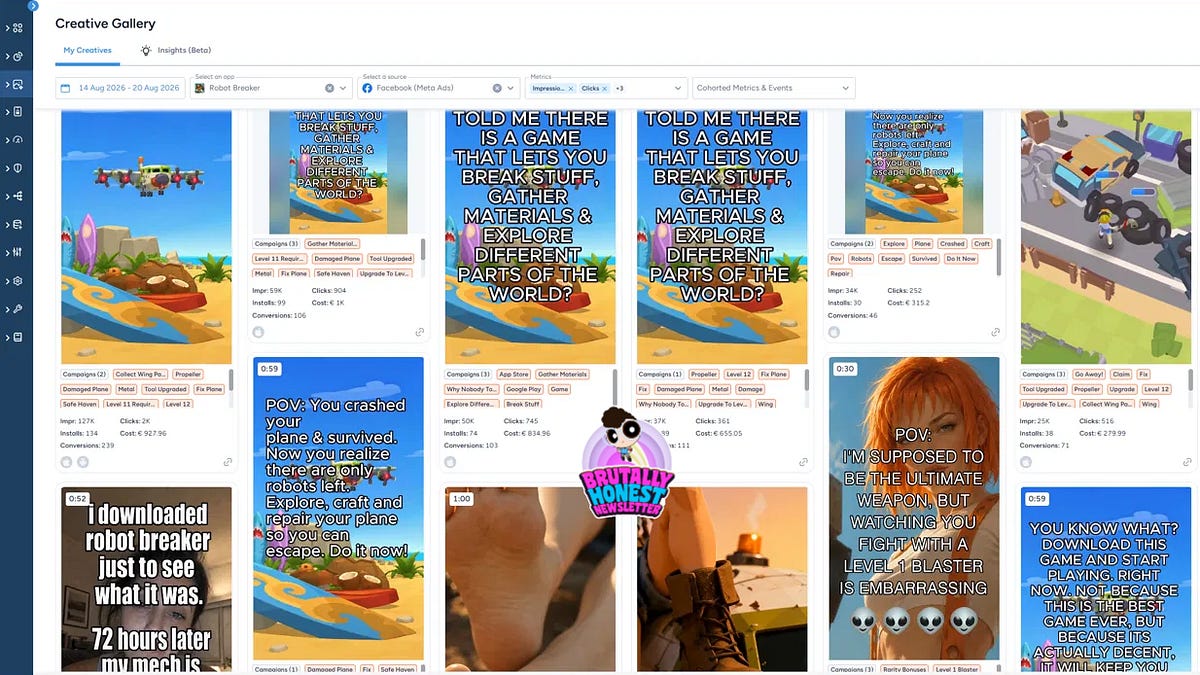
This analysis provides a series of practical, data-driven strategies for optimizing mobile user acquisition (UA) in the third quarter of 2024. The primary thesis emphasizes a "no-nonsense" approach to scaling mobile games, focusing on the aggressive use of artificial intelligence in creative production and the meticulous management of ad groups across major platforms like Google, Facebook, and TikTok.
Key findings highlight the necessity of maintaining three to five active ad groups for Google campaigns, depending on daily spend, to test diverse creative angles such as user-generated content (UGC) and altered gameplay. Data points suggest that implementing Google Audiences can improve performance by 10% to 30%. In the realm of social media, the analysis notes that successful scaling on Facebook and TikTok often requires months of testing across geographic combinations and bidding strategies, with stable daily spends reaching $4,000 to $5,000. On iOS, practitioners are advised to wait at least 72 hours before optimizing campaigns to account for SKAN data delays and to aim for a privacy threshold of 88 daily installs to gain full postback visibility.
The scope of the insights covers global mobile gaming markets, with specific tactical advice for Tier 1 and "Rest of World" (ROW) geographic segments. It also extends to Steam UA, noting that PC game marketing should utilize conversion-based tracking pixels similar to mobile app event optimization.
Methodologically, the findings are based on real-world campaign data and professional observations from the 2023-2024 period. The conclusions stress that AI tools like Midjourney and ChatGPT are now essential for generating high-performing static ads, which can then be converted into video assets. Ultimately, UA success in the current landscape depends on aligning unique KPI goals—such as D7 or D120 ROAS—with the specific retention profiles of each advertising network.