Distilling the key insights…
Activision Blizzard’s 2017 fiscal year was defined by a strategic transition toward a recurring, digital-first revenue model. The company achieved $7.02 billion in consolidated net revenues, a 6% increase over the previous year, largely fueled by digital online channels which accounted for 78% of total revenue. Despite this top-line growth, net income fell significantly to $273 million from $966 million in 2016. This decline was primarily attributed to a $636 million one-time tax charge resulting from the U.S. Tax Reform Act, alongside ongoing operational costs associated with the integration of the King segment and increased marketing investments for major franchises like Call of Duty, Overwatch, and Destiny.
The company’s financial health remains robust, characterized by strong liquidity and a shift in business focus. With $4.71 billion in cash and short-term investments and $2.21 billion in operating cash flow, the firm successfully reduced its long-term debt by $500 million. Operationally, the company is pivoting toward a global media network model, emphasizing mobile expansion, esports—highlighted by the launch of the Overwatch League—and digital advertising. While the company maintains a massive, highly engaged user base, it noted a 14% year-over-year decline in monthly active users, largely due to the maturity of titles within the King segment.
Geographically, the company maintains an extensive international footprint across North America, Europe, Asia, South America, and Australia. Financial reporting is heavily reliant on management judgment regarding complex accounting estimates, including revenue deferrals for online-enabled titles and the valuation of intangible assets. The firm faces ongoing regulatory scrutiny, including a notable tax dispute with French authorities, and maintains a high revenue concentration among three major digital storefront partners: Apple, Sony, and Google. Moving forward, the company is preparing for new revenue recognition standards and continues to prioritize shareholder value through dividend payments and stock repurchase programs.
Modern Times Group · 2026

InvestGame · 2025
Ubisoft · 2025

G5 Entertainment AB · 2024

Paradox Interactive · 2024

Bandai Namco · 2021

King · 2021
GREE · 2020

GREE · 2017
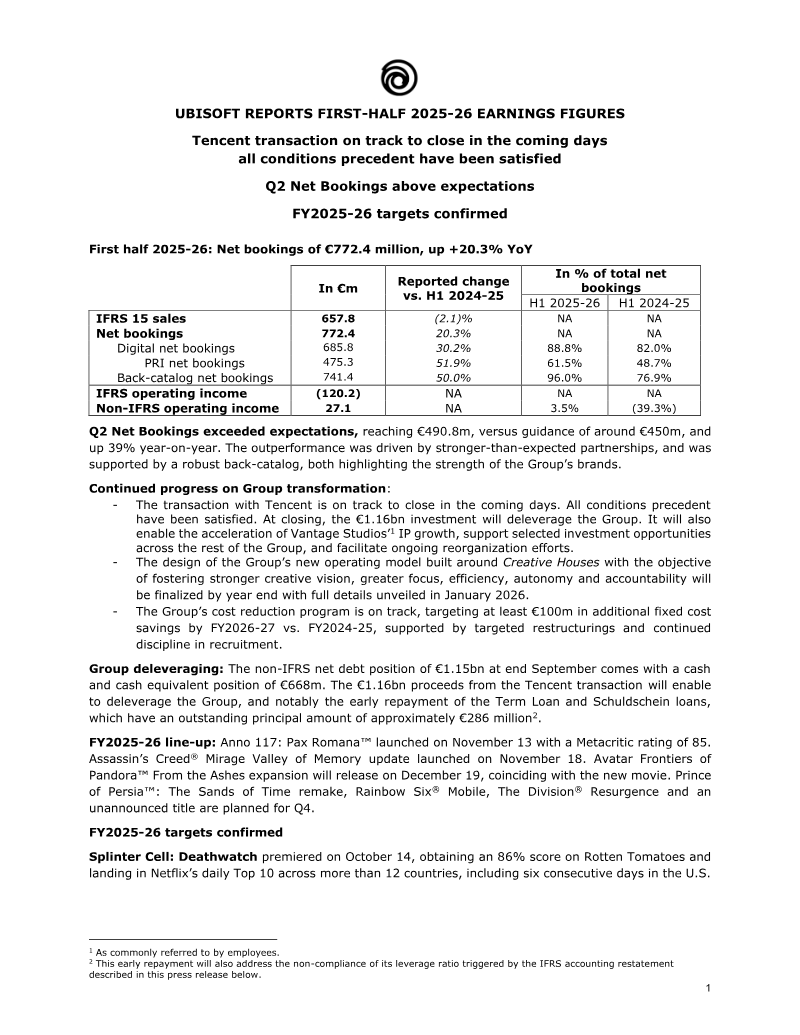
Ubisoft
Modern Times Group

Games Workshop Group