Loading the document
1 free read left. Create a free account for unlimited reading + AI research.
Create free account
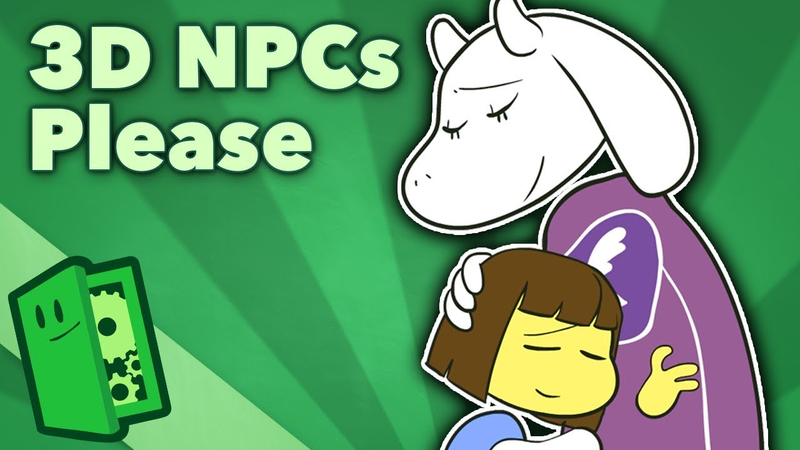
3D NPCs Please - Adding Depth to Character - Extra Credits
Key insights
6 takeaways- 01To create memorable NPCs, developers should apply Lajos Egri’s 1946 dramatic writing framework, which defines character depth through physiological, sociological, and psychological dimensions.
- 02Villains must be grounded in personal flaws or misguided moral convictions rather than simple malice to avoid becoming generic gameplay obstacles.
- 03The emotional impact of a character's loss is directly tied to the level of development invested in their backstory and internal logic.
- 04Mentors and sidekicks require agendas and lives independent of the player to ensure they function as fully realized individuals rather than mere plot devices.
- 05Even when resource constraints limit deep characterization, small additions like unique flavor text can effectively elevate NPCs from static functions to living parts of the narrative.
- 06Player engagement with a virtual world is directly proportional to the effort invested in crafting NPCs that possess their own history and humanity.
Ask AI about this video
Transcript
Not to get too personal right off the bat, but how are your relationships going these days? Hang on, I'm not being nosy. Well, I am, just not in the way you think. I mean, your relationships with non-player characters, the NPCs in the games you're playing. Ever wonder why it is that some NPCs make you glad to know them and others you forget the moment you say goodbye? They are there to fill our game worlds with life after all. So, why do some affect us on a personal level and others don't? Well, let's have a look at some of the most important NPCs that inhabit our virtual worlds, villains, mentors, and sidekicks, and examine how our relationships with them affect whether we care about them or not. Real quick up top, I'm very excited to announce that writing for this episode, we're lucky enough to welcome game design professor, author of the game-based learning book The Multiplayer Classroom, and I kid you not, one of the writers and producers of Star Trek: The Next Generation, Lee Sheldon. Thanks, Lee. In game design, we talk a lot about
the player, what the player knows, what the player does. But, what about all those NPCs? Well, they're often written and designed to be simple, one-dimensional stereotypes. Like, for instance, Lond, the smithy in Elder Scrolls: Blades, with his few stock variants of, "Hello, these are the wares I have today." Or, for that matter, any of the other folks in your town that wander around like self-involved zombies repeating their own brand of generic chitchat. What a waste. All the possibilities of a character reduced to a single function. And that's doubly sad, because without much effort, the Londs of the world could be portrayed as three-dimensional, living, breathing characters that further the believability of their worlds. Or, how about villains in a game? Are they just another ancient evil only back for revenge after being imprisoned, killed, or embarrassed into disappearing? I mean, couldn't that ancient evil also want something more? What else could really be driving them? How about the clumsy, snark-talking sidekick doomed only to fall into that vat of black goo and emerge as a rodent. Sure, that may
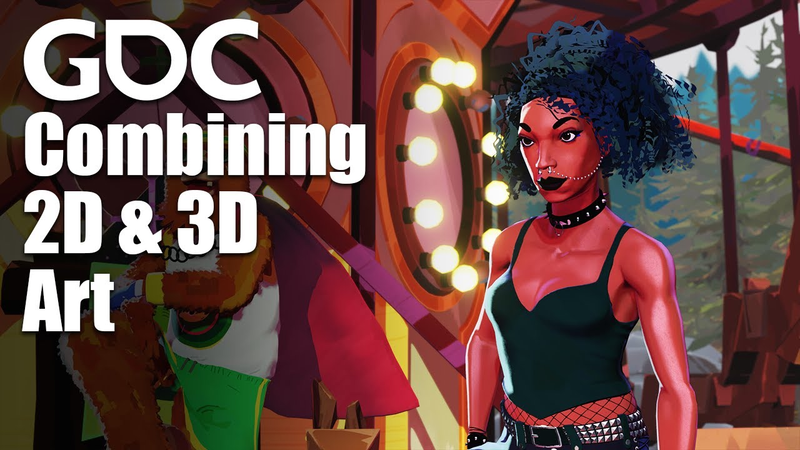
make him the pivotal character who jump-starts the story, but that's not all he is. I mean, Dexter's more than that. Or heck, how does Master Yoda fill his time when nobody comes to visit him in the swamp? Hmm, signed into Able to learn better English is he? The point being, no matter how small or specific their part in the overall scheme of things, the more we include for a character, the less likely they'll come off as a one-dimensional stereotype. So, to start, what does it mean for a character to be truly three-dimensional? Uh, no, Zoey, not that kind of three-dimensional. Though dang, that's some impressive rigging, bud. The idea for a three-dimensional character came to us from a book written in 1946 called The Art of Dramatic Writing by Lajos Egri. Now, what video games were around in 1946? Well, none. This book was about how to write for the theater, but it's really terrific for video game characters as well. Egri's three dimensions are as follows. One, physiological, or to put it more simply, the physical. This is the easiest dimension to picture. What does the character look like and how do they
move? Two, sociological. What happened in the character's past? How was their upbringing? And what's their current environment? And three, psychological. How is the character shaped by the first two dimensions? What are their attitudes, opinions, and views of the world? And how do they reveal those through their actions? So, with those in mind, what can we do to create three-dimensional NPCs? Well, let's start with NPC villains. First and foremost, they should have a compelling reason for their villainy, but also, their villainous ways really can't be the only thing that defines them. Sure, they may like to strangle or toast anyone who vexes them, but they also need to be a full person with motivations and backstory, like for instance, Handsome Jack in Borderlands or Andrew Ryan in BioShock, who we're told throughout the narrative is convinced he's doing the right thing. Also, we know that they shouldn't be easy to imprison, kill, or be embarrassed into disappearing. So, what can we do? We can give them a flaw, an Achilles' heel. For instance, are they so beautiful that looking at them could cause death? Or could they be the last of a dying species? Or are they trying
to live up to their father's expectations? Now, while one of these may be interesting, if you put them all together with some clever writing, it would really bring them to life. Next, let's examine mentor NPCs. Joseph Campbell once wrote that mentors should be protective and dangerous, motherly and fatherly at the same time. AKA, anything but one-dimensional. While mentors in games can do many things, provide gameplay tips for the player, be praise-singing quest givers, and remind them of what goals remain, if we ensure everything the mentor teaches us is also motivated by their character, then there's a much better chance of them feeling real and mattering to the player. Does the mentor keep mentioning that the player character reminds them so much of themselves when they were younger? Or maybe they actually hate the hero because of an old family squabble, but are forced to train them anyway? Or are they, perhaps, just in a hurry to get home for dinner? Any and all elaboration or emphasis on their lives outside of training the hero can only add to the overall story. Oh, and please also remember, mentors aren't all just
bearded old men. Now, let's consider sidekicks, like Zoe here. Sidekicks can provide comic relief, hints, reasons for questing, or they may even turn into surprise villains, like Iago, Othello's best buddy. Along with the villain and the mentor, sidekicks are one of the most important NPCs in a game. And one of those reasons is since we don't often kill a player character, mentors and sidekicks have great potential to touch a player's heart if they should ever come to any harm. But keep in mind, the player won't care if at least a couple of their three dimensions haven't been explored. It all boils down to treating NPCs with respect when crafting them for your game, even the minor ones. Because while you'll probably not have the resources or the time to make everyone strolling down the street more than a quick character sketch, even those minor NPCs can still be made memorable if you just show them a little love and give them a few lines of background flavor text lamenting that arrow they once took to the knee. So, the next time you find yourself crafting an NPC, don't just think of them as a game function. The more time you take to make them multi-dimensional, just like well, you,
the more your players will respond to them and want to see what they're up to again and again.
Summary
The primary objective of character design in video games is to move beyond one-dimensional archetypes by imbuing non-player characters (NPCs) with depth and agency. The central thesis posits that NPCs—whether villains, mentors, or sidekicks—become memorable and impactful only when they are treated as fully realized individuals rather than mere functional tools for gameplay. By grounding character development in the three dimensions of dramatic writing—physiological, sociological, and psychological—developers can create immersive, believable worlds that foster stronger emotional connections with the player.
The analysis draws upon Lajos Egri’s 1946 framework for dramatic writing, which categorizes character depth into physical appearance and movement, past upbringing and environment, and the internal attitudes shaped by those factors. Applying this to game design, the discussion highlights that villains require motivations beyond simple malice, such as personal flaws or misguided moral convictions, to avoid becoming generic obstacles. Similarly, mentors should possess lives and agendas independent of the player, while sidekicks must be developed beyond their roles as comic relief or plot devices to ensure their potential loss carries genuine emotional weight.
While acknowledging that resource constraints often limit the depth possible for every minor character, the analysis emphasizes that even small additions, such as flavor text or unique backstories, can elevate an NPC from a static game function to a living part of the narrative. Ultimately, the quality of a player’s engagement with a virtual world is directly proportional to the effort invested in crafting NPCs that possess their own internal logic, history, and humanity.















Comments