Updated Jun 1, 2026 by PitchBook
What can I help with?
AI-powered answers with citations from the library.
What can I help with?
AI-powered answers with citations from the library.
Report · January 11, 2026
Published by PitchBook
The 2026 US venture capital outlook projects a cautiously optimistic landscape, driven largely by an explosive surge in early‑stage activity and the continued dominance of artificial intelligence (AI) startups. AI firms now command 65 % of venture capital, fueling near‑record first‑financing counts and setting a high bar for late‑stage valuations. While liquidity remains the primary constraint—exit values are projected below $300 billion and limited LP enthusiasm persists—the emergence of improved secondary markets and a potential rebound in initial public offerings are expected to alleviate pressure. Multistage firms that focus on seed rounds are poised to sustain growth across both early and later stages, yet emerging managers may face fundraising challenges that could curtail diversification. A widening gap between AI‑focused, high‑growth startups and their slower‑moving peers is evident. In Q3 2025 the United States hosted 830 active unicorns with a record $3.9 trillion post‑money valuation, yet many of these firms are liquidity‑constrained and struggle to secure follow‑on funding. AI companies dominate late‑stage deals, with median Series C and D+ valuations reaching $838 million; AI rounds exceed non‑AI deals by roughly 26 % at Series D+, underscoring investor confidence in the AI boom while highlighting potential risks if public AI valuations contract. Fundraising is projected to rebound to $100‑$130 billion in 2026, largely driven by recycled distributions that are expected to account for roughly 70 % of new commitments. Strong exit activity through 2025 and renewed interest in AI‑focused funds—such as a $10 billion Andreessen Horowitz vehicle—underpin this outlook. However, risks remain: a potential liquidity reversal or recession‑induced sentiment decline could keep commitments below $100 billion, tempering the projected recovery.
Institutional Research Group 2026 US Venture Kyle Stanford, CAIA Capital Outlook Director of Research, US Venture [email protected] Our analysts’ outlook on the venture market in 2026 Emily Zheng Senior Research Analyst, PitchBook is a Morningstar company providing the most comprehensive, most Venture Capital accurate, and hard-to-find data for professionals doing business in the private markets. [email protected] Kaidi Gao Senior Research Analyst, Venture Capital 2026 outlooks [email protected] Susan Hu 4 The early stages of the market will see a surge in deal activity. Quantitative Research Analyst [email protected] 9 Later-stage deal activity will remain strong. [email protected] Published on December 1, 2025 13 Liquidity will return, though recovery will remain uneven. 16 Fundraising has bottomed out, and a gradual rebound awaits as distributions and LP sentiment improve.
Introduction Optimism in the US venture market heading into 2026 may not differ much from that at the start of 2025. Public markets had been trading at or near all-time highs, liquidity is still a major concern for venture capital, and further rate cuts are expected as the new year begins. Meanwhile, geopolitical tensions continue, though their impact on markets has somewhat lessened, and inflation is back to where it was a year ago. US GDP growth has returned to an annualized rate of 3.8% (as of Q2), aligning with the 3.6% rate from a year prior. What is different is that the Trump administration has had nearly a year to implement its policies, reducing the chances of legislative surprises in 2026. Now, the likelihood of rapid regulatory change in the market is low, contrasting sharply with last year when the changing administrations raised hopes of an M&A rebound and a more relaxed regulatory environment. Overall, we maintain a cautiously optimistic outlook for 2026, expecting tempered growth in IPOs, relatively improved market liquidity through secondaries, and continued growth in the number of completed deals, especially at the early stages.
M&A rebound and a more relaxed regulatory environment. Overall, we maintain a cautiously optimistic outlook for 2026, expecting tempered growth in IPOs, relatively improved market liquidity through secondaries, and continued growth in the number of completed deals, especially at the early stages. Liquidity will remain the primary challenge for the VC market in 2026. Despite a rebound in exit value in 2025, the year’s total is projected to fall below $300 billion, trailing not only 2021 but also 2020 and 2019. Fourth place is not bad, except that the net asset value (NAV) of VC has doubled since 2020, with the prior three years also having relatively low exit values. However, both big-ticket M&A and the number of unicorns going public noticeably increased in 2025. Exits of $500 million or more accounted for 91% of total exit value through Q3. We expect exit counts to continue to increase. Barring a major market event, public market multiples will likely keep expanding. Although the Federal Trade Commission has not explicitly commented on lowering M&A barriers, none of the year’s large deals has faced as much scrutiny as it might have under the previous administration. This is another positive sign for the market. With nearly half of unicorns being held for at least nine years, liquidity for these companies cannot rely solely on the public market.
riers, none of the year’s large deals has faced as much scrutiny as it might have under the previous administration. This is another positive sign for the market. With nearly half of unicorns being held for at least nine years, liquidity for these companies cannot rely solely on the public market. Despite these positive indicators, broad LP sentiment remains poor. Since 2022, net cash flows to LPs have been negative by $169 billion. The time to close new funds has increased sharply as LPs hesitate to commit more capital without any distributions. This has led to a concentration of capital among established firms. We knew that traditional venture mechanics would break with the extended liquidity timelines, and we are starting to see that happen.
On the dealmaking side, AI continues to foster optimism. It was a key driver of the surge in billion-dollar funds, and the nature of the AI market has significant implications for venture. AI startups have captured 65% of the total VC deal value in the US YTD, and more than half of new unicorns are AI companies. The market value of AI startups exceeds $1 trillion. AI is often seen as a single sector, such as climate tech, or a specific business model, such as software as a service; however, it is increasingly becoming an essential part of a broader range of industries, including biotech, enterprise productivity, and the previously mentioned climate tech. There is an endless stream of new AI tools being developed and adopted by corporations worldwide. It has been challenging for large companies to develop their own AI tools, so many have turned to tools created by startups. Through the first three quarters of 2025, first-time financings were nearing the all-time high set in 2021. While this has led to a rally in the early stages of venture, it has also led to crowded vertical segments that will bifurcate into a few winners and many losers. The pace of investment in AI continues to increase despite the venture market’s slow liquidity and low fundraising levels. Should those flip in 2026, deal counts could reach levels seen in 2020 and 2021.
also led to crowded vertical segments that will bifurcate into a few winners and many losers. The pace of investment in AI continues to increase despite the venture market’s slow liquidity and low fundraising levels. Should those flip in 2026, deal counts could reach levels seen in 2020 and 2021. We are more optimistic about early funding stages than we have been since 2021 because of AI, its rapid development cycles, and its growing demand from global corporations. Still, continued improvement of liquidity markets is necessary. IPOs may not be the most common exit path, but they will be crucial in expanding liquidity.
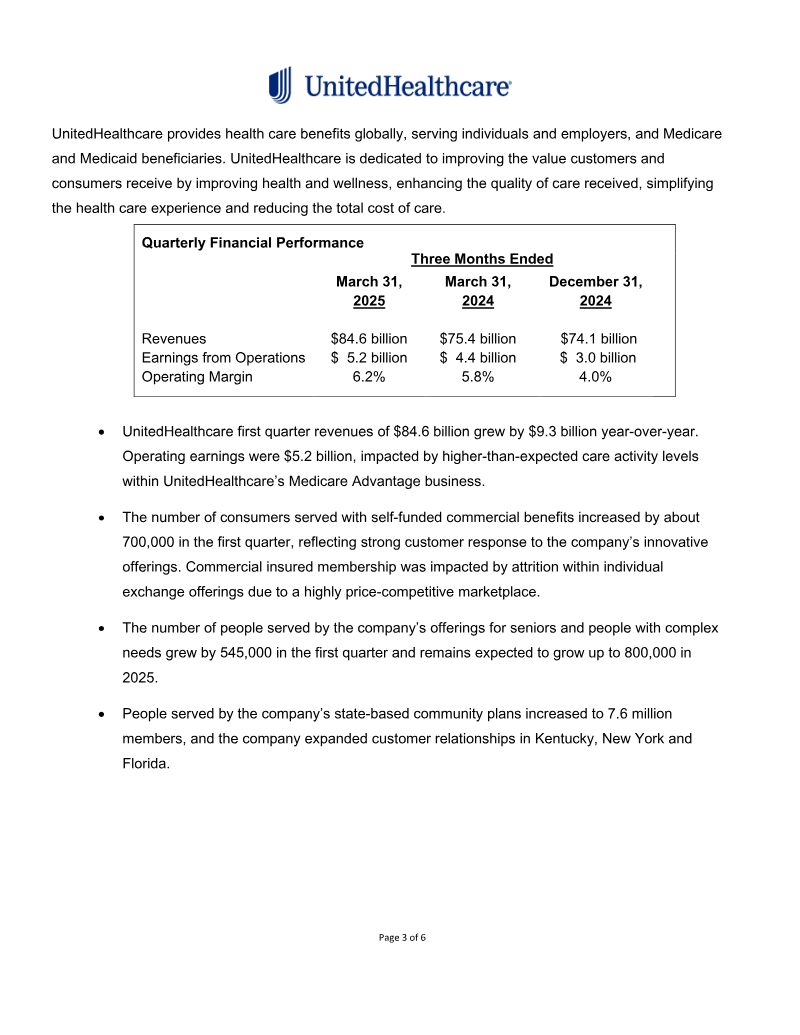
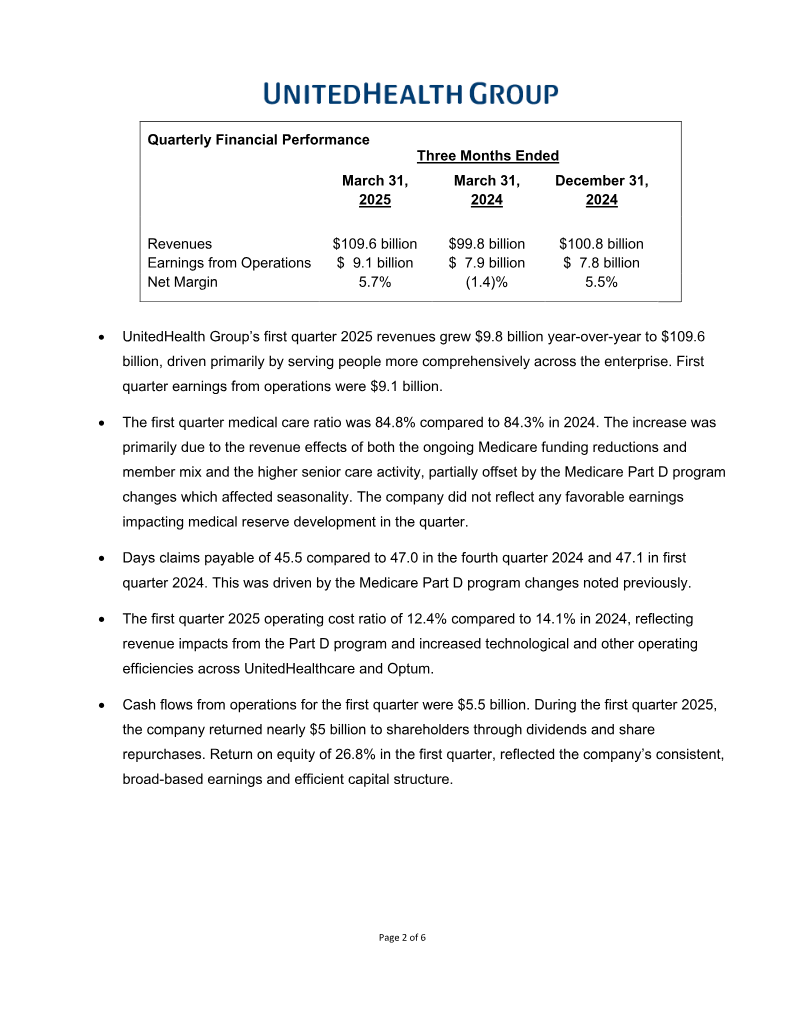
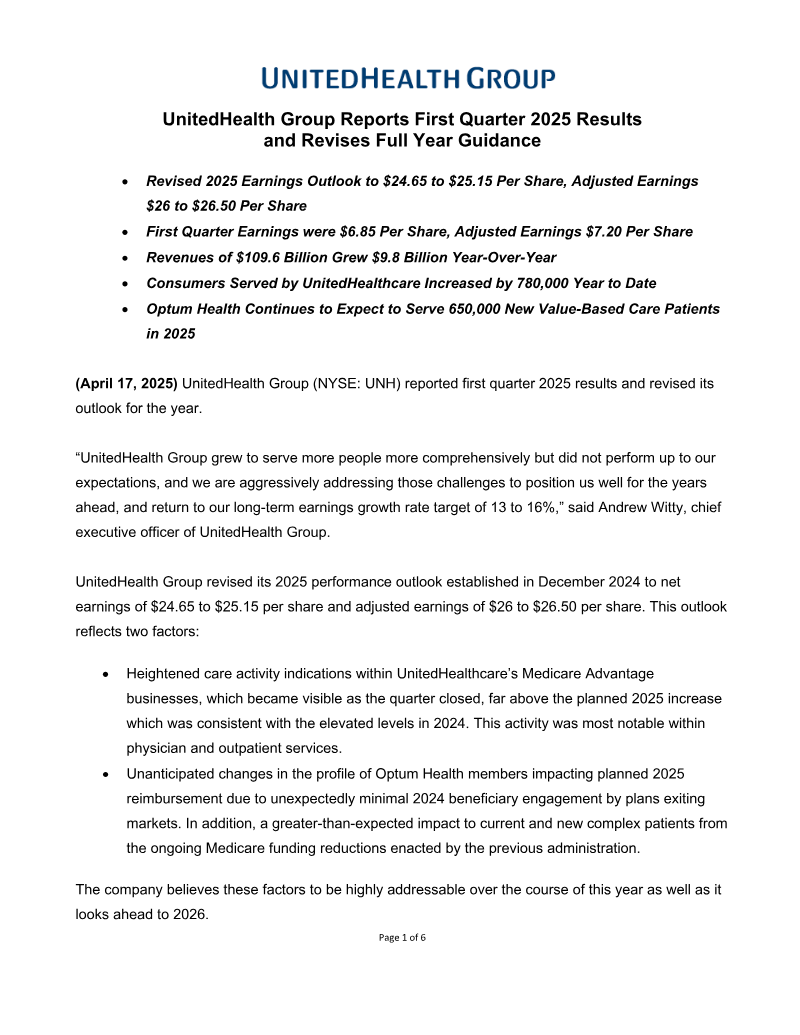
alth Group Reports First Quarter 20a UnitedHealth Group Reports First Quarter 2025 Results and Revises Full Year Guidance • Revised 2025 Earnings Outlook to $24.65 to $25.15 Per Share, Adjusted Earnings • First Quarter Earnings were $6.85 Per Share, Adjusted Earnings $7.20 Per Share • Revenues of $109.6 Billion Grew $9.8 Billion Year-Over-Year • Consumers Served by UnitedHealthcare Increased by 780,000 Year to Date • Optum Health Continues to Expect to Serve 650,000 New Value...
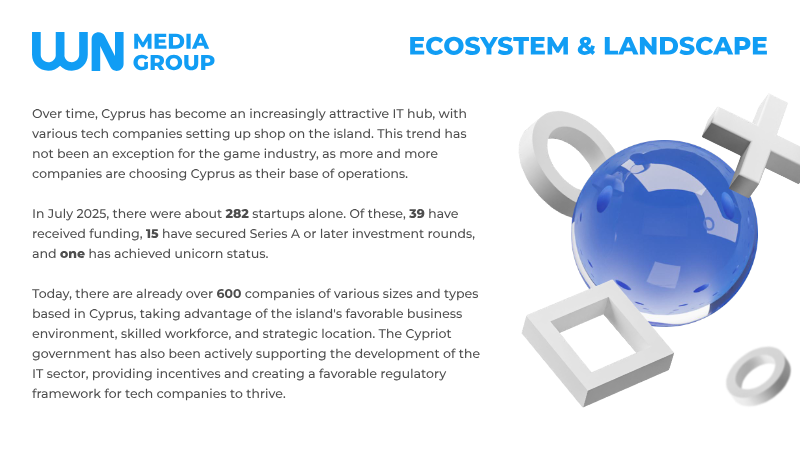
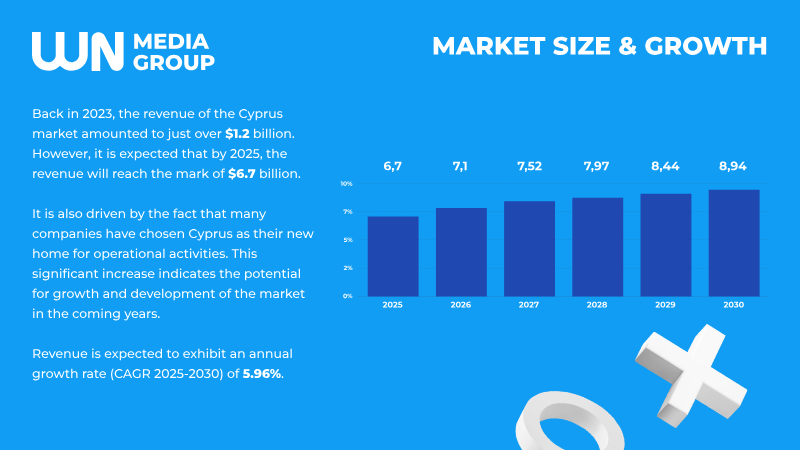
The report outlines a rapidly expanding video‑games ecosystem in Cyprus, projecting market revenue to surge from $1.2 billion in 2023 to $6.7 billion by 2025, with a compound annual growth rate of 5.96 % through 2030. The growth is driven by a growing number of tech firms relocating to the island, with 282 startups reported in July 2025—39 funded, 15 in Series A rounds, and one unicorn. Over 600 companies of varying sizes now operate locally, benefiting from Cyprus’s favorable tax regime, EU membership, and supportive regulatory framework. Key success stories highlight local studios such as MY.GAMES and Ludus, whose mobile titles have achieved multi‑million downloads and cross‑platform revenue streams exceeding $2 million. The mobile segment dominates, with Playrix, Easybrain, and Outfit7 leading in casual and puzzle games; yet PC and console titles from Wargaming and Digital Vortex Entertainment demonstrate a growing presence in the market. Cross‑platform development and cloud gaming are emerging trends, offering opportunities for developers skilled across mobile and PC. The island’s advantages include competitive corporate tax rates, strategic positioning between Europe and the Middle East, a growing talent pool enriched by relocation of experienced developers, and increasing investment in esports and blockchain gaming. The report also promotes the WN Conference Cyprus (September 2025) as a networking and market‑entry platform, anticipating attendance of 700+ participants. Overall, the data portray Cyprus as an attractive hub for game development and investment, poised for continued expansion through 2030.
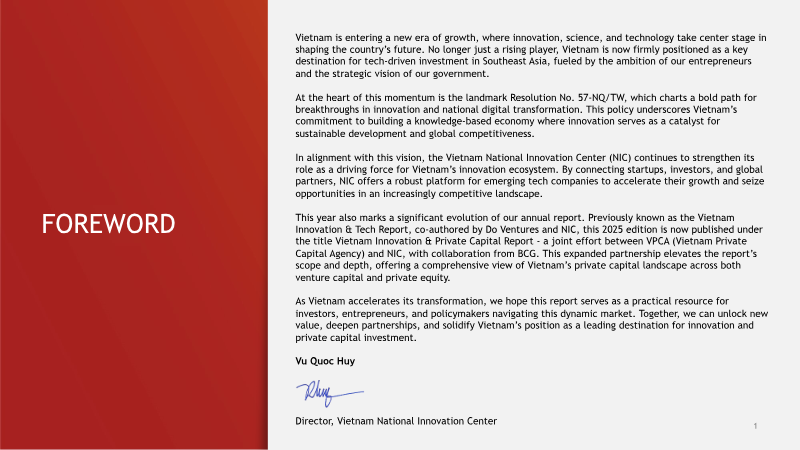
Vietnam’s 2025 Innovation and Private Capital Report positions the country as a rapidly ascending tech‑investment hub in Southeast Asia, underpinned by steady macro growth and decisive policy support. A 6 % annual real GDP expansion, a $36 B digital economy, and the landmark Resolution No. 57‑NQ/TW collectively create a macro‑environment that attracts both domestic and foreign capital. Private‑capital activity in 2024 totaled $2.3 B across 141 deals, with buyouts dominating but early‑stage venture capital rebounding sharply in the second half of the year. High‑tech sectors—particularly AI, AgriTech, Green Tech, semiconductors, and data centers—experienced multi‑fold funding surges, reflecting a shift toward technology‑driven value creation. The labor market fuels consumer and industrial demand: Vietnam ranks second in Southeast Asia for workforce size, with a growing middle‑affluent class projected to exceed 45 % of the population by 2030. Strong education outcomes and a youthful, tech‑savvy demographic drive growth in retail, e‑commerce, digital health, and edtech. Tier‑2 cities such as Bac Ninh, Can Tho, and Da Nang emerge as new growth poles, supported by government investment in transportation, renewable energy, and digital infrastructure. Resolution No. 57 sets ambitious 2030–2045 targets—30–50 % GDP share from digital and high‑tech exports, 80 % cashless transactions, and 2 % of GDP allocated to R&D (60 % private). It outlines strategic actions in AI, 6G, talent development, and digital governance to attract at least five global tech giants for R&D and manufacturing. Projected economic gains from AI alone could reach $120 B by 2040, while renewable energy and climate‑tech investments are already reshaping the power sector through flexible PPAs and green‑credit programs. Overall, Vietnam’s coordinated policy framework, expanding talent pool, and maturing private‑capital ecosystem converge to make the country a compelling destination for long‑term value creation across high‑growth technology, green infrastructure, and consumer markets within Southeast Asia.
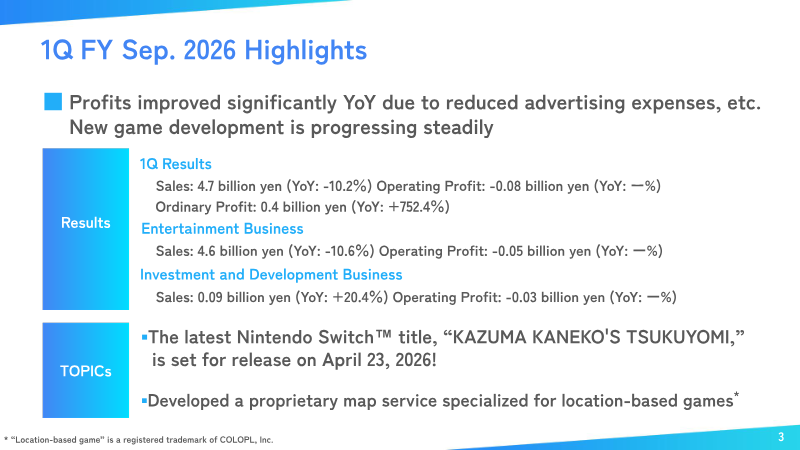
COLOPL’s financial performance for the first quarter of the fiscal year ending September 2026 reflects a strategic pivot toward profitability through rigorous cost management despite a shrinking core user base. While net sales declined 10.2% year-on-year to 4.7 billion yen, the company successfully reversed previous losses to achieve an ordinary profit of 0.4 billion yen. This recovery was primarily facilitated by aggressive reductions in advertising expenditures. The company maintains a highly stable financial foundation, characterized by a 91.7% equity ratio, providing the necessary capital to fund its transition from a mobile-centric developer to a multi-platform entertainment entity. Operational data indicates significant headwinds in the mobile segment, with Quarterly Active Users dropping to 400,000 from a peak of 575,000 in 2022. This contraction is compounded by a long-term decline in Average Revenue Per User, which has fallen from 862 JPY to 680 JPY over the same period. To counter these trends, the growth strategy emphasizes expansion into the PC and console markets, highlighted by the upcoming April 2026 release of Kazuma Kaneko’s Tsukuyomi for the Nintendo Switch. Furthermore, investments in specialized game server services and location-based map distribution technologies aim to diversify revenue streams beyond traditional mobile gaming. The long-term vision targets a "Global Top 20" market position with ambitious goals of 100 billion yen in sales and 50 billion yen in operating profit. Achieving these benchmarks relies on integrating cutting-edge technology, including AI-powered titles and XR experiences for next-generation mobility. By leveraging strategic investments in firms like CORE, Inc. and focusing on high-value intellectual property, the objective is to stabilize the current user contraction while building a sustainable pipeline of cross-platform content that can compete on a global scale.