Monetization & Live Ops
Revenue models, in-game economies, retention and live operations.
285 documents

GameDiscoverCo · 2025
ReportUGC Impact Study 2025
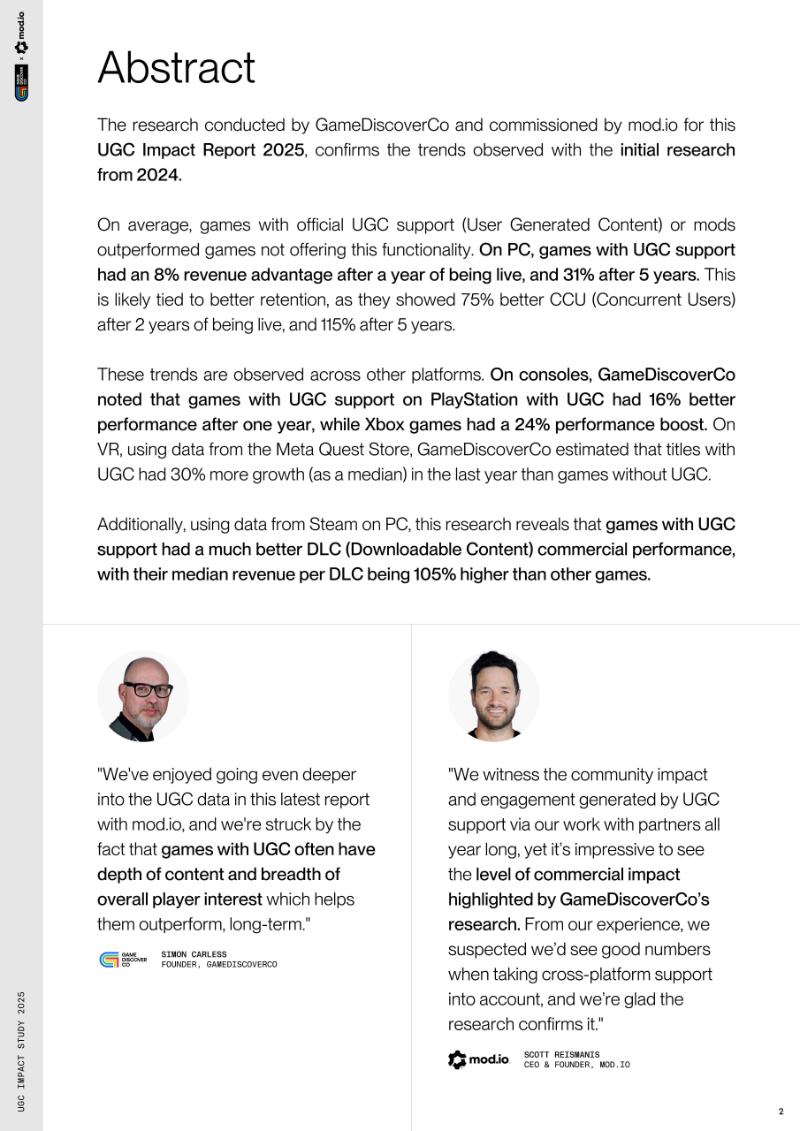
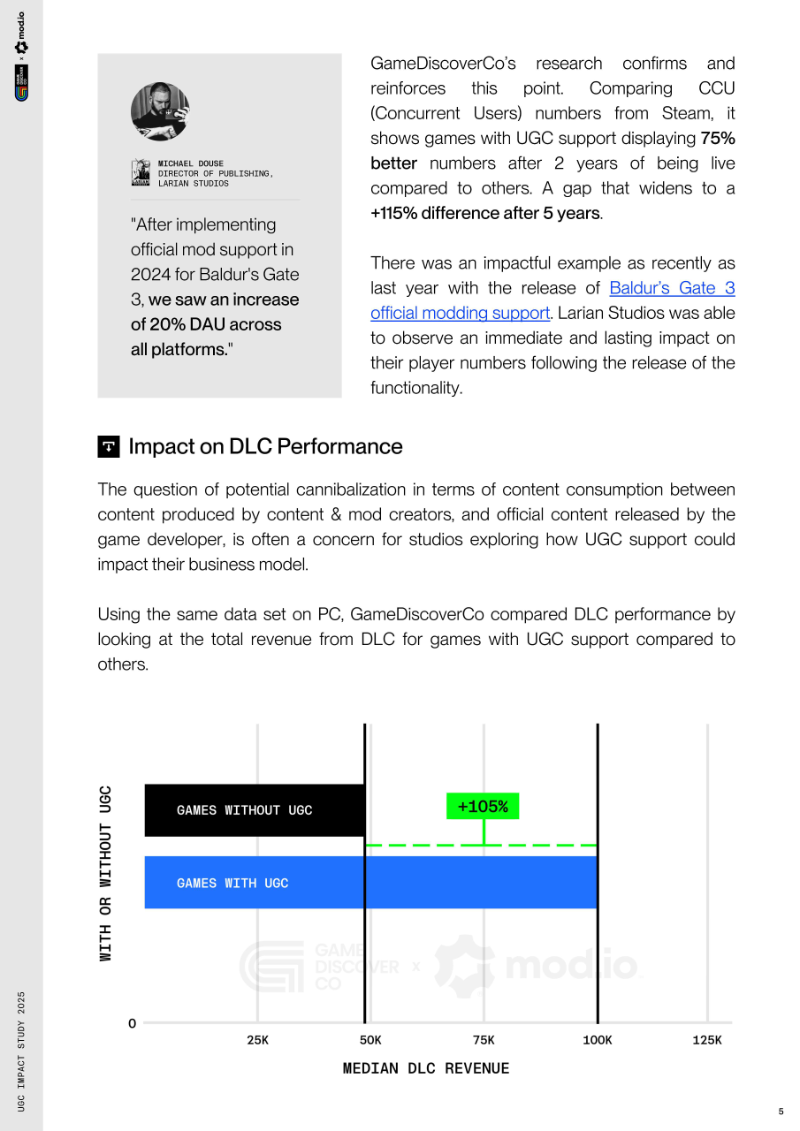
The 2025 UGC Impact Study, conducted by GameDiscoverCo and commissioned by mod.io, analyzes the commercial and engagement benefits of integrating official user-generated content (UGC) support into video games. The research demonstrates that games offering official modding tools or content-sharing solutions consistently outperform those without such features across PC, console, and VR platforms. By examining a dataset of approximately 1,200 Steam games that generated at least $1 million in their first month, the study finds that titles with UGC support see an 8% revenue advantage after one year, which expands to 31% after five years. The primary driver for this long-term financial success is significantly higher player retention. On PC, games with UGC support maintain 75% higher concurrent user counts after two years and 115% higher after five years compared to games without these features. Furthermore, the research refutes concerns regarding the cannibalization of official content; games with UGC support actually see 105% higher median revenue per DLC. Case studies, such as Baldur’s Gate 3 and SnowRunner, support these findings, with the latter noting that players using mods were 2.4 times more likely to purchase official DLC. The scope of the study extends beyond PC to include PlayStation, Xbox, and Meta Quest platforms. On consoles, the impact is even more pronounced in the short term, with UGC-supported titles showing a 16% performance boost on PlayStation and a 24% boost on Xbox after one year. In the VR sector, titles with UGC support experienced 30% more median growth over the past year than those without. The methodology evolved from previous years to include not just Steam Workshop, but also middleware solutions like mod.io and proprietary studio tools, suggesting that the positive correlation between UGC and commercial longevity is a robust, industry-wide trend.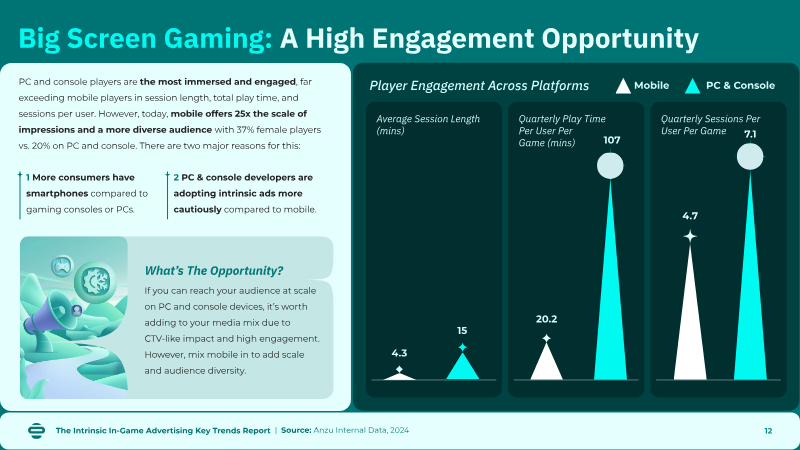

Anzu · 2025
ReportThe Intrinsic In-Game Advertising Key Trends Report H1 2025
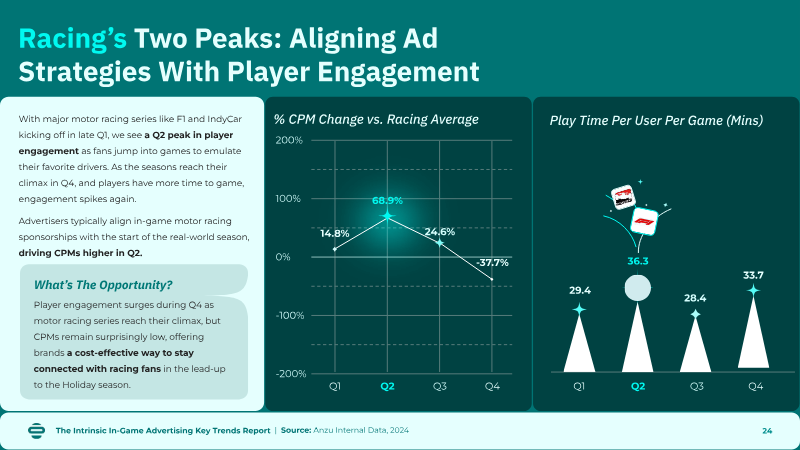
Intrinsic in-game advertising (IIGA) has transitioned into a measurable, high-impact media channel that allows brands to reach premium gaming environments through buying approaches similar to traditional digital and broadcast media. The primary thesis of this analysis is that gaming offers a unique, year-round engagement opportunity that remains consistent even when traditional channels like television and social media experience seasonal dips. By integrating non-disruptive, native ads into gameplay, advertisers can achieve significant full-funnel impact, including a 20-point lift in ad recall and a 21% lower cost per acquisition (CPA) compared to standard goals. The findings are based on aggregated internal data from 105 games and 333 direct advertisers, supplemented by third-party research from partners such as IAS, Lumen, and Comscore. The scope is global, with specific insights covering North America, Europe, LATAM, and APAC throughout the 2024 calendar year. While mobile currently offers 25 times the scale of impressions and greater audience diversity, PC and console platforms provide superior immersion, with significantly longer session lengths and higher total playtime per user. Key data points highlight that IIGA outperforms traditional digital formats in attention, delivering 2,957 attentive seconds per thousand impressions—nearly triple the performance of Facebook Infeed. Regional trends indicate that while North America and Europe command the highest CPMs, emerging markets like APAC and LATAM offer cost-effective growth opportunities. Furthermore, genre-specific data reveals that sports and racing titles see engagement peaks tied to real-world competitions, while simulation games offer a steady, female-skewing audience. The report concludes that advertisers should move beyond seasonal buying habits to capitalize on gaming’s "always-on" nature, particularly during Q1 when CPMs are lower but engagement remains high.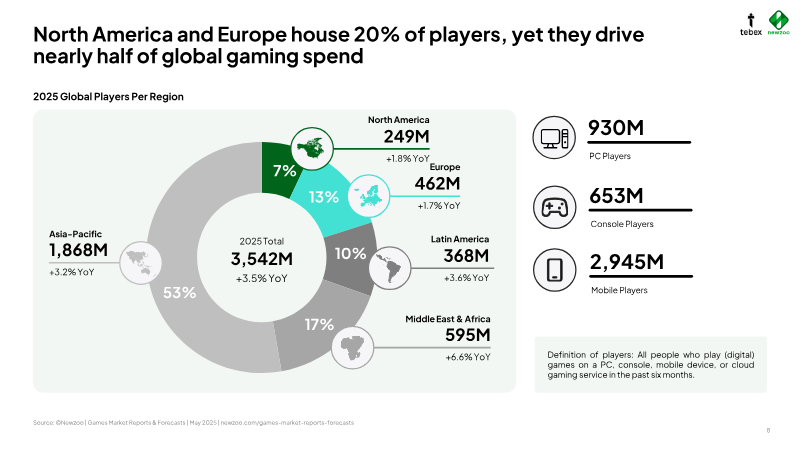
Newzoo & Tebex · 2025
ReportUnlocking Games Revenue: Player Behavior and Payment Trends in the West
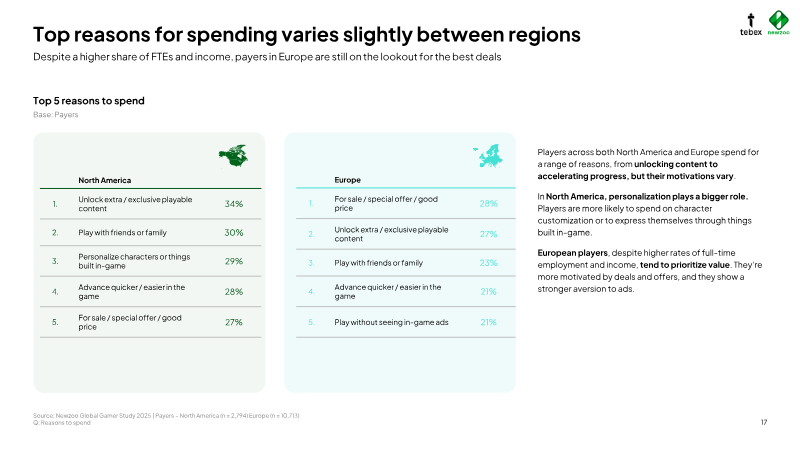
Unlocking Games Revenue: Player Behavior and Payment Trends in the West examines the evolving monetization landscape across North America and Europe. Produced through a partnership between Newzoo and Tebex, the analysis combines market intelligence with transaction data from over $1 billion in processed payments. The primary thesis suggests that as payer growth in mature Western markets plateaus—with a projected Compound Annual Growth Rate (CAGR) through 2027 of only 1.1% in North America and 3.1% in Europe—industry success depends on maximizing value from existing players through diversified payment methods and localized monetization strategies. The scope of the research focuses on PC, console, and mobile platforms in 2024 and 2025. Findings indicate that while North America and Europe house only 20% of the global player base, they account for 46% of total gaming spend. North America leads the world in average annual spend per payer at $324.90, compared to $125.40 in Europe. Regional motivations for spending differ significantly; North American players prioritize personalization and character customization, whereas European players are more value-conscious, citing sales, special offers, and the removal of advertisements as primary drivers for transactions. A critical finding involves the impact of alternative payment methods on Average Transaction Value (ATV). While traditional cards and digital wallets dominate total volume, emerging methods like Buy Now, Pay Later (BNPL) and cryptocurrency yield significantly higher ATVs. In North America, BNPL transactions average $85.00 compared to $52.20 for cards. Furthermore, the data shows that players using both traditional and alternative methods do not decrease their transaction frequency, suggesting that offering diverse payment options directly unlocks higher spending tiers. The analysis concludes that studios must reduce friction in payment flows and embrace unbundled, web-based storefronts to maintain loyalty and revenue in a maturing market.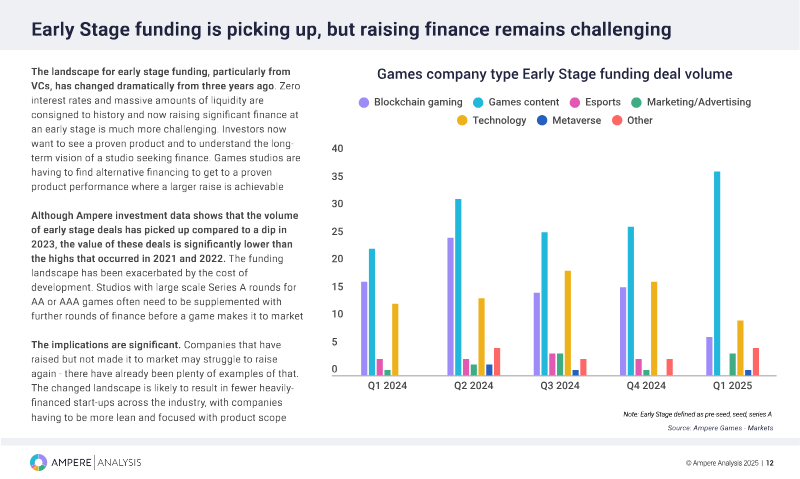
Ampere Analysis · 2025
ReportGames Industry in 2025
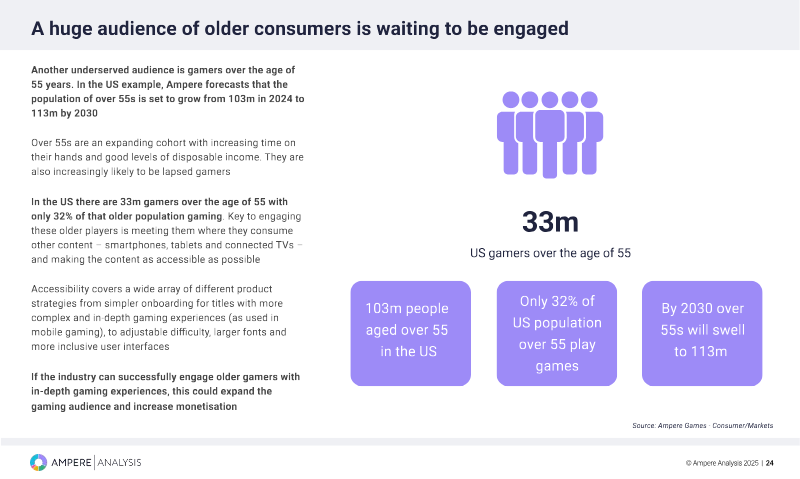
The global games content and services market reached a record $199.4 billion in 2024, a 3.5% year-on-year increase that surpassed pandemic-era peaks. Despite this financial milestone, the industry faces significant structural challenges, including widespread layoffs, studio closures, and a shift toward de-risking strategies. Growth is expected to slow to 0.9% in 2025, largely due to the delay of Grand Theft Auto VI into 2026, which is projected to remove $2.7 billion from the 2025 console market. However, the industry is forecast to surpass the $200 billion threshold for the first time in 2025, with growth accelerating to 2.2% in 2026. Key growth opportunities center on new hardware and emerging markets. The anticipated launch of the Nintendo Switch 2 in 2025 represents a $7-8 billion content opportunity, with significant potential for increased in-game monetization. Geographically, the Middle East, Africa, and Southeast Asia are expected to outperform Western markets, with the Middle East and Africa projected to grow by 6.3% in 2025. Additionally, significant headroom exists in mature markets like the U.S. by targeting underserved cohorts, specifically females aged 16-24 and adults over 55. The industry is navigating a transition in monetization and platform dynamics. In-game spending accounts for 77% of total revenue, while physical media is expected to dwindle to just 2% of the market by 2026. To combat escalating AAA development costs, publishers are increasingly utilizing remakes, remasters, and transmedia franchise strategies. While mobile gaming remains the largest segment at 58% market share, PC gaming showed the strongest growth in 2024 at 5.7%. The analysis utilizes proprietary market modeling, financial KPIs, and quantitative consumer research across global regions to provide a comprehensive outlook through 2026.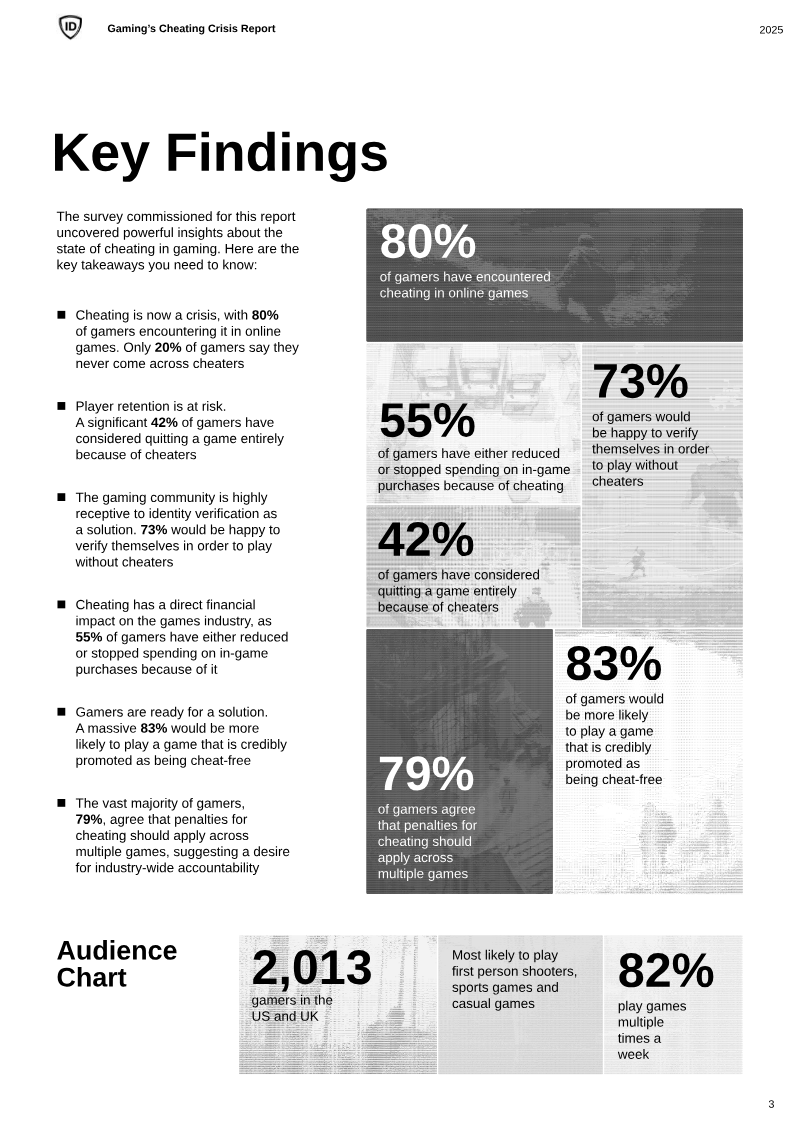

PlaySafe ID · 2025
ReportGaming’s Cheating Crisis Report: The Impact on Players and Profit
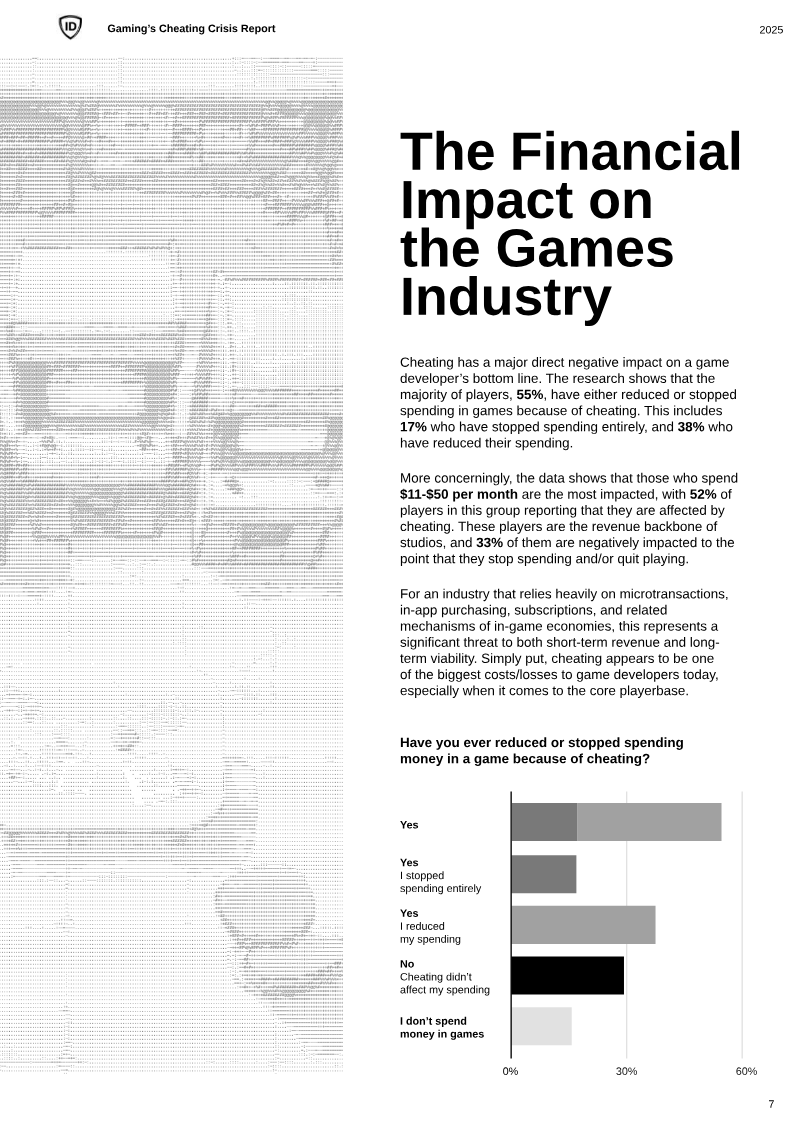
The gaming industry is currently facing a significant integrity crisis, with 80% of players reporting encounters with cheaters in online environments. This prevalence has transformed cheating from a fringe issue into a routine experience for the majority of the community, with over half of gamers encountering unfair play at least several times a month. The widespread availability of cheating tutorials on social media platforms like YouTube and TikTok has further exacerbated the problem, creating a cycle where 62% of players admit to feeling tempted to cheat themselves. The impact of this crisis extends beyond player frustration to significant financial and operational risks for developers. Approximately 42% of gamers have considered quitting specific titles due to cheaters, and 55% have either reduced or stopped their in-game spending entirely. This trend is particularly pronounced among high-value players, threatening the core revenue models of modern live-service games. Despite these challenges, there remains a high level of trust in developers to solve the issue, with 94% of players believing studios can effectively address the problem. Data suggests a strong appetite for robust, industry-wide solutions. Approximately 73% of gamers are willing to undergo identity verification to ensure cheat-free matchmaking, and 79% support cross-game penalties where bans follow a player across multiple titles. Furthermore, 83% of respondents indicated they would be more likely to play a game credibly marketed as "cheat-free." These findings suggest that implementing verified identity systems could restore accountability, protect revenue streams, and improve player retention. The research was conducted by Atomik Research on behalf of PlaySafe ID, surveying 2,013 adult PC gamers across the United Kingdom and the United States in July 2023. The sample consisted of active players, 82% of whom play multiple times per week, primarily focusing on first-person shooters, sports games, and casual titles.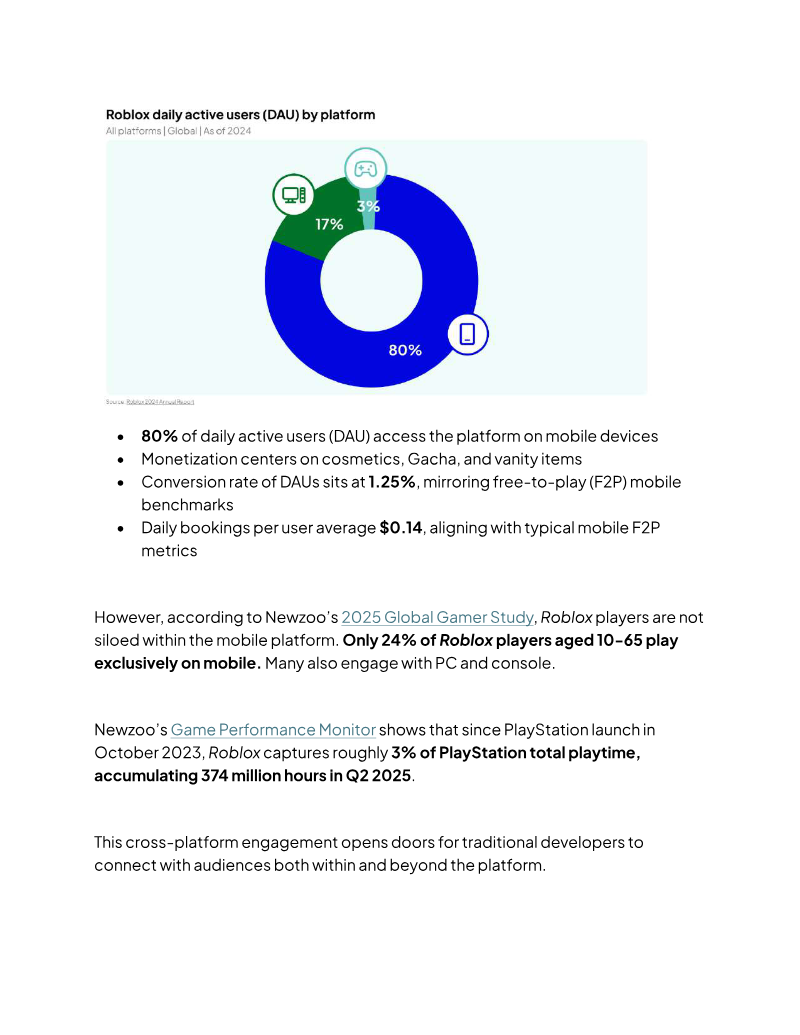
Newzoo · 2025
ReportRoblox as a Strategic Growth Platform: What Developers Need to Know
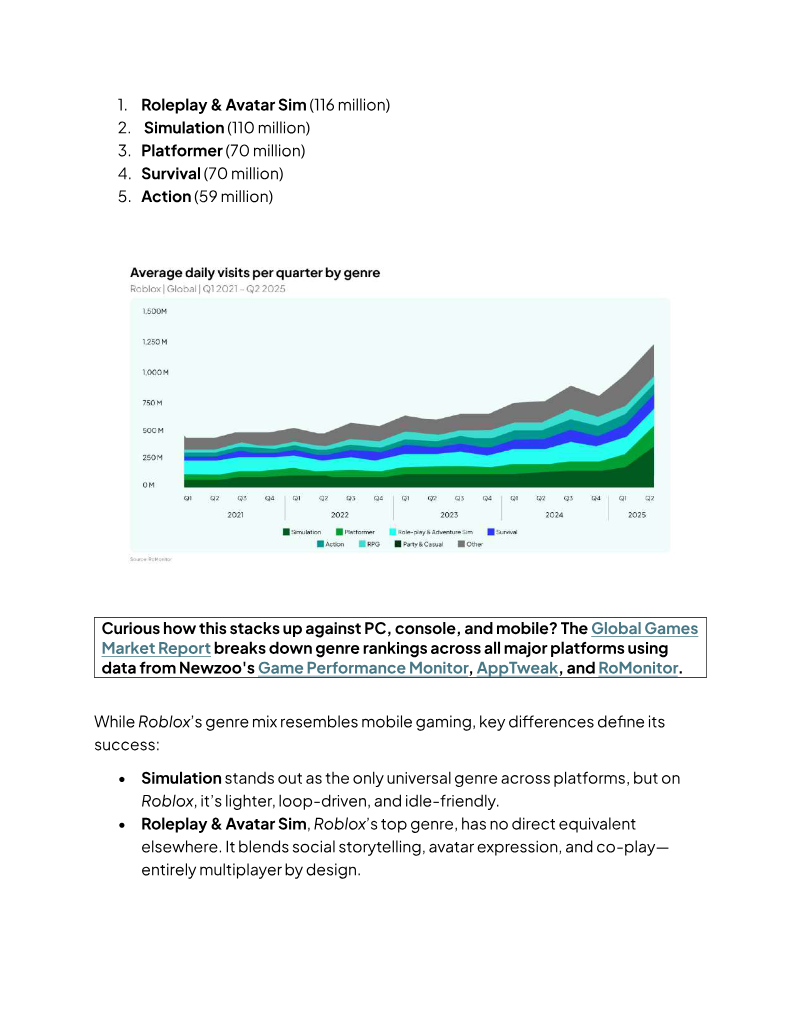
Roblox has evolved from a youth-centric gaming site into a massive entertainment ecosystem and creator economy, boasting nearly 112 million daily active users and distributing over $300 million to creators in a single quarter. While the platform shares structural similarities with mobile gaming—such as an 80% mobile user base and monetization driven by cosmetics and gacha—it functions more like a social media platform such as TikTok or YouTube. Success is dictated by cultural fluency, rapid iteration, and social momentum rather than high graphical fidelity or traditional production cycles. The platform’s audience is maturing, with the 13+ demographic growing at 54% year-over-year, significantly outpacing younger cohorts. This shift brings higher spending power and more sophisticated expectations to the ecosystem. Data indicates that Roblox is not a siloed experience; only 24% of players engage exclusively on mobile, with significant playtime occurring on PlayStation and PC. The genre landscape is dominated by Roleplay, Simulation, and Platformers, characterized by low-friction, social, and trend-driven mechanics that prioritize accessibility over complex skill sets. For traditional developers, the platform serves as a strategic testing ground for intellectual property and audience cultivation among Gen Z and Gen Alpha. Because the discovery algorithm rewards speed and native platform knowledge, established studios are increasingly partnering with Roblox-native creators to navigate the unique development rhythm. The most effective strategies treat the platform as a long-term engagement tool rather than a standard publishing channel, focusing on branded activations and collaborative IP experiences to build brand affinity with the next generation of gamers.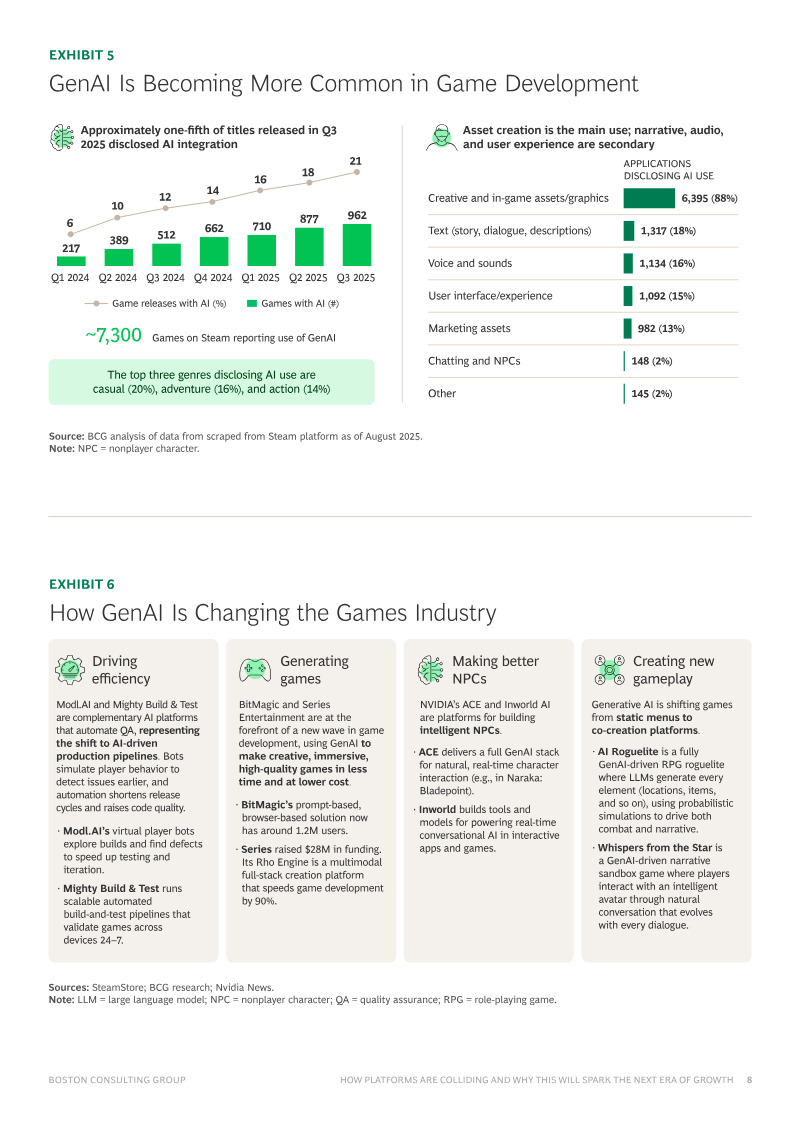
Boston Consulting Group · 2025
ReportVideo Gaming Report: How Platforms Are Colliding and Why This Will Spark the Next Era of Growth
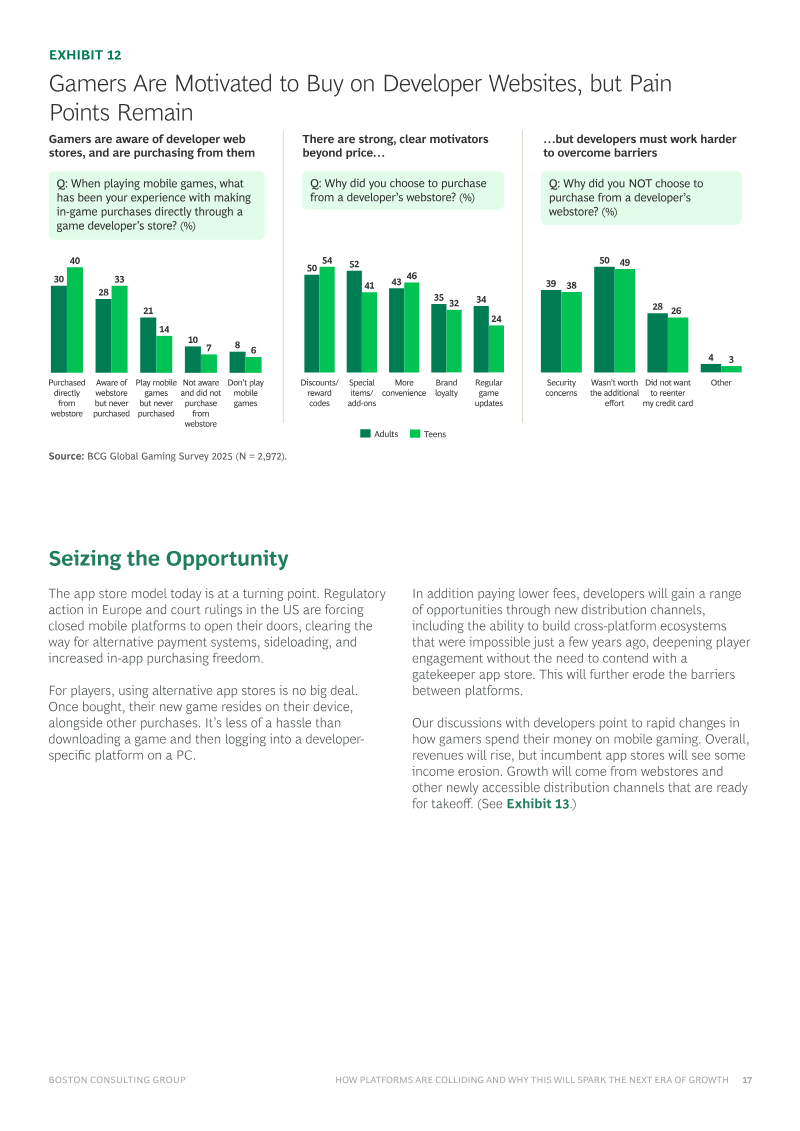
The video gaming industry is transitioning into a new era of growth following a post-pandemic stabilization period. While the sector is unlikely to replicate the rapid doubling of the 2010s, a convergence of technological and structural shifts is expected to revitalize the market. This evolution is driven by four primary strategic trends: the integration of Generative AI, the expansion of the user-generated content (UGC) creator economy, the mainstream adoption of cloud gaming, and the regulatory opening of mobile app stores. Key findings indicate that Generative AI is already being utilized by approximately 50% of studios to improve development efficiency and create adaptive gameplay, with 20% of new Steam games disclosing AI use by mid-2025. Simultaneously, the creator economy is surging; payouts from platforms like Roblox and Fortnite are projected to exceed $1.5 billion in 2025. Cloud gaming is also positioned for a massive scale-up, with revenues forecasted to grow from $1.4 billion in 2025 to $18.3 billion by 2030. This shift toward hardware-agnostic play is mirrored in distribution, where 33% of adult gamers have already purchased titles directly from developer web stores to bypass traditional platform fees. The scope of this analysis is global, with a particular focus on major markets including the US, China, Germany, Japan, and South Korea. It covers the industry from late 2025 through projections for 2030, spanning mobile, console, and PC segments. Data is derived from the Global Gaming Survey of approximately 3,000 gamers, metadata analysis of the Steam platform, and interviews with industry leaders and developers. The industry concludes that success in this new landscape requires a departure from traditional "console war" mentalities in favor of ecosystem-based strategies. Developers must master new monetization models, such as tiered pricing and windowing, to protect the value of premium content while navigating a market increasingly defined by infinite digital shelf space and algorithmic discovery.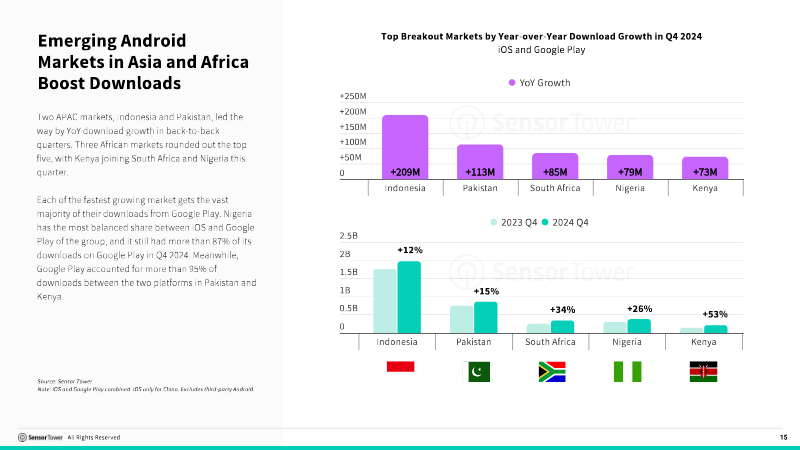
Sensor Tower · 2024
ReportDigital Market Index: Q4 2024
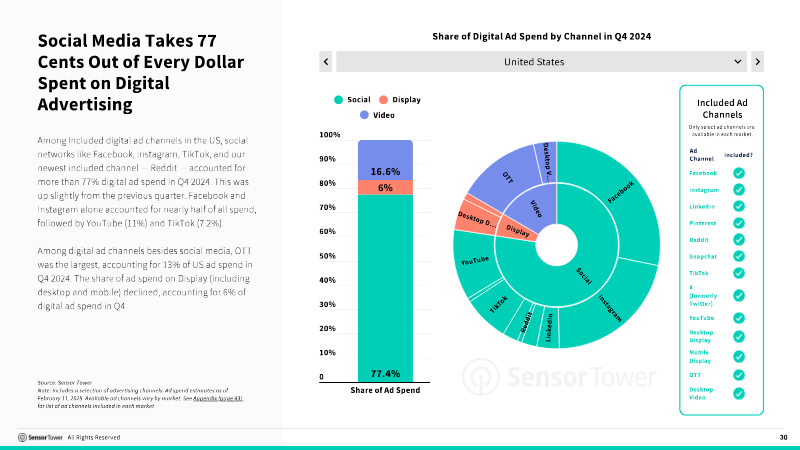
Global digital markets reached a significant milestone in the final quarter of 2024, with in-app purchase revenue hitting a record $39.4 billion. This growth was primarily fueled by a 28.2% year-over-year surge in non-game applications, exemplified by TikTok becoming the first app to surpass $6 billion in annual revenue. While the iOS ecosystem remains the primary driver of monetization by capturing 70% of total revenue, Google Play maintains its dominance in scale, facilitating nearly three-quarters of the 34.1 billion global downloads recorded during the period. The mobile gaming landscape underwent a notable structural shift as consumer preferences migrated from traditional RPGs toward Strategy and Puzzle titles. Strategy games experienced a 26% year-over-year increase in downloads, helping to offset regional revenue declines in major markets like Japan and South Korea. Despite these shifts, Japan’s mobile sector showed signs of overall recovery, while emerging Android markets in Indonesia and Pakistan continued to expand rapidly. The successful launch of high-profile titles like Pokémon TCG Pocket further stabilized the gaming sector during this transition. Advertising and retail media also reached unprecedented levels, with U.S. digital ad spend hitting $34 billion. Social media channels dominated this space, accounting for 77% of total expenditures as major retailers like Amazon and Walmart increased holiday investments. Retail media specifically generated a record 75.4 billion impressions, driven by high demand in consumer electronics and personal care. Strategic co-branded partnerships, such as the collaboration between Best Buy and Samsung, emerged as critical drivers of visibility, cementing the role of retail platforms as essential components of the broader digital advertising ecosystem.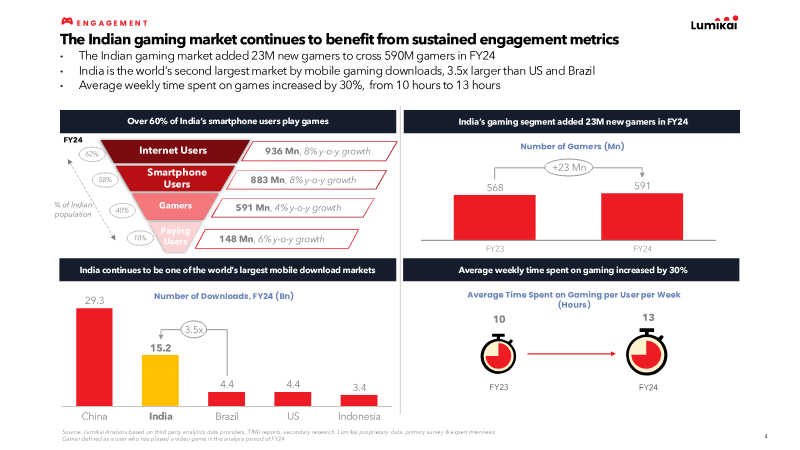

Lumikai · 2024
ReportLevelling Up: State of India Interactive Media & Gaming Research FY'24
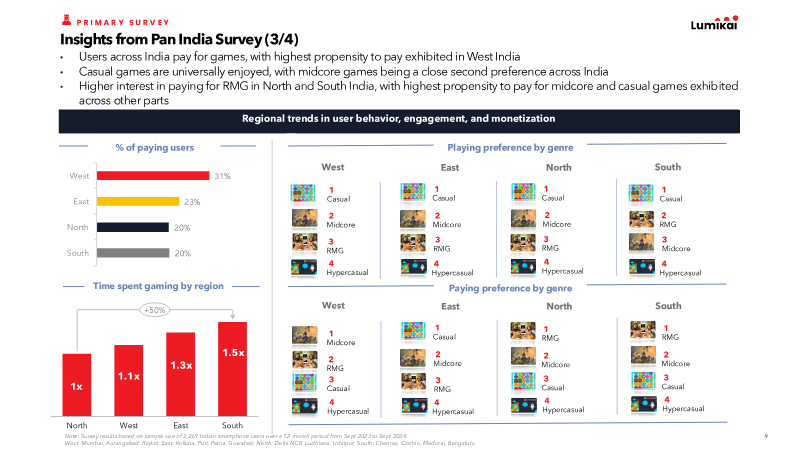
The Indian interactive media and gaming market reached a valuation of $3.8 billion in FY24, representing a significant 30% share of the country’s broader $12.5 billion new media sector. Growth is characterized by a 20% five-year projected CAGR, with expectations to exceed $9.2 billion by FY29. This expansion is primarily driven by a 41% year-on-year increase in in-app purchase revenue, particularly within the midcore segment, which grew by 53%. While Real Money Gaming (RMG) remains a major contributor, recent changes to the GST regime have led to margin compression and increased user acquisition costs for operators in that sub-sector. The player base in India has expanded to 590 million gamers, with 148 million identified as paying users. Engagement metrics show a 30% increase in average weekly time spent, rising from 10 to 13 hours. Demographic data reveals a diversifying landscape where 44% of gamers are women and 66% reside in non-metro cities. Notably, there is a high degree of overlap between gaming categories, as over 60% of RMG paying users also spend money on midcore titles. Payment behaviors are heavily modernized, with 83% of users utilizing UPI or digital wallets for transactions. The regulatory environment is shifting toward formal recognition and support, with the government identifying gaming as a "sunrise sector." New frameworks distinguish between RMG and Free-to-Play (F2P) games for taxation purposes, while esports has been officially integrated under the Ministry of Youth Affairs and Sports. These findings are based on a mixed-methods research design conducted between May and October 2024, incorporating a primary survey of 2,269 smartphone users across 16 Indian cities alongside secondary analysis of financial statements and proprietary industry data.


Video Game Insights · 2024
ReportGlobal Indie Games Market Report 2024
The 2024 Global Indie Games Market Report by Video Game Insights analyzes the significant growth and evolving structure of the independent gaming sector on Steam from 2018 through September 2024. The central thesis posits that indie games have reached a historical milestone, with their revenue share doubling since 2018 to match the combined earnings of AA and AAA titles for the first time. This surge is largely attributed to the rise of "Triple I" games—high-budget independent projects with teams of over 50 people—which now account for more than half of all indie revenue. Key findings highlight that 2024 was a record-breaking year driven by exceptional hits like Black Myth: Wukong and Palworld, which sold 20.6 million and 20.1 million units respectively. The data reveals an increasing concentration of wealth at the top of the market; excluding these two titles, all other 2024 indie releases combined generated less revenue than Black Myth: Wukong alone. Furthermore, the report identifies a trend toward studio maturity, noting that second and third releases typically outperform debut titles. Successful developers like Pocketpair and Sunlock Studios achieved massive hits only after releasing multiple previous games. The scope of the analysis focuses on the Steam platform, segmenting the market into four categories: Triple I, Middle Market, Small Teams, and Hobbyists. While all segments saw a "boom" during the COVID-19 pandemic, the larger Triple I and Middle Market tiers have seen the most substantial long-term growth. Methodology involves proprietary algorithms and the Boxleiter method to estimate unit sales and gross revenue from public Steam data, adjusted for regional pricing and returns. The findings suggest that the traditional definition of "indie" is blurring as production qualities and budgets of top-tier independent games now rival those of major AAA studios.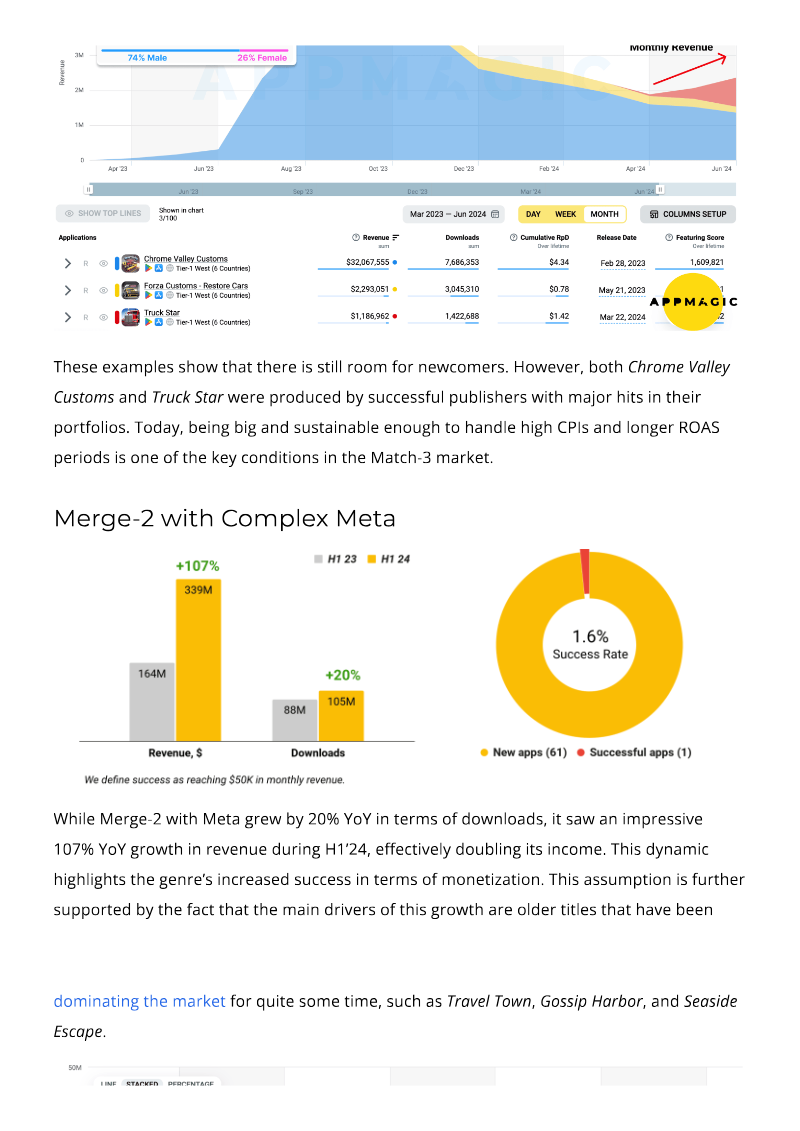
AppMagic · 2024
ReportCasual Gaming in H1 2024: Tough Competition and New Opportunities
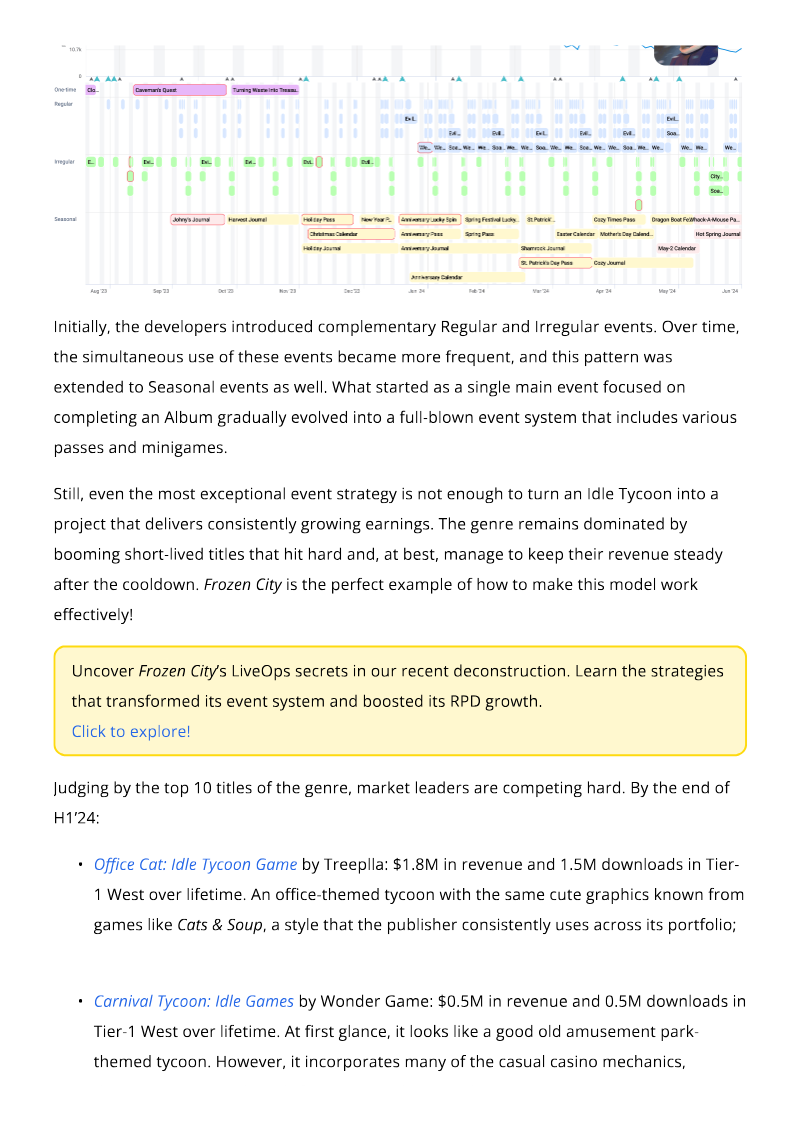
The mobile casual gaming market in Tier-1 Western countries—comprising the US, UK, Australia, Canada, France, and Germany—experienced an 11% year-over-year revenue increase in the first half of 2024, reaching $7.2 billion. Despite this growth, the industry faces significant challenges, including post-pandemic market cooling and the ongoing impact of IDFA privacy changes. A recurring trend across successful titles is that revenue growth is increasingly outpacing download volume, signaling a strategic shift toward enhanced monetization and sophisticated LiveOps rather than pure user acquisition. The analysis focuses on six key genres, revealing a landscape where established giants often dominate, yet specific niches offer growth potential. Match-3 with Meta remains the highest-grossing category, though it is heavily concentrated among four major titles. Conversely, the Sort Puzzle genre emerged as the fastest-growing segment, achieving a twelve-fold year-over-year revenue increase. Merge-2 and Match 3D also demonstrated strong performance, with the latter doubling its revenue primarily through new, innovative titles that integrate meta-features and social mechanics. Meanwhile, the Casual Casino genre remains highly monopolized, with Monopoly GO! alone accounting for 63% of total genre revenue. Methodologically, the findings are derived from an extensive classification system covering over 300 genres, with in-depth performance tracking of specific titles and their respective LiveOps calendars. The data indicates that while market entry barriers are high due to rising customer acquisition costs, developers can still succeed by refining monetization strategies and implementing robust, event-driven engagement models. The current market environment favors publishers capable of sustaining long-term operations over those relying on short-lived viral hits, as evidenced by the operational transition of former leaders like Frozen City.

PitchBook · 2024
Report