Xi'an Jiaotong-Liverpool University
5 reports, presentations and talks by Xi'an Jiaotong-Liverpool University in the Game Industry Library, the newest “Fused Spectatorship: Designing Bodily Experiences Where Spectators Become Players” (2023).
Documents
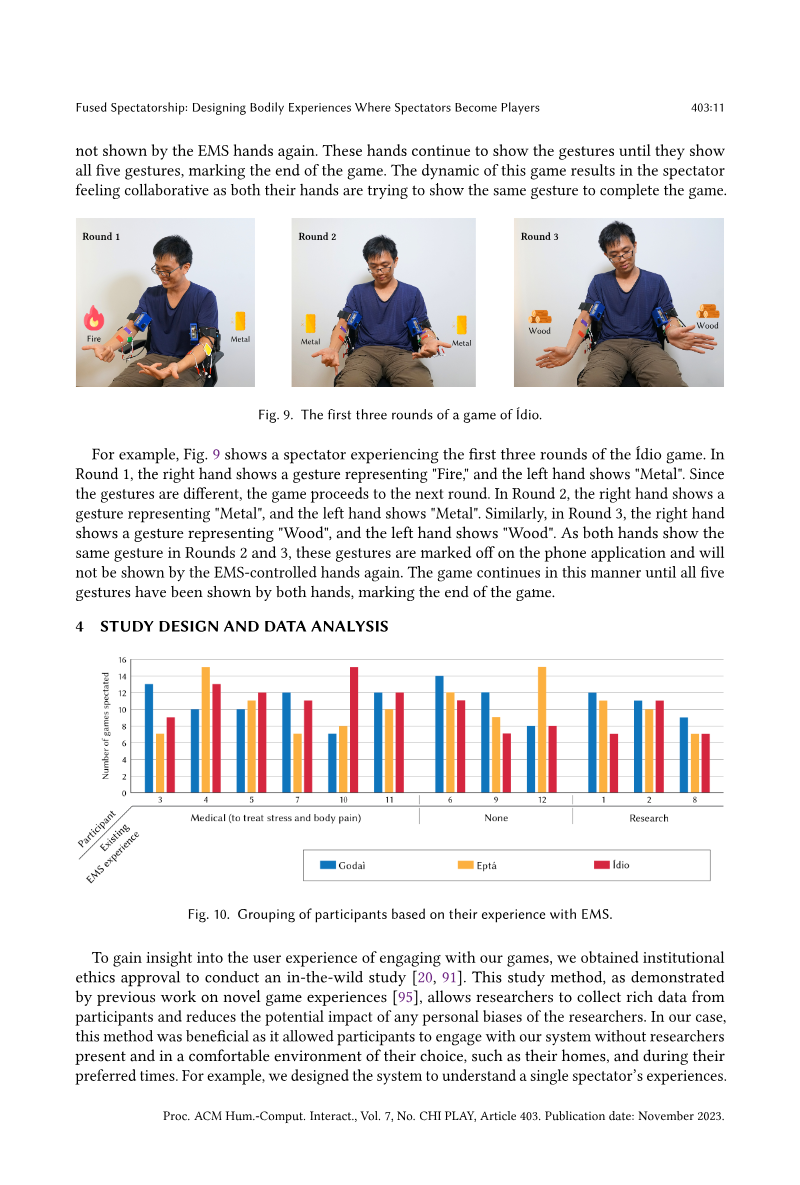
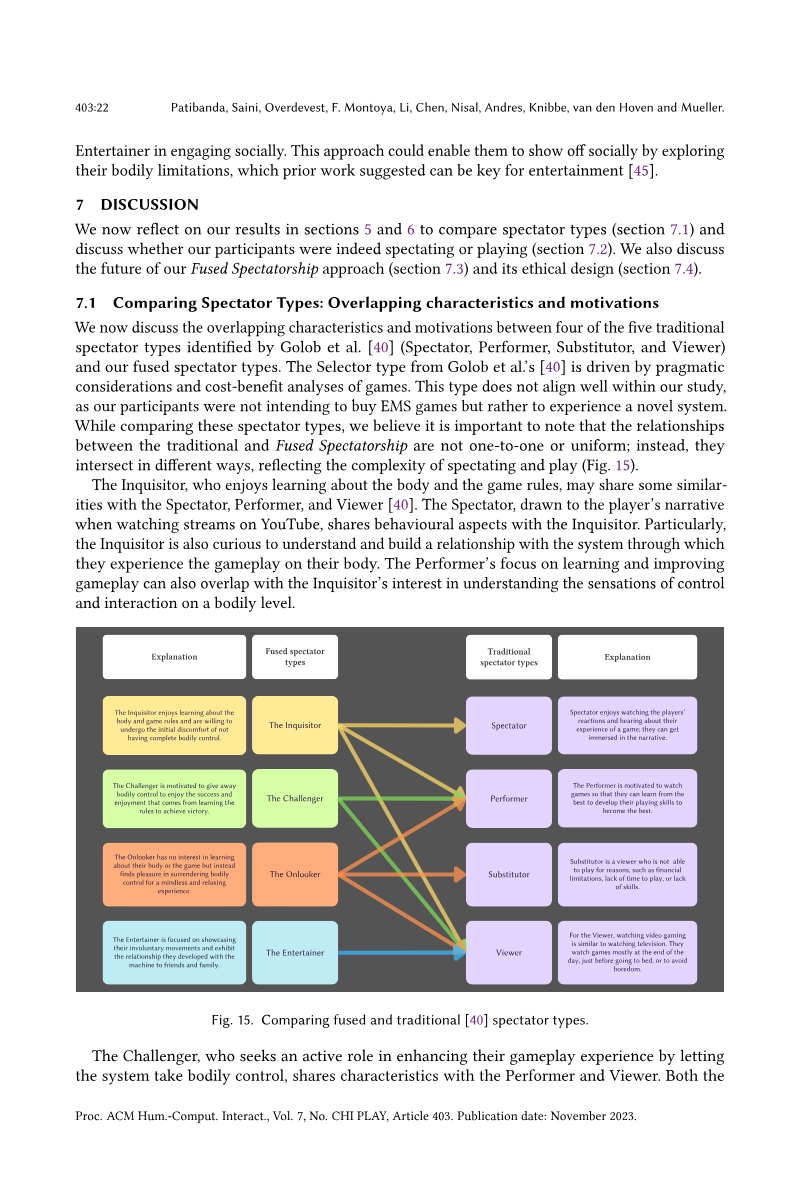
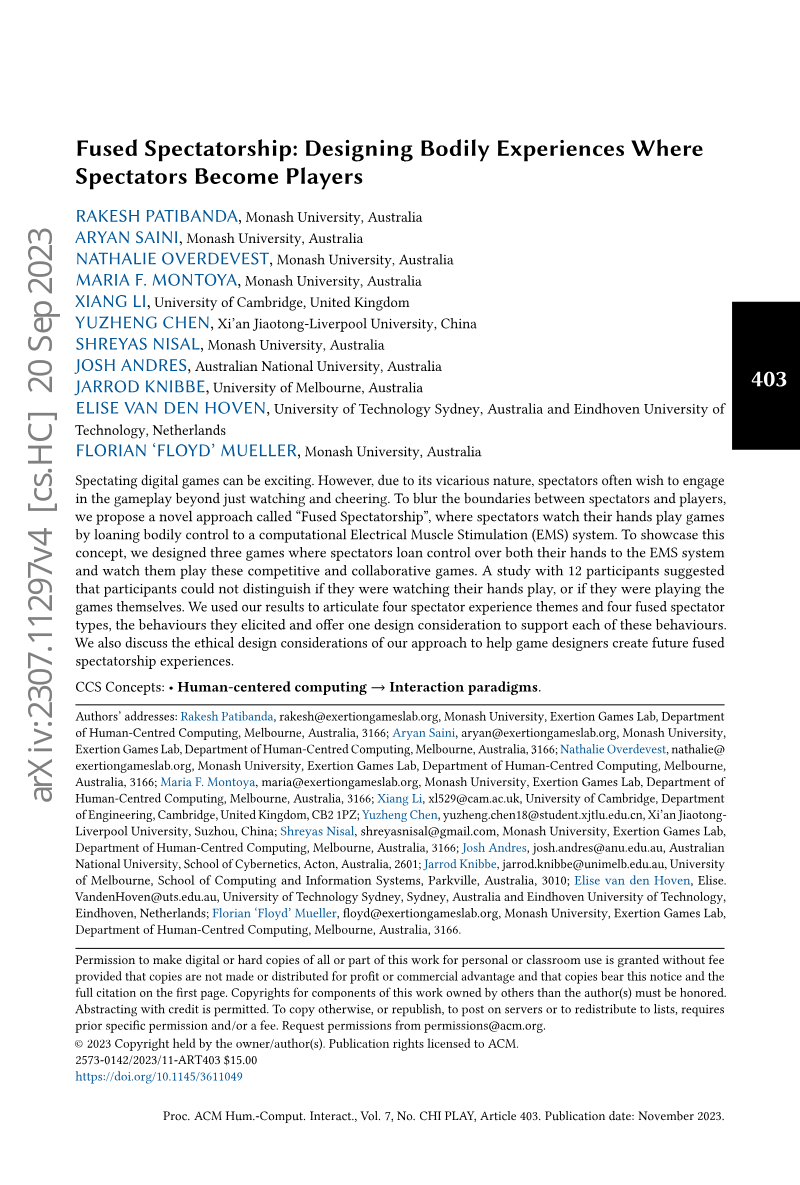
Fused Spectatorship: Designing Bodily Experiences Where Spectators Become Players
Fused Spectatorship redefines the traditional boundaries of digital gaming by utilizing Electrical Muscle Stimulation (EMS) to transform the spectator’s body into an active output medium.
- Fused Spectatorship uses Electrical Muscle Stimulation (EMS) to actuate involuntary motor movements, allowing spectators to physically participate in digital games rather than merely observing them.
- Research involving 12 participants across three game environments confirms that bodily engagement is a primary driver for immersive play, often causing users to struggle to distinguish between watching their hands move and actively playing.
- The study identifies four distinct spectator archetypes—the Inquisitor, the Challenger, the Onlooker, and the Entertainer—each requiring different levels of bodily control and awareness.
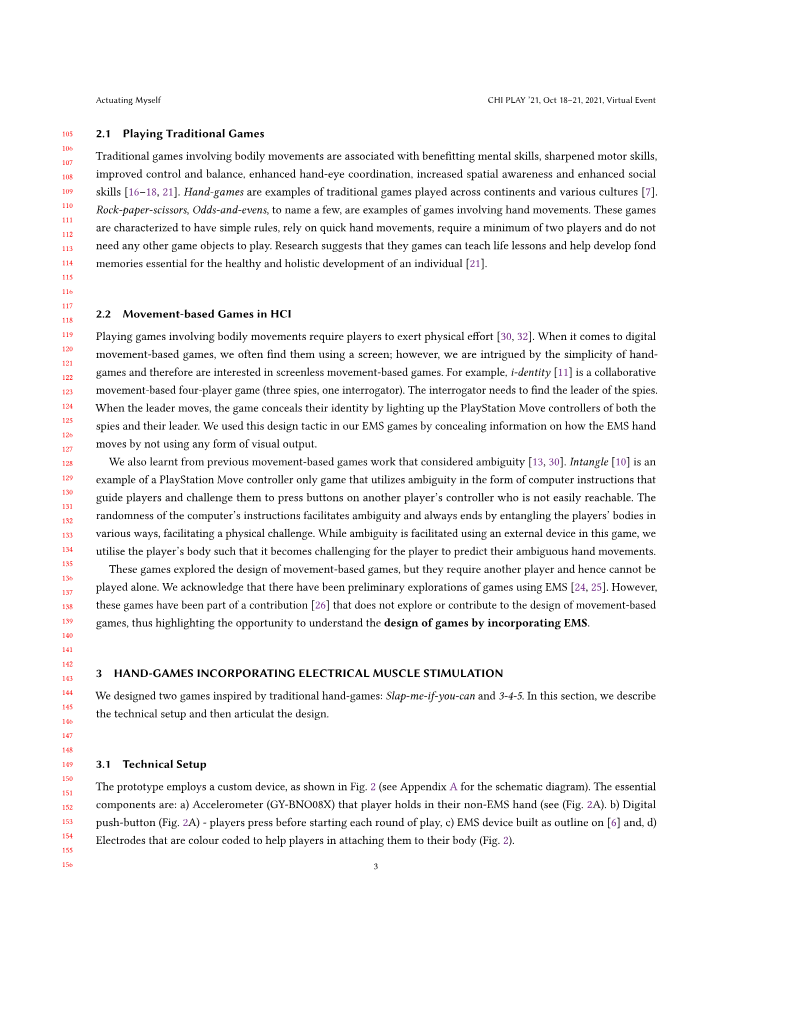
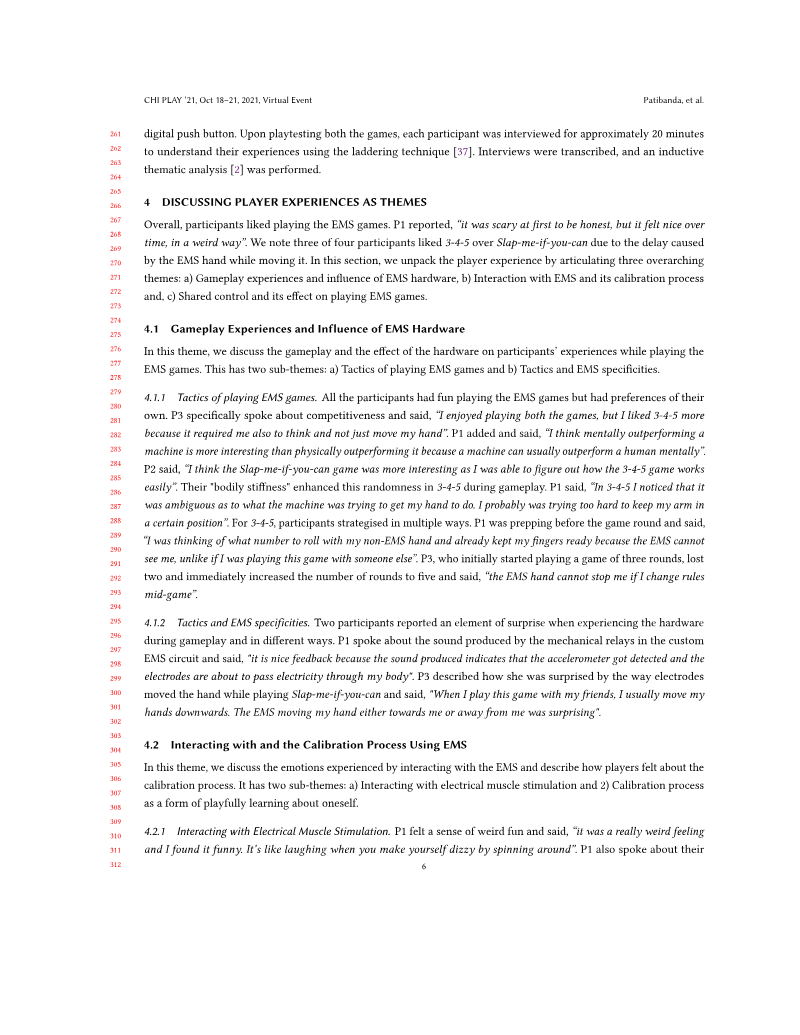
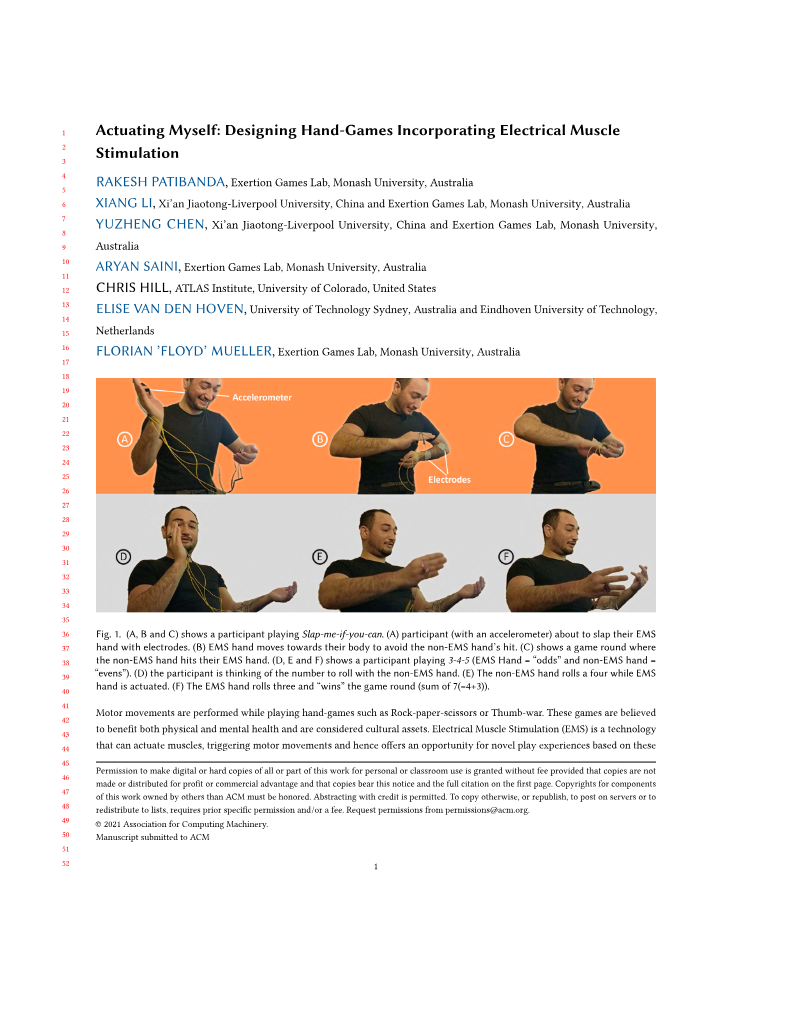
Actuating Myself: Designing Hand-Games Incorporating Electrical Muscle Stimulation
Electrical muscle stimulation (EMS) offers a transformative approach to game design by enabling single-player experiences that simulate the competitive dynamics of traditional two-player hand games.
- Electrical Muscle Stimulation (EMS) can transform traditional two-player hand games into single-player experiences by allowing users to share control of their bodily movements with a machine.
- The study developed two prototype games, 'Slap-me-if-you-can' and '3-4-5', which use an accelerometer in the non-EMS hand and electrodes on the forearm to actuate wrist and finger movements.
- The calibration process for EMS serves as a form of playful learning, helping users understand the biological relationship between specific forearm muscles and resulting hand movements.
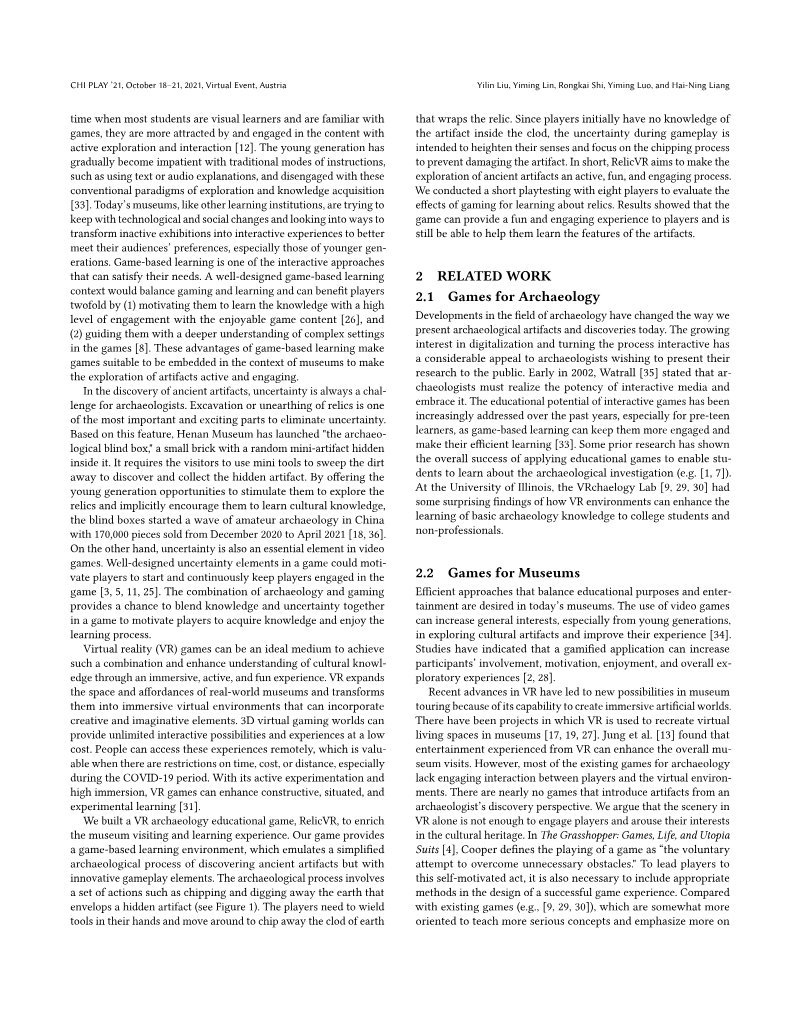
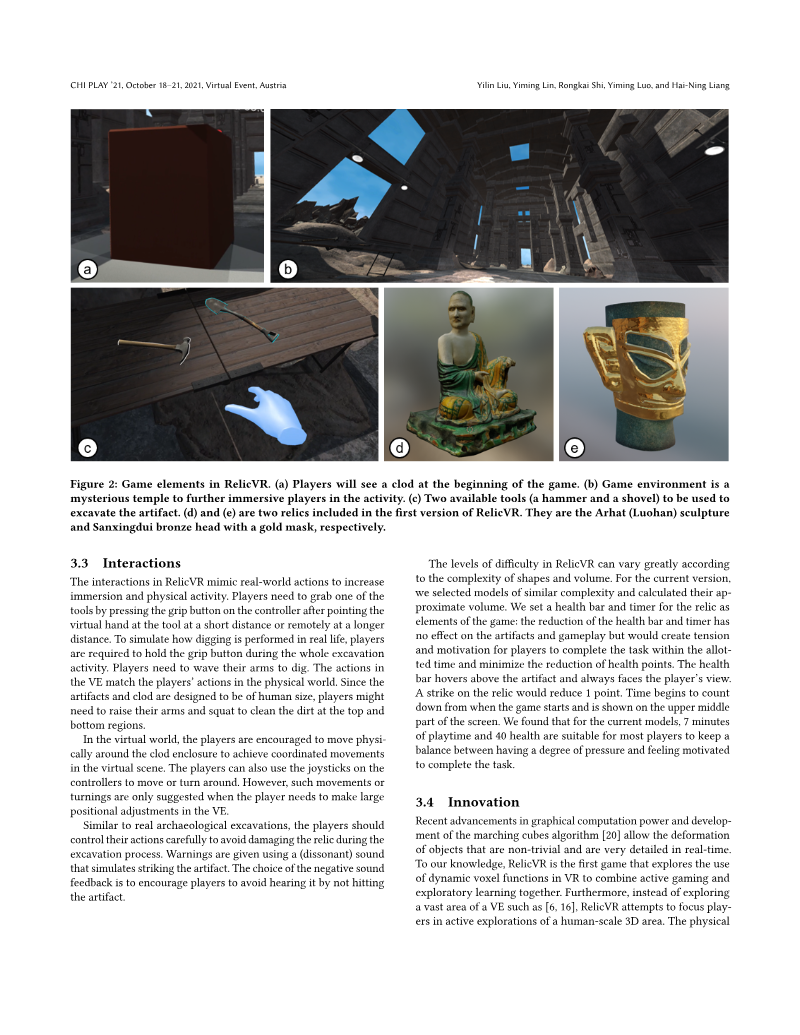
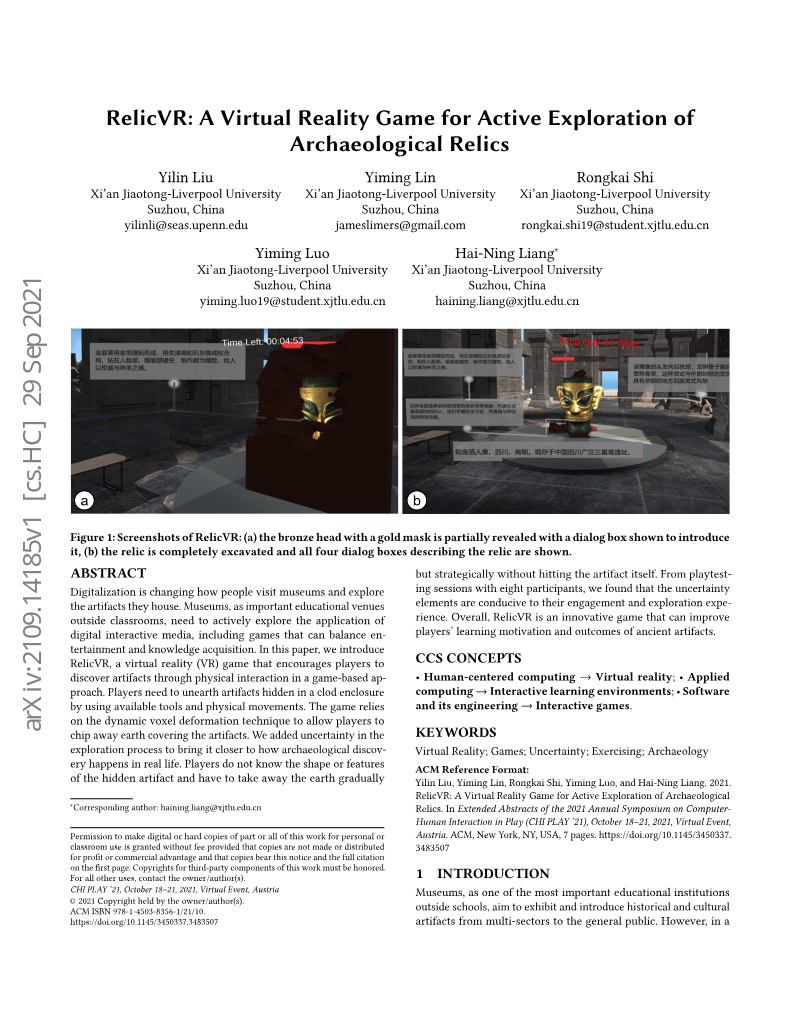
RelicVR: A Virtual Reality Game for Active Exploration of Archaeological Relics
RelicVR functions as an innovative educational tool designed to transform museum engagement by simulating the intricate process of archaeological excavation.
- RelicVR is a virtual reality game designed to enhance museum education by gamifying the archaeological excavation process through active, physical interaction and the management of uncertainty.
- The game utilizes 'uncertainty' as a core mechanic, where players must carefully chip away layers of earth to reveal hidden artifacts without damaging them, mirroring real-world archaeological challenges.
- Preliminary playtesting with eight participants (aged 19–25) yielded positive results, with users reporting high levels of competence, immersion, and engagement while maintaining low levels of negative affect or annoyance.
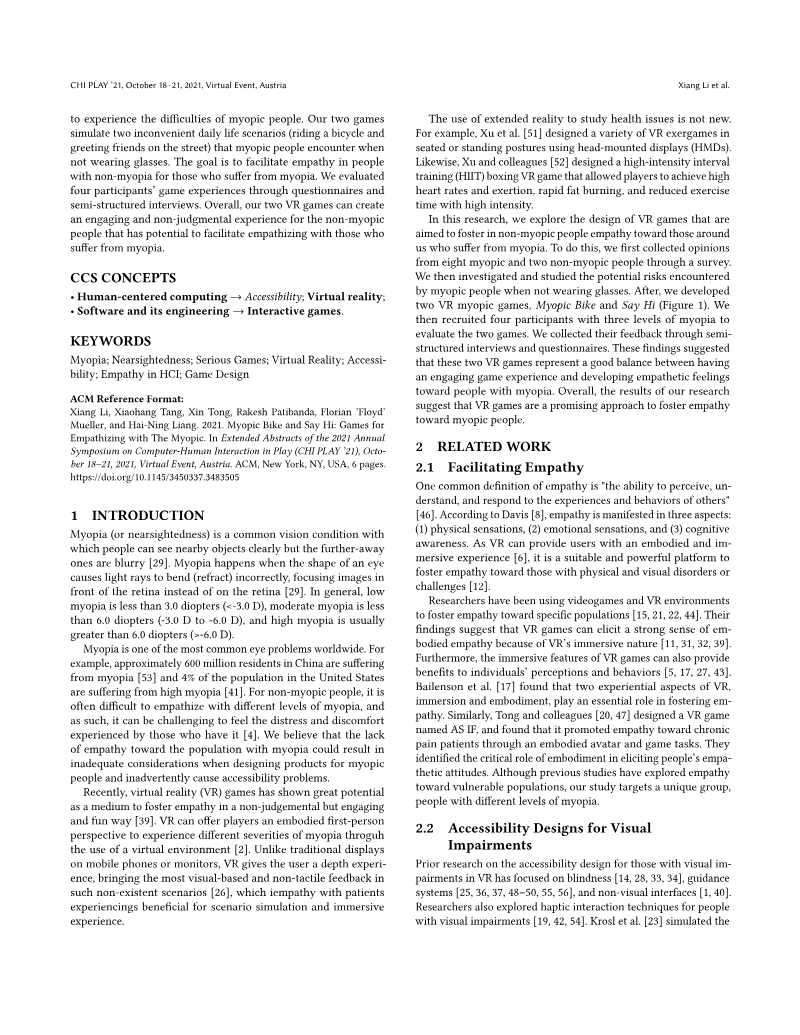
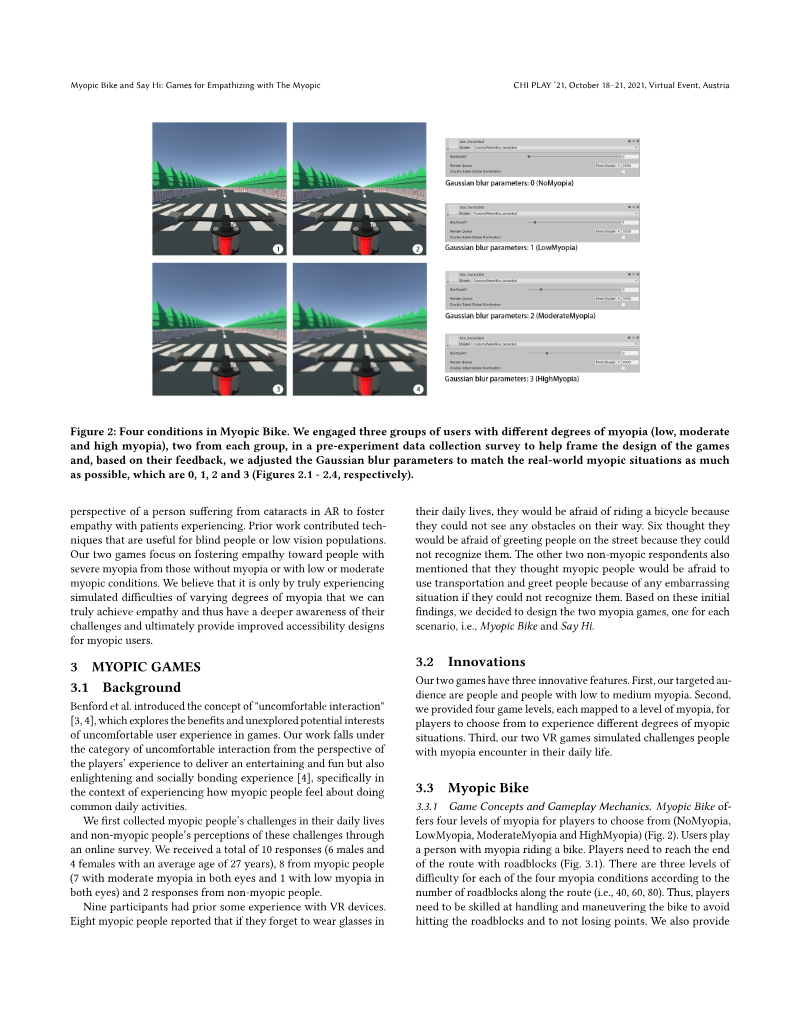
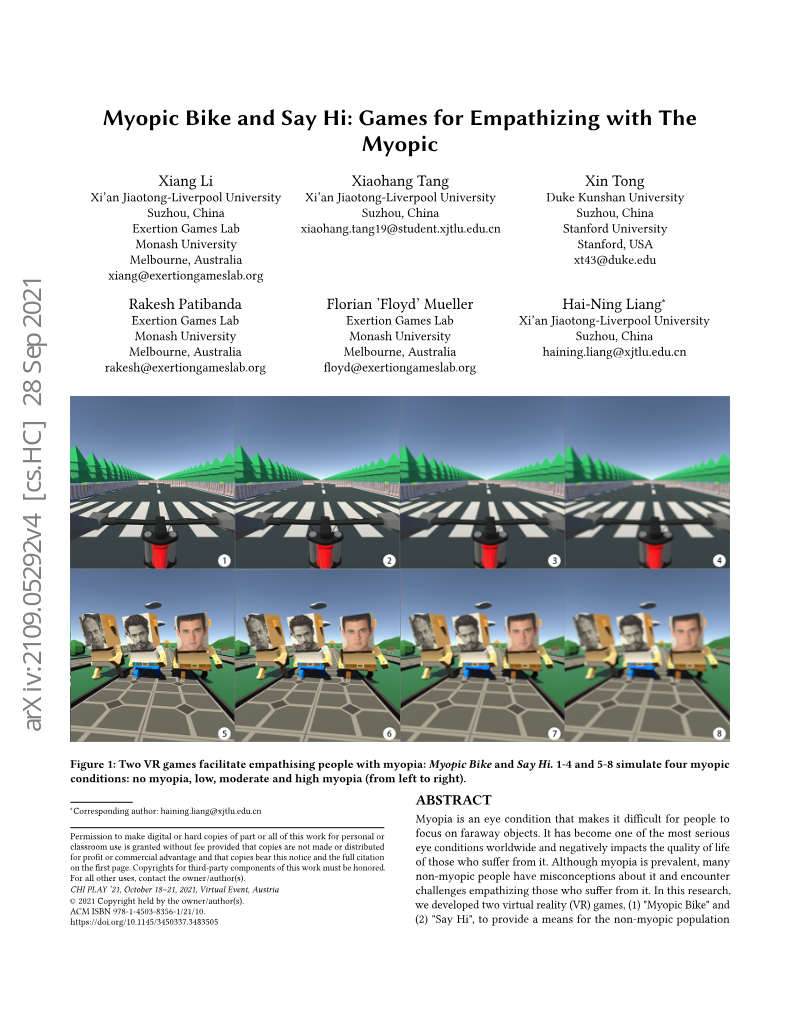
Myopic Bike and Say Hi: Games for Empathizing with the Myopic
This research explores the potential of virtual reality (VR) games to foster empathy in non-myopic individuals toward those living with varying degrees of myopia.
- Researchers developed two VR games, 'Myopic Bike' and 'Say Hi,' to simulate varying levels of myopia (low, moderate, and high) to foster empathy in non-myopic users by replicating daily challenges like cycling and social interaction.
- The games utilize four distinct visual simulation levels to represent myopia severity, ranging from no myopia to high myopia (defined as greater than 6.0 diopters).
- Initial playtesting with four participants across different myopia conditions indicated that the VR experience successfully created an engaging, non-judgmental environment for users to better understand the difficulties faced by those with visual impairments.
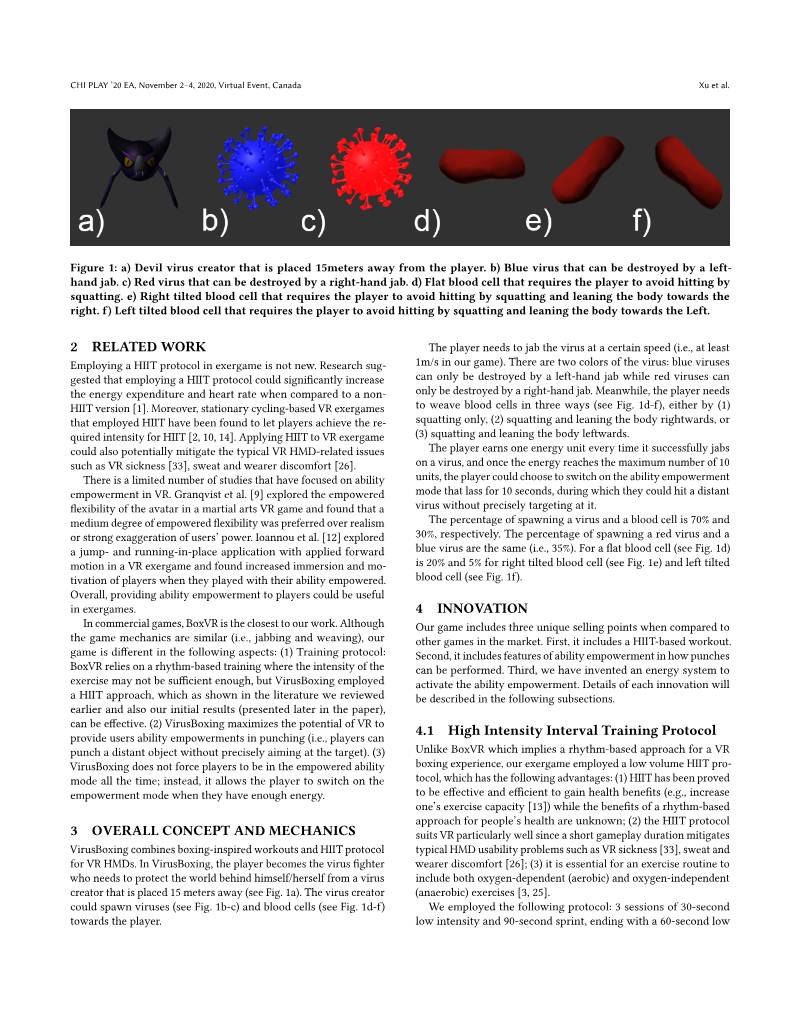
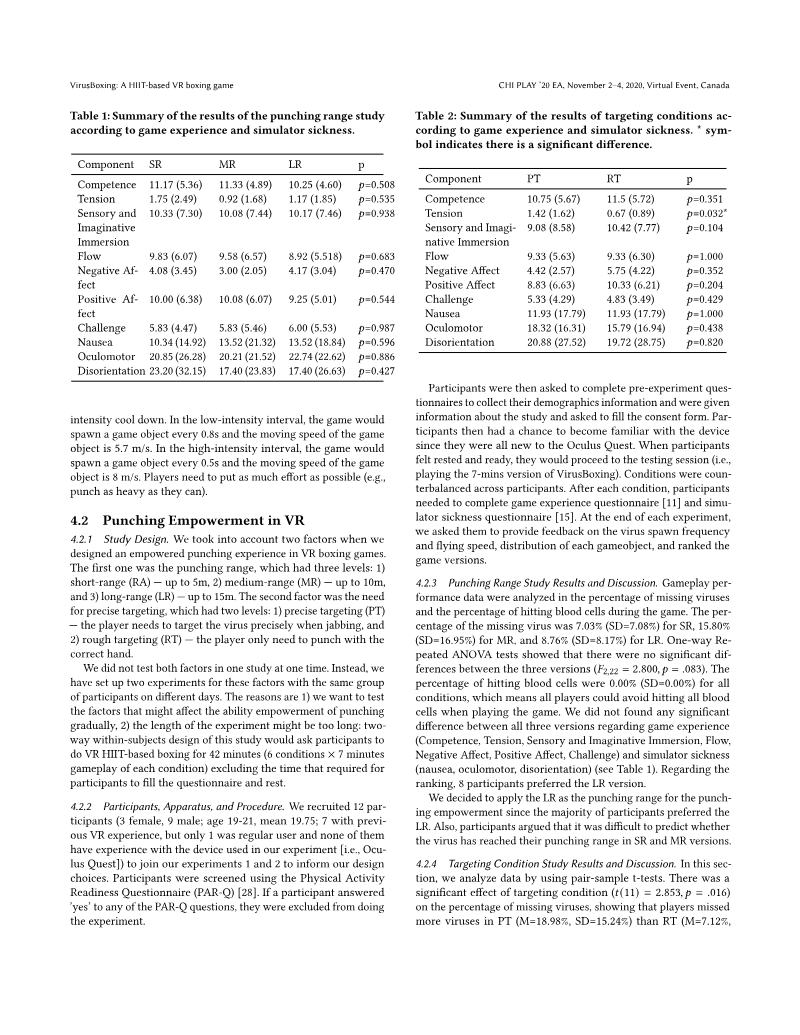
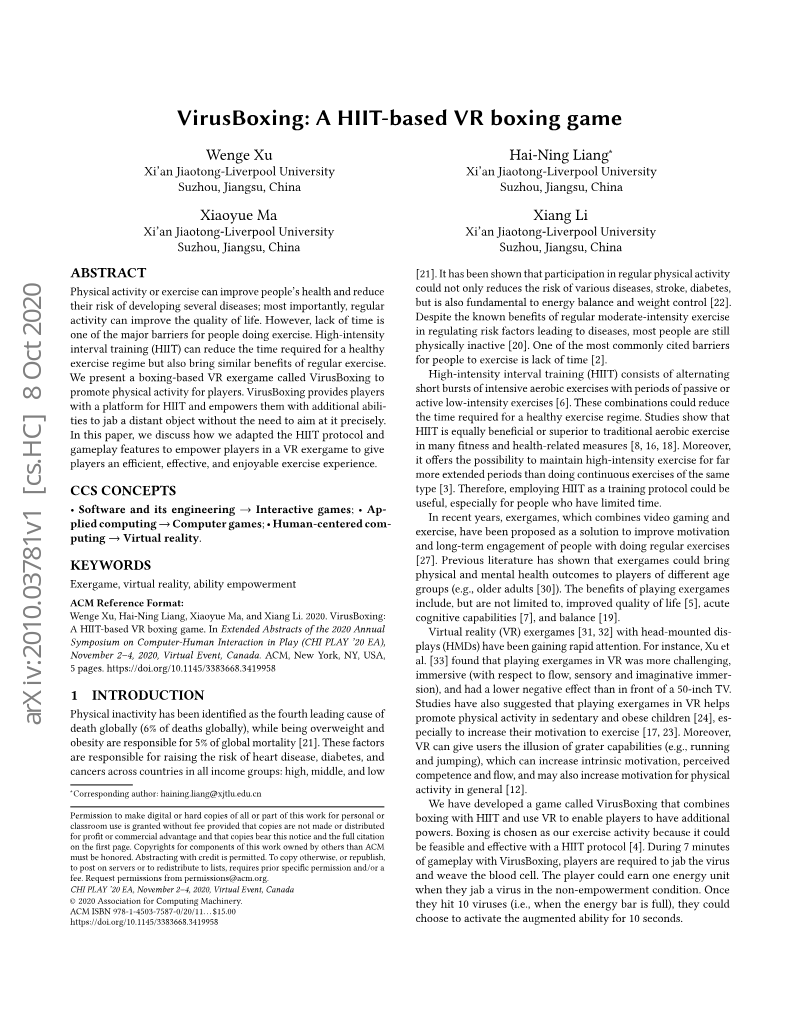
VirusBoxing: A HIIT-Based VR Boxing Game
VirusBoxing is a virtual reality (VR) exergame designed to combat sedentary lifestyles by integrating high-intensity interval training (HIIT) with interactive boxing mechanics.
- VirusBoxing utilizes a HIIT protocol of 30-second low-intensity and 90-second high-intensity intervals to maximize exercise efficiency within short timeframes.
- A seven-minute session of the game successfully elevated participant heart rates to a peak range of 140–149 bpm across both sedentary and active individuals.
- Implementing a rough targeting system rather than requiring precise aim significantly reduces player tension and frustration during gameplay.
Do you work at Xi'an Jiaotong-Liverpool University? Get a free report of how these documents are read and cited here.