NATO Centre for Maritime Research and Experimentation
3 reports, presentations and talks by NATO Centre for Maritime Research and Experimentation in the Game Industry Library, the newest “Risk Game: Capturing Impact of Information Quality on Human Belief Assessment and Decision Making” (2018).
Documents
Risk Game: Capturing Impact of Information Quality on Human Belief Assessment and Decision Making
The Risk Game methodology serves as a specialized framework for eliciting expert knowledge regarding human cognitive processes during complex decision-making tasks.
- Elevated levels of false information in decision-making environments directly correlate with increased cognitive confusion and a higher probability of operational errors.
- High-certainty data and specific object attributes serve as the primary drivers for human belief revision during complex analytical tasks.
- The Risk Game methodology, validated by 32 maritime experts, provides a domain-independent, gamified platform that effectively mirrors real-world analytical challenges like intelligence gathering and crisis management.
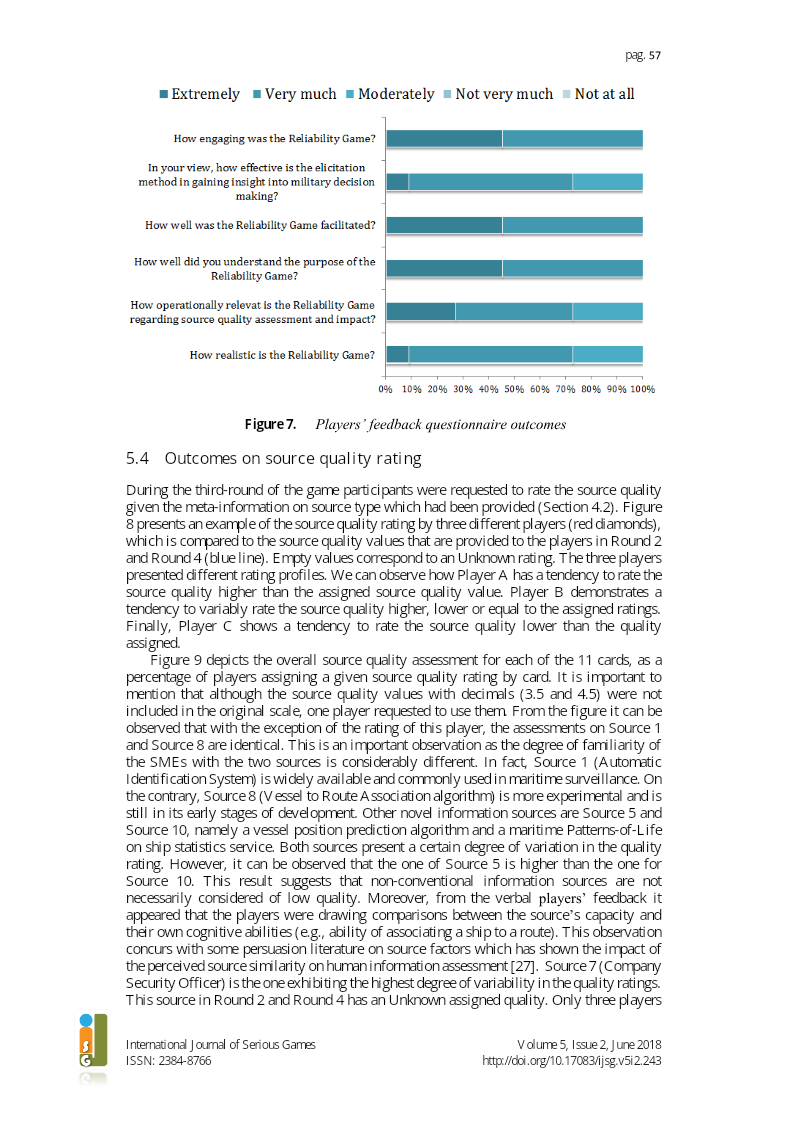
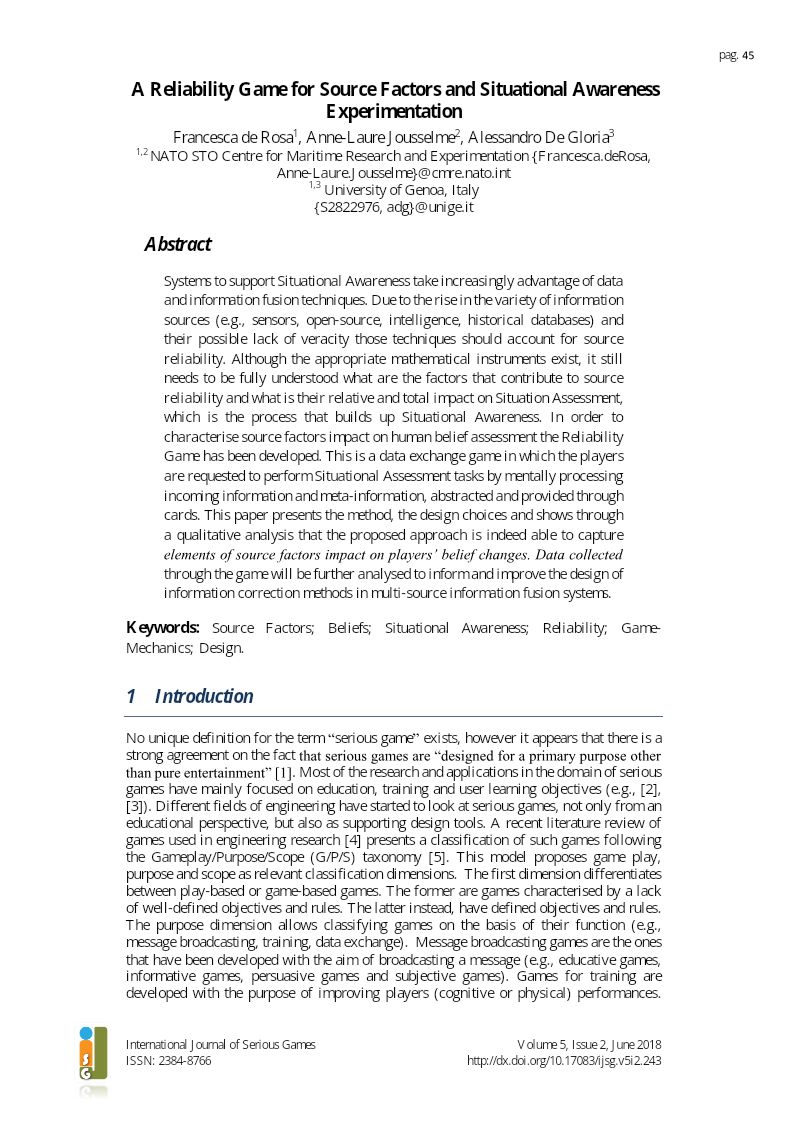
A Reliability Game for Source Factors and Situational Awareness Experimentation
The Reliability Game serves as a specialized serious game designed to investigate the cognitive mechanisms behind situational awareness and belief formation under conditions of uncertainty.
- The Reliability Game uses a structured, four-round simulation involving eleven information cards to quantify how experts weigh evidence against three potential maritime outcomes: no incident, safety issue, or security issue.
- Human decision-making in the study demonstrates a cognitive bias toward excluding specific hypotheses rather than actively confirming them.
- Participants show a strong reluctance to use 'unknown' ratings, preferring to commit to definitive, albeit uncertain, stances when evaluating information.
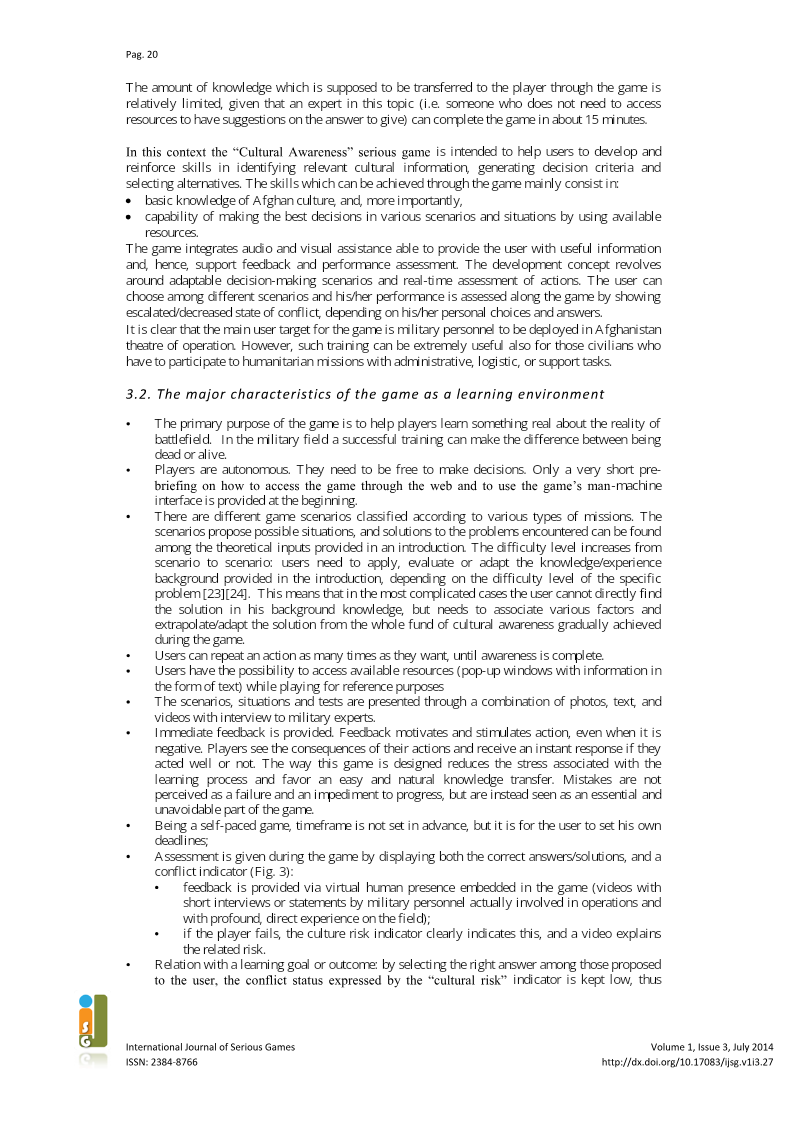
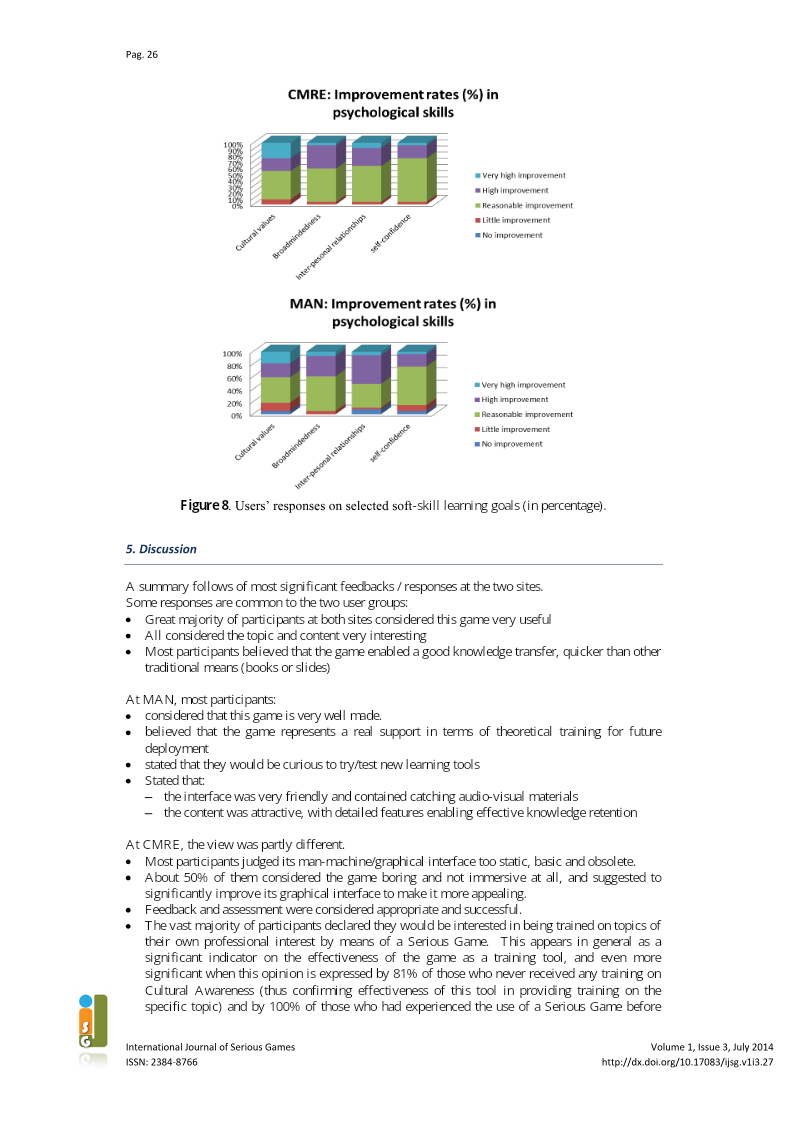
Learning Impact Evaluation of the Serious Game: Cultural Awareness - Afghanistan Pre-deployment
The Cultural Awareness Afghanistan Pre-deployment serious game functions as a specialized training instrument designed to enhance the decision-making capabilities of NATO military personnel and civilian staff.
- The Cultural Awareness Afghanistan Pre-deployment game effectively improves decision-making and operational readiness by allowing personnel to practice cultural intelligence in a low-stress, simulated environment.
- The training tool is most effective for individuals with no prior subject matter exposure, resulting in significant measurable improvements in cognitive and soft-skill development.
- Evaluations across diverse cohorts—including military personnel, civilian staff, and students—confirm the game is a highly efficient and reliable method for knowledge transfer.