Article
Who's Playing What on PlayStation 5?
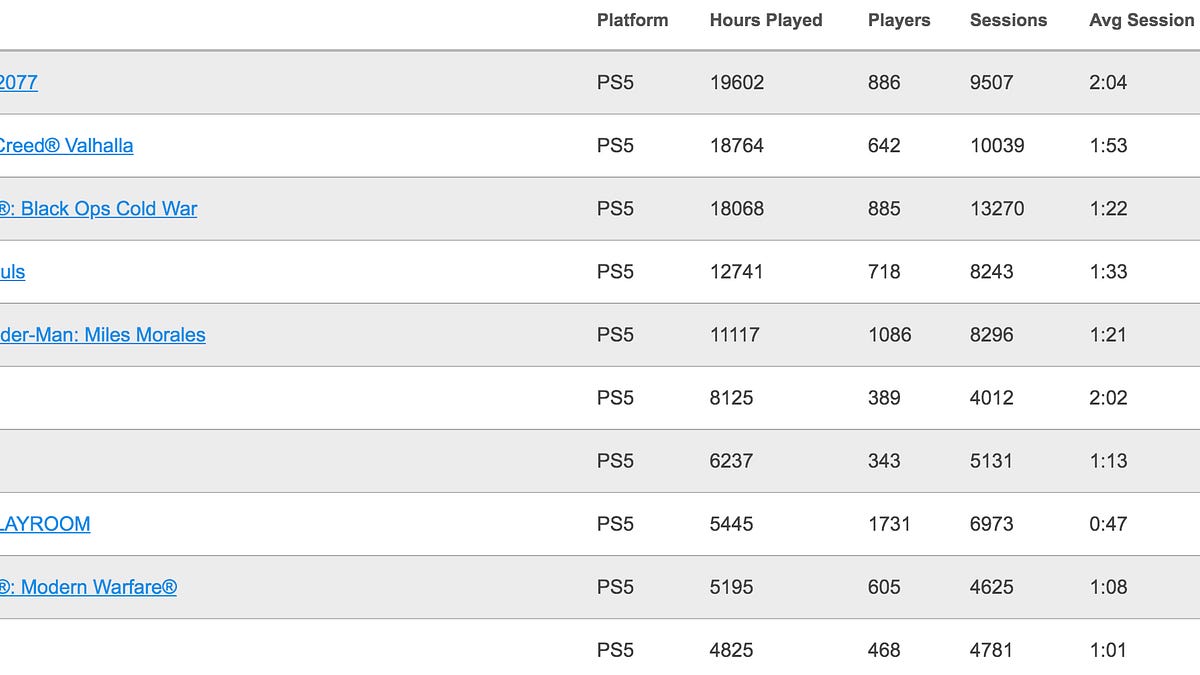
This analysis examines early PlayStation 5 engagement trends by utilizing playtime data from a sample of 3,018 active users tracked via the PS Time Tracker platform. The findings indicate that while new releases like Cyberpunk 2077 and the Demon’s Souls remake dominate initial interest, long-standing titles such as FIFA 21, Destiny 2, and Fortnite remain significant drivers of player engagement. The data suggests that cross-generational support for established, frequently updated titles is a critical factor in maintaining console activity, often rivaling the impact of platform-exclusive releases.
Beyond specific playtime metrics, the analysis explores broader industry dynamics, including the impact of platform-level policy changes and corporate acquisition strategies. Observations regarding the Nintendo eShop reveal that recent restrictions on extreme discounting have forced developers to adjust their pricing strategies, with some firms planning sales months in advance to circumvent new limitations. Furthermore, the report highlights that public game companies are increasingly driven by shareholder pressure to utilize excess cash for acquisitions, fueling a trend of industry consolidation.
The scope of this assessment covers global gaming trends as of late 2020, with a focus on console ecosystems and digital distribution platforms. By synthesizing playtime statistics with observations on market behavior and corporate finance, the analysis provides a snapshot of the early PlayStation 5 landscape and the evolving economic pressures facing game developers and publishers. The methodology relies on third-party tracking data and industry-wide reporting to contextualize how players discover and interact with content in the current gaming environment.
- Long-standing titles like FIFA 21, Destiny 2, and Fortnite remain primary drivers of PS5 engagement, rivaling the impact of new platform exclusives.
- Early PS5 engagement analysis, based on a sample of 3,018 active users tracked via PS Time Tracker, shows that new releases like Cyberpunk 2077 and the Demon’s Souls remake dominate initial interest.
- Cross-generational support for frequently updated titles is a critical factor in maintaining console activity levels.
- Nintendo eShop policy changes restricting extreme discounting have forced developers to adjust pricing strategies and plan sales months in advance.
- Public gaming companies are increasingly utilizing excess cash for acquisitions due to shareholder pressure, driving a trend of industry consolidation.
+1
GameDiscoverCoDec 2020