Basic Roots Consulting
Organization1 document
Basic Roots Consulting is a consulting firm that publishes market analysis on the gaming sector, including a report on the growing gaming market and the role of play.
Documents
Report38 pages
The Power of Play: Exploring the Growing Gaming Market
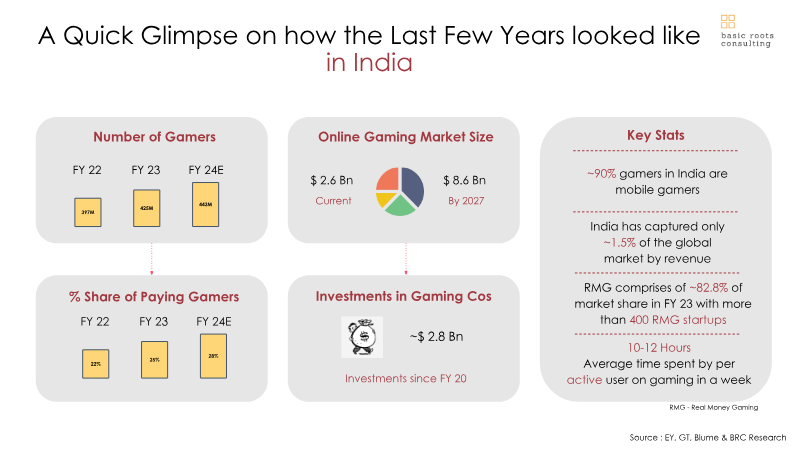
The Indian gaming market is projected to reach ₹8.6 billion by 2027, expanding at a 28% CAGR from FY20-23, while the global market is expected to hit $340 billion.
- The Indian gaming market is projected to reach ₹8.6 billion by 2027, growing at a 28% CAGR, while the global market is expected to hit $340 billion.
- A shift to a 28% GST on total deposits has pressured real-money gaming (RMG) firms, leading to layoffs, revenue slowdowns, and a strategic push toward geographic and genre diversification.
- RMG currently dominates the Indian market, accounting for approximately 82% of total gaming revenue, though monetization remains low relative to total download volumes.
Basic Roots ConsultingDec 2025