Reports matching your filters
The Modern Mobile Consumer 2022: App Discovery Report examines the evolving journey of mobile users from initial app discovery to daily usage and long-term engagement. The primary thesis suggests that the traditional distinction between gamers and non-gamers is increasingly obsolete, as consumer behaviors and attitudes toward advertising are remarkably consistent across different app categories. Findings indicate that mobile gaming has become a universal hobby, with 60% of non-gaming app users playing mobile games daily, tying with social media for the top usage category.
Data highlights the dominance of in-app advertising as a discovery tool, with 70% of gaming audiences and 78% of a control group reporting they have downloaded apps after seeing mobile advertisements. While most users maintain over 20 apps on their devices, the majority only engage with five to ten apps daily. To break into this limited rotation, the research suggests that video ads, app store promotions, and interactive formats are the most effective. Furthermore, rewarded ads—traditionally associated with gaming—show broad appeal, with 33% of non-gaming audiences paying more attention to ads that offer in-app incentives.
The research methodology involved a large-scale survey of 30,457 respondents conducted in April and May 2022. The sample included 18,894 consumers from gaming apps and 11,563 from non-gaming apps within the ironSource network, supplemented by a 500-person third-party control group to eliminate bias. All participants were verified adults aged 18 or older. The geographic scope is global, focusing on the broader mobile app economy. Conclusions emphasize that successful user acquisition strategies must prioritize interest-based relevance, humor, and rewarded engagement to capture the attention of the modern mobile consumer.
The 2021 Gaming Spotlight provides a comprehensive analysis of the global digital gaming landscape, emphasizing the dominance of mobile gaming and the increasing integration of cross-platform experiences. The primary thesis posits that mobile gaming has become the central driver of industry growth, with its global lead over home consoles projected to reach 3.1x by the end of 2021. This shift is supported by data indicating that mobile game downloads and consumer spending in Q1 2021 increased by 30% and 40%, respectively, compared to pre-pandemic levels in late 2019.
The analysis highlights a significant evolution in player behavior, where social connectivity and cross-play capabilities have become essential for long-term engagement. High-grossing titles such as Roblox and Genshin Impact exemplify this trend, leveraging cross-platform features to scale rapidly across mobile, PC, and console environments. Furthermore, the report notes that console companion apps have become vital tools for managing accounts and maintaining social connections, reflecting a broader trend of merging mobile and console experiences.
Methodologically, the findings rely on market intelligence from App Annie and consumer survey data from IDC, which polled over 3,300 US gamers regarding their attitudes toward in-game advertising. The research reveals that while overall sentiment toward in-game ads improved between 2019 and 2020, player reception is highly dependent on the ad format. Rewarded video and playable ads, which offer a direct value exchange, consistently outperform traditional banner and video ads in user sentiment. The data warns that ad oversaturation, particularly in high-frequency genres like word and trivia games, correlates with more negative player sentiment and potential churn. Ultimately, the industry is trending toward casual, session-based gaming, with hyper-casual and simulation genres seeing the most significant growth in download market share.
This analysis examines the efficacy of in-game audio advertising as a non-intrusive alternative to traditional video and banner formats within the mobile gaming industry. The primary thesis posits that audio ads maintain player engagement and retention by allowing gameplay to continue uninterrupted, thereby fostering a more positive brand association compared to conventional, disruptive advertising models.
Research findings are derived from a combination of market surveys and behavioral testing. A YouGov survey of 2,200 respondents highlights that 86% of UK adults dislike video ads, while 28% identify audio ads as their preferred monetization model. Behavioral testing conducted by Go Live Test confirms that 100% of participants continued playing during audio ad delivery and achieved 100% brand recall when ads were paired with a companion banner. Furthermore, the data indicates a significant engagement advantage, with audio ads achieving a click-through rate (CTR) of approximately one click per 1.4 listens, vastly outperforming the 0.08% average CTR typical of static banners.
The effectiveness of this format is further validated by a Warner Music Group case study targeting 18-to-30-year-olds in the United States. The campaign achieved a 1.78% CTR—representing a 1,000% increase over traditional banner standards—and an ad completion rate exceeding 75%, significantly higher than the 4% to 8% industry standard for skippable video ads. Additionally, the campaign recorded a 1.8% bounce rate on the destination page, suggesting high intent among users who engaged with the audio format.
These findings suggest that audio advertising offers a viable solution for developers and brands seeking to monetize a global audience of 2.8 billion mobile gamers without compromising the user experience. By integrating seamlessly into the background of gameplay, audio ads mitigate the frustration associated with screen-blocking video ads, ultimately driving higher engagement and more favorable brand outcomes.
The white paper argues that mobile‑game advertising has entered a new phase of intensity and sophistication, driven by rapid creative growth, the dominance of video formats, and evolving privacy regulations. In 2021 ad creatives surged by 200 % YoY while CPMs rose 34 %, with video ads now accounting for over 85 % of spend. The market continues to expand, projecting more than 70 000 advertisers by 2023, yet advertiser growth has slowed post‑pandemic to just 5 % YoY. Android remains the primary platform, hosting roughly two‑thirds of advertisers, and high‑spending Tier 1 markets—particularly the United States, Japan, and Korea—retain their status as key targets for publishers.
Geographically, the United States shows a casual‑game bias among advertisers (26 % of spend) but still supports high‑spending titles such as Free Fire and Subway Surfers. China’s landscape is shifting from RPGs to casual titles, with puzzle games capturing the largest creative share. In the Middle East, strategy and shooter games like Rise of Kingdoms and PUBG Mobile dominate downloads and revenue, whereas the CIS market displays a more diversified mix of strategy, shooter, and casual titles. Across all regions, vertical video ads—especially 30–34 second formats with end‑card elements—outperform horizontal variants for mid‑ and hard‑core titles, achieving conversion rates around 0.15 %. Playable ads also deliver significant lift for mid‑core games.
Privacy changes from Apple and Google have accelerated a shift toward probabilistic attribution models such as SKAN, compelling advertisers to prioritize creative design over granular targeting. Hybrid monetization platforms that blend bidding and non‑bidding networks are gaining traction, while developers increasingly adopt innovative in‑app purchase mechanics (limited‑time offers, battle passes) and social features (chat, PvP, guilds) to enhance engagement and retention. These trends collectively underscore a mobile‑gaming ecosystem that is more video‑centric, privacy‑aware, and focused on long‑cycle strategy titles in high‑engagement markets.
This analysis examines the relationship between video ad length, end card formats, and campaign performance across five major mobile gaming genres: Hyper-Casual, RPG, Strategy, Puzzle, and Social Casino. By evaluating 3.7 billion in-app video ad impressions and subsequent installs via the Vungle platform, the study establishes creative benchmarks using a proprietary Power Index to measure efficacy. The findings suggest that as the industry moves toward a post-IDFA environment with limited user-level data, marketers must prioritize creative optimization and mass-appeal strategies to drive engagement.
The data reveals distinct audience preferences for each genre. Social Casino players favor efficiency, responding best to 10-second ads paired with standard static end cards. Puzzle and Strategy games both see peak performance when utilizing app store end cards that provide a direct path to download, though their optimal video lengths differ at 22 seconds and 33 seconds, respectively. Conversely, genres with deeper gameplay loops require more extensive creative storytelling. Hyper-Casual games perform best with 37-second ads and video end cards, while RPGs benefit from the longest engagement times, peaking at 46 seconds with looping video end cards to showcase aesthetic and narrative depth.
The scope of the research covers a global audience of over one billion unique devices, focusing on the structural elements of ad creatives rather than specific visual content. The methodology filters out low-performing impressions to ensure the Power Index accurately reflects the most successful format pairings. Ultimately, the findings conclude that aligning ad duration and post-roll interactive elements with genre-specific player expectations is essential for maximizing return on ad spend in an increasingly competitive mobile marketplace.
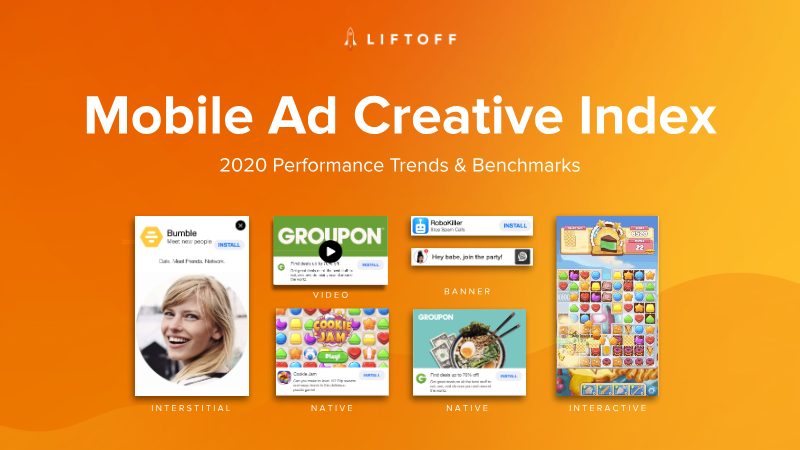
The 2020 mobile advertising landscape is defined by a stark divergence in performance metrics across creative formats, operating systems, and geographic regions. While banner ads remain the most cost-effective entry point for driving initial installs, native and video formats demonstrate superior efficacy in securing high-value, deep-funnel actions such as in-app purchases. Native ads, in particular, achieve conversion rates as high as 52.8%, signaling their importance for long-term user retention. However, these performance gains come at a premium on iOS, where costs consistently dwarf those on Android. For instance, the cost of securing an in-app purchase through native ads on iOS reaches $218.09, nearly triple the $73.62 required on Android.
Geographically, North America persists as the most expensive market for user acquisition across all formats, while the LATAM and APAC regions offer significantly more accessible pricing for advertisers. Seasonal trends also influence these costs, with install expenses typically peaking during the summer months. To navigate these fluctuations, successful campaigns increasingly rely on iterative A/B testing and dynamic creative strategies. Case studies from major brands like Credit Karma and Groupon illustrate that disciplined testing can yield lifts in click-to-install rates exceeding 120%, underscoring the necessity of a data-driven approach to creative optimization.
The industry is shifting toward a performance-based, cost-per-action model that prioritizes post-install revenue events over simple downloads. By leveraging machine learning and focusing on single-deal creative strategies, advertisers can better align their spending with actual user value. Ultimately, the data suggests that while the cost of acquisition is rising, particularly on premium platforms and in mature markets, the integration of dynamic product ads and rigorous testing frameworks remains the most effective path toward achieving sustainable return on ad spend.