Key insights
4 slides
The starting point
Games are neither inherently beneficial nor harmful for children.
The handbook holds that the value of video games for children with developmental disabilities depends on how they are selected, structured, and mediated by adults.
1 / 4
- 01Video games are neither inherently beneficial nor harmful; their value for children with developmental disabilities depends on how they are selected, structured, and mediated by adults.See it on page 18
- 02The handbook frames disability through the WHO's ICF and ICF-CY biopsychosocial model, arguing that disability arises from the interaction between a child's condition and their environment, and that children with developmental disabilities face double marginalization, both physically and digitally.See it on page 98
- 03Structured, guided play with active adult mediation consistently outperforms purely restrictive approaches, and games are positioned as one tool within broader educational, therapeutic, and family support systems rather than a replacement for them.See it on page 69
- 04Research reviewed indicates effects on motor, cognitive, social, and attentional skills vary by game type, play duration, and child age; active motion games can raise physical activity, and cooperative and exergames show promise for social and motor goals.See it on page 39
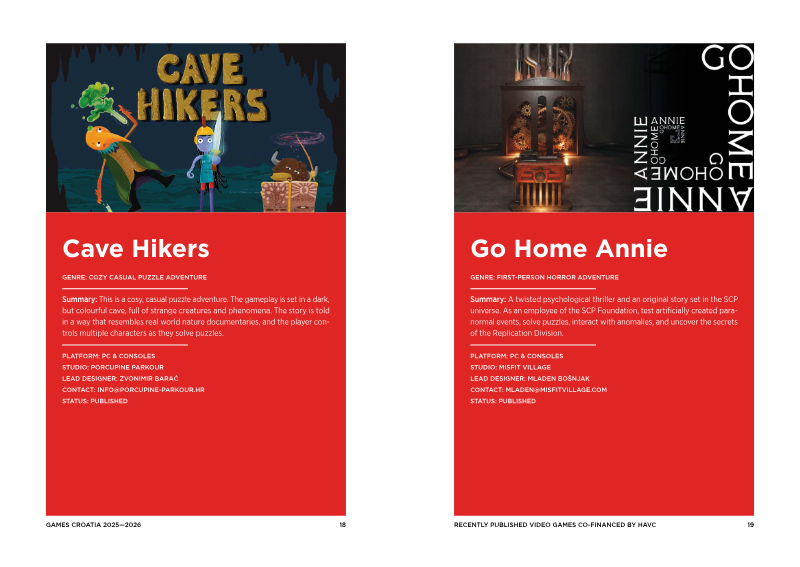
- 05The handbook advocates Universal Design features such as adjustable sensory intensity, remappable controls, subtitles, predictable rules, and multimodal information presentation, citing calm pacing and nature-based exploration in Croatian games Bura: The Way the Wind Blows and Hikers as accessibility advantages, though practical testing with children is still needed.See it on page 11
- 06The handbook addresses problematic gaming by contrasting WHO's inclusion of Gaming Disorder in ICD-11 with DSM-5's more cautious stance, and stresses GDPR-compliant data protection and continuous evaluation against SMART goals.See it on page 118
Ask AI about this report
Summary
This Croatian handbook, authored by Eva Brlek and published in 2026 by the Croatian Audiovisual Centre, argues that video games can serve as an inclusive medium for children with developmental disabilities, provided they are thoughtfully adapted and guided by professionals and caregivers. Its central thesis is that games are neither inherently beneficial nor harmful; their value depends on how they are selected, structured, and mediated. Games are positioned as one tool within broader educational, therapeutic, and family support systems rather than a replacement for them.
The handbook grounds its argument in the biopsychosocial framework of the WHO's ICF and ICF-CY, holding that disability arises from the interaction between a child's condition and their environment. It contends that children with developmental disabilities face double marginalization, both physically and digitally, making game accessibility a rights-based necessity. Research reviewed across its sections indicates that effects on motor, cognitive, social, and attentional skills vary by game type, play duration, and child age. Regular players often show faster reaction times, active motion games can raise physical activity, and cooperative and exergames show promise for social and motor goals. Structured, guided play with active adult mediation consistently outperforms purely restrictive approaches.
On design, the handbook advocates Universal Design principles, including adjustable sensory intensity, remappable controls, subtitles, predictable rules, and multimodal presentation of information. Its case studies of the Croatian games Bura: The Way the Wind Blows and Hikers highlight calm pacing and nature-based exploration as accessibility advantages, while noting that practical testing with children is still needed before conclusions about generalization can be drawn. The handbook also addresses problematic gaming, referencing WHO's inclusion of Gaming Disorder in ICD-11 and DSM-5's more cautious stance, while stressing GDPR-compliant data protection and continuous evaluation against SMART goals.