ReportUbisoft
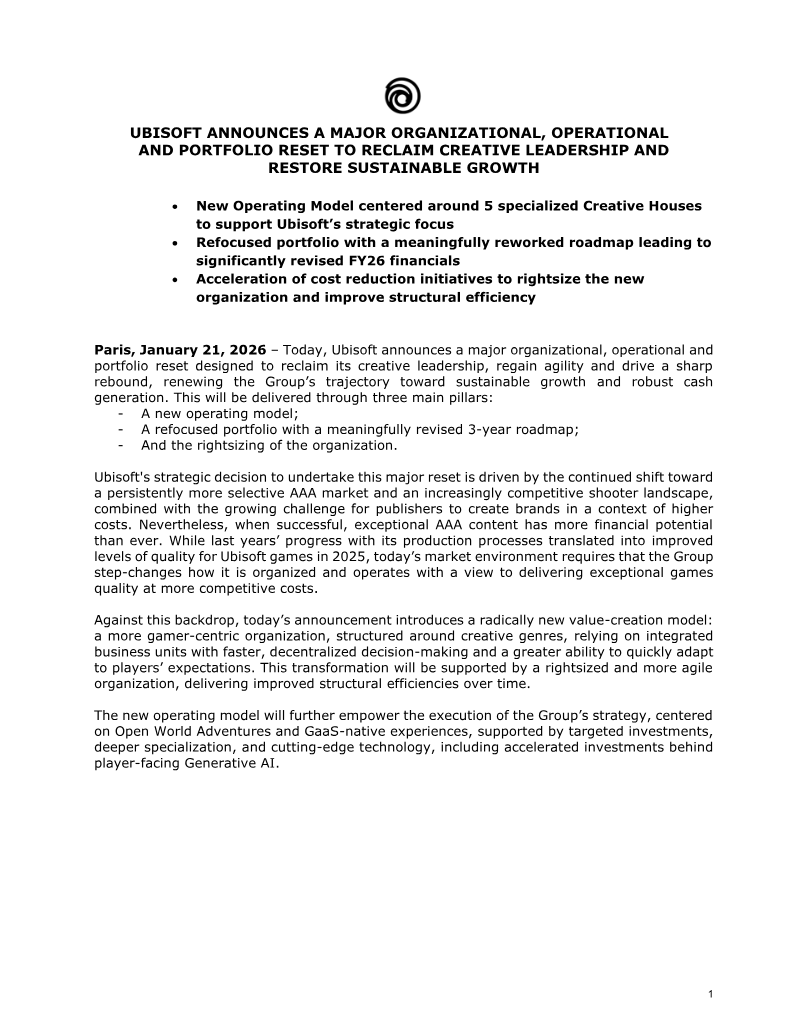
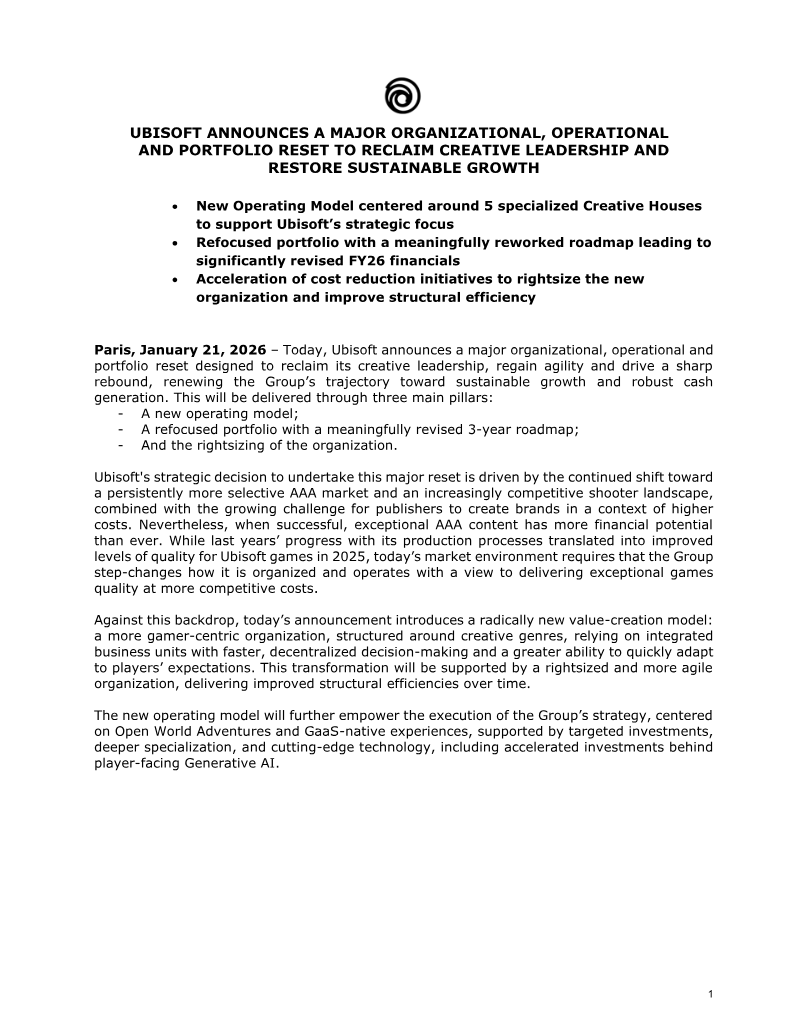
Ubisoft announces a major organizational, operational and portfolio reset to reclaim creative leadership and restore sustainable growth
7 pages~16 min full read
Key insights
4 slides
What changed
Ubisoft is restructuring into five genre-focused Creative Houses.
Each house is fully responsible for development, publishing, and financial performance. The structure is intended to accelerate decision-making.
Page 2 of the report- 01Five Creative HousesGenre-focused units responsible for development, publishing, and financial performance.
- 02Creative NetworkStudios and shared Core Services support the houses.
- 03Generative AIInitiatives are embedded across the structure.
Quality bar
Six titles are being discontinued to meet new quality thresholds.
Development timelines for seven other games are being extended. These changes are expected to reduce net bookings for FY26 by roughly €330 million.
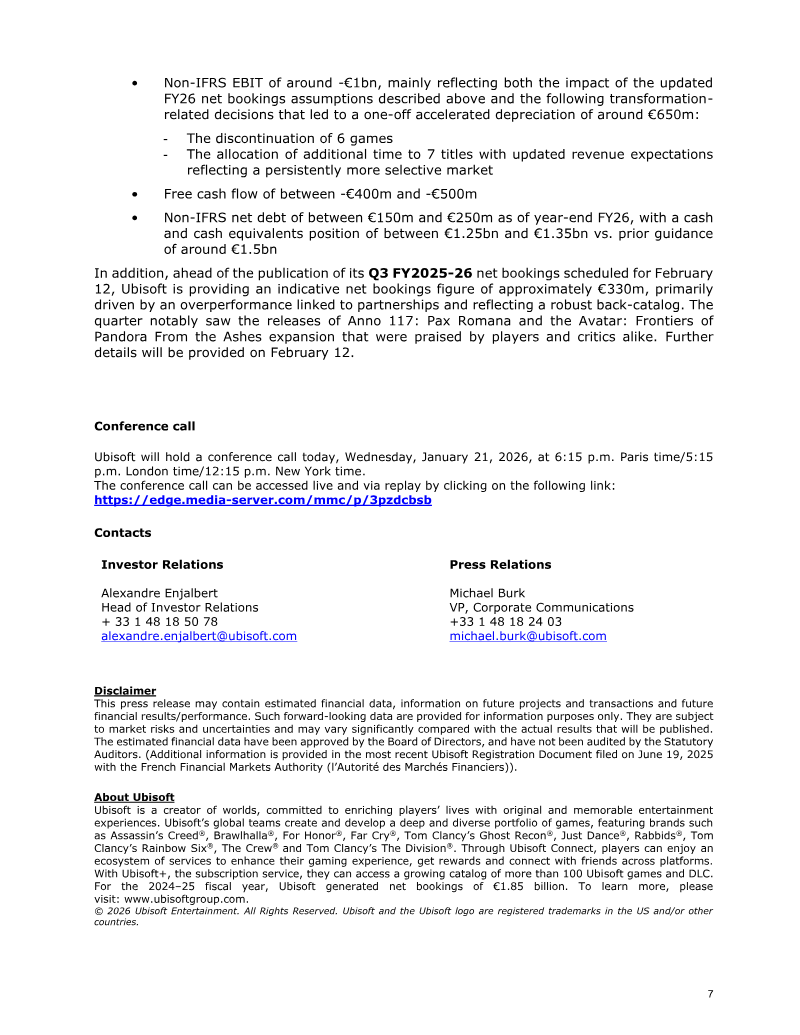
FY26 projections
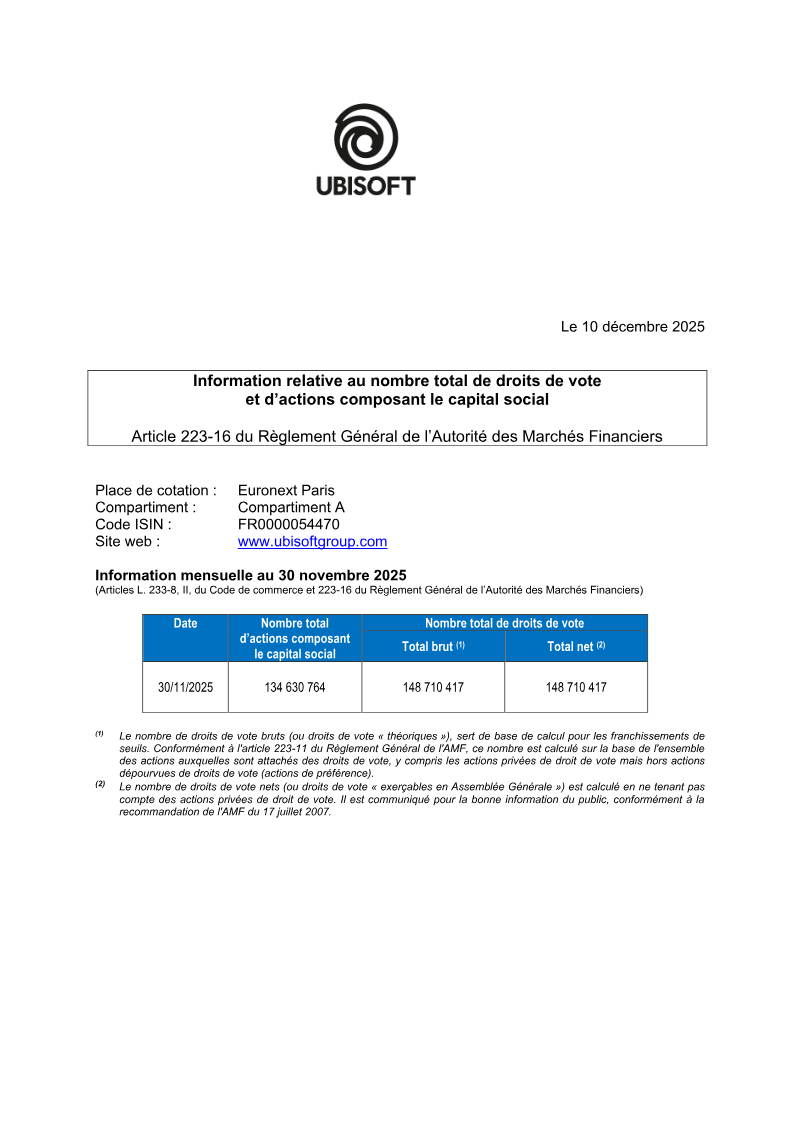
FY26 free cash flow is projected between –€400 million and –€500 million.
Non-IFRS EBIT is projected into the negative. Net debt is projected to rise to €150–250 million.
Fixed costs
Fixed costs are targeted to reach about €1.25 billion by March 2028.
An accelerated €100 million cut is already achieved by March 2026. A further €200 million is planned over the next two years.
1 / 4
Ask AI about this report