1 free read left. Create a free account for unlimited reading + AI research.
Create free accountArticle DiGRA
1 free read left. Create a free account for unlimited reading + AI research.
Create free accountArticleDiGRA
Distilling the key insights…
Brendan Keogh's paper argues that Spec Ops: The Line critiques the military shooter genre by subverting its conventions from within, exposing the violence and moral ambiguity that the genre's romantic, technologically superior depictions of modern warfare tend to obscure. Situating the genre within the "military-entertainment complex," the analysis draws on scholars such as Der Derian and Dyer-Witheford and de Peuter, who contend that videogames virtualise war and reduce enemies to abstract, pixelated "others." The work is primarily textual and qualitative, relying on close readings of the game's narrative and mechanics alongside critical literature rather than quantitative data.
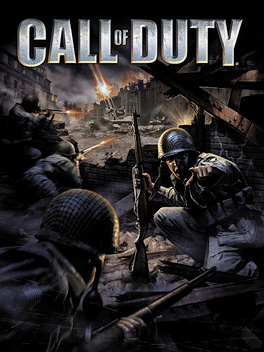
The central contrast is drawn between mainstream titles such as Call of Duty: Modern Warfare, which portray war as precise and ethically clean, and real-world footage such as the 2010 WikiLeaks Apache video, which suggests that actual combat increasingly resembles a video game. Against this backdrop, Spec Ops: The Line is presented as a counterexample. Despite relying on conventional mechanics such as sticky cover and a linear path, the game uses its third-person perspective, audiovisual design, and the white phosphorous sequence "The Gate" to strip away the distance that virtualised warfare typically provides. The author's key conclusion is that representational strategy, rather than mechanics alone, is what exposes how the genre normalises violence.
The analysis further argues that the game progressively degrades its protagonist, Walker, both visually and through his dialogue, shifting the player's embodied perspective from a self-assured soldier to a monstrous killer. This process undermines myths of Western ethical and technological superiority embedded in the genre. The paper also acknowledges the game's own complicity as a commercial military shooter, noting that it arguably absolves its developers by placing responsibility on the player. Ultimately, the work concludes that The Line "conventionally subverts" the genre, using its own tools to make players confront their participation in the military-entertainment complex.
PocketGamer.biz · 2025