LegalPCF Group
Formularz Pozwalający na Wykonanie Prawa Głosu Przez Pełnomocnika: Nadzwyczajne Walne Zgromadzenie
28 Feb 20264 pages~2 min full read
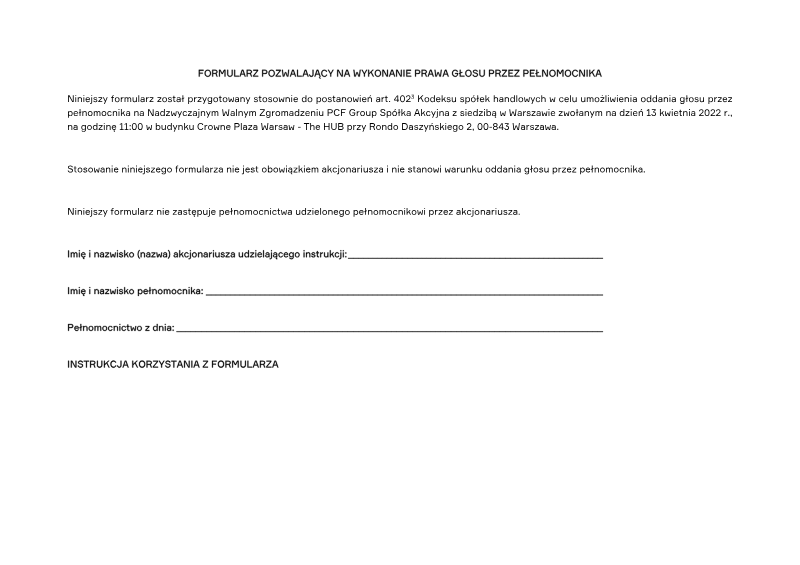
This administrative instrument facilitates the exercise of voting rights by proxy during the Extraordinary General Meeting of PCF Group S.A., a prominent Polish video game developer and publisher. Scheduled for April 13, 2022, in Warsaw, the meeting serves as a critical governance event for the company. The framework is established in accordance with Article 402 of the Polish Commercial Companies Code, providing a standardized method for shareholders to convey specific voting instructions to their designated representatives.
The scope of the document is limited to the corporate governance of PCF Group S.A. within the Polish legal jurisdiction. It functions as a technical guide rather than a legal power of attorney, requiring shareholders to provide identifying information for both themselves and their proxies. The methodology for casting votes involves a structured grid where shareholders can mark their preferences—for, against, or abstain—for each resolution on the agenda. It also allows for split voting, where a shareholder can allocate different numbers of shares to different voting outcomes, a common necessity for institutional investors managing multiple portfolios.
A significant provision within the instructions addresses the potential for discrepancies between draft resolutions and the final versions presented during the meeting. Shareholders are encouraged to utilize a remarks section to provide contingency instructions, ensuring their intent is preserved even if the wording of a resolution is amended on the floor. This mechanism highlights the procedural rigor required in the management of a publicly traded entity in the gaming industry, ensuring transparency and legal compliance in shareholder communications and decision-making processes.
PCF Group · 2026
PCF Group · 2026
PCF Group · 2026
PCF Group · 2025
PCF Group · 2025
PCF Group · 2025
PCF Group · 2025
PCF Group · 2025
PCF Group · 2025
PCF Group · 2025
PCF Group · 2025
PCF Group · 2025
PCF Group · 2025
PCF Group · 2025
PCF Group · 2025
PCF Group · 2025
PCF Group · 2025
PCF Group · 2025
PCF Group · 2025
PCF Group · 2025
PCF Group · 2025

AEVI · 2025

AEVI · 2025
PCF Group · 2024