LegalPlayWay
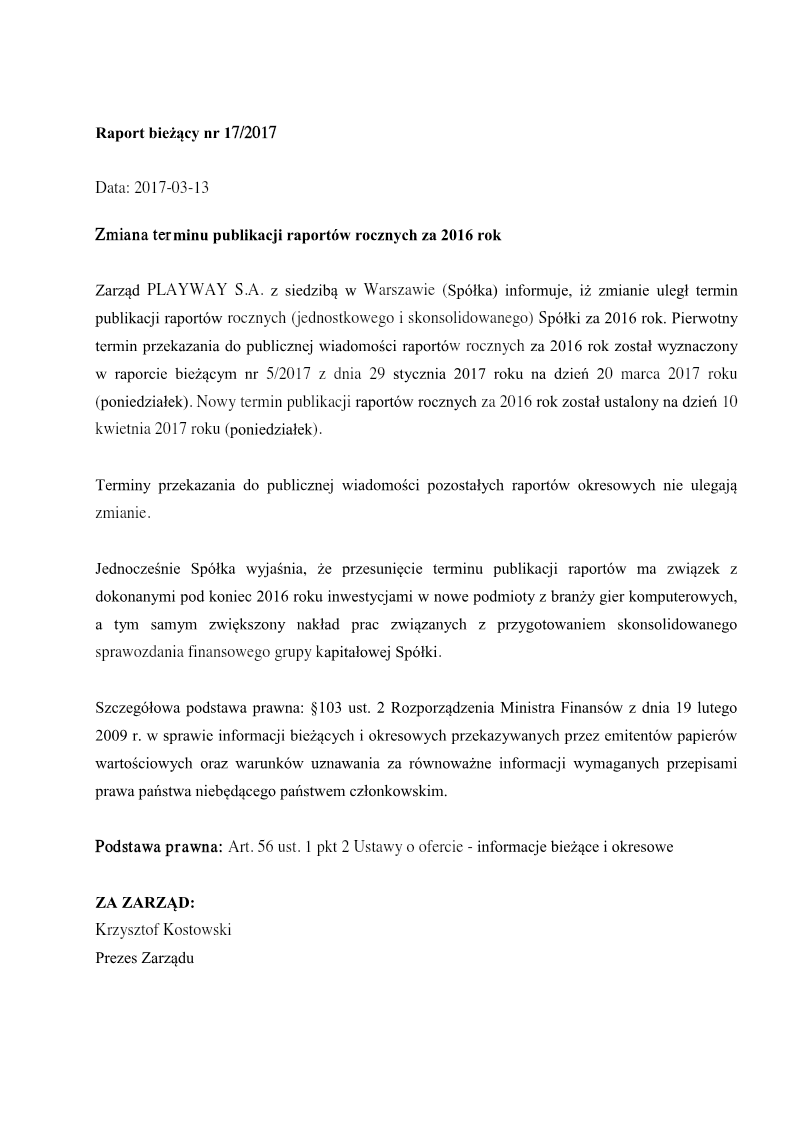
Raport bieżący nr 17/2017: Zmiana terminu publikacji raportów rocznych za 2016 rok
13 Mar 20171 pages~1 min full read
The management board of PlayWay S.A., a prominent Polish video game developer and publisher, officially rescheduled the release of its annual financial results for the 2016 fiscal year. Originally slated for publication on March 20, 2017, the separate and consolidated annual reports were moved to a new deadline of April 10, 2017. This administrative adjustment specifically targets the year-end financial disclosures, while the previously established schedule for all other periodic reports remains unaffected.
The primary driver for this delay is the significant expansion of the company’s corporate structure. During the latter part of 2016, PlayWay undertook several strategic investments in new entities within the computer games industry. These acquisitions necessitated a substantial increase in the workload required to prepare the consolidated financial statements for the capital group. The additional time allows for the accurate integration of these new subsidiaries into the group’s financial reporting framework.
This disclosure was issued in compliance with Polish financial regulations regarding current and periodic information provided by securities issuers. The announcement serves as a formal notification to investors and regulatory bodies, ensuring transparency regarding the company's reporting timeline following a period of active portfolio growth. The decision reflects the operational complexities inherent in managing a rapidly expanding network of development studios within the global gaming market.
PlayWay · 2026
PlayWay · 2026
PlayWay · 2026
PCF Group · 2025
PlayWay · 2025
PlayWay · 2025
PlayWay · 2025
PlayWay · 2025
PlayWay · 2025
PlayWay · 2025
PlayWay · 2025
PlayWay · 2025
PCF Group · 2026
PCF Group · 2025
11 bit studios · 2025
PCF Group · 2025
11 bit studios · 2025
11 bit studios · 2025
11 bit studios · 2025
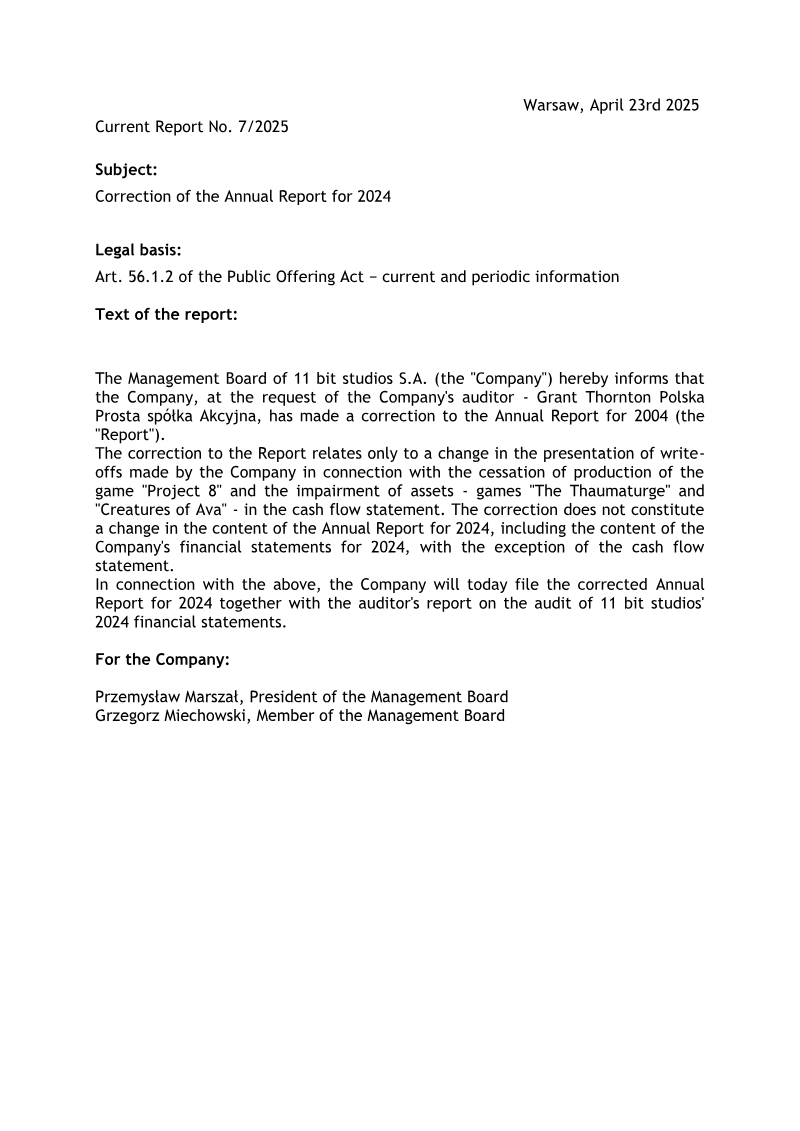
11 bit studios · 2025
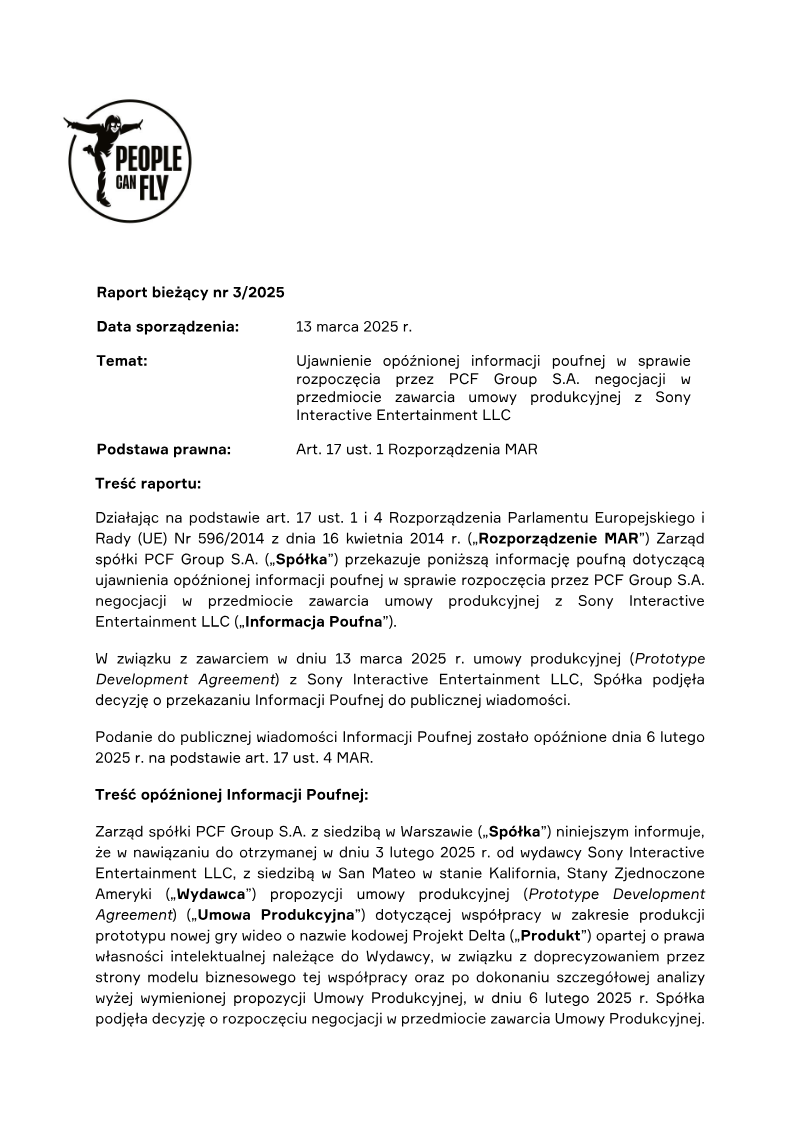
PCF Group · 2025
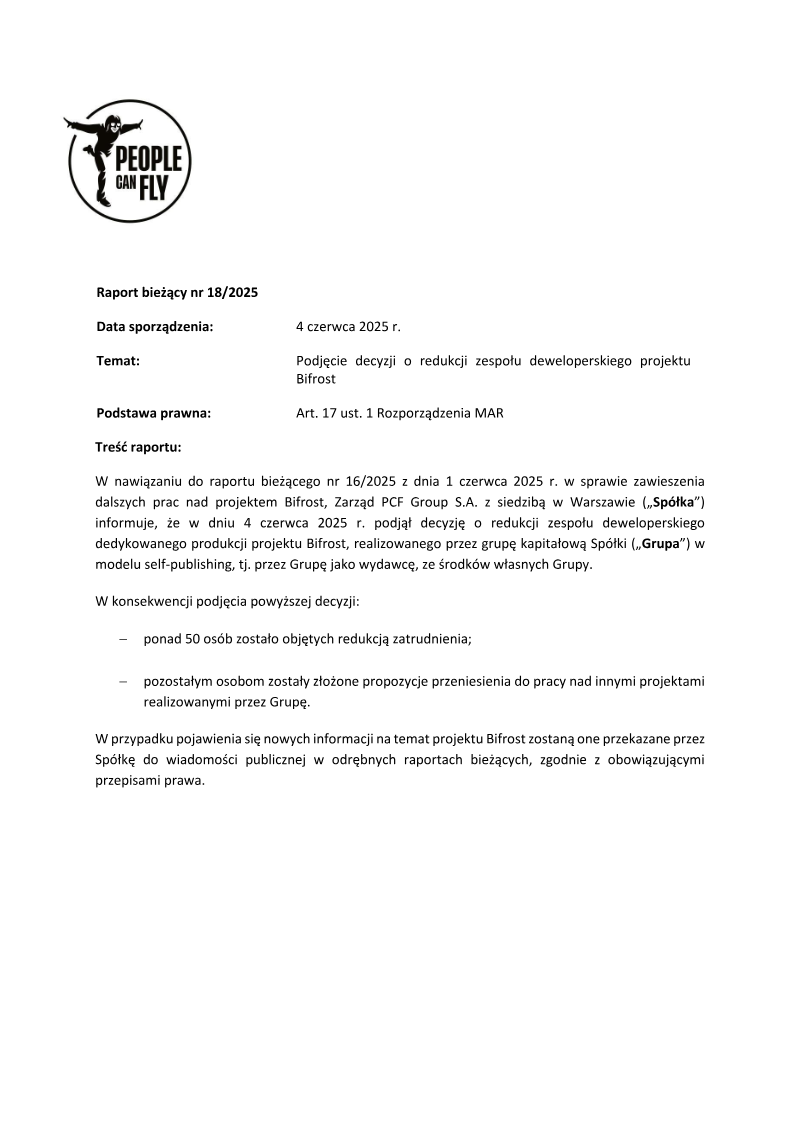
PCF Group · 2025
AEVI · 2025
11 bit studios · 2024