Legal11 bit studios
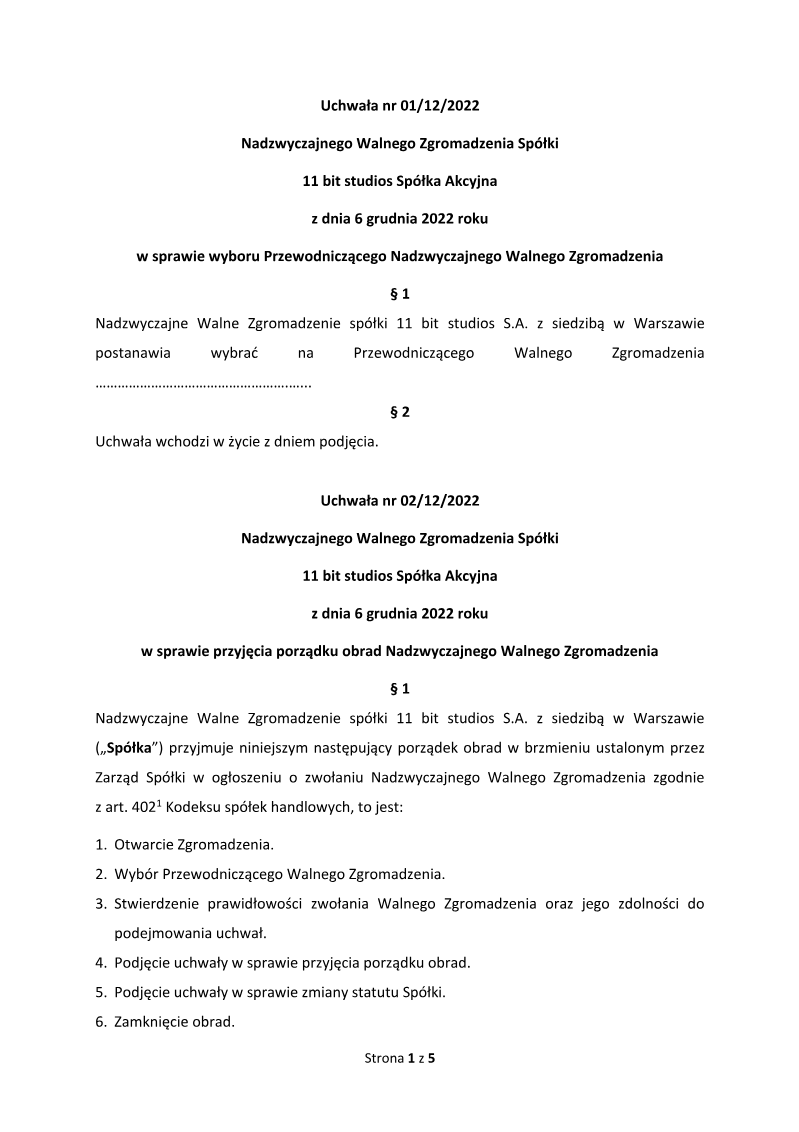
Resolution No. 01/12/2022 of the Extraordinary General Meeting of 11 bit studios S.A.
6 Dec 20225 pages~5 min full read
The draft resolutions for the Extraordinary General Meeting of Shareholders of 11 bit studios S.A., scheduled for December 6, 2022, outline significant structural and administrative updates to the company’s governing statutes. The primary objective of these resolutions is to refine the legal framework of the company’s operations, specifically regarding the roles and responsibilities of the Supervisory Board and the Management Board, while ensuring compliance with the Polish Commercial Companies Code.
Key findings include a technical update to the company’s business classification, specifically refining its entertainment and recreational activities under the PKD 93.29.B code. More substantial changes focus on corporate governance, such as clarifying that the three-year terms for both the Supervisory and Management Boards are to be calculated in full financial years. The resolutions also transition the Supervisory Board’s role regarding the acquisition of shares in other entities from a direct action to an oversight function, requiring their formal consent for such transactions.
The proposed amendments introduce new procedural protocols for the Supervisory Board, including detailed rules for leadership succession during absences, meeting notification methods via digital and physical channels, and the ability to vote on items not originally on the agenda. A significant addition is the provision for the Supervisory Board to hire external advisors at the company’s expense to conduct specific analyses or audits, subject to a spending cap of 50% of the board's total compensation from the previous year. Finally, the resolutions seek to limit certain mandatory information obligations of the Management Board under the Commercial Companies Code, replacing them with a requirement to provide aggregated data on the company’s financial, operational, and personnel status. These changes take legal effect upon registration with the National Court Register.
11 bit studios · 2026
11 bit studios · 2025
11 bit studios · 2025
11 bit studios · 2025
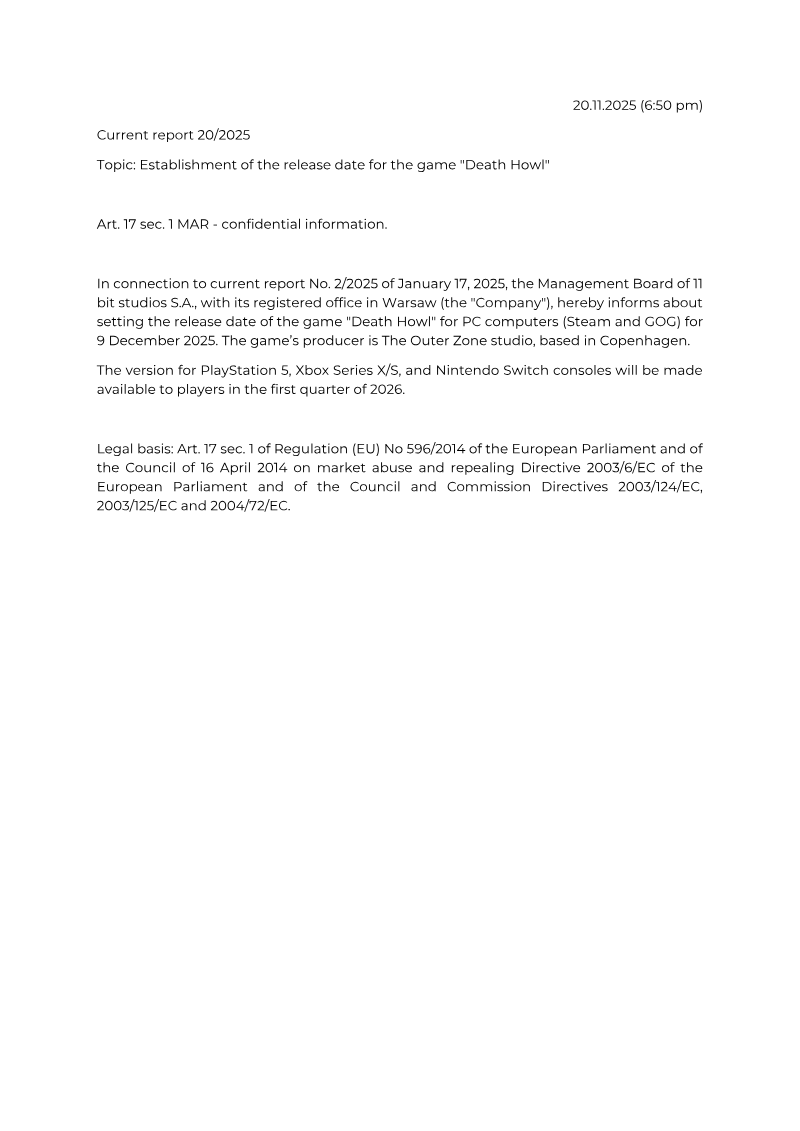
11 bit studios · 2025
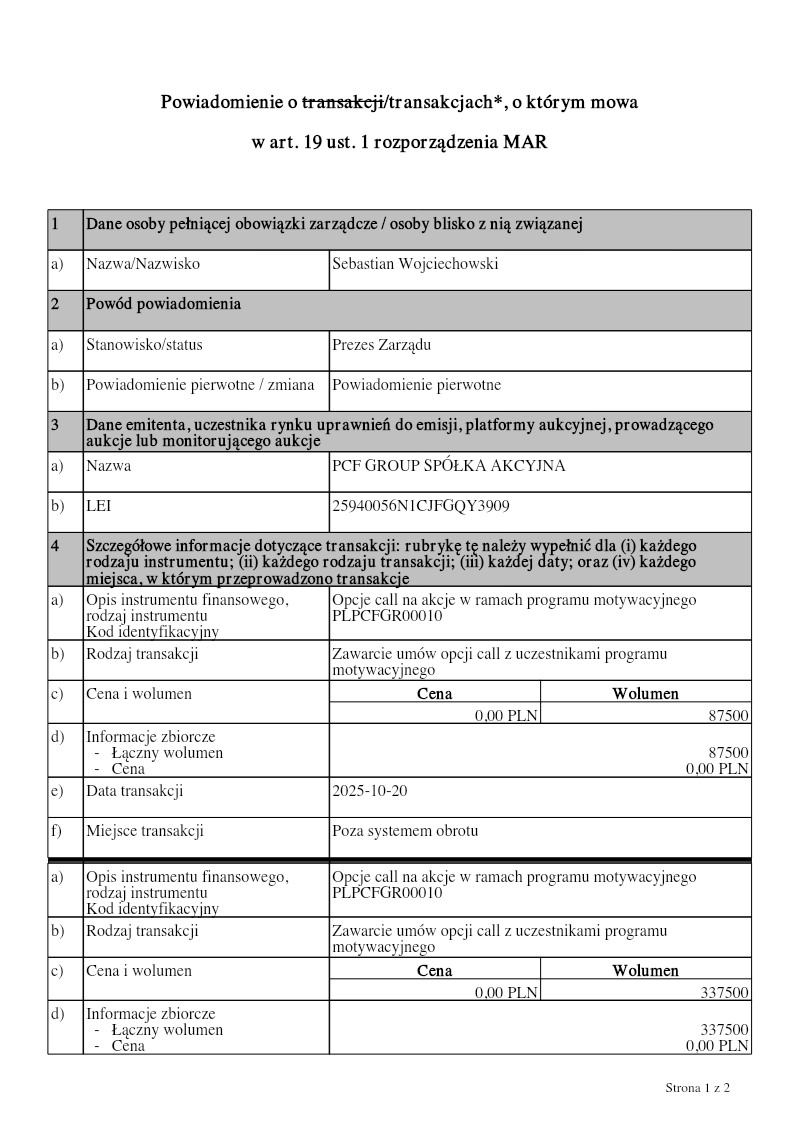
PCF Group · 2025
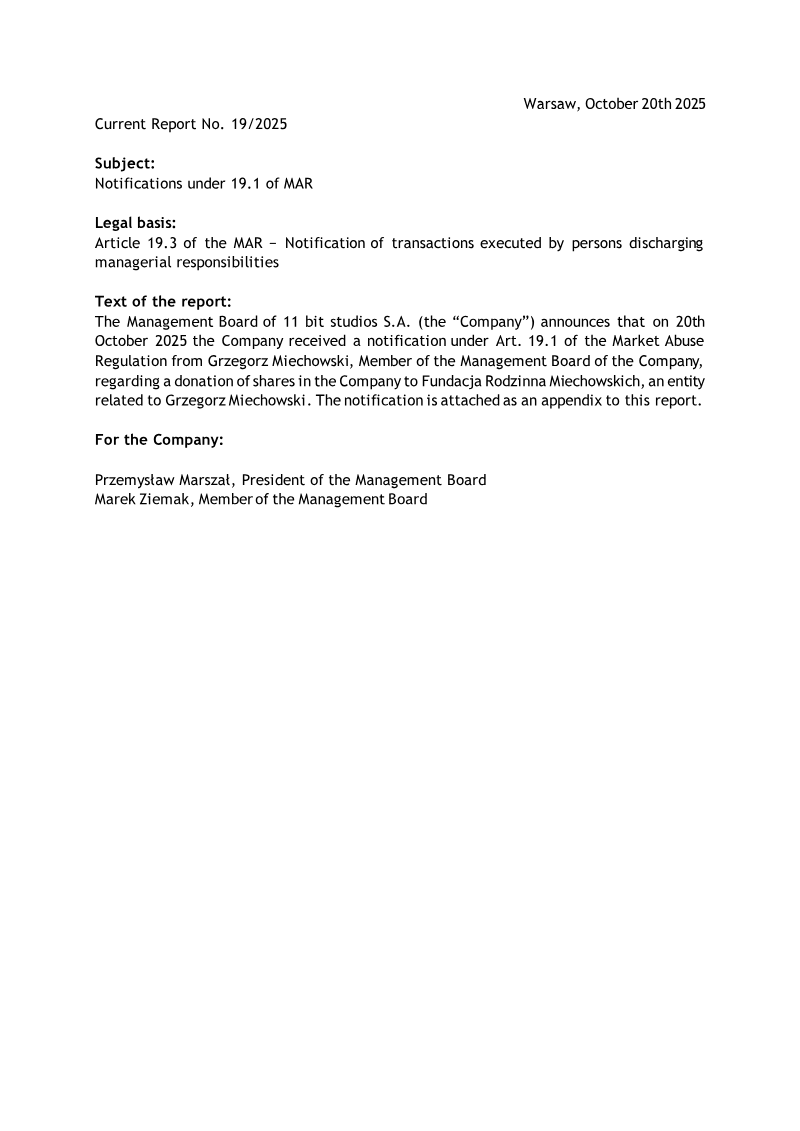
11 bit studios · 2025
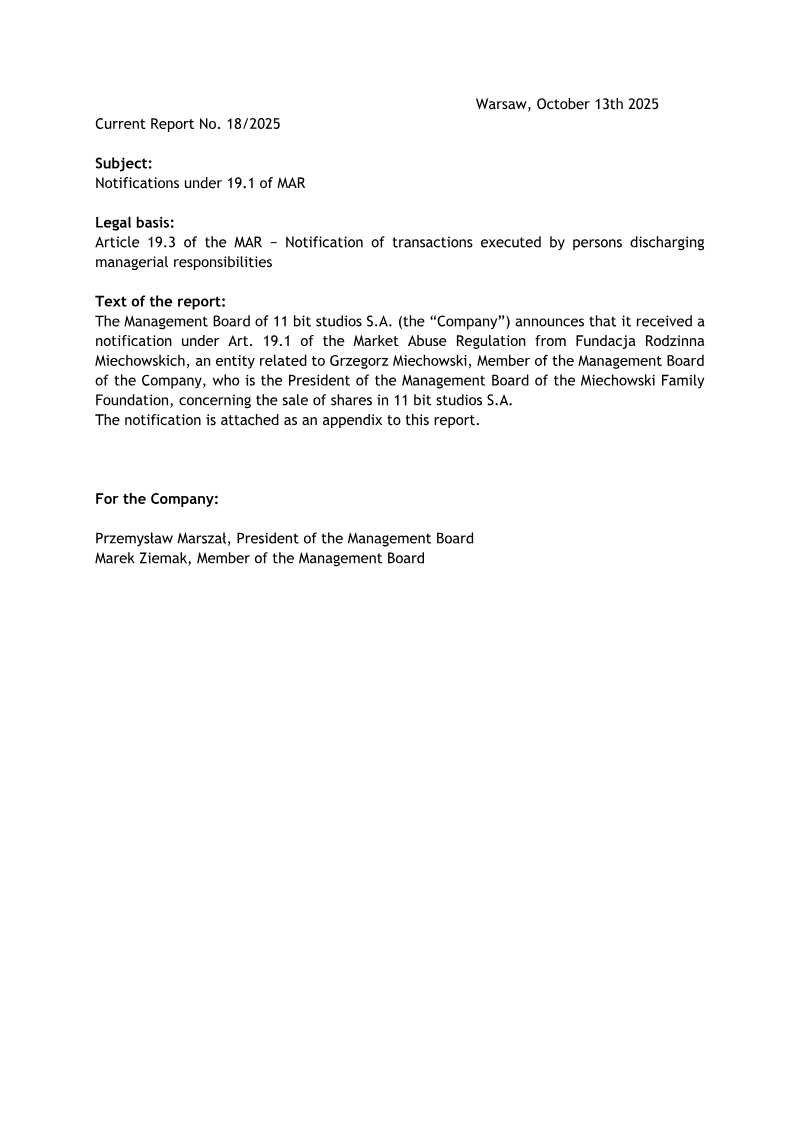
11 bit studios · 2025
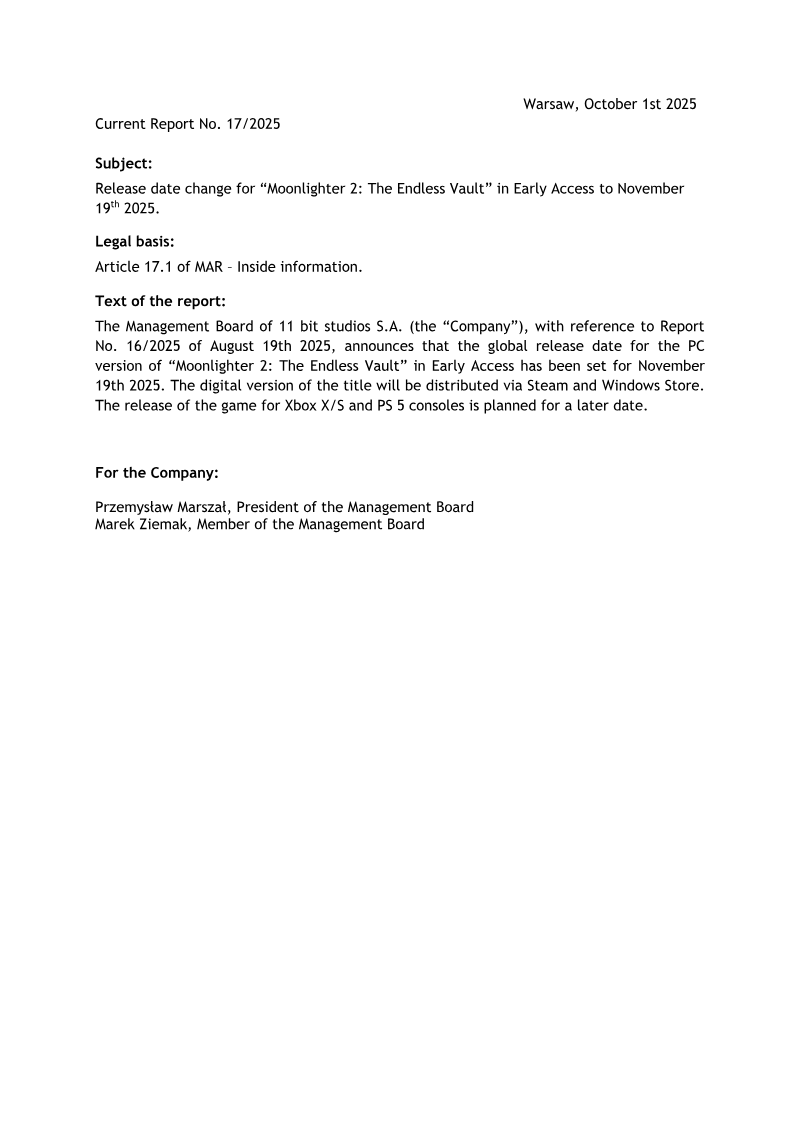
11 bit studios · 2025
11 bit studios · 2025
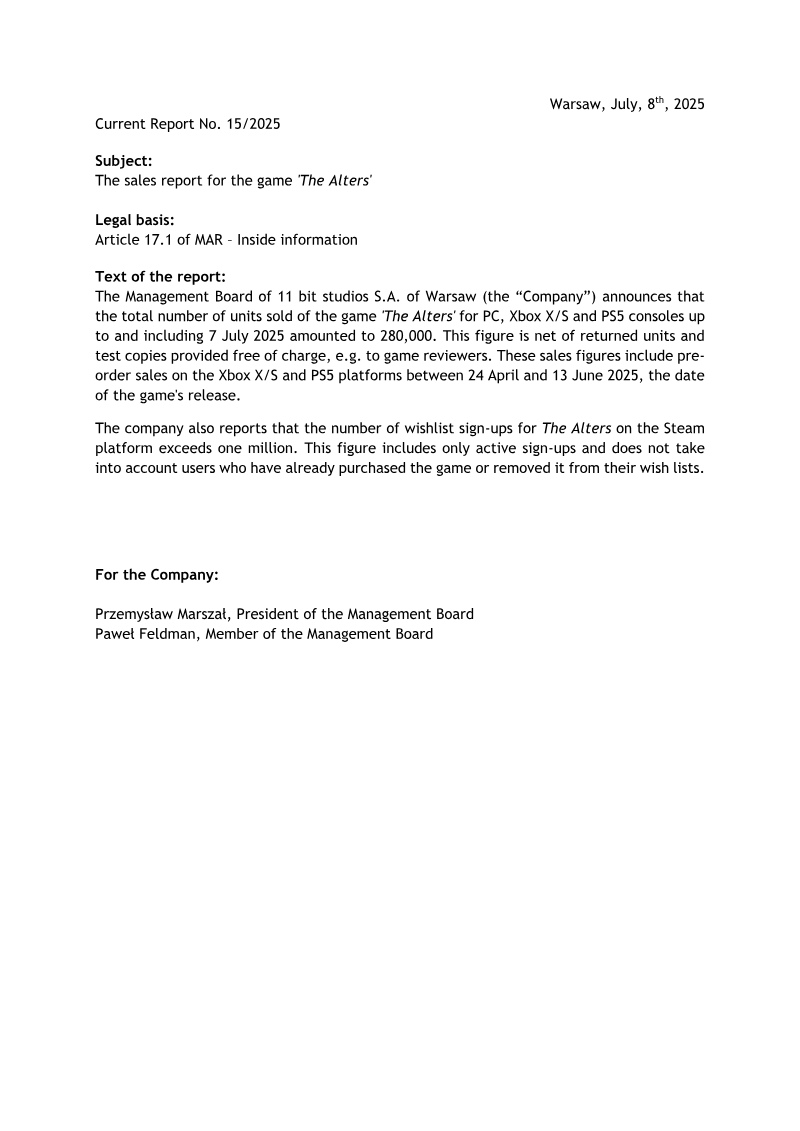
11 bit studios · 2025
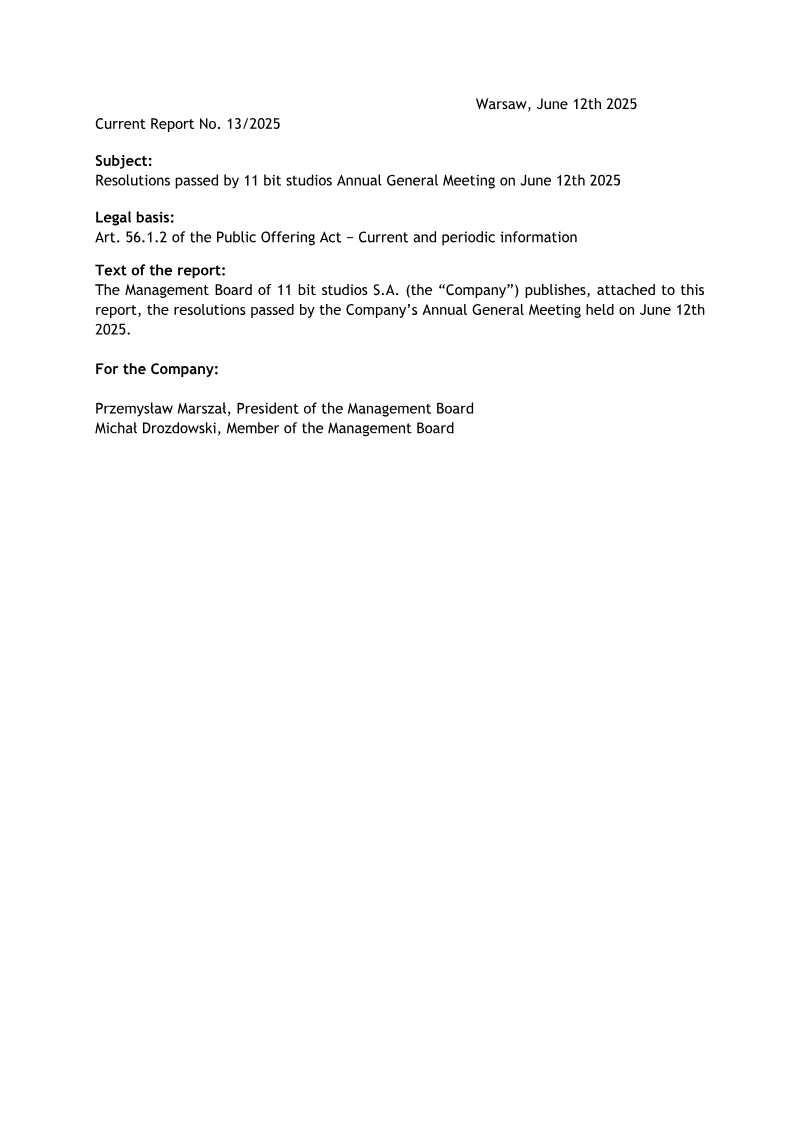
11 bit studios · 2025
PCF Group · 2025
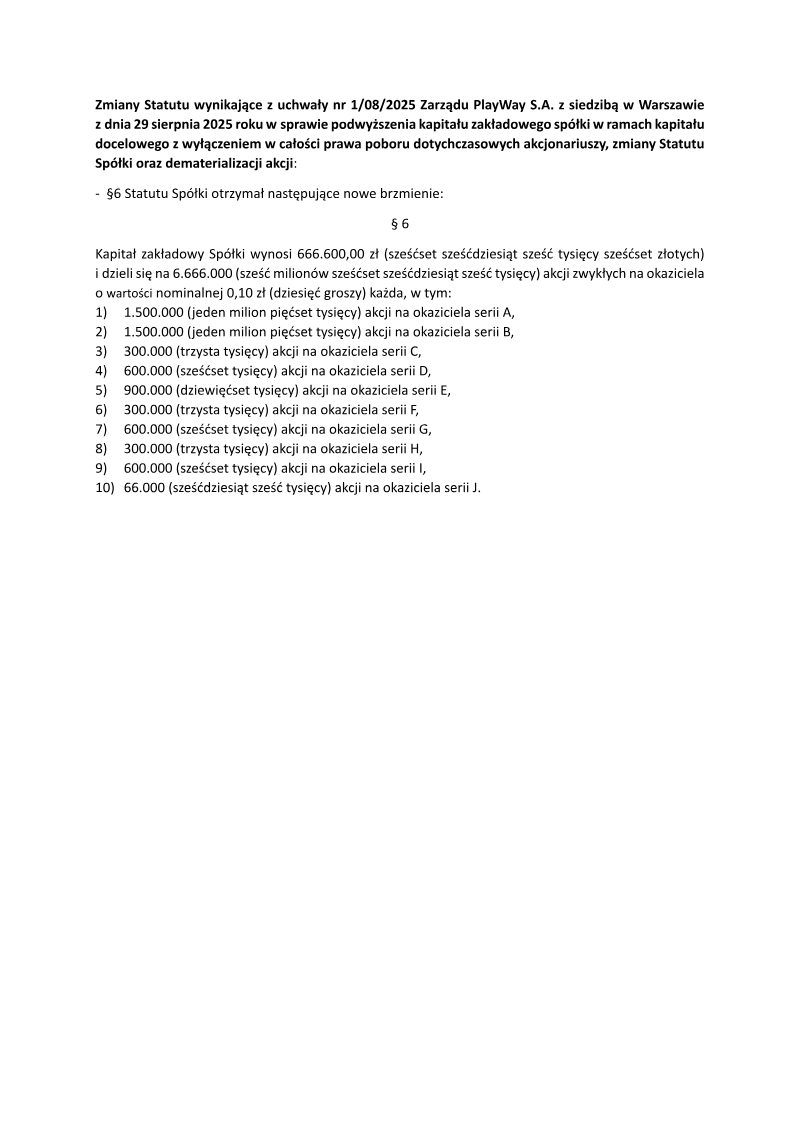
PlayWay · 2025
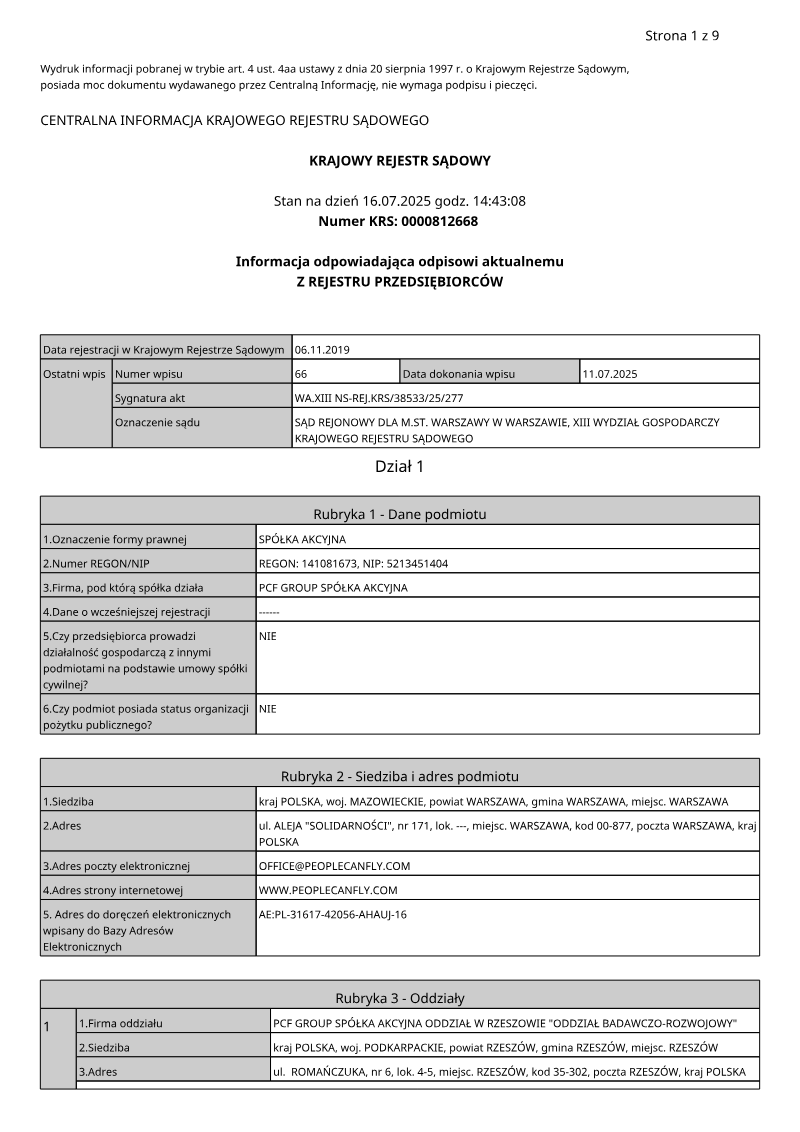
Centralna Informacja Krajowego Rejestru Sądowego · 2025
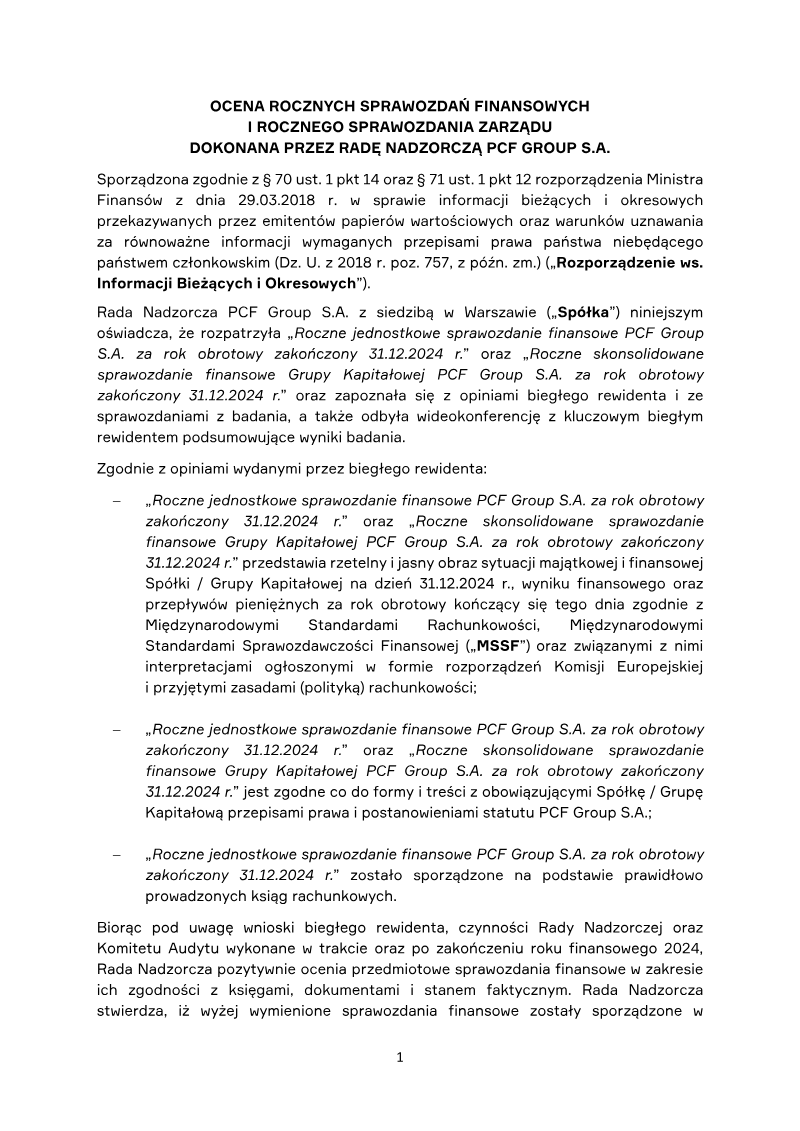
PCF Group · 2025
PCF Group · 2024
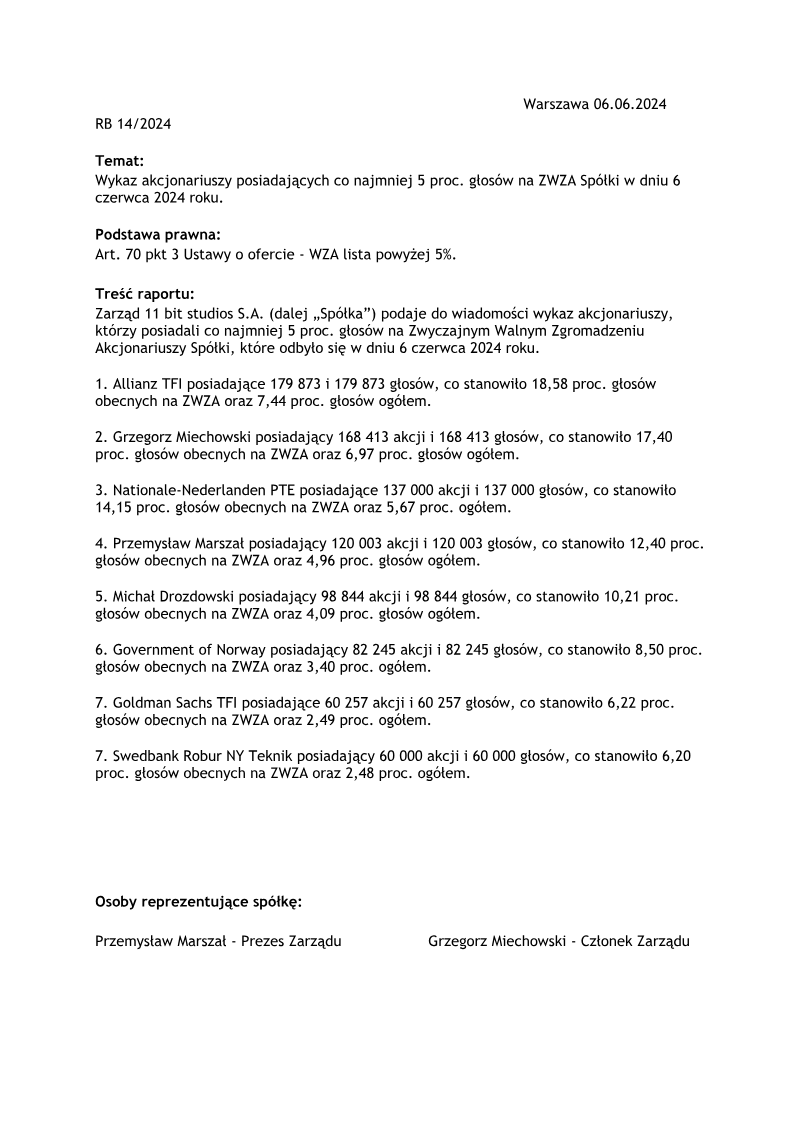
11 bit studios · 2024
PCF Group · 2024
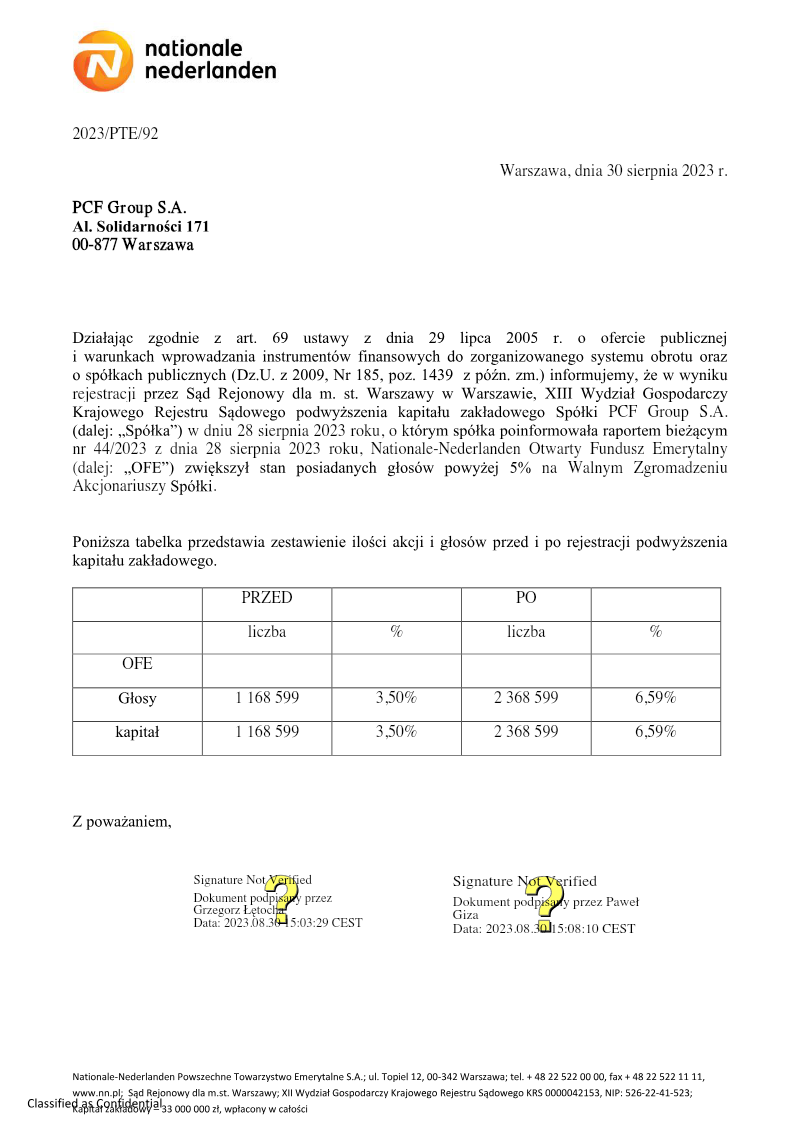
PCF Group · 2023
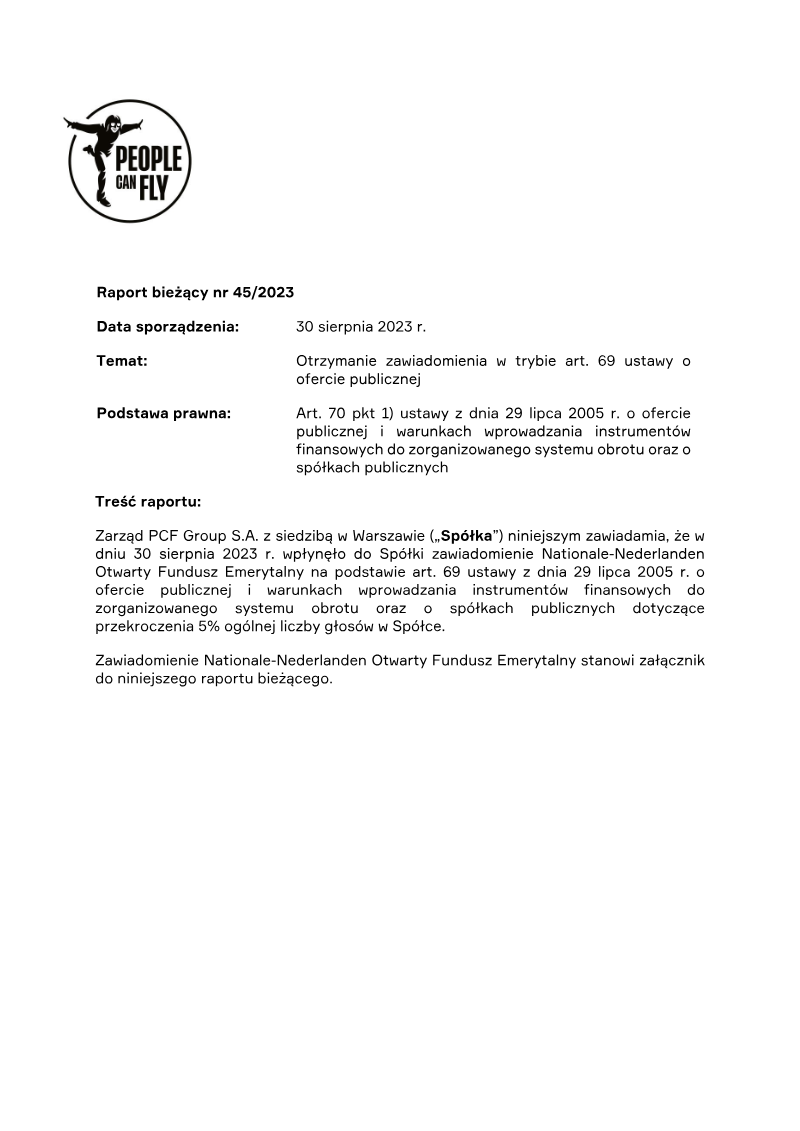
PCF Group · 2023
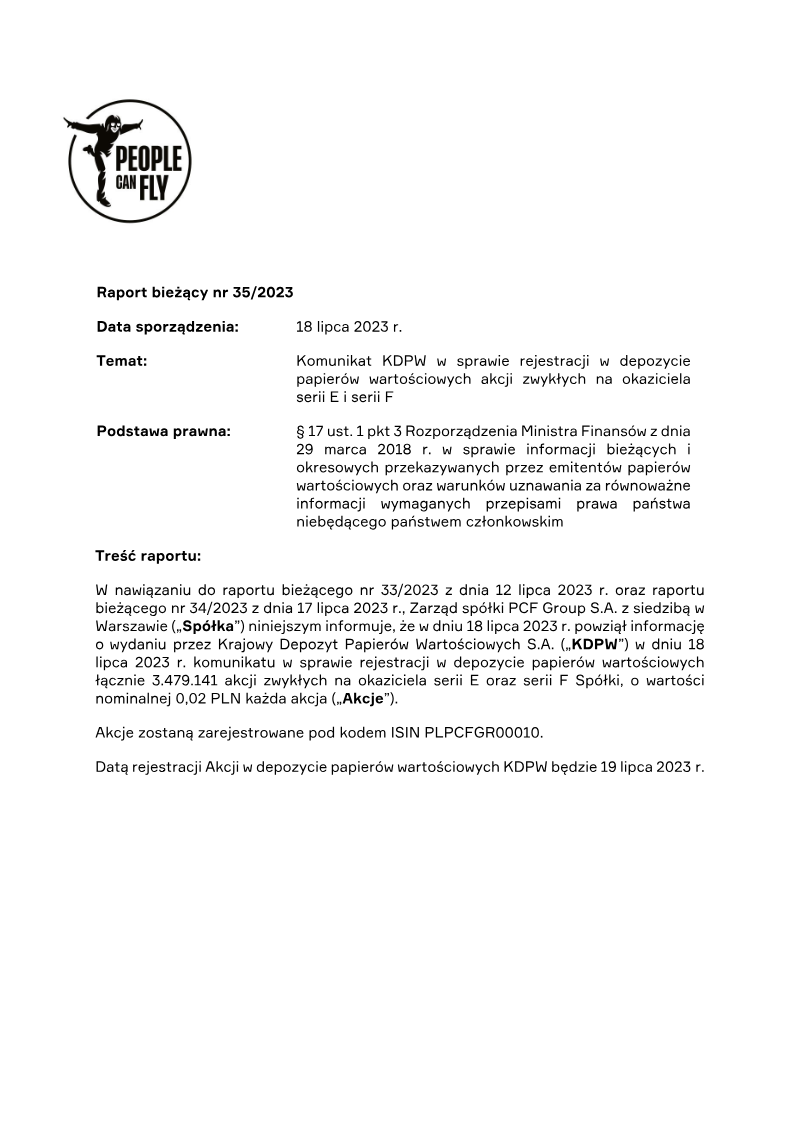
PCF Group · 2023
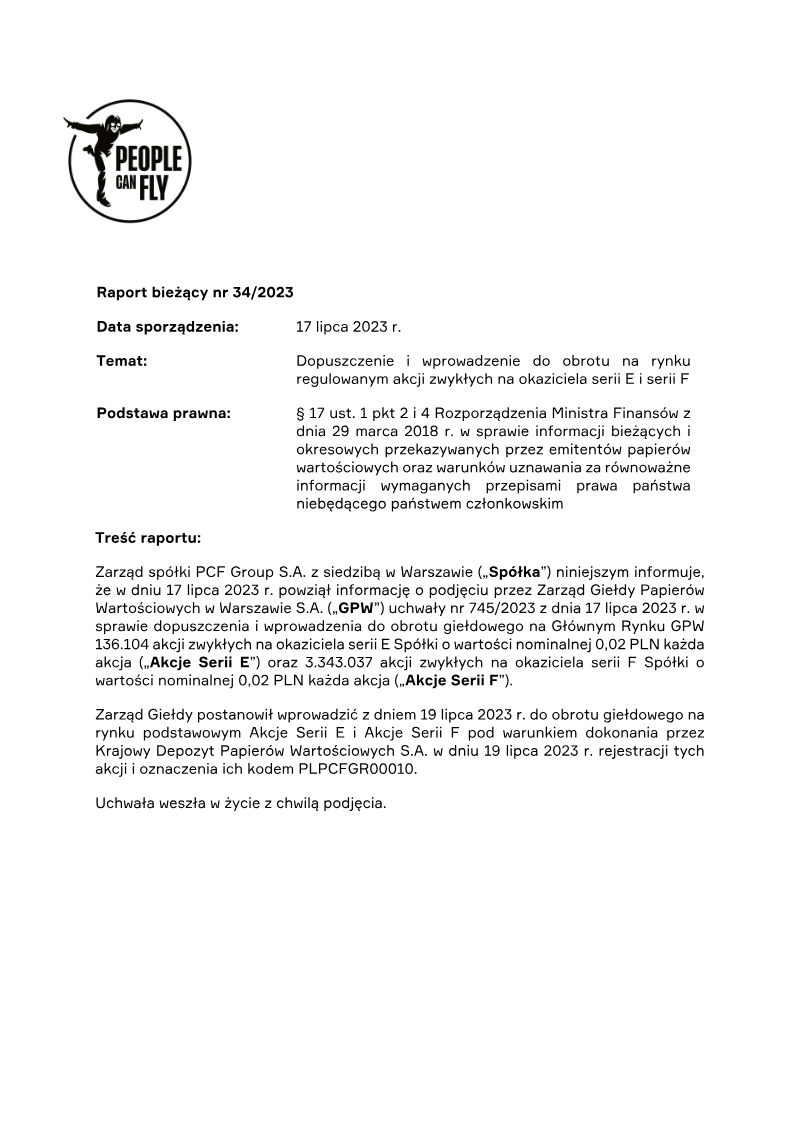
PCF Group · 2023
PCF Group · 2023