Key insights
6 slides
Training need
Police officers require effective training to enhance their investigative interviewing capabilities.
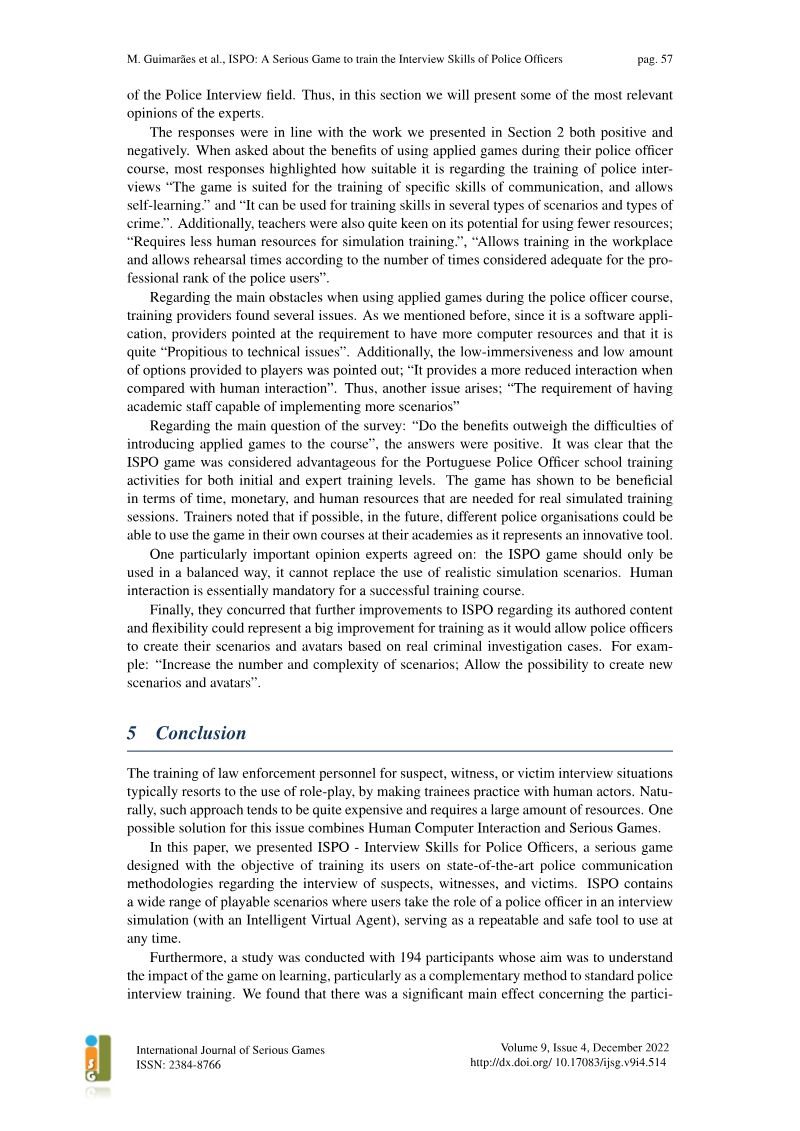
The ISPO project establishes a digital training framework to improve law enforcement's investigative capabilities. It focuses on interviewing victims, witnesses, and suspects.
Core objective. The primary objective is to supplement traditional human-led role-play training.
1 / 6
- 01The ISPO project utilizes Intelligent Virtual Agents to provide a scalable, repeatable digital training environment for police officers to practice investigative interviewing techniques.See it on page 15
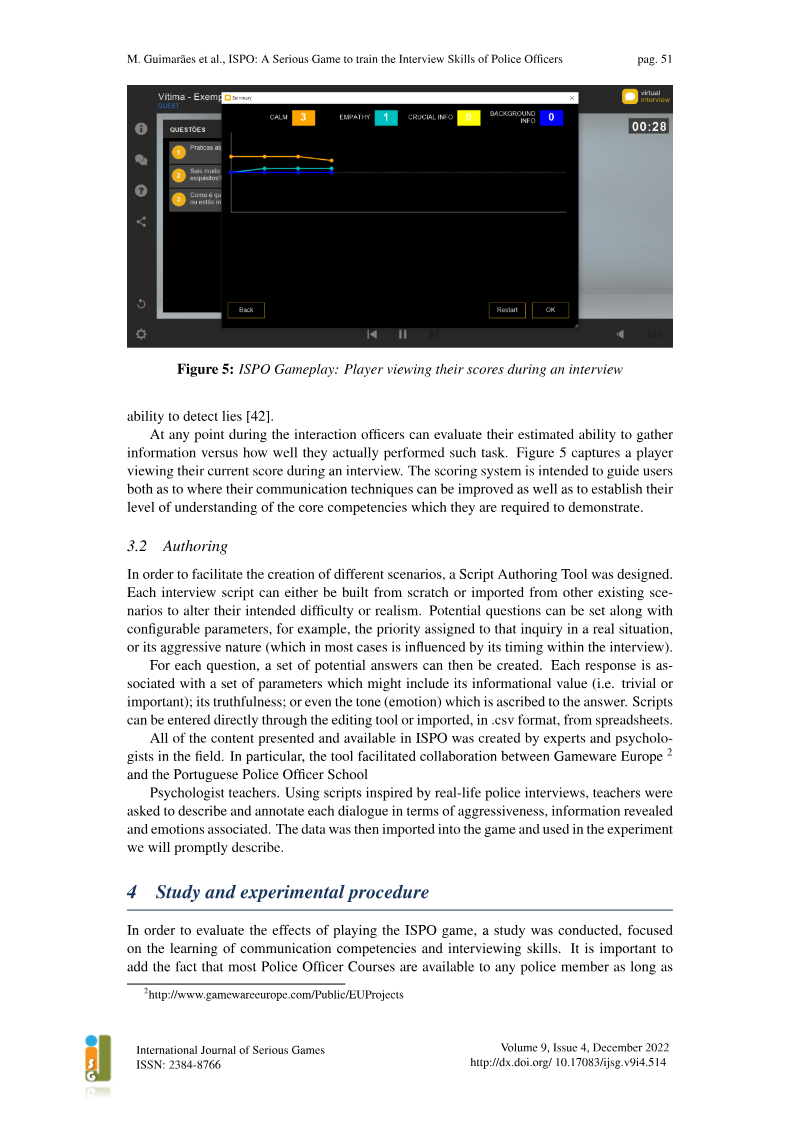
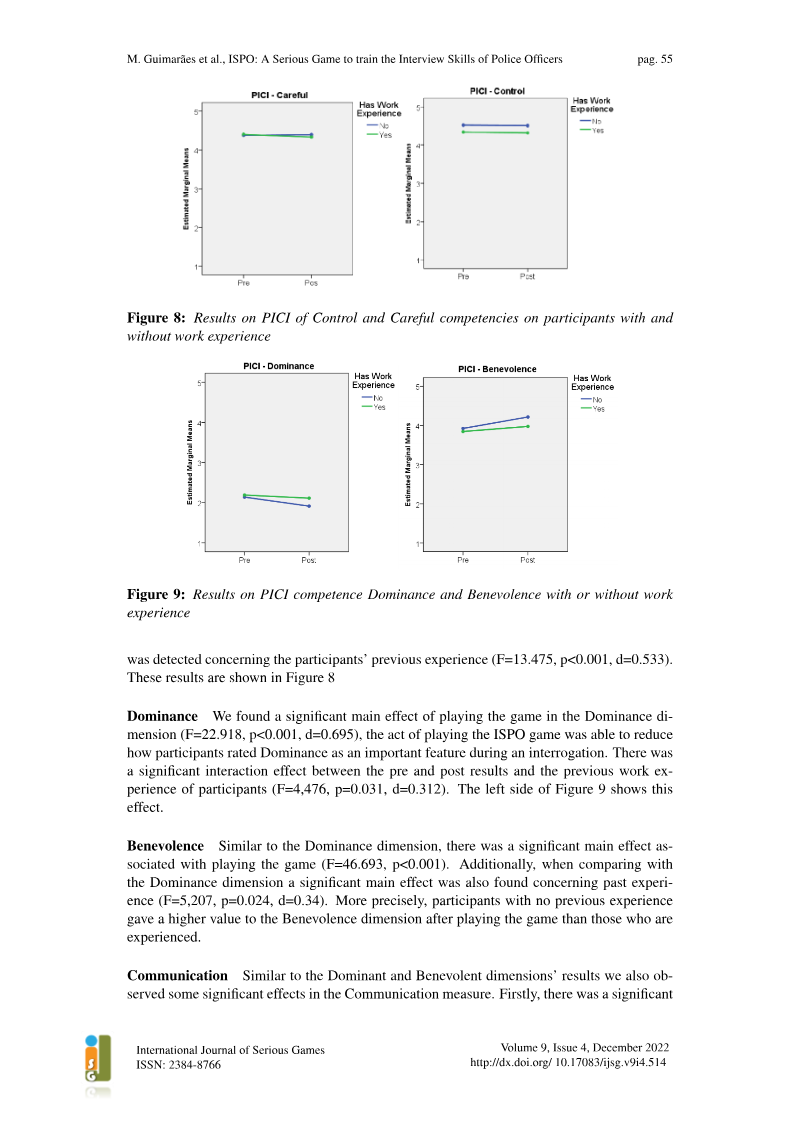
- 02Empirical testing with 194 participants showed that the simulation effectively reduces reliance on dominance-based tactics in favor of empathetic engagement and structured communication.See it on page 13
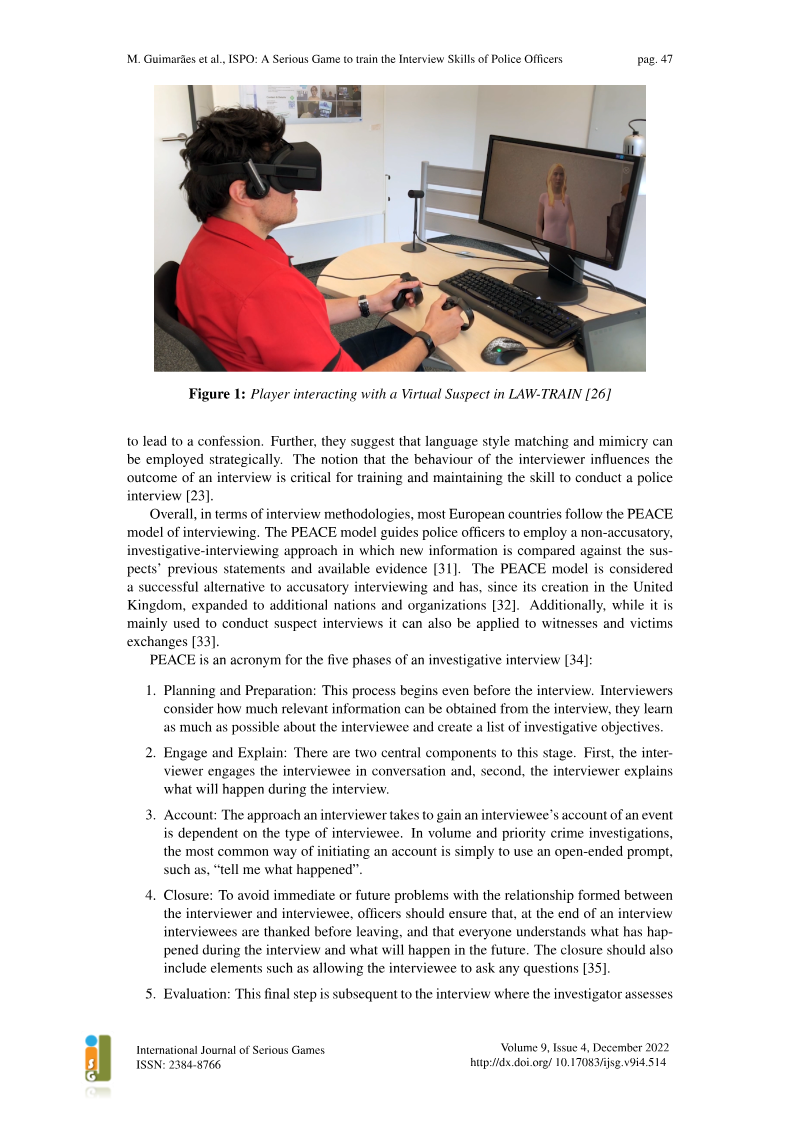
- 03The platform is designed to teach established investigative protocols, specifically the PEACE model and the Cognitive Interview, through real-time feedback and post-session analysis.See it on page 5
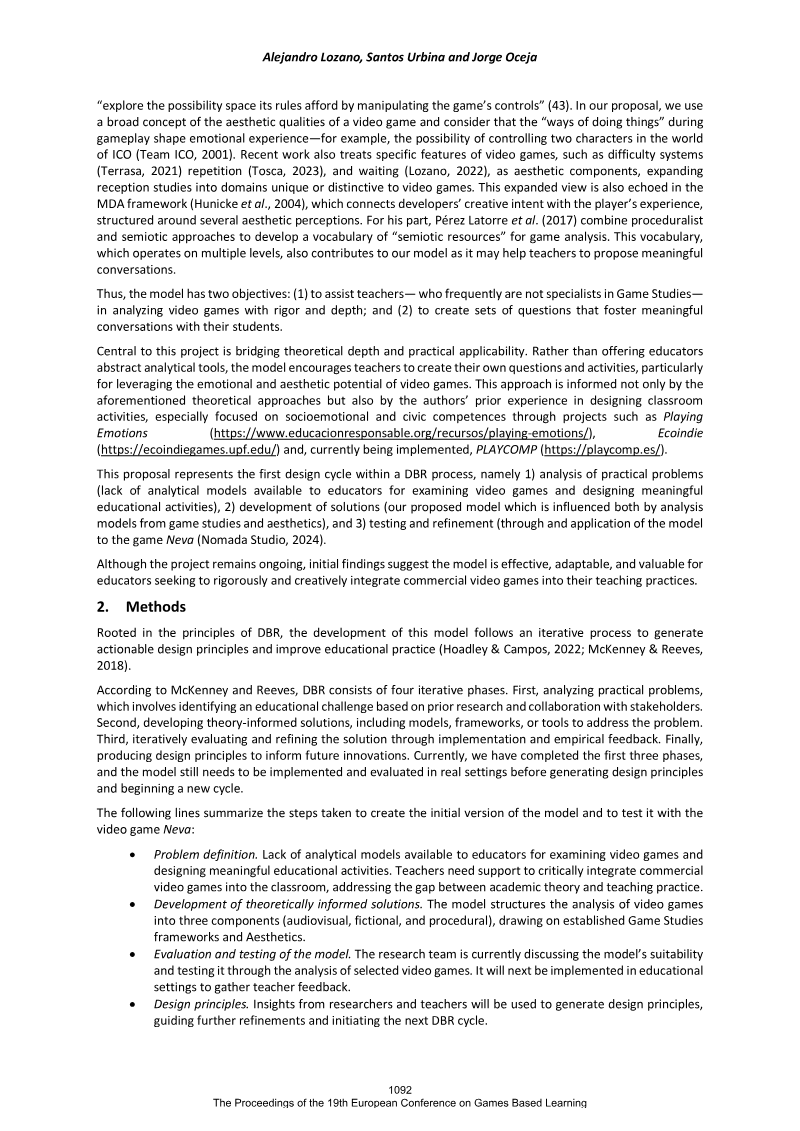
- 04The software includes an authoring tool that allows subject matter experts to customize training scenarios to align with evolving psychological standards.See it on page 9
- 05While most effective for inexperienced officers, the system serves as a resource-efficient pedagogical complement to traditional human-led role-play training.See it on page 2
- 06The project is supported by the Portuguese School for Police Officers and various European research initiatives, signaling a broader trend toward integrating virtual simulation into law enforcement curricula.See it on page 16
Ask AI about this report
Summary
The Interview Skills for Police Officers (ISPO) project establishes a digital training framework designed to enhance the investigative capabilities of law enforcement through serious gaming. By leveraging Intelligent Virtual Agents, the platform provides a scalable, cost-effective, and repeatable environment for officers to practice interviewing victims, witnesses, and suspects. The primary objective is to supplement traditional human-led role-play training by offering a safe space where trainees can refine their communication techniques, specifically focusing on empathy, rapport-building, and the management of interviewee emotions according to established protocols like PEACE and the Cognitive Interview.
Empirical testing involving 194 participants demonstrates that the simulation effectively shifts the professional mindset of trainees. Results indicate a measurable decrease in the perceived necessity of dominance-based tactics, replaced by a heightened appreciation for empathetic engagement and structured communication. While the software proves most beneficial for inexperienced officers, it functions as a robust pedagogical tool that provides real-time feedback and post-session analysis, allowing users to learn from decision-making errors in a controlled setting. Furthermore, the inclusion of an authoring tool empowers subject matter experts to customize scenarios based on evolving psychological standards.
Supported by the Portuguese School for Police Officers and various European research initiatives, this project underscores the growing integration of virtual simulation into professional law enforcement curricula. The findings suggest that while serious games cannot fully replace the nuance of human-led instruction, they serve as a vital, resource-efficient complement to existing training methodologies. By bridging the gap between theoretical knowledge and practical application, the system offers a sustainable path forward for developing essential investigative competencies across the broader police training landscape.