Updated Apr 30, 2026 by Ubisoft
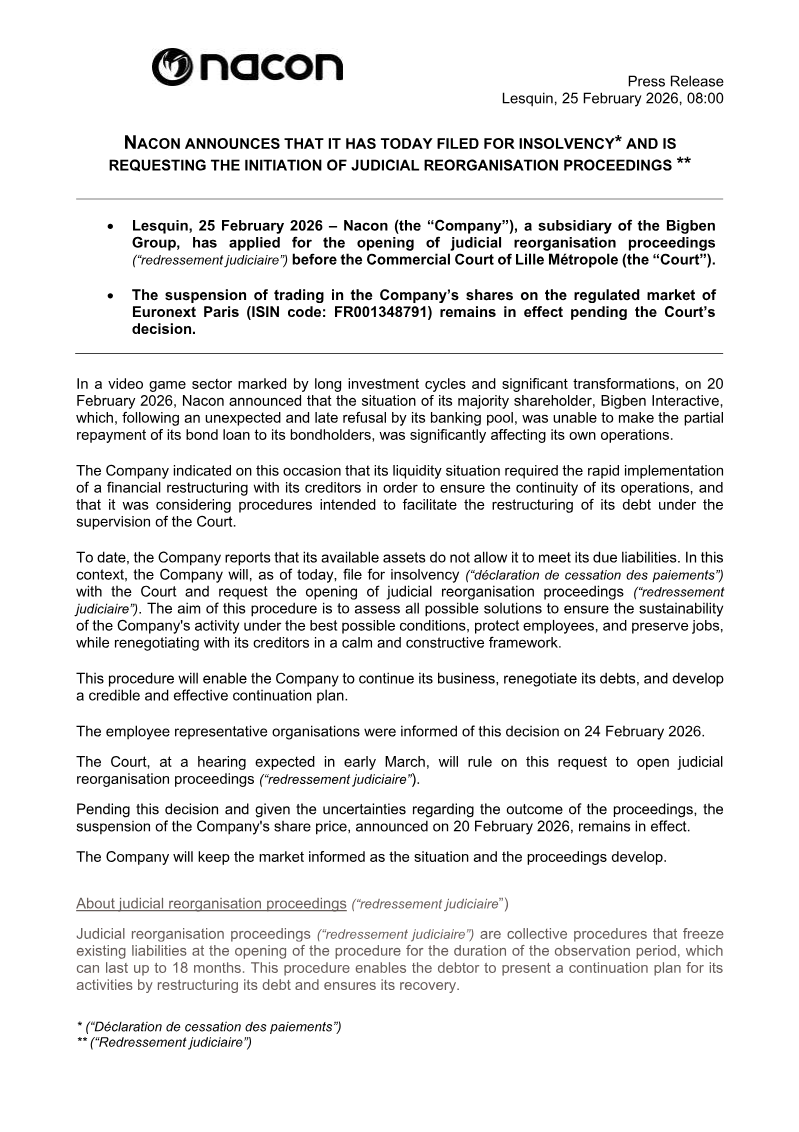
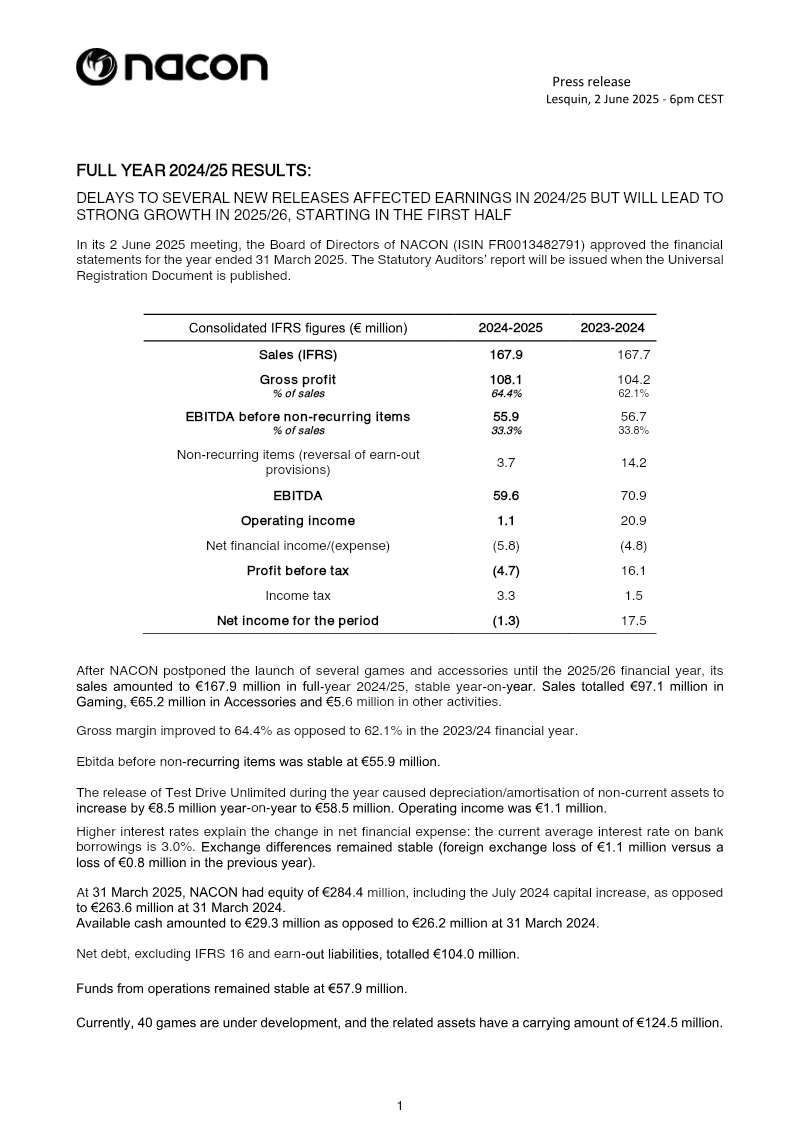
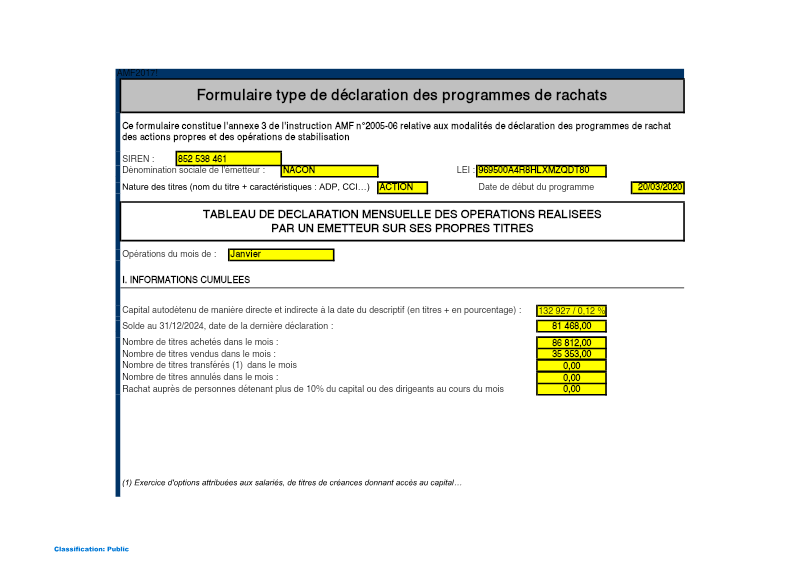
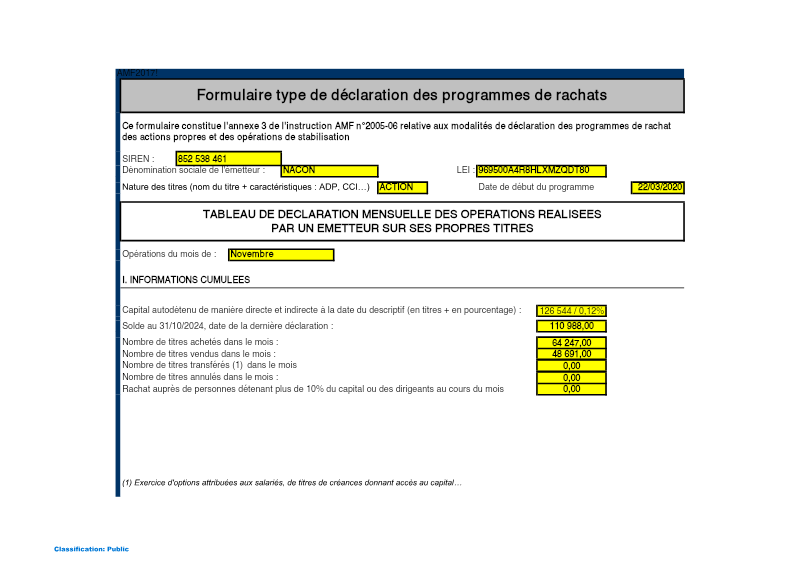
Nacon, a prominent French video game publisher and peripheral manufacturer, has officially filed for insolvency and requested the initiation of judicial reorganization proceedings before the Commercial Court of Lille Métropole. This decision, announced in February 2026, stems from a critical liquidity crisis exacerbated by the financial instability of its majority shareholder, Bigben Interactive. The parent company’s inability to repay a bond loan following a refusal from its banking pool created a domino effect, leaving Nacon unable to meet its current liabilities with available assets. The primary objective of the judicial reorganization is to facilitate a structured debt renegotiation while ensuring the continuity of business operations. Under French law, this procedure allows for an observation period of up to 18 months, during which existing liabilities are frozen to allow the company to develop a credible recovery plan. Nacon aims to use this period to protect its workforce of over 1,000 employees and preserve its global distribution network, which spans 25 subsidiaries and 100 countries. Despite reporting a revenue of €167.9 million and an operating profit of €1.1 million for the 2024/2025 fiscal year, the company faces significant pressure from the long investment cycles inherent in the AA video game sector. Trading of Nacon’s shares on the Euronext Paris remains suspended pending a court ruling expected in early March 2026. The outcome of these proceedings will determine the feasibility of a continuation plan intended to stabilize the company’s 16 development studios and its broader gaming peripheral business.
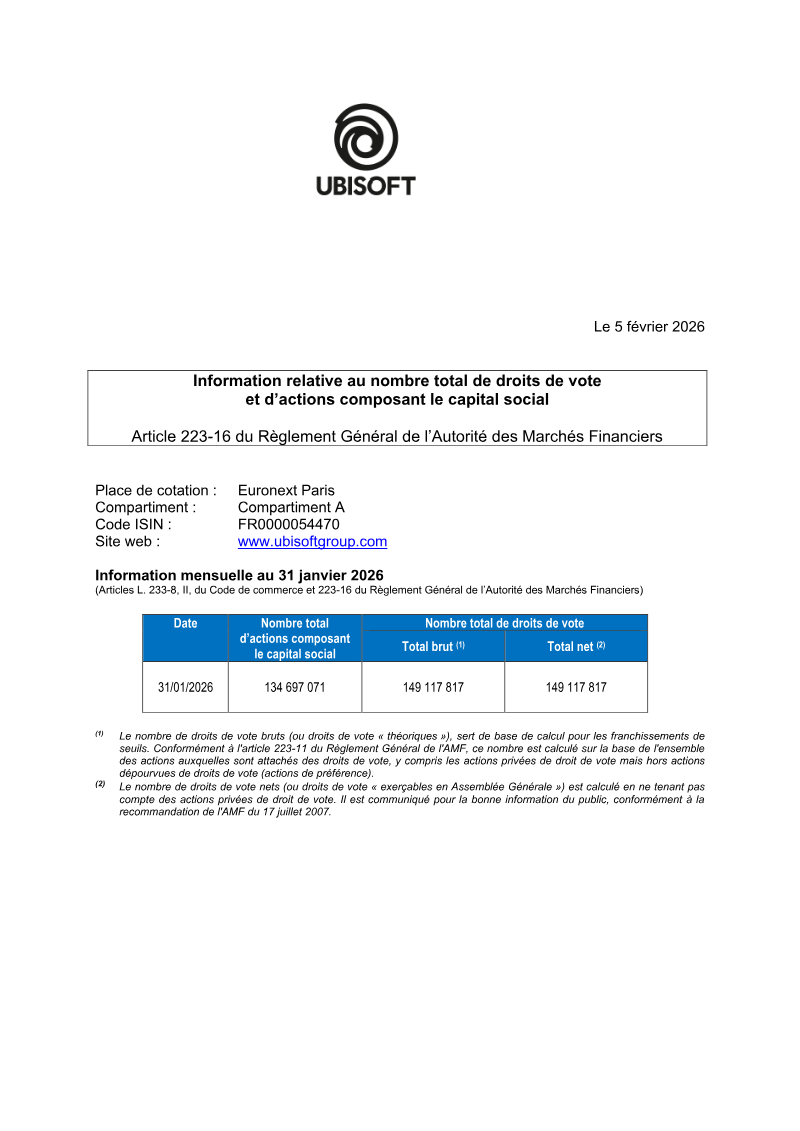
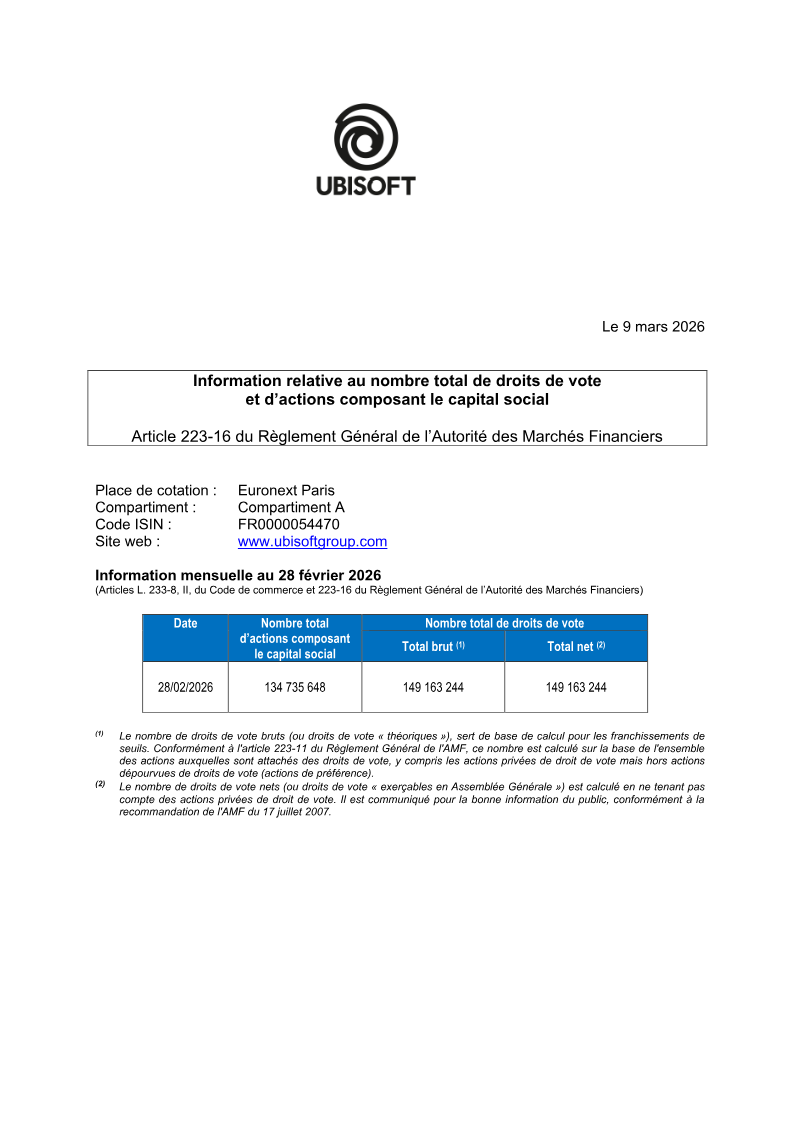
Ubisoft Entertainment SA released its monthly regulatory disclosure regarding its share capital and voting rights as of January 31, 2026. This mandatory filing, submitted in accordance with the General Regulations of the Autorité des Marchés Financiers and the French Commercial Code, provides transparency for investors and regulatory bodies regarding the company's ownership structure. The data pertains specifically to Ubisoft’s listing on Euronext Paris under the ISIN code FR0000054470. As of the end of January 2026, the total share capital of the company consisted of 134,697,071 shares. The disclosure identifies two distinct categories of voting rights: gross and net. The total number of gross, or theoretical, voting rights reached 149,117,817. This figure serves as the official basis for calculating threshold crossings by shareholders. It includes all shares with attached voting rights, even those temporarily deprived of such rights, while excluding preference shares that lack voting rights entirely. The total number of net voting rights, which represents the actual votes exercisable at General Meetings, was also recorded at 149,117,817. This net figure is calculated by subtracting shares deprived of voting rights from the gross total. The alignment of gross and net figures suggests that, at the time of the report, there were no significant holdings of treasury shares or other instruments that would typically result in the suspension of voting rights. This monthly update ensures that the public remains informed of the company's capital composition and the precise metrics required for legal compliance regarding shareholder influence.
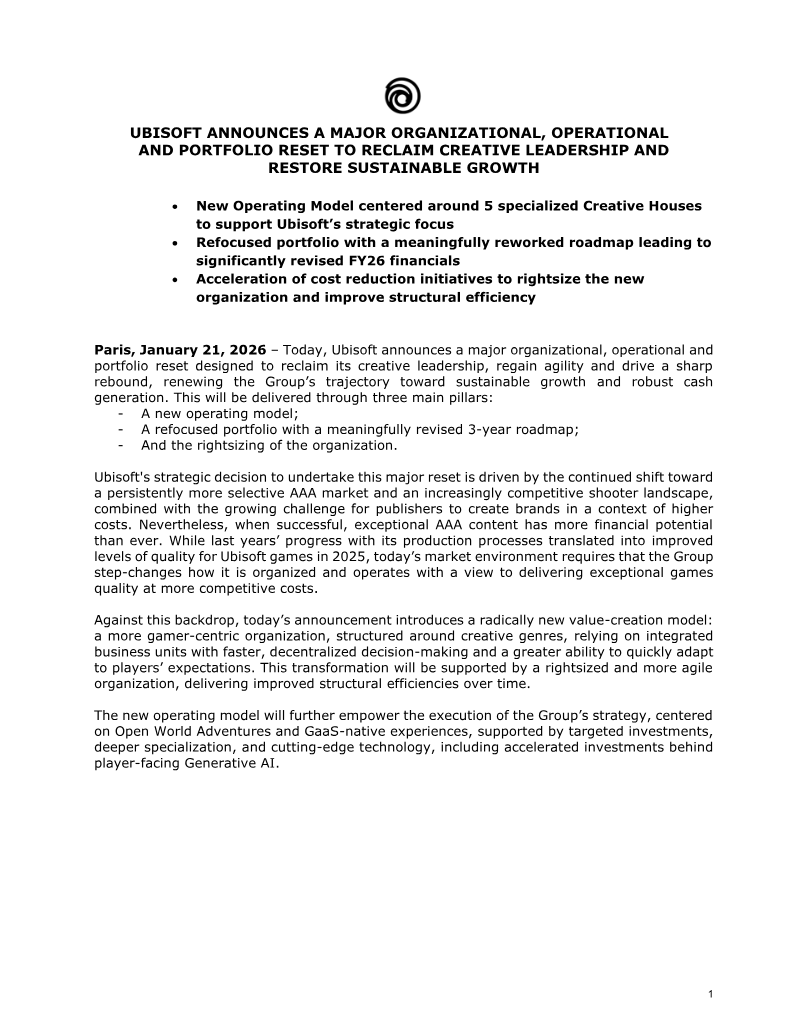
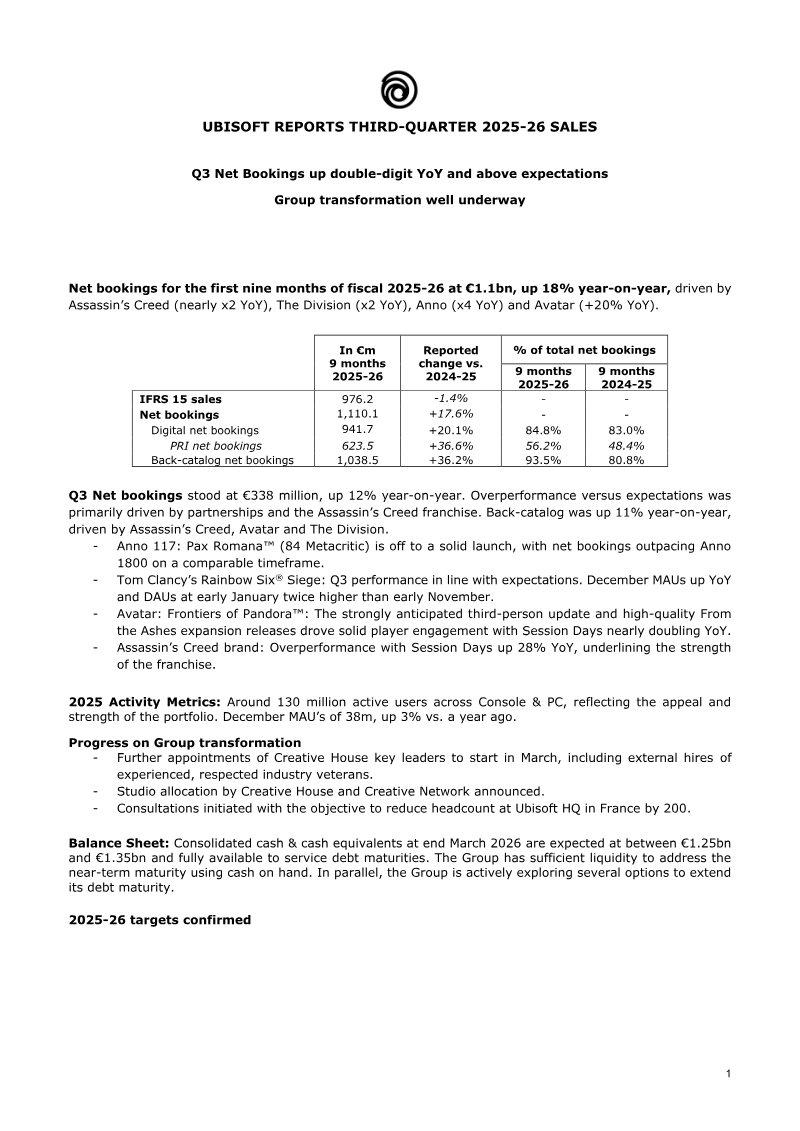
Ubisoft has initiated a major organizational and operational reset designed to reclaim creative leadership and restore sustainable growth in an increasingly selective AAA market. This strategic pivot addresses rising development costs and the competitive challenges of establishing new intellectual properties. The transformation is built upon three primary pillars: the implementation of a new operating model, a refocused game portfolio with a revised three-year roadmap, and a significant rightsizing of the global organization to improve agility and reduce fixed costs. The new operating model decentralizes production into five distinct Creative Houses supported by a centralized Creative Network and Core Services. These houses are specialized by genre and business model, focusing on billionaire brands like Assassin’s Creed and Far Cry, competitive shooters such as Rainbow Six and Ghost Recon, live-service experiences, immersive narrative universes, and casual family-friendly titles. To support this focus, Ubisoft has discontinued six games—including the Prince of Persia: The Sands of Time remake and four unannounced titles—while allocating additional development time to seven other projects to ensure higher quality standards. Financial restructuring is a critical component of this reset, with the company targeting a total reduction in fixed costs of approximately €500 million by March 2028 compared to FY23 levels. This includes the closure of studios in Halifax and Stockholm, alongside restructurings in Abu Dhabi, RedLynx, and Massive. For FY26, the group anticipates net bookings of approximately €1.5 billion and a non-IFRS EBIT loss of around €1 billion, largely due to a €650 million one-off accelerated depreciation from canceled and delayed titles. Moving forward, the group aims to reach a run-rate fixed cost base of €1.25 billion by 2028, prioritizing robust cash generation and a more disciplined approach to capital allocation.
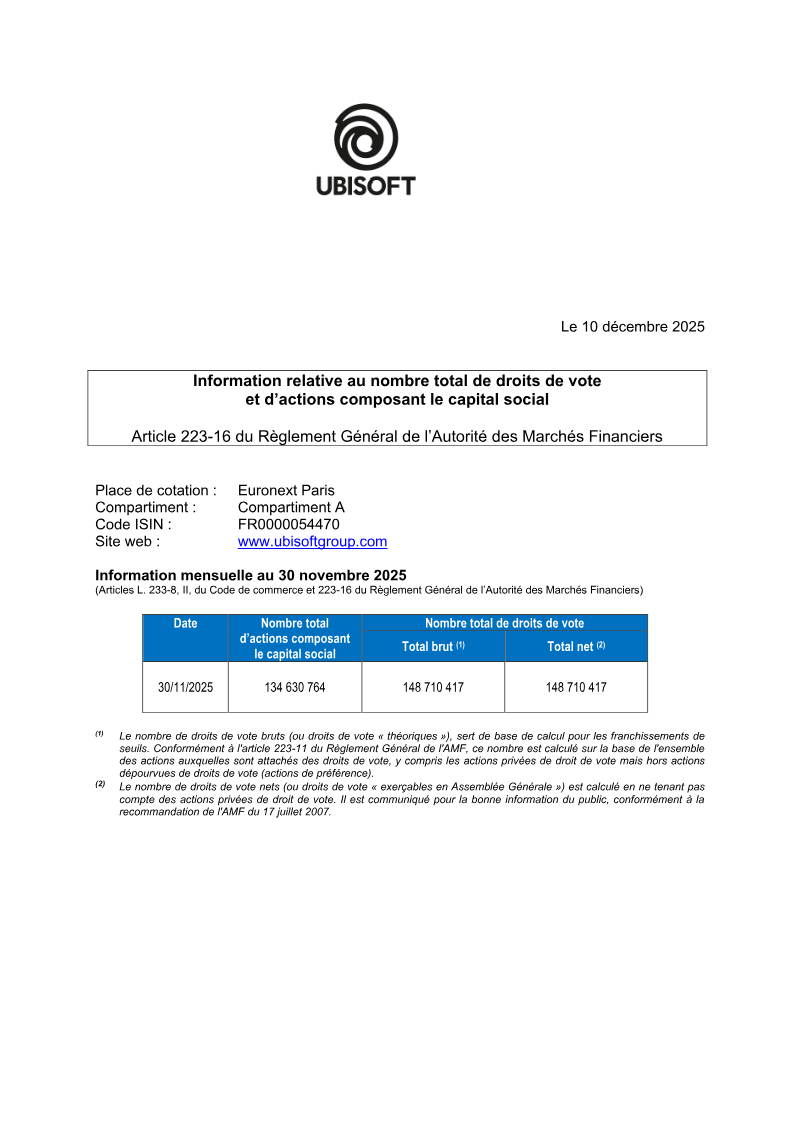
Ubisoft Entertainment SA provides a formal disclosure regarding its share capital and voting rights structure as of November 30, 2025. This regulatory filing, issued in compliance with the French Commercial Code and the General Regulations of the Autorité des Marchés Financiers, serves to inform the public and regulatory bodies of the company's current equity composition. The data is specifically relevant for stakeholders monitoring threshold crossings and corporate governance within the Euronext Paris Compartment A market. As of the end of November 2025, the total share capital consists of 134,630,764 individual shares. The disclosure distinguishes between theoretical and exercisable voting rights to provide a comprehensive view of shareholder influence. The total gross, or theoretical, voting rights are recorded at 148,710,417. This figure includes all shares with attached voting rights, even those temporarily deprived of such rights, and serves as the official basis for calculating legal threshold notifications. The net voting rights, which represent the actual votes exercisable at General Meetings, also total 148,710,417 for this period. This indicates that there are currently no treasury shares or other instruments held by the company that would result in a discrepancy between gross and net voting power. By maintaining this transparency, the company adheres to the AMF recommendation of July 17, 2007, ensuring that investors have accurate data regarding the distribution of power and the potential for influence within the organization's capital structure.