FinancialKLab
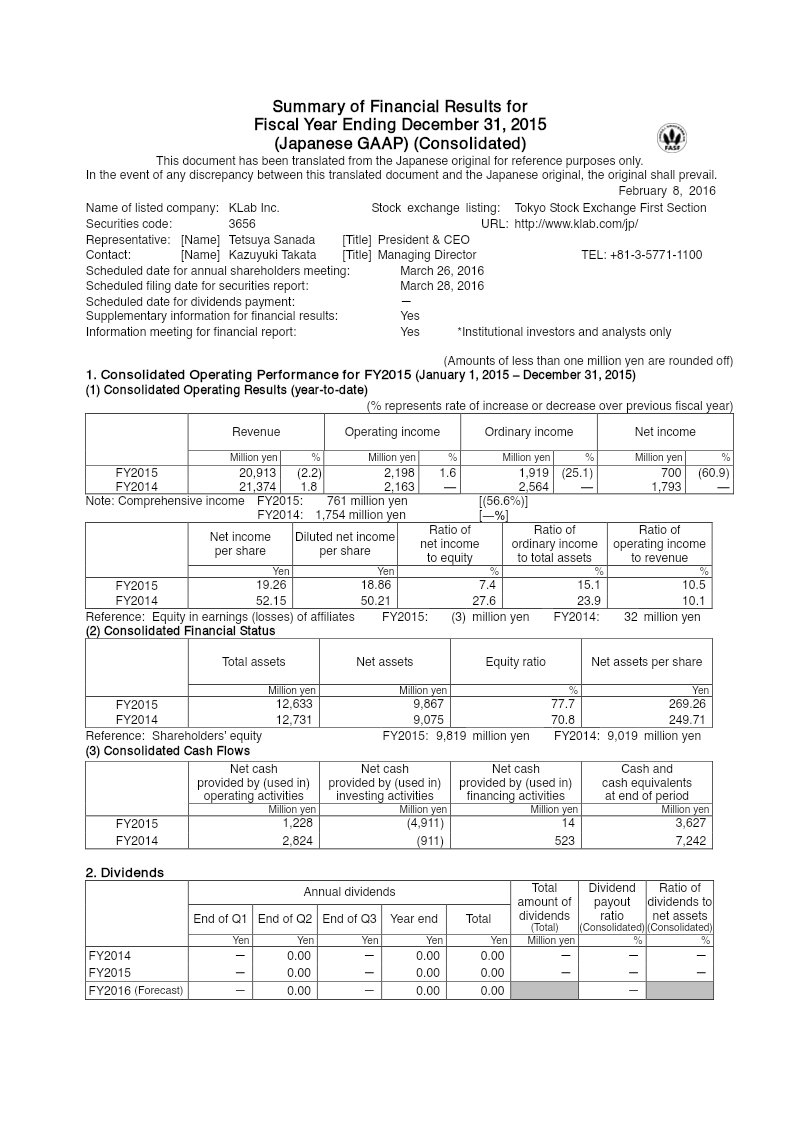
Summary of Financial Results for Fiscal Year Ending December 31, 2015
1 Feb 201621 pages~30 min full read
KLab Inc. experienced a period of financial contraction during the fiscal year ending December 31, 2015, characterized by a 2.2% year-over-year decline in consolidated revenue to ¥20.9 billion. While core titles such as Love Live! School Idol Festival and Tales of Asteria maintained strong performance, net income plummeted by 60.9% to ¥700.5 million. This sharp decline in profitability was primarily driven by external financial pressures, including foreign exchange losses and derivative valuation losses, alongside a ¥328 million impairment loss on software assets. Consequently, net income per share fell from ¥52.15 to ¥19.26, although net assets per share saw a marginal increase to ¥269.26 due to a higher volume of common shares.
The Japanese market remains the primary driver of business activity, accounting for over 90% of total revenue, with distribution heavily concentrated through Apple Inc. and Google Inc. platforms. To mitigate future volatility and address a forecasted loss for the first quarter of 2016, the strategic focus has shifted toward a more flexible cost structure. This involves transitioning development toward variable costs by increasing reliance on outsourcing and expanding publishing partnerships.
Future growth initiatives center on the establishment of dedicated research and development units tasked with exploring new technologies and the implementation of rigorous safety guidelines to bolster consumer trust in mobile online games. While the unamortized balance of goodwill and impairment losses on fixed assets decreased compared to the previous year, the overall fiscal outlook remains cautious as the organization pivots its operational model to stabilize long-term earnings in a competitive mobile landscape.
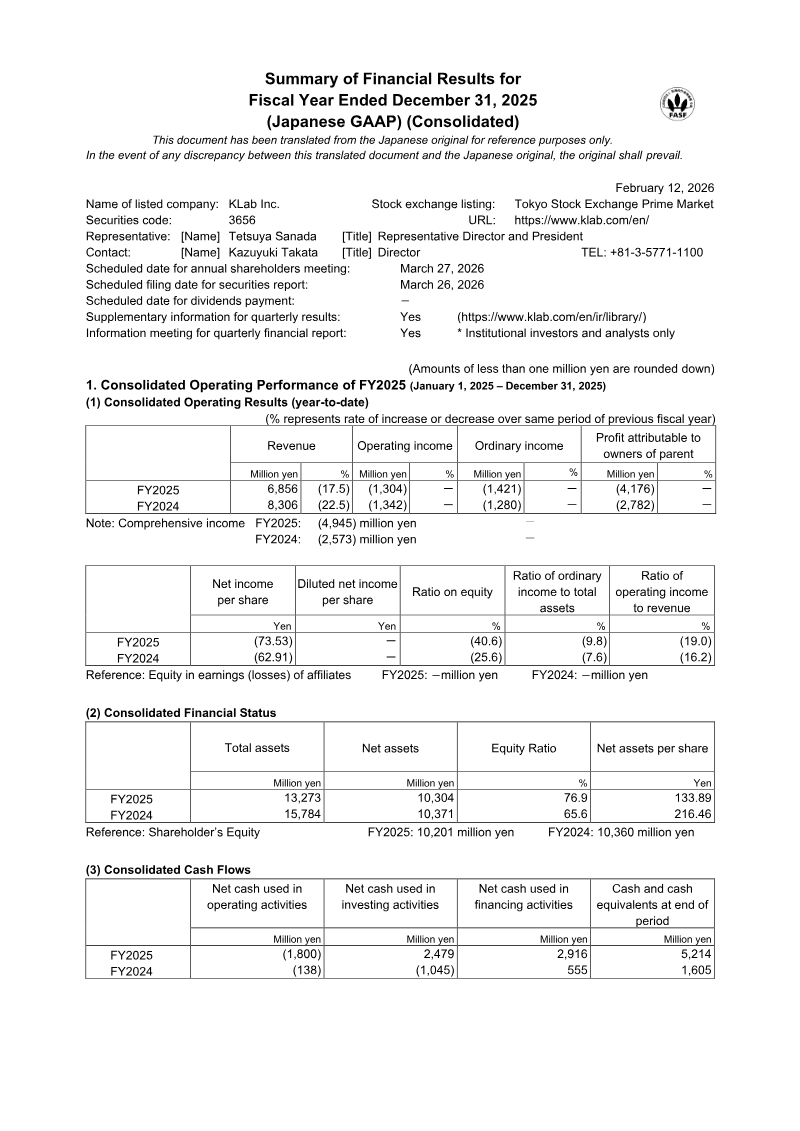
KLab · 2026
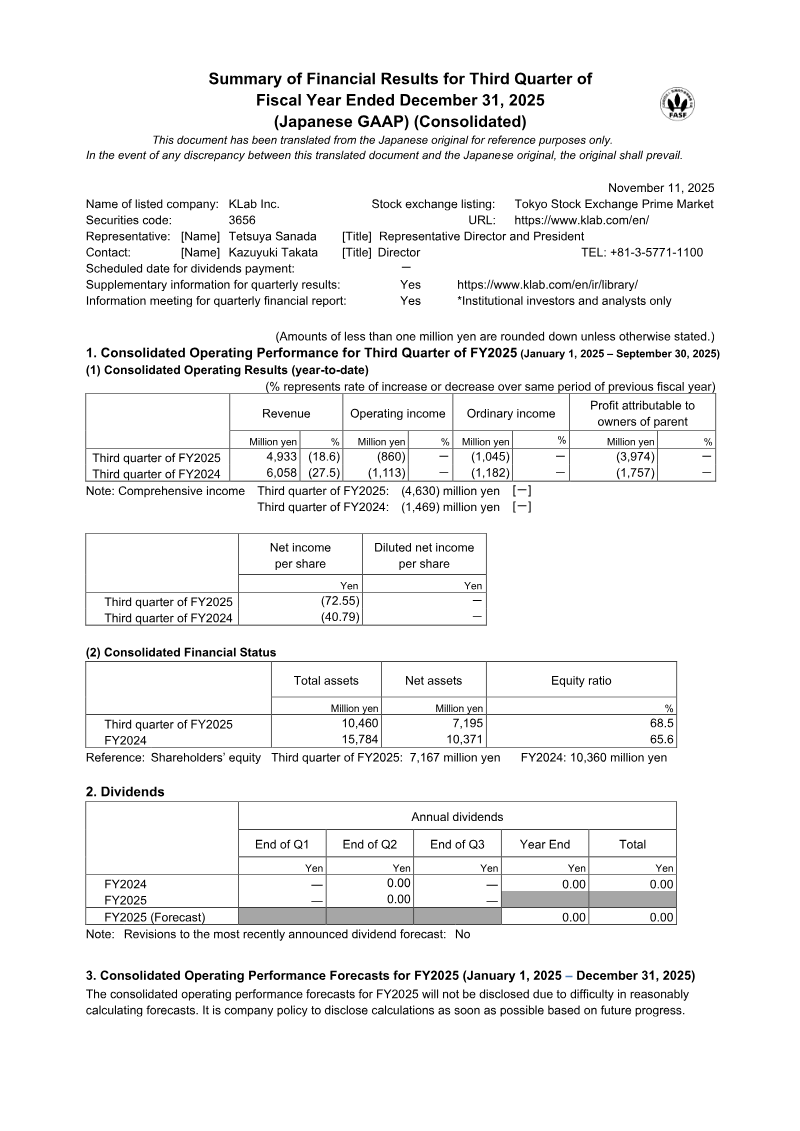
KLab · 2025
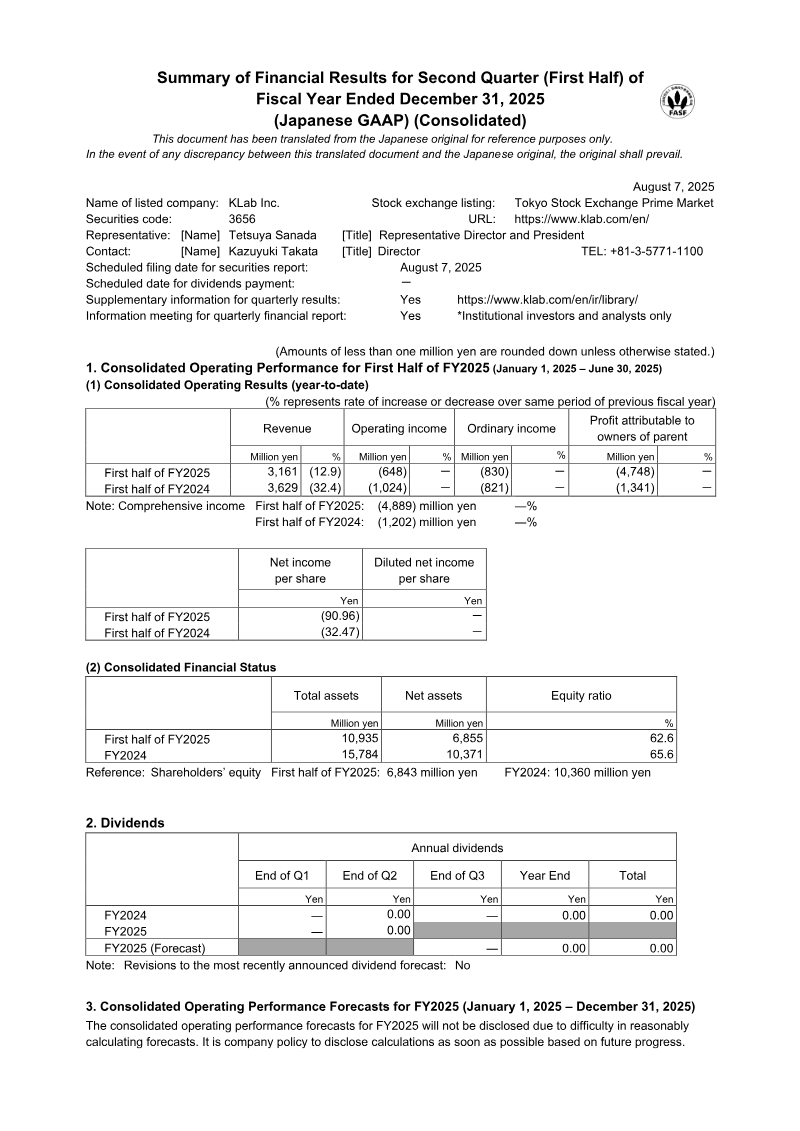
KLab · 2025
KLab · 2025
KLab · 2025
KLab · 2024
KLab · 2024
KLab · 2024
KLab · 2024
KLab · 2023
KLab · 2023
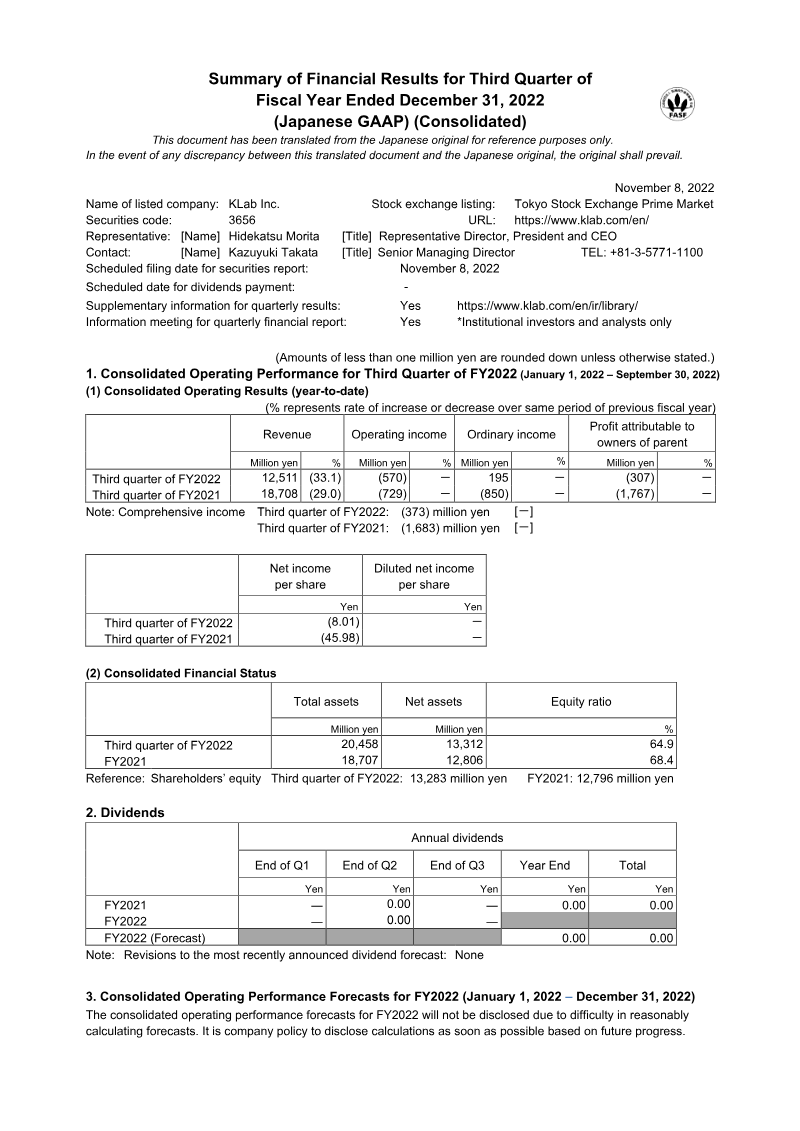
KLab · 2022
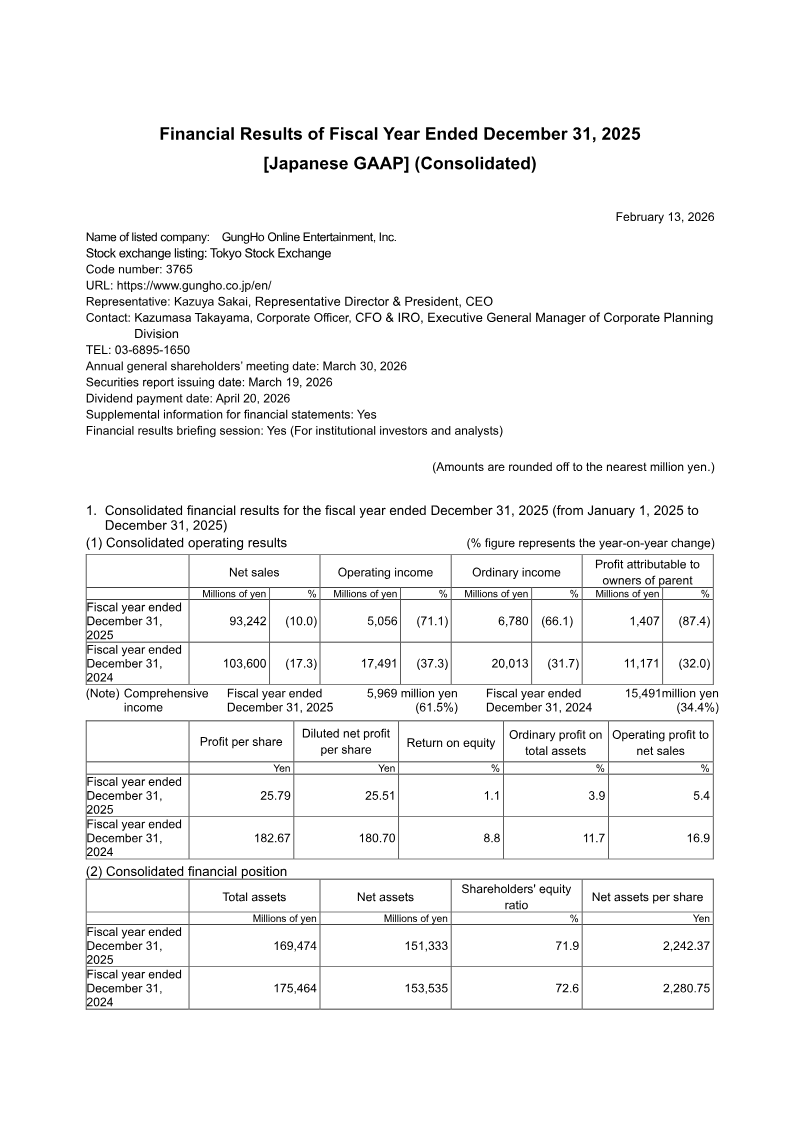
GungHo Online Entertainment · 2026
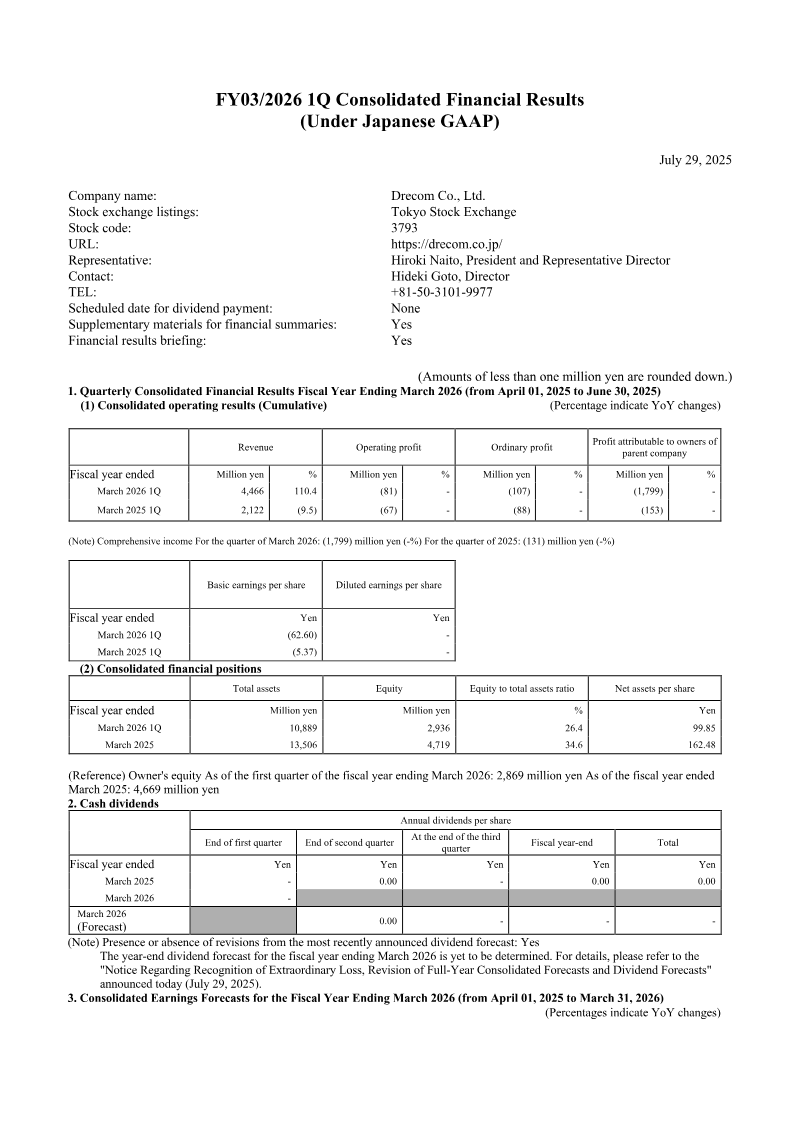
Drecom Co. · 2025
GREE · 2025
GREE · 2024
GREE · 2024
GREE · 2023
GREE · 2023
GREE · 2023