
Updated Mar 21, 2026 by tinyBuild
What can I help with?
AI-powered answers with citations from the library.
What can I help with?
AI-powered answers with citations from the library.
Report
Published by tinyBuild
ANNUAL REPORT AND CONSOLIDATED FINANCIAL STATEMENTS FOR THE YEAR ENDED 31 DECEMBER 2021 Strategic Report 3 Highlights of the year 5 Chairman’s statement 6 History and background 7 Strategy 9 Business model 11 Chief Executive’s review 16 Chief ...
UBII ANNUAL REPORT AND CONSOLIDATED FINANCIAL STATEMENTS FOR THE YEAR ENDED 31 DECEMBER 2021 TAT UB11
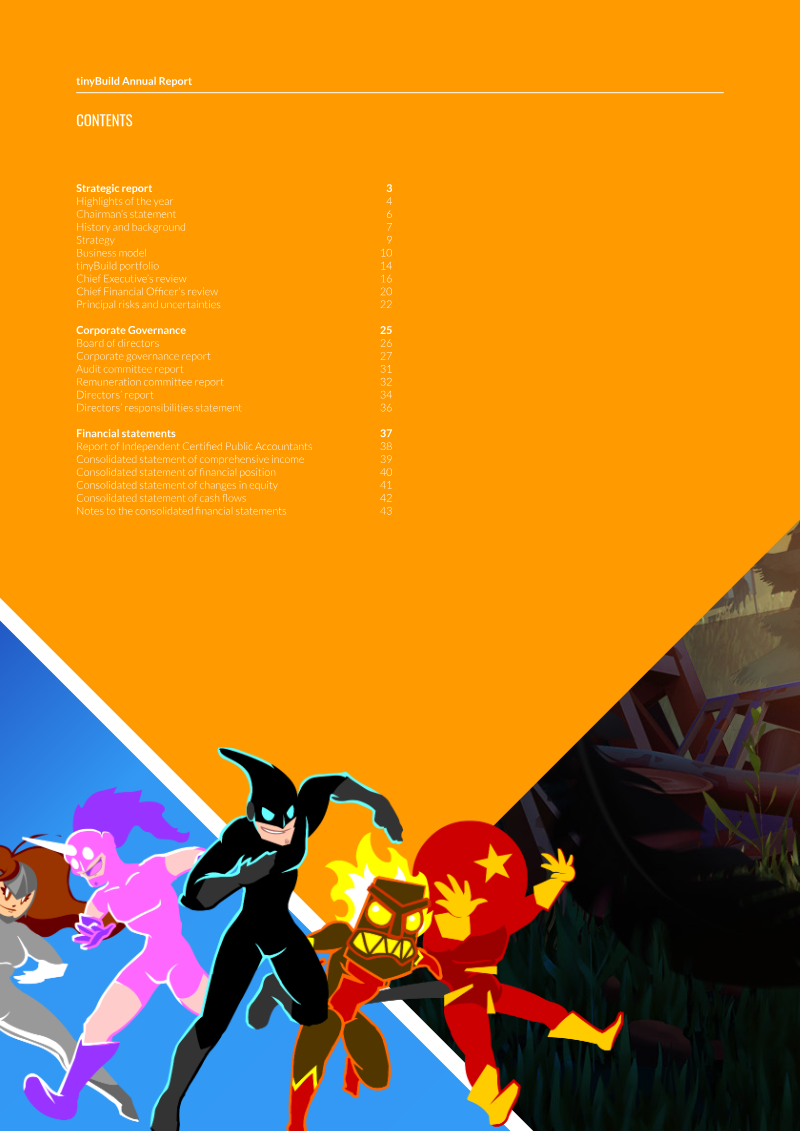
tinyBuild Annual Report 2021 CONTENTS Strategic Report 3 Highlights of the year 5 Chairman’s statement 6 History and background 7 Strategy 9 Business model 11 Chief Executive’s review 16 Chief Financial Officer’s review 18 Environmental, Social & Governance 19 Principal risks and uncertainties 20 Corporate Governance 23 Board of Directors 24 Corporate governance report 25 Audit committee report 29 Remuneration committee report 30 Directors’ report 32 Directors’ responsibilities statement 34 Financial Statements 35 Report of Independent Certified Public Accountants 36 Consolidated statement of comprehensive income 38 Consolidated statement of financial position 39 Consolidated statement of changes in equity 40 Consolidated statement of cash flows 41 Notes to the consolidated financial statements 42
4 tinyBuild Annual Report 2021 NEXT-GEN ENTERTAINMENT TINYBUILD IS A GLOBAL VIDEO GAMES PUBLISHER AND DEVELOPER OF WITH A CATALOGUE OF MORE THAN 70 PREMIUM TITLES ACROSS DIFFERENT GENRES, CHIA PRIMARILY FOR PC AND CONSOLES. Headquartered in Seattle, tinyBuild’s operations stretch across the Americas and Europe using a flexible, decentralised model. The Company’s innovative grassroots approach to marketing, which involves stakeholders, such as influencers and players, in the development of franchises and the wider brand, has enabled tinyBuild to build a loyal customer base across different demographics.
HIGHLIGHTS OF THE YEAR $52m 46% consolidated revenues Adj. EBITDA growth >30 81% games currently of sales from in the pipeline Own-IP 07 $49m Acquisitions closed net cash positive (ye) in 2021 net cash positive (ye) “WE PARTNER WITH DEVELOPERS TO CREATE ORIGINAL FRANCHISES THAT WILL LIVE FOR GENERATIONS, REGARDLESS OF NERATIONS, MEDIUM.” M.ᴶ NOTES RIP Adjusted EBITDA:excludes share based compensation expenses, includes amortisation of Development costs REPORT STRATEGIC
6 tinyBuild Annual Report 2021 CHAIRMAN’S STATEMENT LEVEL ONE COMPLETE, HERE COMES THE BOSS CHALLENGE As tinyBuild (AIM:TBLD) enters its second year as a publicly traded company, I’m honoured to update shareholders on the success of our strategy, games and teams during a period marked by very difficult events. Looking back to tinyBuild’s listing in March 2021, the macro question lurking on the horizon was how much of the pandemic’s tailwinds we would shed in the course of the year, given the significant bump the games industry sales experienced during the lockdowns prior. Despite the logical rationale that such exceptional growth couldn’t prove permanent, it was a longstanding belief held by game developers and publishers alike that, once a gamer, always a gamer – thus privately most of us expected to retain the attention of these newfound audiences. And with DogHelm, we bring into the Group a critically acclaimed IP – Streets of Rogue – and a development partner whose historic relationship with tinyBuild made the acquisition an obvious move. Added to the studios acquired<sup>1</sup> pre-IPO (We’re Five Games and Hungry Couch), tinyBuild can execute its strategy for the foreseeable future. Now we aim to improve our internal management processes to ensure the seamless integration of the new studios, team members and operational units. We are aware that scaling up creative and technical teams is a big undertaking in its own right.
d can execute its strategy for the foreseeable future. Now we aim to improve our internal management processes to ensure the seamless integration of the new studios, team members and operational units. We are aware that scaling up creative and technical teams is a big undertaking in its own right. Furthermore, new monetisation models are being considered to adapt in light of increasing inflation and its effect on our players around the world. We continue to pursue opportunities for IP expansion in order to maximise our engagement with our growing audiences. The games industry, much like every other sector, has had to contend 2022 is going to be yet another exciting year for our teams. The with many recent setbacks, particularly the global chip shortage. This mindset of thriving in change is a defining aspect of tinyBuild’s culture, affected the manufacturing of consoles, mobiles and PC gaming GPUs, a key element that should prove particularly useful in the short to limiting the games industry’s full potential. Despite this challenge, last medium term global entertainment landscape. year saw 1.4% sales growth for the whole industry and 5.3% growth in the number of players, corroborating our expectations: not only did Finally, the appalling situation in Ukraine which directly impacts many we retain the lockdown audience we gained, we expanded our reach colleagues. Management’s unique understanding of the region means through the excellence of our content. contingency plans had already been prepared and could be executed promptly to relocate teams to safer locations, from both Ukraine At tinyBuild, we executed our M&A strategy aimed at expanding our and Russia.
ANNUAL REPORT AND CONSOLIDATED FINANCIAL STATEMENTS FOR THE YEAR ENDED 31 DECEMBER 2020 Strategic report 3 Highlights of the year 4 Chairman’s statement 6 History and background 7 Strategy 9 Business model 10 tinyBuild portfolio 14 Chief Executive’s ...
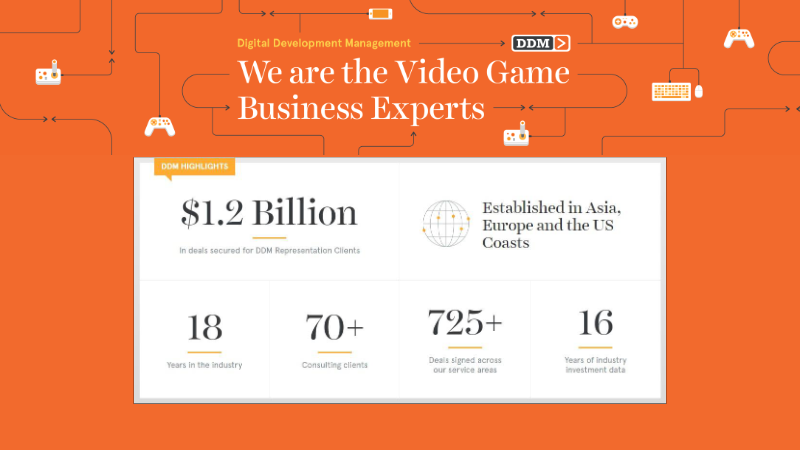
Investment activity within the console and PC gaming sectors throughout 2023 reveals a strategic focus on early-stage developers, artificial intelligence integration, and blockchain-enabled platforms. Venture capital firms and strategic corporate investors prioritized studios capable of delivering high-fidelity experiences or innovative user-generated content tools. Andreessen Horowitz emerged as a leading contributor, deploying $82 million across various rounds, highlighted by a $55 million Series A investment in The Believer Company. This trend underscores a broader industry movement toward backing unproven but high-potential studios during their foundational stages. The funding landscape also highlights the significant role of strategic industry players like KRAFTON and specialized funds such as Makers Fund. KRAFTON’s involvement included a notable $30.7 million post-IPO equity injection into People Can Fly, while Makers Fund distributed $22.5 million across multiple early-stage ventures including Noodle Cat Games and World Makers. These investments suggest a dual interest in established mid-tier developers and lean, agile startups focusing on niche PC markets. Blockchain and Web3 gaming remained a resilient segment for capital allocation, particularly through investors like Merit Circle and Polygon. These firms concentrated on seed-stage rounds for developers such as Farcana, which secured $10 million, and Delabs Games. The data indicates that while the broader market faced economic headwinds, specialized sectors involving AI-driven development and decentralized gaming infrastructure continued to attract tens of millions of dollars in capital. Overall, the 2023 investment cycle was defined by a preference for Series A and Seed rounds, signaling a long-term bet on the next generation of console and PC intellectual property.
The analysis presents a comprehensive review of investment and merger‑and‑acquisition activity within the console and PC video‑game sector for the 2023 fiscal year, positioning 2023 as an outlier driven primarily by Microsoft’s $68.7 billion acquisition of Activision Blizzard. Total deal value reached $69.5 billion across 200 transactions, a 612 % increase in value yet a 25 % decline in transaction count compared with 2022, and twice the combined value of the preceding five‑year period (2018‑2022). Investment volume fell to $627.8 million across 161 deals, while M&A volume surged to $68.8 billion in 39 deals, accounting for more than 99 % of North American M&A value. IPO activity contracted sharply, with six offerings generating $46 million in market capitalisation, down 85 % from the prior year. Geographically, North America and Europe dominated private investment, contributing $184.7 million (29 % of volume) and $358.8 million (57 % of volume) respectively, while Australia and New Zealand saw limited activity aside from a government grant program. Investors favored micro‑studios (median six employees), whereas acquirers targeted slightly larger teams (median 39 employees). Blockchain‑related deals comprised 15 % of investment value but only 13 % of transaction count, highlighted by Mythic Protocol’s $6.5 million seed round. Methodologically, the review counts only closed transactions, excluding announced deals, and treats SPAC proceeds as the investment amount rather than post‑transaction valuation. Data are drawn from a proprietary, sixteen‑year‑old database that tracks Western‑focused game‑industry deals across development, publishing, and technology, ensuring consistency and comparability across quarters. The findings underscore a market concentrated around a few mega‑deals, with modest activity elsewhere and a clear shift toward larger, strategic acquisitions.
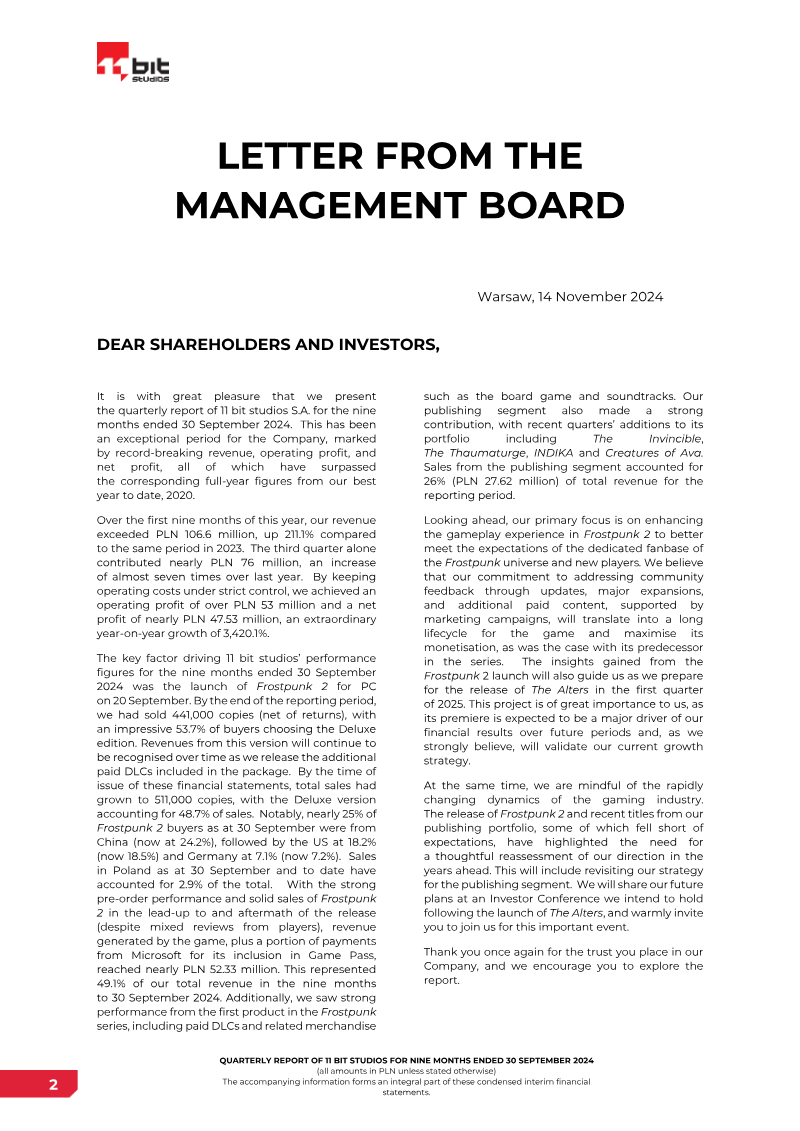
QUARTERLY REPORT OF 11 BIT STUDIOS FOR NINE MONTHS ENDED 30 SEPTEMBER 2024 DEAR SHAREHOLDERS AND INVESTORS, It is with great pleasure that we present the quarterly report of 11 bit studios S.A. for the nine months ended 30 September 2024.