BrainBerry
Organization2 reports
2 reports, presentations and talks by BrainBerry in the Game Industry Library, the newest “Attention and Motor Skill Improvements in Mild Cognitive Impairment Patients Using COSMA Application” (2022).
Documents
Whitepaper18 pages
Attention and Motor Skill Improvements in Mild Cognitive Impairment Patients Using COSMA Application
The COSMA serious gaming platform serves as a targeted, non-pharmacological intervention designed to mitigate cognitive decline and enhance motor coordination in patients diagnosed with Mild Cognitive Impairment (MCI).
- Patients using the COSMA platform at home achieved performance gains in 48% of games, significantly outperforming a control group limited to laboratory sessions, which saw improvements in only 20% of games.
- A 28-day clinical protocol demonstrated that consistent, at-home digital stimulation is more effective for cognitive and motor skill retention than sporadic, facility-based intervention.
- CANTAB neuropsychological assessments confirmed that COSMA users experienced measurable advancements in motor screening and visual information processing capabilities.
International Journal of Serious GamesNov 2022
Whitepaper16 pages
The Effects of Playing the COSMA Cognitive Games in Dementia
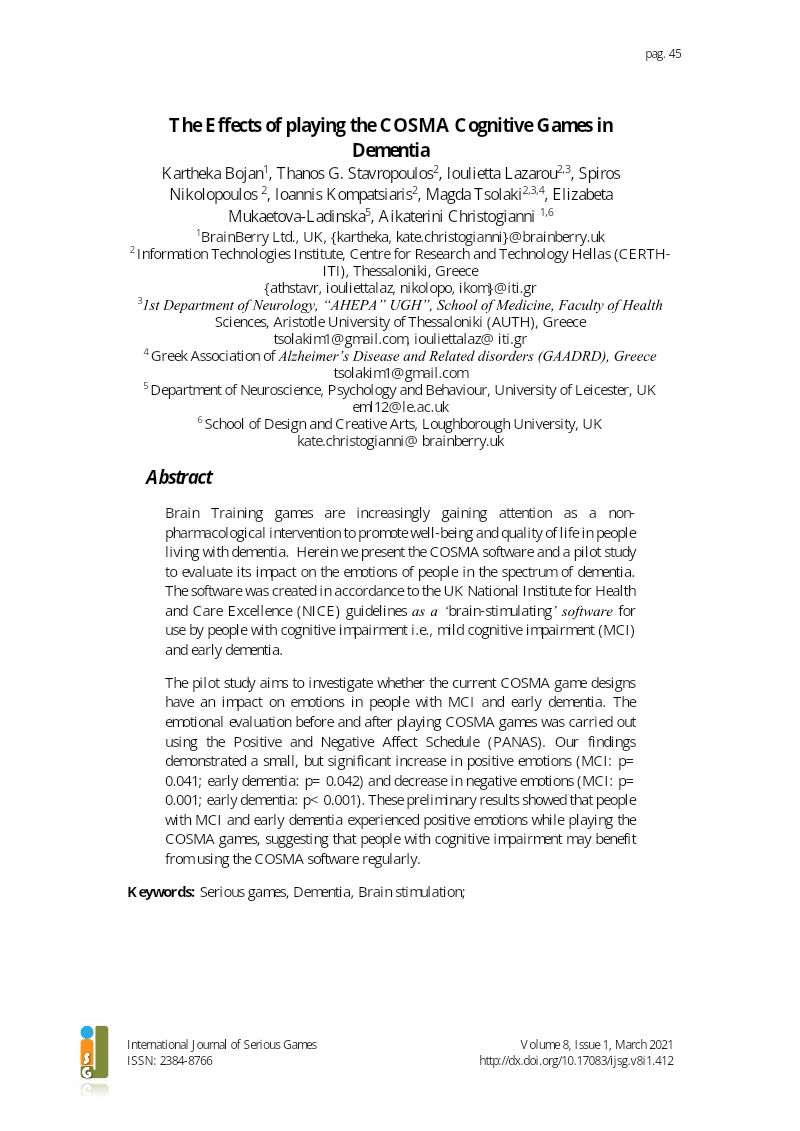
The Cognitive Operational System for Mental Health Advancement (COSMA) functions as a specialized suite of serious games engineered to provide targeted brain stimulation and emotional support for individuals diagnosed with mild cognitive impairment and early-stage dementia.
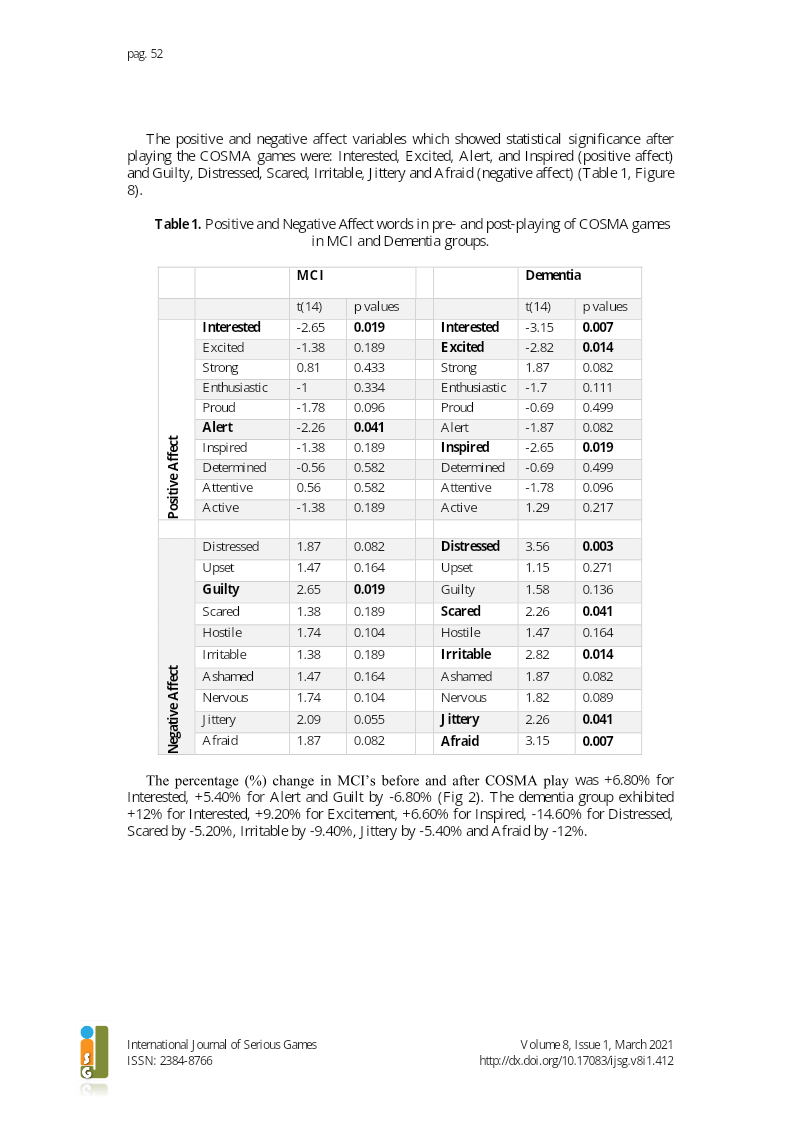
- A pilot study of 30 participants with mild cognitive impairment and early-stage dementia showed that consistent use of COSMA games significantly increases positive affect and reduces negative states like distress and guilt.
- The COSMA suite utilizes personalized modules focused on reminiscence, logical reasoning, and daily task simulation to provide targeted brain stimulation and emotional support.
- Data from the Positive and Negative Affect Schedule indicates that the software is particularly effective at increasing participant interest, suggesting it is a viable tool for emotional regulation in clinical settings.
BrainBerryMar 2021