What do different European countries see as the biggest challenges facing their game development industries?
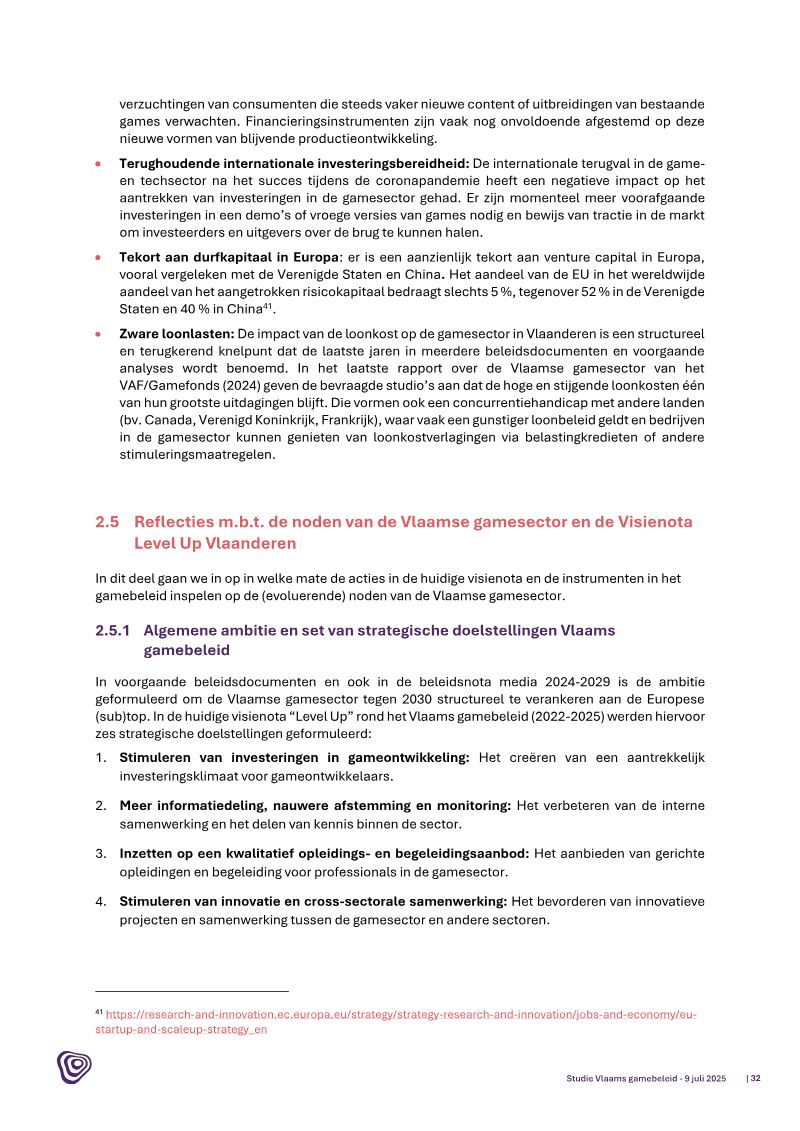
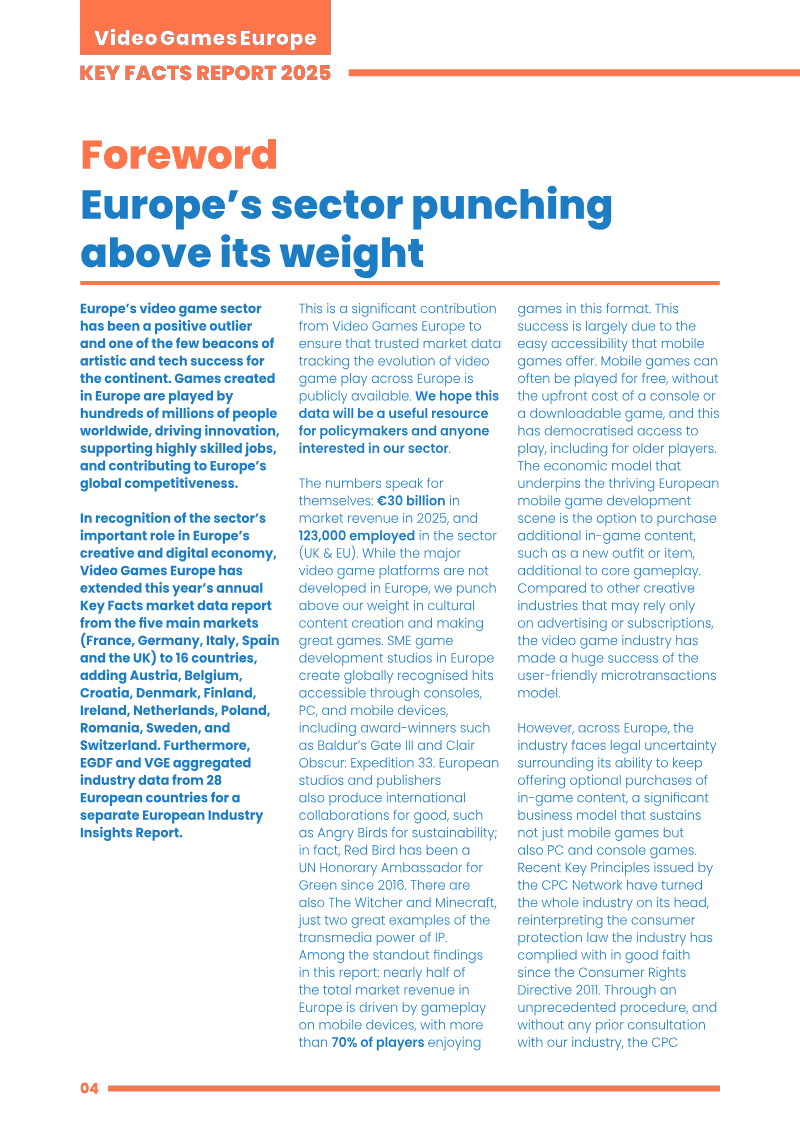
The most-cited challenge across European national reports is a shortage of skills and talent — named as the top or near-top problem by Sweden, Germany, Czechia, Poland, Finland, Türkiye and the UK — followed by access to capital and public funding, which Spain's 2025 White Book calls the "principal challenge" reported by Spanish studios 59, while Flanders points to wage costs and a European venture-capital share of only 5% against 52% in the United States and 40% in China 22.
Europe-wide: what the cross-border surveys report
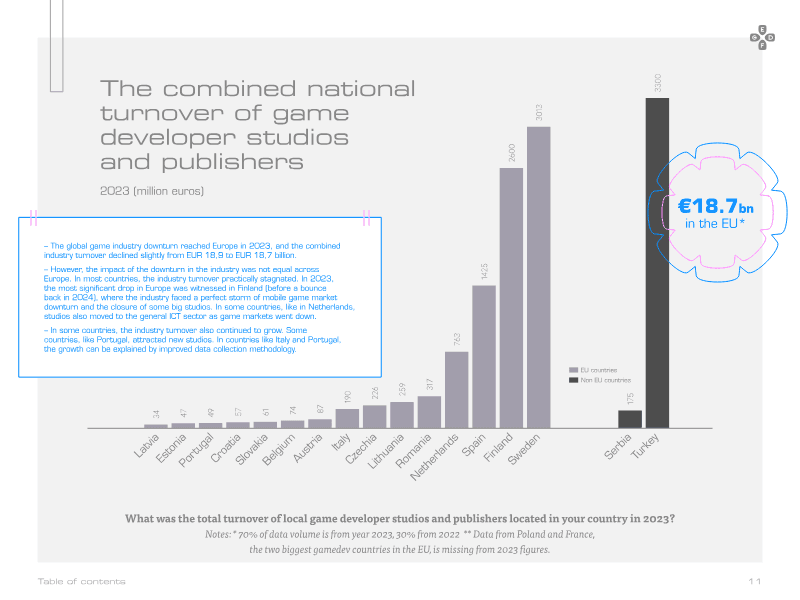
The European Games Developer Federation's 2023 data report records the downturn reaching the continent: "the global game industry downturn reached Europe in 2023, and the combined industry turnover declined slightly from EUR 18,9 to EUR 18,7 billion," with the sharpest national drop in Finland, where "the industry faced a perfect storm of mobile game market downturn and the closure of some big studios," and in the Netherlands, where "studios also moved to the general ICT sector as game markets went down" 1.
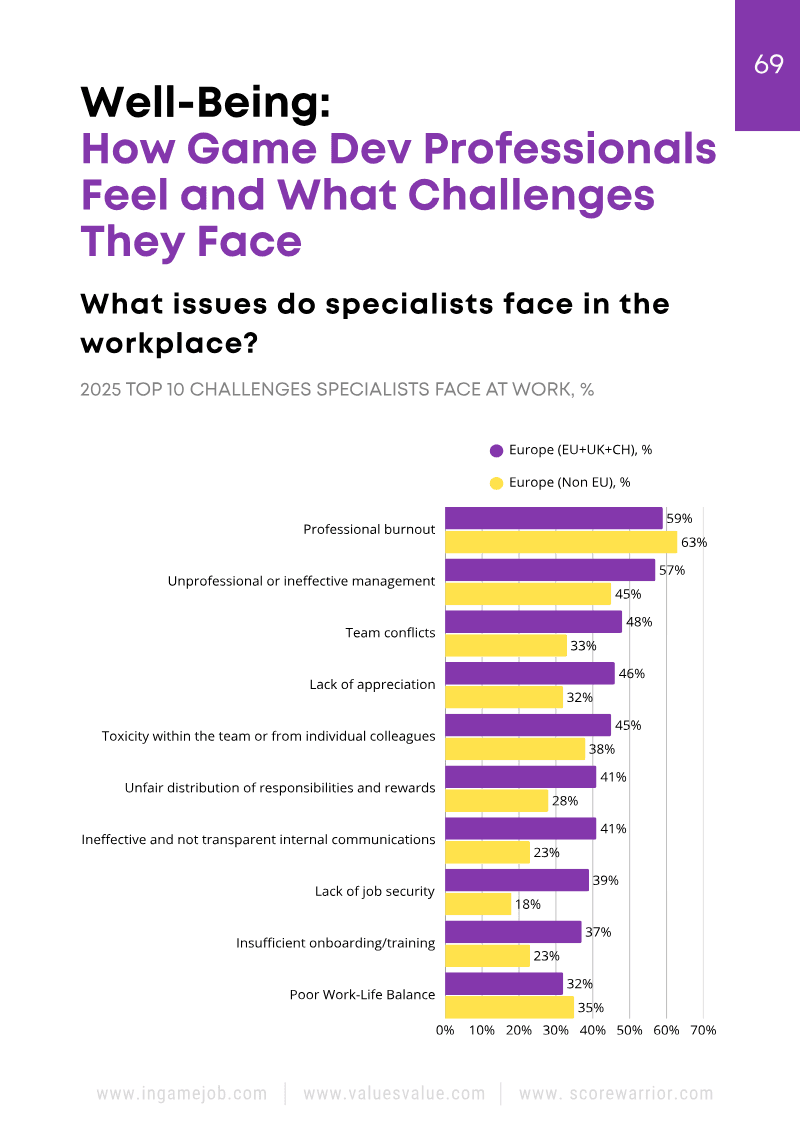
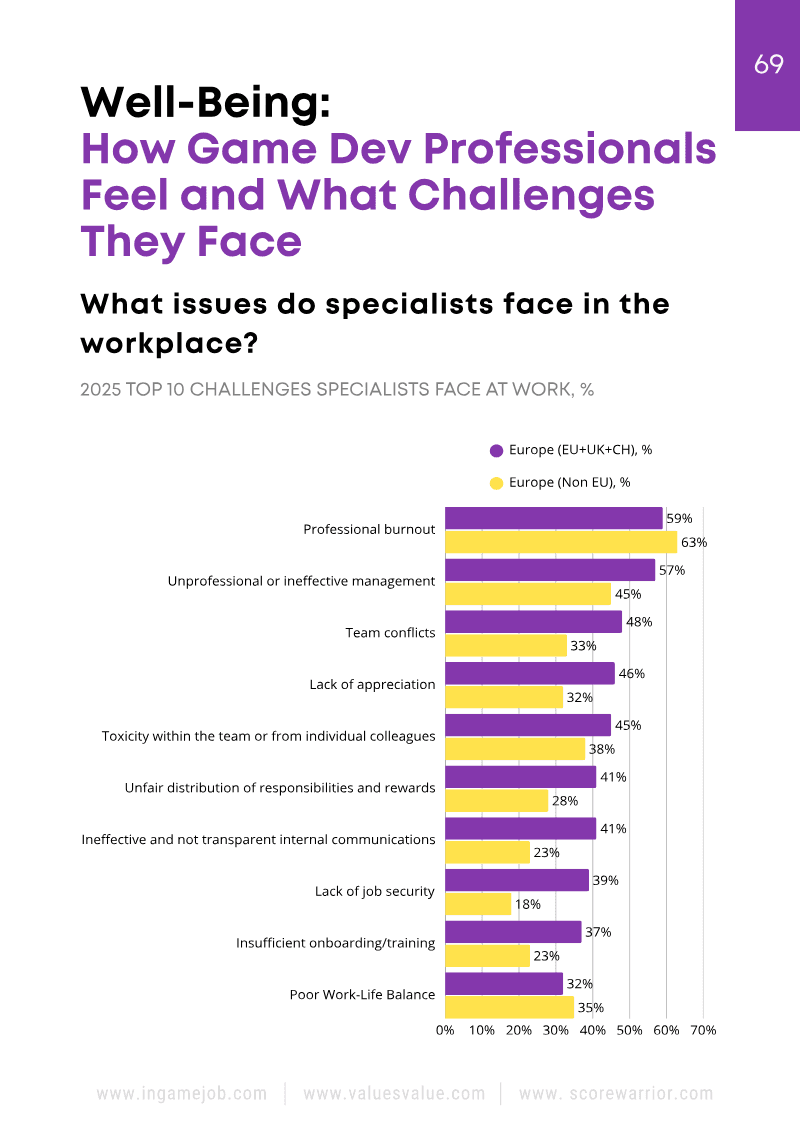
In the InGameJob & Values Value Big Games Industry Employment Survey 2025, the top challenge reported by game professionals is professional burnout, at 59% in Europe (EU+UK+CH) and 63% in non-EU Europe, followed by unprofessional or ineffective management (45% / 57%) and toxicity within the team (38% / 45%) 34.
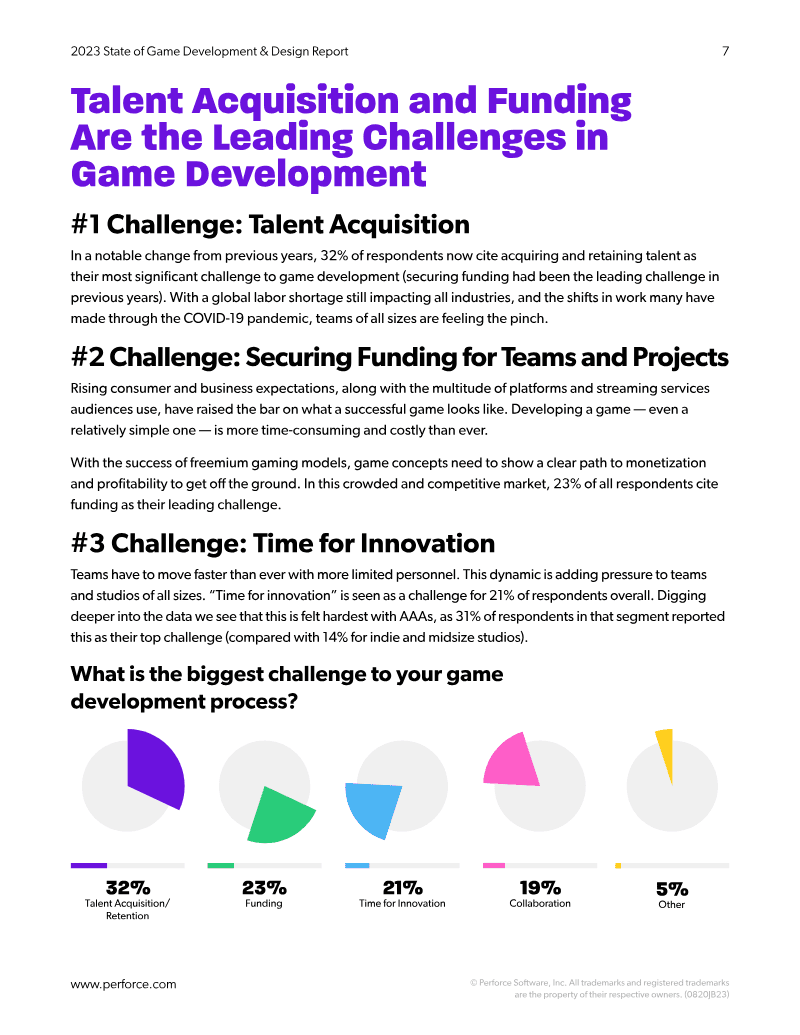
Perforce's State of Game Development & Design Report 2023 reports a shift in what studios themselves name as their leading obstacle: "In a notable change from previous years, 32% of respondents now cite acquiring and retaining talent as their most significant challenge to game development (securing funding had been the leading challenge in previous years)," with funding second at 23% and "time for innovation" third at 21% overall — but 31% among AAA respondents 31.
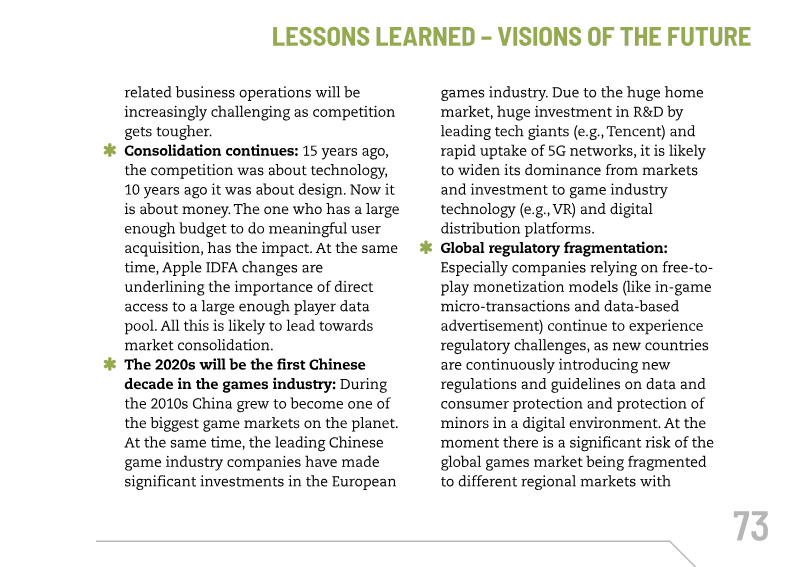
Video Games Europe's European Key Facts: 2025 names a legal rather than a skills or funding challenge: "across Europe, the industry faces legal uncertainty surrounding its ability to keep offering optional purchases of in-game content, a significant business model that sustains the sector" 14. Neogames Finland's 2020 report frames the same pressure as "global regulatory fragmentation," with "a significant risk of the global games market being fragmented to different regional markets" 24.
What each country names as its biggest challenge
| Country | Challenge named as the biggest | Figure / date | Citation |
|---|---|---|---|
| Flanders (Belgium) | High wage costs and lack of venture capital | EU holds 5% of global venture capital vs 52% US, 40% China (2025) | 2279 |
| Czechia | Lack of skilled developers and of state support | "The lack of skilled developers is a major obstacle to further development of the industry" (2020) | 78 |
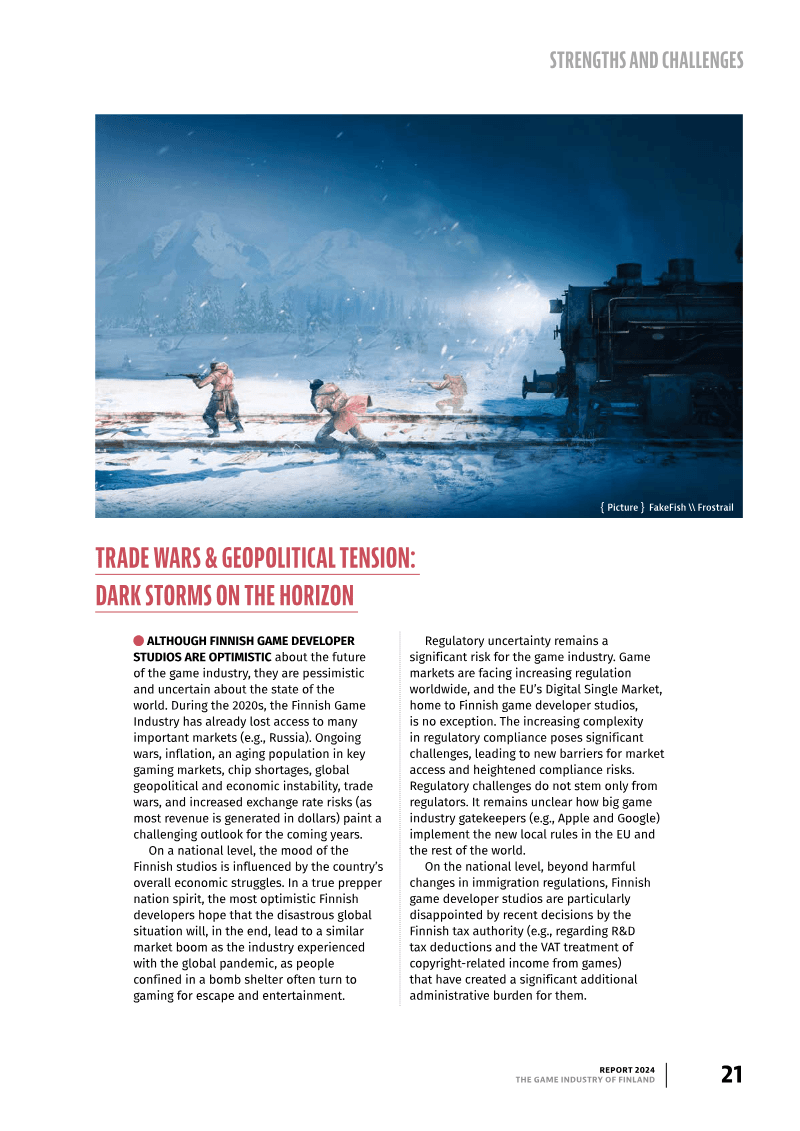
| Finland | Regulatory compliance and administrative burden | "significant additional administrative burden" (2024) | 19 |
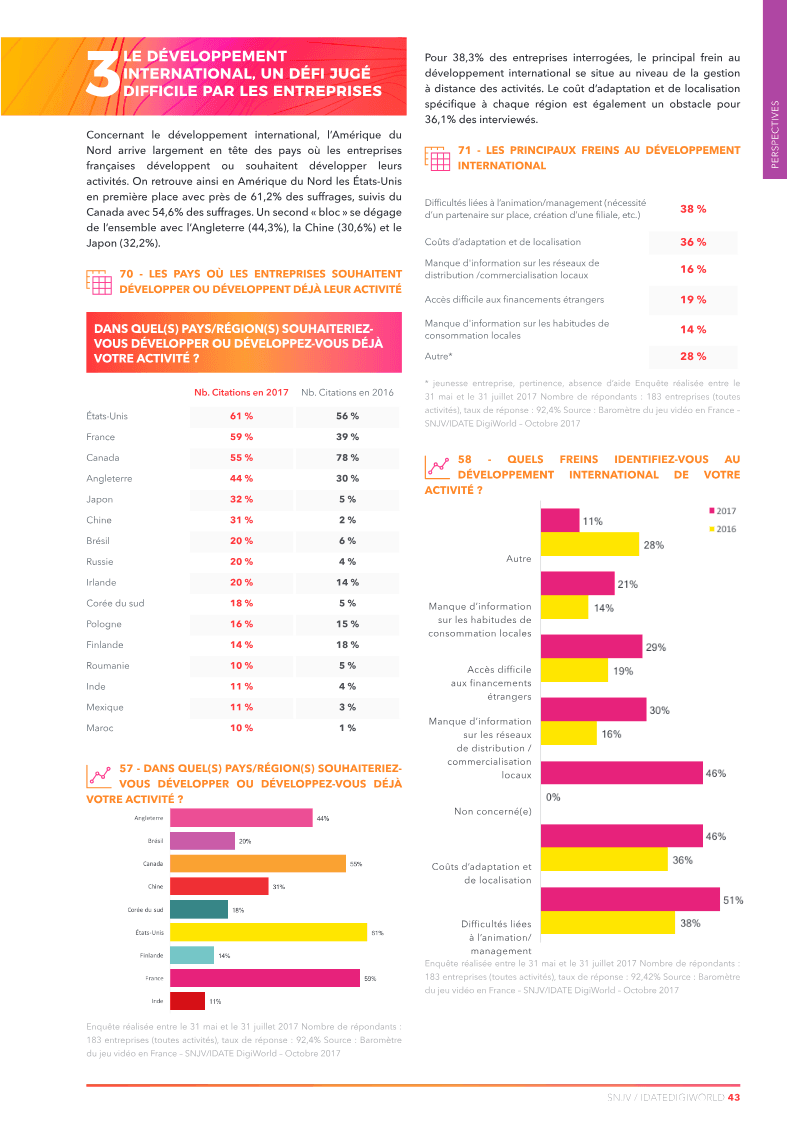
| France | Managing activities at a distance when going international | 38.3% of surveyed companies (2017) | 43 |
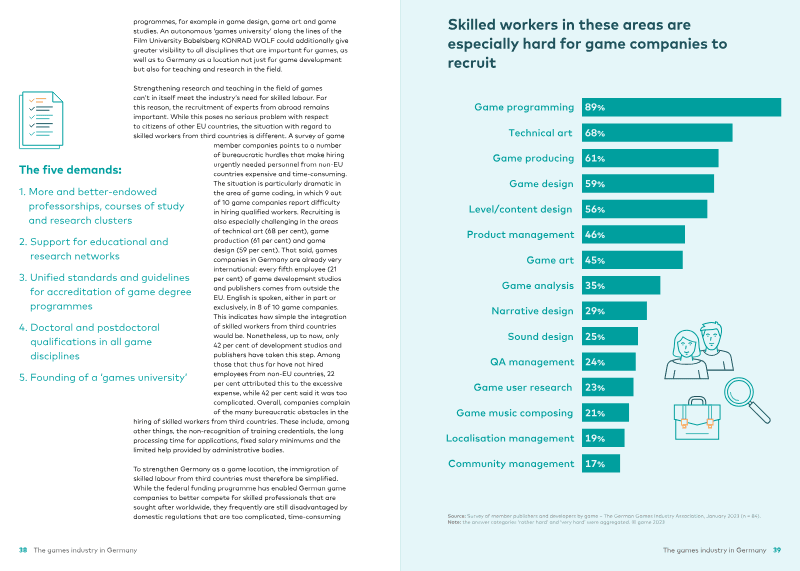
| Germany | Difficulty hiring qualified workers | 9 of 10 companies; 89% in game programming (2023) | 27 |
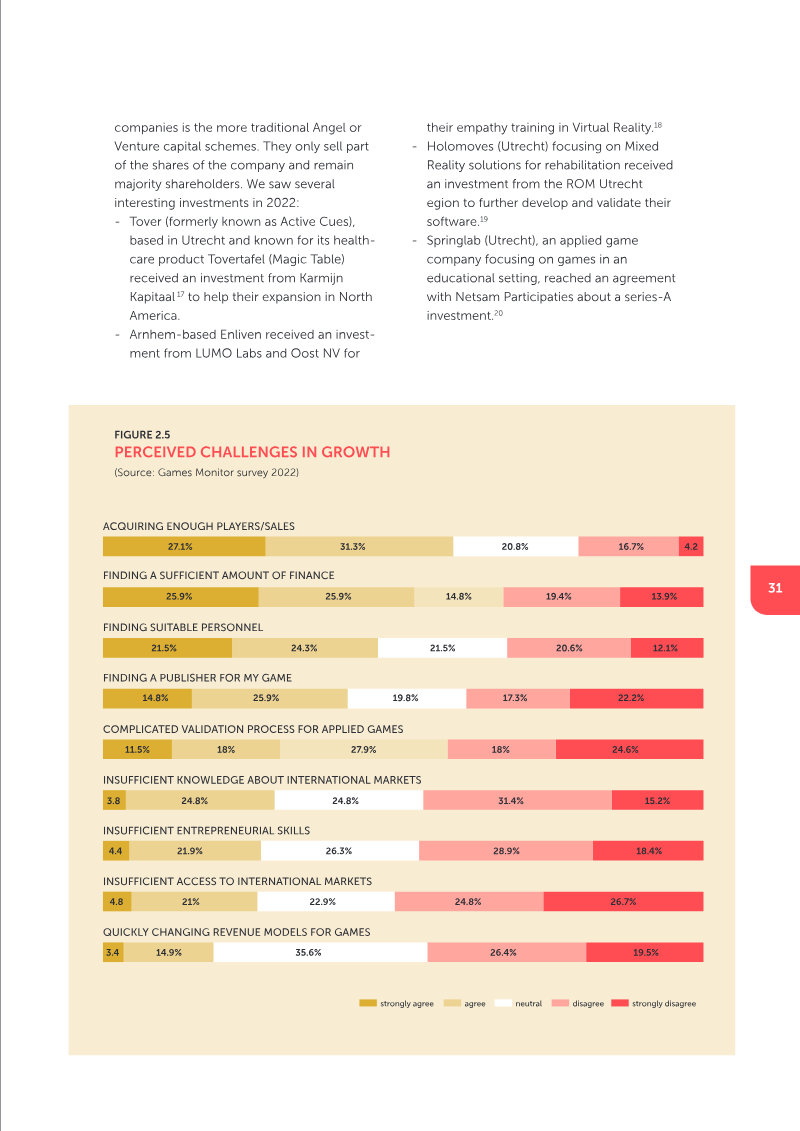
| Netherlands | Acquiring enough players | user acquisition "has become the largest challenge" (2022) | 29 |
| Poland | Bureaucracy and tax obstacles | 4.17 and 4.0 on a 5-point scale (2015) | 28 |
| Spain | Financing | "the principal challenge reported by Spanish studios" (2025) | 59 |
| Sweden | Access to expertise and access to capital | both named jointly (2024, 2025) | 1876 |
| Türkiye | Lack of talent | "One of the most fundamental problems" (2023) | 42 |
| United Kingdom | Lack of talent | 68% of studios, 59% unable to grow (TIGA, cited 2023) | 42 |
| Eastern Europe / CIS | Political, legal and regulatory hurdles | "hard to develop games or deploy investments" (2024) | 17 |
Skills and talent shortages
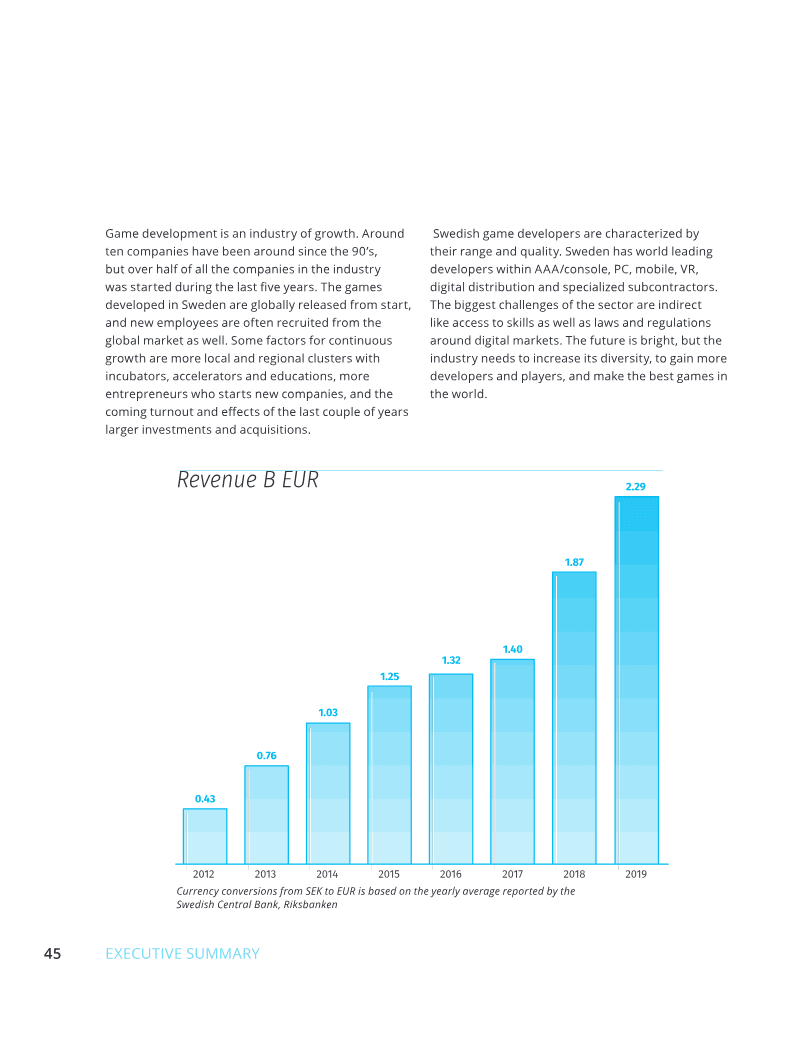
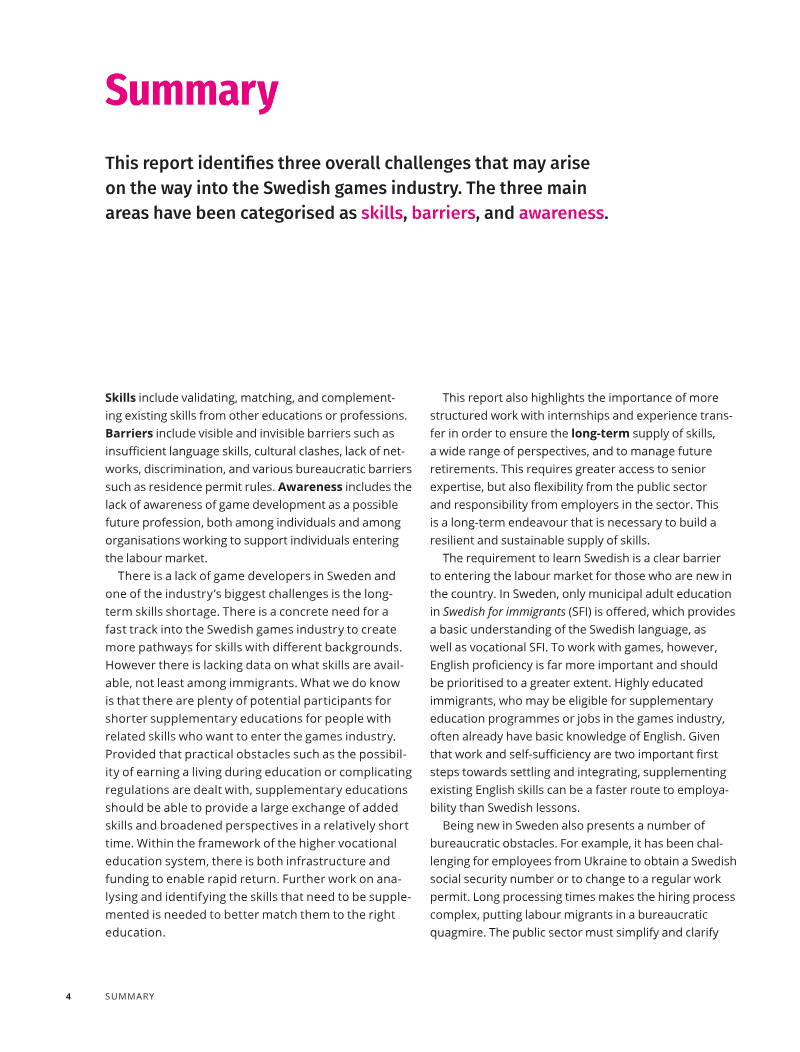
Sweden. The Swedish Games Industry's Paving Ways to the Games Industry (2024) states plainly: "There is a lack of game developers in Sweden and one of the industry's biggest challenges is the long-term skills shortage," listing "insufficient language skills, cultural clashes, lack of networks, discrimination, and various bureaucratic barriers such as residence permit rules" as barriers, and noting that "the requirement to learn Swedish is a clear barrier" 18. The same organisation's 2024 report puts it as: "The industry's biggest challenges are access to expertise and access to capital" 76. Its 2020 index said "the biggest challenges of the sector are indirect like access to skills as well as laws and regulations around digital markets" 16.
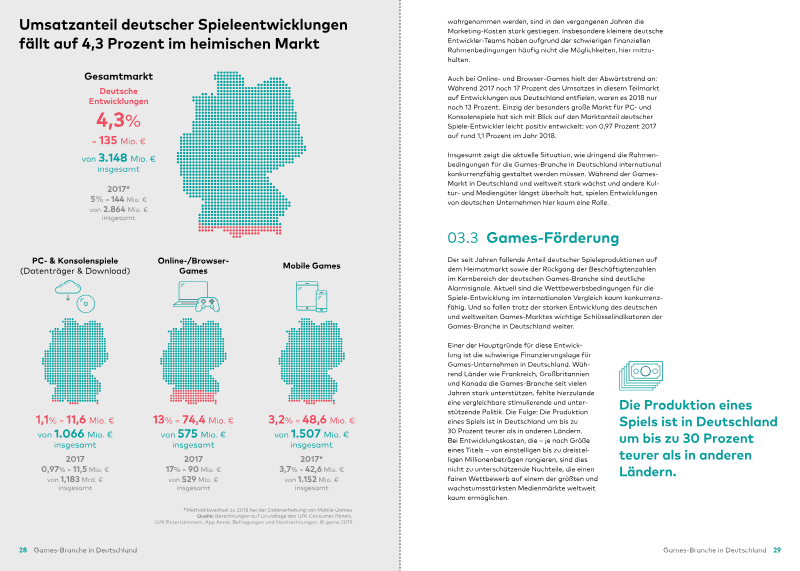
Germany. The Annual Report of the German Games Industry 2023 reports that "the situation is particularly dramatic in the area of game coding, in which 9 out of 10 game companies report difficulty in hiring qualified workers," with recruiting "especially challenging in the areas of technical art (68 per cent), game production (61 per cent) and game design (59 per cent)," and notes "a number of bureaucratic hurdles that make hiring urgently needed personnel from non-EU countries expensive and time-consuming" 27. Earlier German reports frame the problem as cost: the 2019 annual report said game production in Germany is "up to 30 percent more expensive" than in other countries, because "while countries such as France, Great Britain and Canada have supported the games industry for many years, a comparable stimulating and supportive policy has been missing" here 35, and the 2021 report repeated that developers "faced costs that were up to 30 per cent higher, putting them at a significant disadvantage" 48.
Czechia. The 2020 Czech report lists among the industry's main characteristics: "The lack of skilled developers is a major obstacle to further development of the industry," and describes "high quality products under unfavourable conditions… a very strong sector that lacks solid state support. Other obstacles include the immature business environment, the low number of investors and a dependence on internal resources" 78. Czech applicants for Creative Europe support also face structural obstacles: "the necessity of one commercially distributed game, which is often an obstacle because of the fragmentation of the Czech video game industry," plus "the requirement for narrative in the game" 21. The 2019 report called for "tax relief or investment incentives" and "facilities for qualified investors and mentors, such as incubators or accelerators," because the industry's long development cycles mean companies "lack development support tools that would at least partially reduce their business risk" 26.
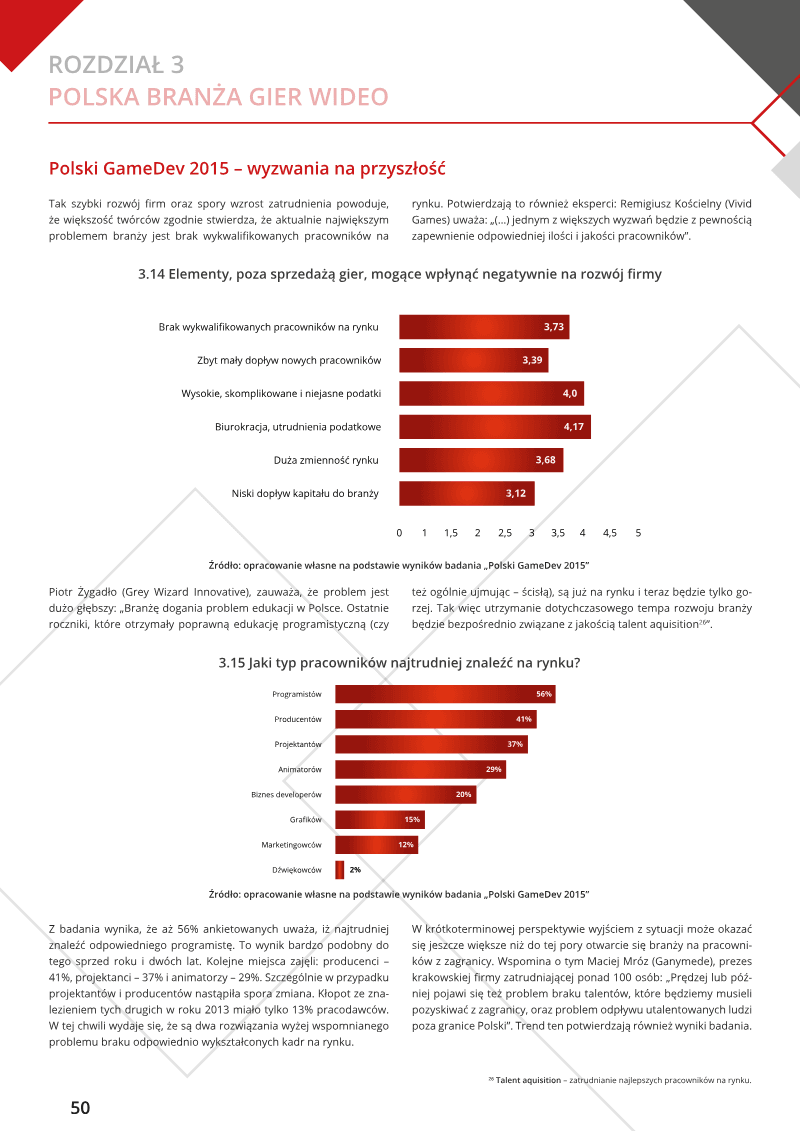
Poland. The Polish 2015 survey scored the barriers to company growth out of five: bureaucracy and tax obstacles 4.17, high, complicated and unclear taxes 4.0, lack of qualified employees 3.73, market volatility 3.68, too small an inflow of new employees 3.39 and low capital inflow 3.12. One expert quoted said "one of the bigger challenges will certainly be ensuring the right quantity and quality of employees"; the hardest roles to fill were programmers (56%), producers (41%) and designers (37%) 28. (This source is from 2015 — 11 years old.)
Finland. Neogames Finland's 2016 report grouped developers' challenges into five areas and led with recruitment: "many game companies, especially those larger and more established, indicated that the biggest challenge they meet is recruiting senior talent," adding that "hiring abroad is expensive." Its second category was "competition and saturation of the market," illustrated by "over 21 000 new games were released in the Apple App store in May 2016 alone" 36.
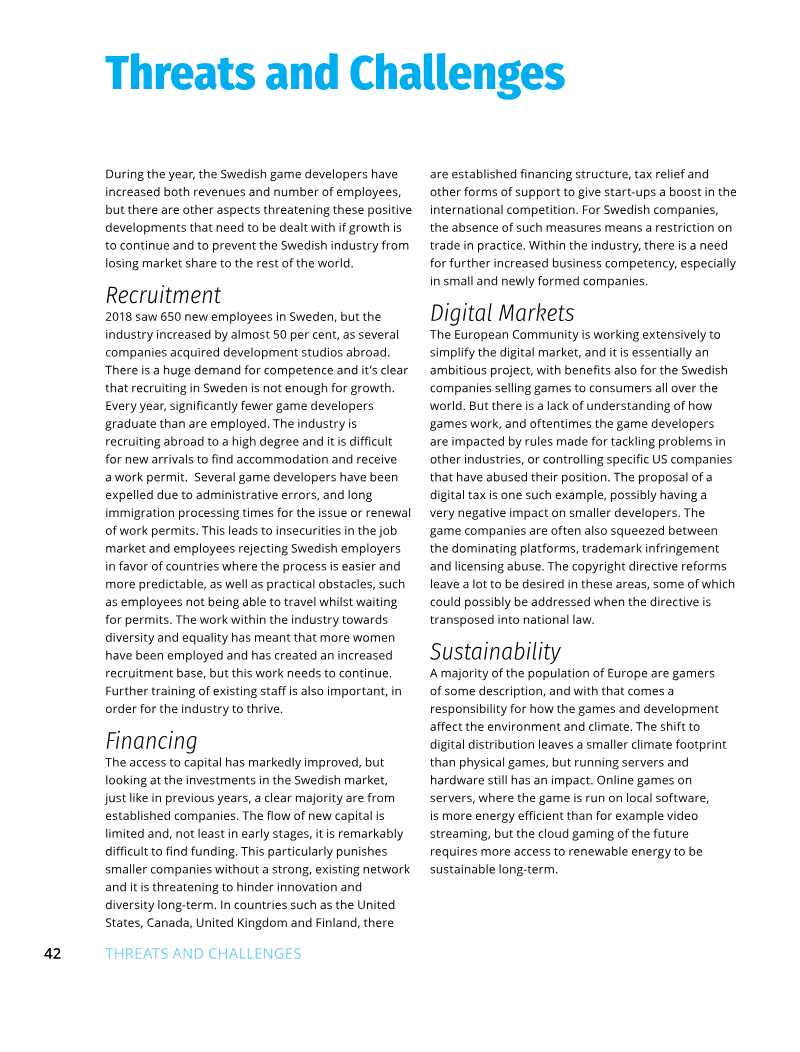
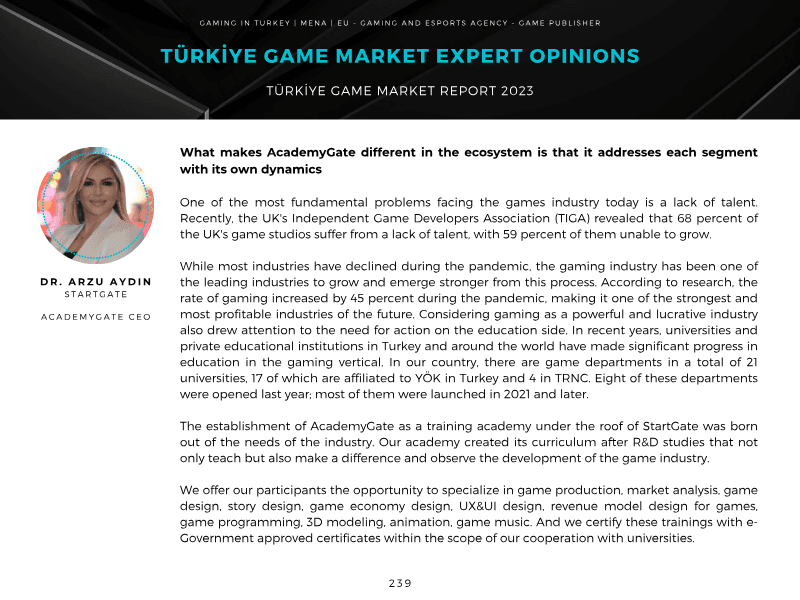
Türkiye and the UK. The Türkiye Game Market 2023 Report quotes an expert stating "one of the most fundamental problems facing the games industry today is a lack of talent," and cites TIGA's finding that "68 percent of the UK's game studios suffer from a lack of talent, with 59 percent of them unable to grow" 42.
Cross-country note. The Dutch 2015 monitor observed a shared complaint: "Too few game students / qualified personnel (reported in UK, Germany, Poland and Nordics)" 11. (2015 source.)
Funding, capital and public support
Spain. The Libro Blanco del Desarrollo Español de Videojuegos 2025 states: "Financing continues to be the principal challenge reported by Spanish studios. Difficulties in accessing private investment, reduced activity by publishers and international investors, and long production cycles hamper the sustainability of numerous projects." It adds that "smaller studios also find important barriers to accessing conventional financing due to the lack of a business track record or sufficient guarantees," that "there continues to be a deficit of medium-sized and large companies capable of acting as the engine of the ecosystem," and that "the saturation of the global market and the constant increase in the number of launches make it increasingly difficult for independent studios to achieve sufficient visibility to compete internationally" 59.
Flanders. The 2025 Flemish game policy study reports: "Reduced international willingness to invest: the international downturn in the games and tech sector after the success during the coronavirus pandemic has had a negative impact on attracting investments into the games sector," and "there is currently a considerable shortage of venture capital in Europe, especially compared with the United States and China. The EU's share of globally attracted venture capital is only 5%, against 52% in the United States and 40% in China." It also records that "the impact of wage costs on the games sector in Flanders is a structural and recurring bottleneck," and that surveyed studios "indicate that the high and rising wage costs remain one of their biggest challenges," forming "a competitive handicap with other countries (e.g. Canada, United Kingdom, France), where a more favourable wage policy often applies" 22. Elsewhere the same study notes that "Belgium has occupied one of the highest places in European rankings of wage costs for years," that France and the UK are attractive "because of their tax credits for the games sector," and that Flanders' own Tax Shelter "is not yet being used optimally" 79.
Belgium (studio view). In Larian's GDC talk on Divinity: Original Sin 2, the studio described both cost and talent problems: "the cost of living and of wages in the country where we started, which was Belgium, was very high," colleagues to the east paid "almost half of what we were paying," and "we needed access to senior talents because in Belgium there's not much of a mature games industry at least back then there wasn't" 54.
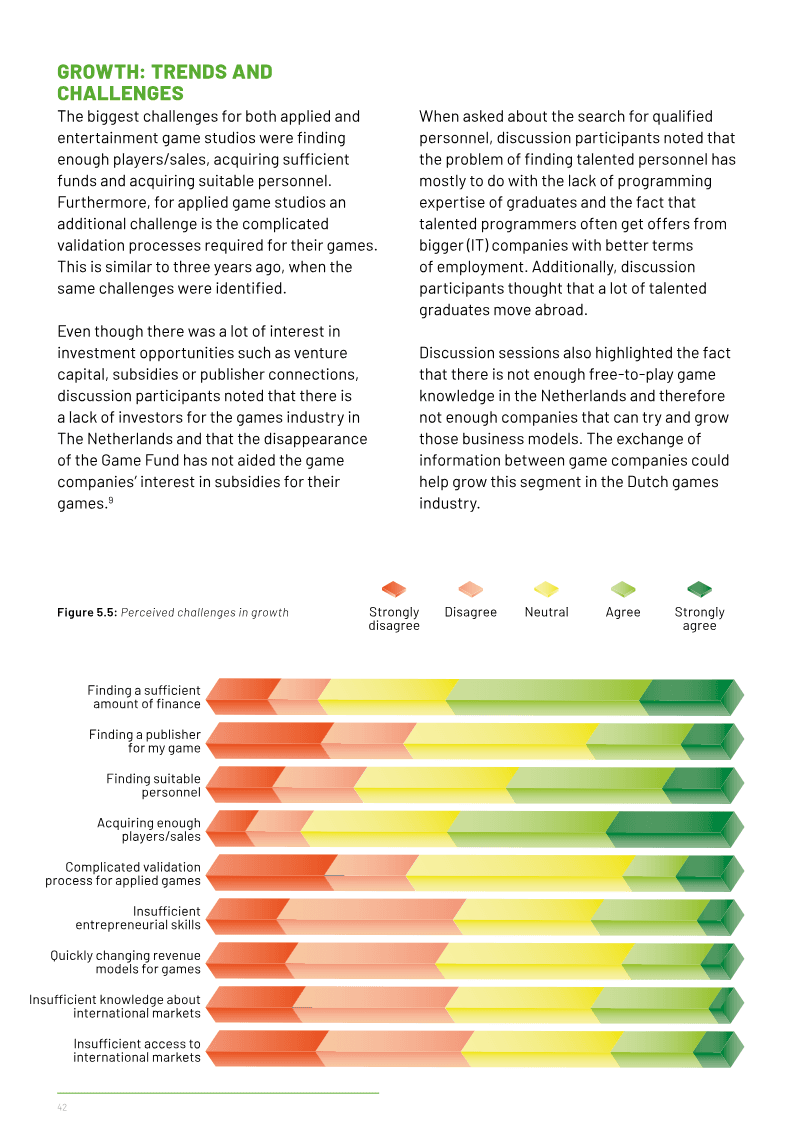
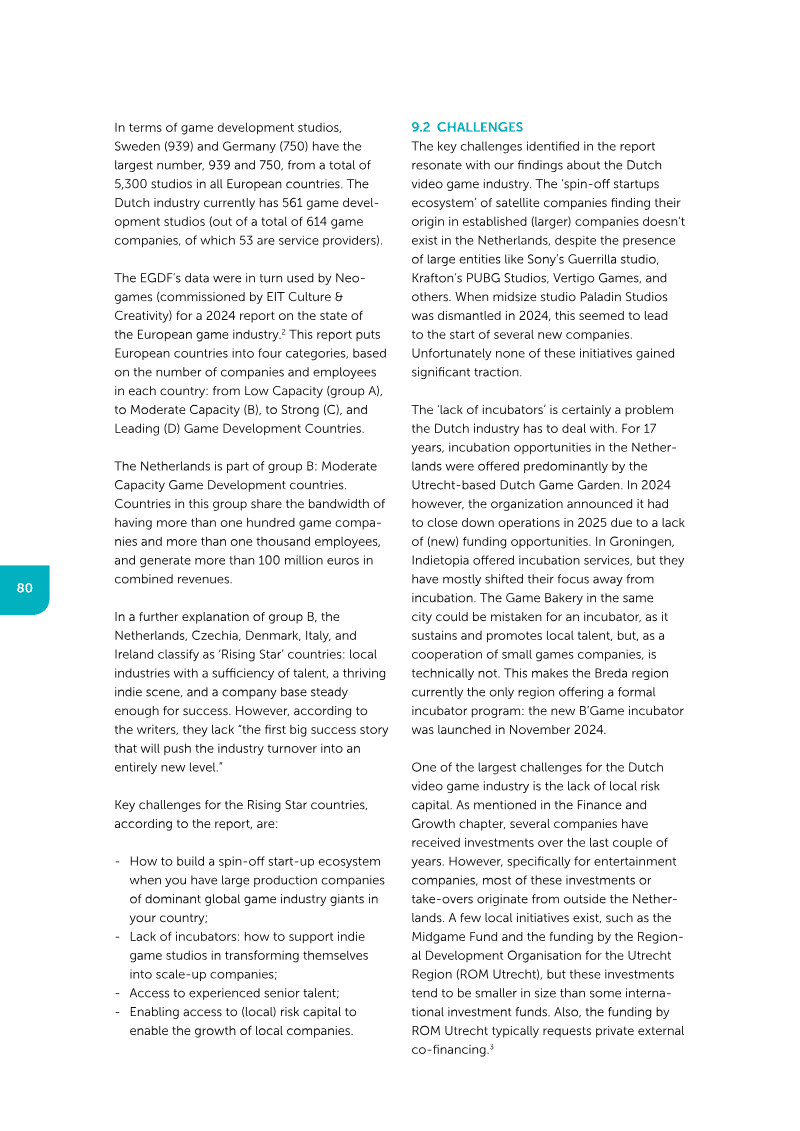
Netherlands. The Dutch Games Monitor 2022 reports: "The biggest challenges for Dutch game companies were acquiring enough players, acquiring sufficient funds, and finding suitable personnel. This top 3 has not changed compared to the 2018 edition of the Games Monitor. However, the percentage of user acquisition has increased and has become the largest challenge," attributed to "changing regulations around cookies in the European market (for instance the Digital Services Act). It has become much harder to target specific audiences" 29. The 2018 edition had already found "there is a lack of investors for the games industry in The Netherlands" and that "the disappearance of the Game Fund has not aided the game companies' interest in subsidies for their games" 41. The 2024 monitor names the structural gaps: "the 'spin-off startups ecosystem'… doesn't exist in the Netherlands," "the 'lack of incubators' is certainly a problem the Dutch industry has to deal with," and EGDF places the country among "Moderate Capacity Game Development countries," whose "challenges… are found in building a thriving start-up ecosystem, a lack of incubators, access to experienced senior talent, and access to local risk capital" 26970.
Finland. Neogames Finland's 2022 report notes that "Finnish public funding for the game industry is primarily R&D-oriented, with cultural funding schemes, common in many other European countries, being almost non-existent," so that with consolidation and IDFA changes, "game developers are in significant need of support on the creative side as well" 47.
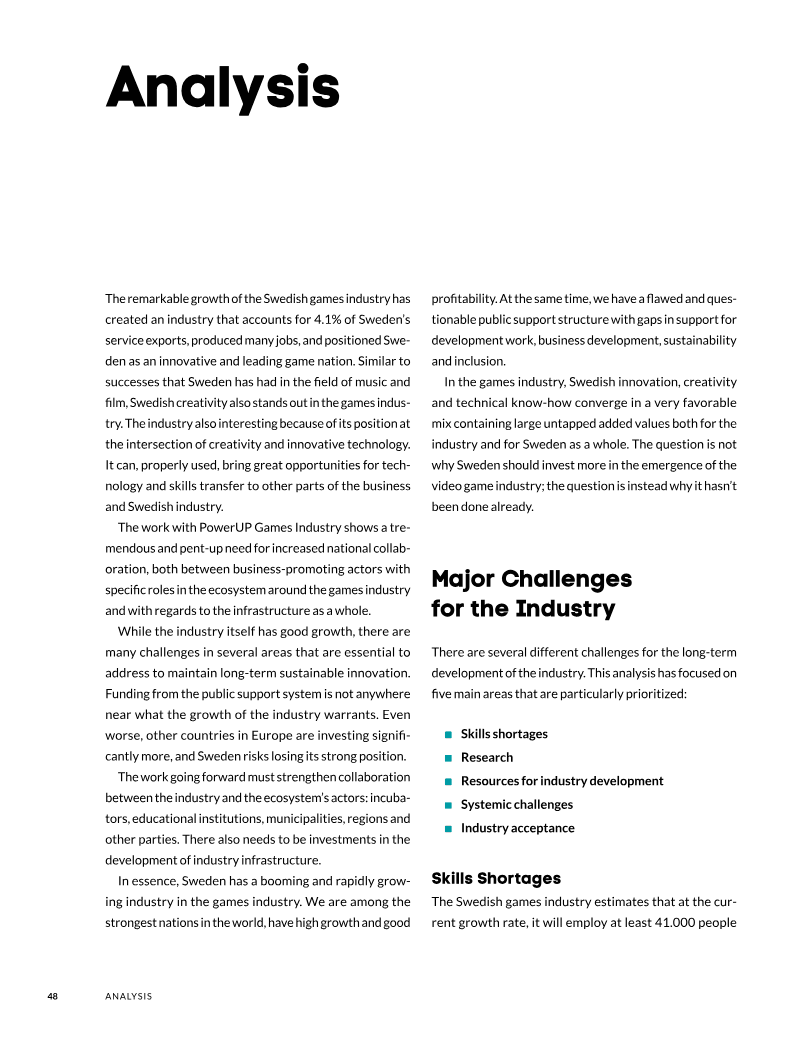
Sweden. The 2023 PowerUP Games Industry report lists five prioritised areas — "Skills shortages, Research, Resources for industry development, Systemic challenges, Industry acceptance" — and states: "Funding from the public support system is not anywhere near what the growth of the industry warrants. Even worse, other countries in Europe are investing significantly more, and Sweden risks losing its strong position" 6. The 2019 index adds that export subsidies "are designed for traditional industries and not adapted for 'born global' companies" 12.
Regulation and market access
Finland. The 2024 Neogames report: "The increasing complexity in regulatory compliance poses significant challenges, leading to new barriers for market access and heightened compliance risks." It adds that "it remains unclear how big game industry gatekeepers (e.g., Apple and Google) implement the new local rules in the EU and the rest of the world," and that "beyond harmful changes in immigration regulations, Finnish game developer studios are particularly disappointed by recent decisions by the Finnish tax authority (e.g., regarding R&D tax deductions and the VAT treatment of copyright-related income from games) that have created a significant additional administrative burden" 19.
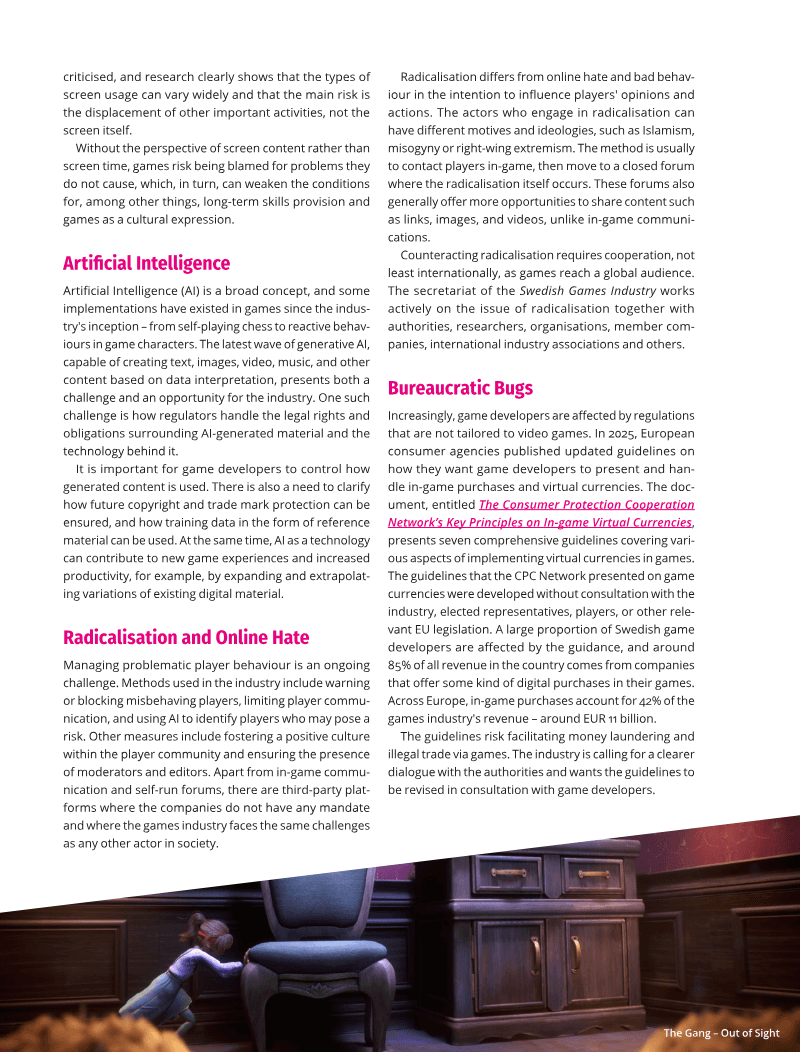
Sweden. The 2025 Swedish developer index criticises the EU consumer-protection guidelines on in-game currencies, "developed without consultation with the industry, elected representatives, players, or other relevant EU legislation," noting that "a large proportion of Swedish game developers are affected by the guidance, and around 85% of all revenue in the country comes from companies that offer some kind of digital purchases in their games," while "across Europe, in-game purchases account for 42% of the games industry's revenue — around EUR 11 billion" 23. The same index reports stagnation: "In 2024 the industry stood still and increased only marginally in the number of employees. Layoffs, redundancies and closed studios have hit more people in the industry than before," and says "long-term skills supply remains a challenge" 39. Its 2019 predecessor warned that "the proposal of a digital tax is one such example, possibly having a very negative impact on smaller developers," with companies "squeezed between the dominating platforms, trademark infringement and licensing abuse" 12.
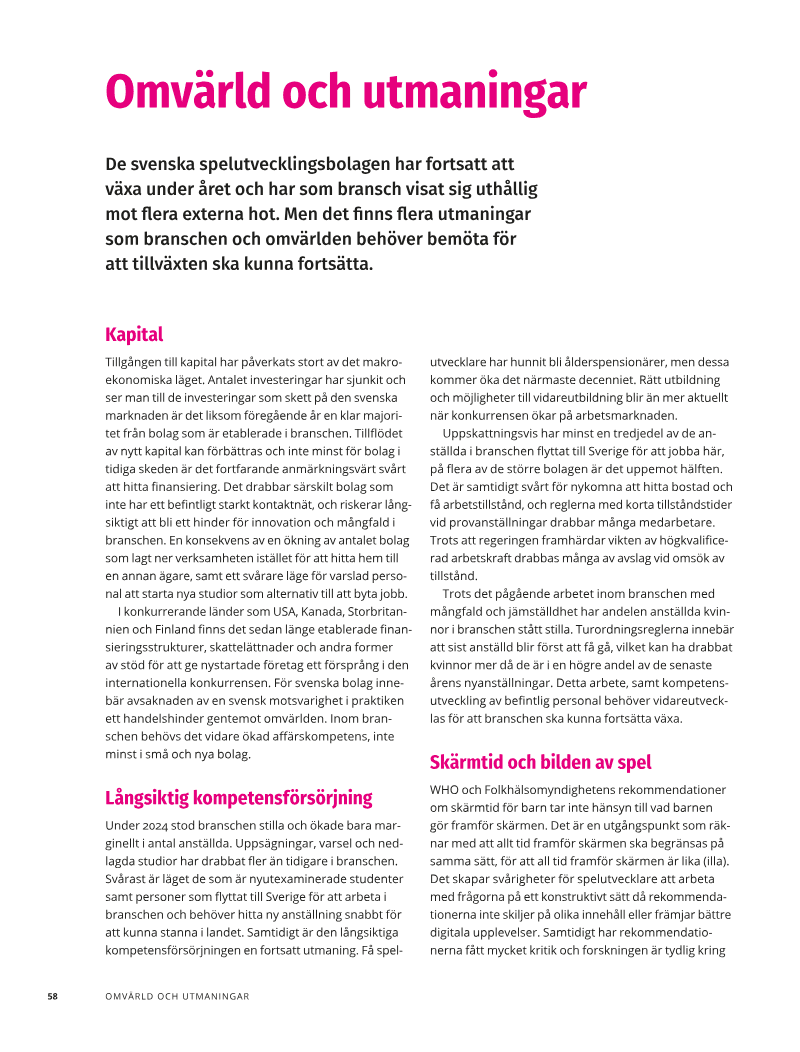
France. The 2017 French barometer reports that "for 38.3% of the companies surveyed, the main brake on international development lies in managing activities at a distance," and "the cost of adaptation and localisation specific to each region is also an obstacle for 36.1% of interviewees," alongside "difficulties related to animation/management (need for a partner on site, creating a subsidiary, etc.)" and "lack of information on local habits" 43. (2017 source.)
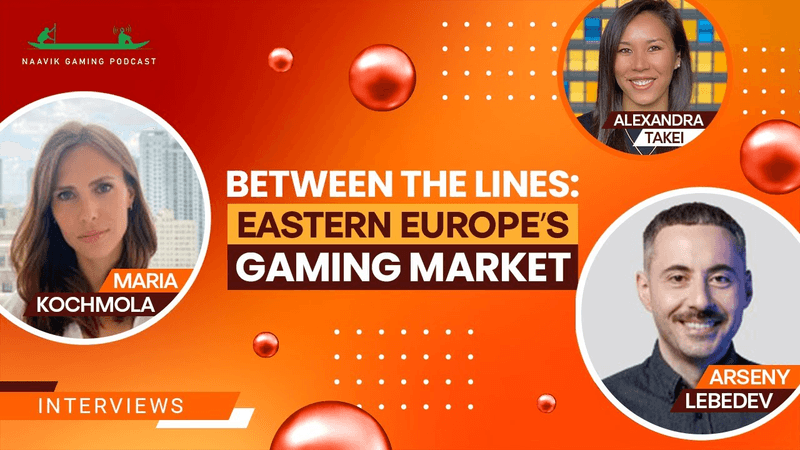
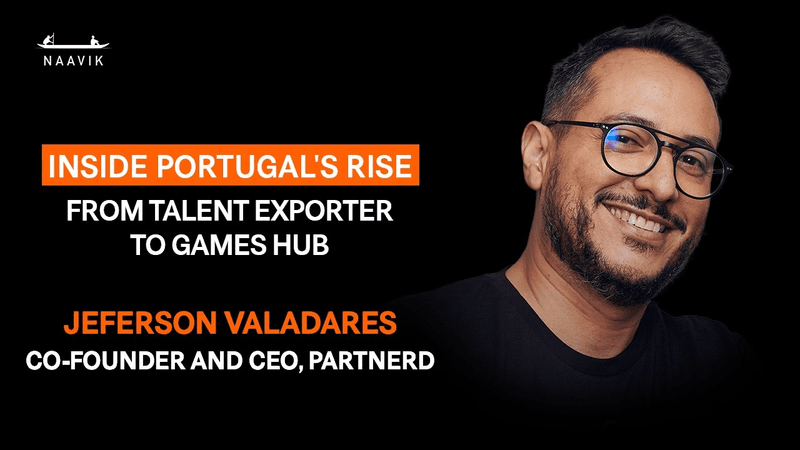
Eastern Europe and CIS. In Naavik's episode Between the Lines: Eastern Europe's Gaming Market (2024), the description notes that "the gaming scene in CIS has political, legal, and regulatory challenges that make it hard to develop games or deploy investments into the region," and that guests discuss "why going through the hurdles of employee relocation and headquarter restructuring are worth it in the long run" 17. In Naavik's Can Portugal Become Europe's Next Gaming Powerhouse? (2026), a guest describes a product-side weakness in outsourcing-driven ecosystems such as Romania's: studios "were never leading the product so they have a lot of like talent but every time a studio that tries to make a game it's not that good" 32.
Workplace-level challenges
The 2025 InGameJob / Values Value survey ranks the top ten workplace issues in Europe (EU+UK+CH): professional burnout 59%, unprofessional or ineffective management 45%, toxicity 38%, team conflicts 33%, lack of appreciation 32%, poor work-life balance 32%, unfair distribution of responsibilities and rewards 28%, ineffective and non-transparent internal communications 23%, insufficient onboarding/training 23%, and lack of job security 18%; non-EU European respondents reported higher shares on most items, including job security at 39% 34. The Netherlands' 2018 monitor similarly recorded that "the problem of finding talented personnel has mostly to do with the lack of programming expertise of graduates and the fact that talented programmers often get offers from bigger (IT) companies with better terms of employment," and that "a lot of talented graduates move abroad" 41. The Swedish 2025 report raises a further societal pressure: WHO and public-health screen-time recommendations "do not take into account what children are doing in front of the screen," which "creates difficulties for game developers to work with these questions in a constructive way" 39. A Swedish 2022 index additionally documents war-related disruption, noting "several Swedish companies have hundreds of employees in Ukraine" and the industry's aid initiatives after the 2022 attack 72.
Notes on coverage and currency
Several national positions here come from older editions — Poland 2015 28, France 2017 43, the Netherlands 2015 and 2018 1141, Germany 2019 35, Czechia 2019–2020 2678 and Finland 2016 36 — while Sweden 18233976, Finland 19, Spain 59 and Flanders 2279 provide 2024–2025 positions; the sources provided do not include recent equivalents for Romania, Portugal, Cyprus or the Eastern European countries beyond the CIS discussion 17 and Portugal episode 32, nor a country-level breakdown of the 2025 Europe-wide burnout figures 34.
Have your own question about the games industry?
Ask the library — synthesized answers with citations from hundreds of industry reports.
Ask the library