LegalPlayWay
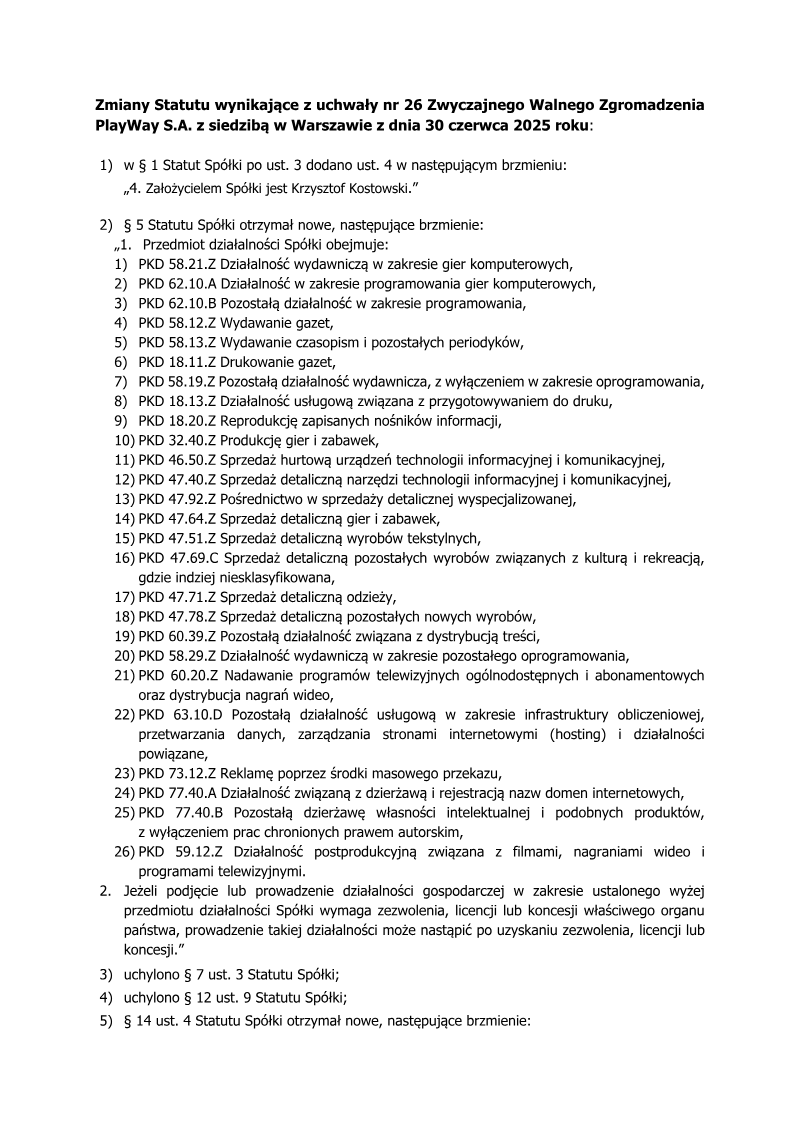
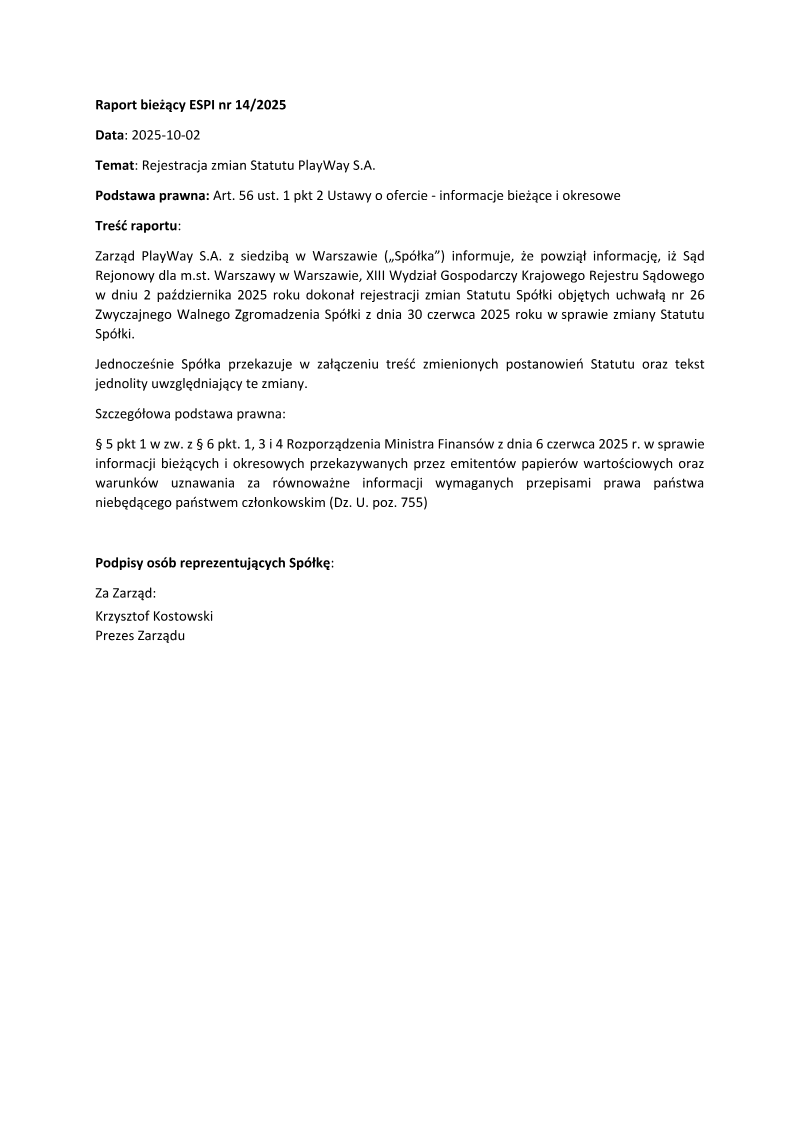
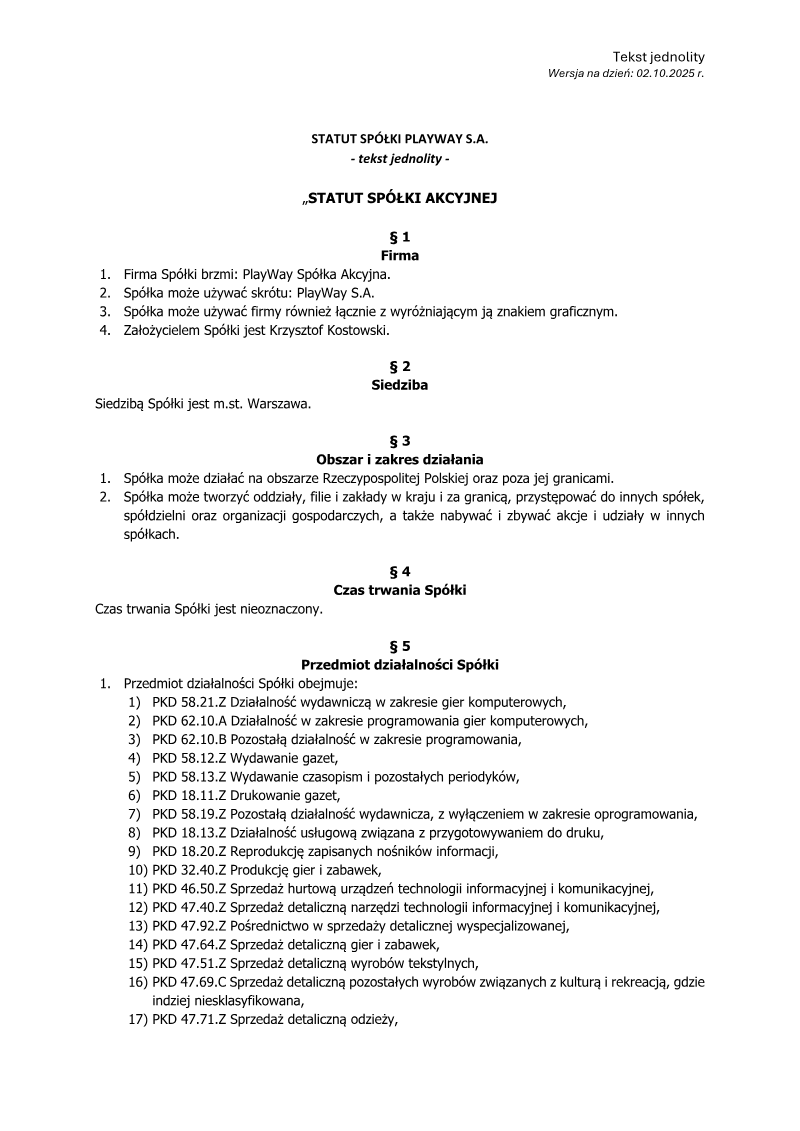
Zmiany Statutu wynikające z uchwały nr 26 Zwyczajnego Walnego Zgromadzenia
30 Jun 20252 pages~3 min full read
The legal amendments to the Articles of Association of PlayWay S.A., a prominent Polish video game publisher and developer, were formally adopted following Resolution No. 26 of the Ordinary General Meeting held on June 30, 2025. These changes serve to modernize the company’s corporate governance framework, clarify its foundational history, and significantly broaden its registered business activities.
A primary update involves the formal recognition of Krzysztof Kostowski as the company’s founder. Furthermore, the scope of business operations has been extensively redefined under the Polish Classification of Activities (PKD). While the core focus remains on computer game publishing and programming, the expanded scope now includes diverse sectors such as the production of games and toys, retail and wholesale of information technology equipment, textile and clothing sales, and media-related activities including television broadcasting and film post-production. This indicates a strategic shift toward a more diversified commercial ecosystem surrounding the company’s intellectual property.
Governance structures have also been standardized, with the terms of office for both the Management Board and the Supervisory Board set at five years, calculated in full financial years. The Supervisory Board’s competencies have been updated to include the selection of auditing firms not only for financial audits but also for the attestation of sustainability reporting, reflecting increasing regulatory requirements for corporate social responsibility and ESG transparency. Additionally, the authority to determine dividend dates and payment schedules is explicitly vested in the Ordinary General Meeting, ensuring compliance with current legal standards. These amendments collectively streamline the company’s internal regulations to support long-term operational stability and broader market engagement.
PlayWay · 2026
PlayWay · 2026
PlayWay · 2026
PCF Group · 2025
PlayWay · 2025
PlayWay · 2025
PlayWay · 2025
PlayWay · 2025
PlayWay · 2025
PlayWay · 2025
PlayWay · 2025
PlayWay · 2025
PCF Group · 2023
PCF Group · 2022
PlayWay · 2020
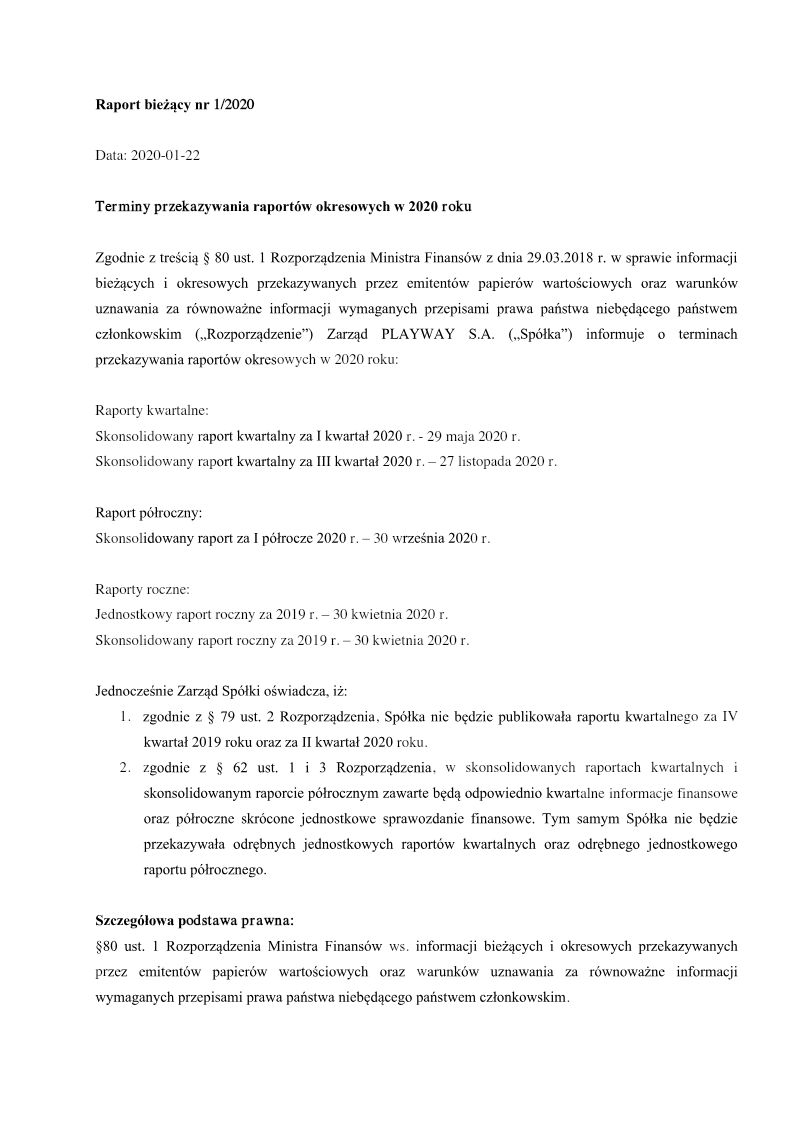
PlayWay · 2020
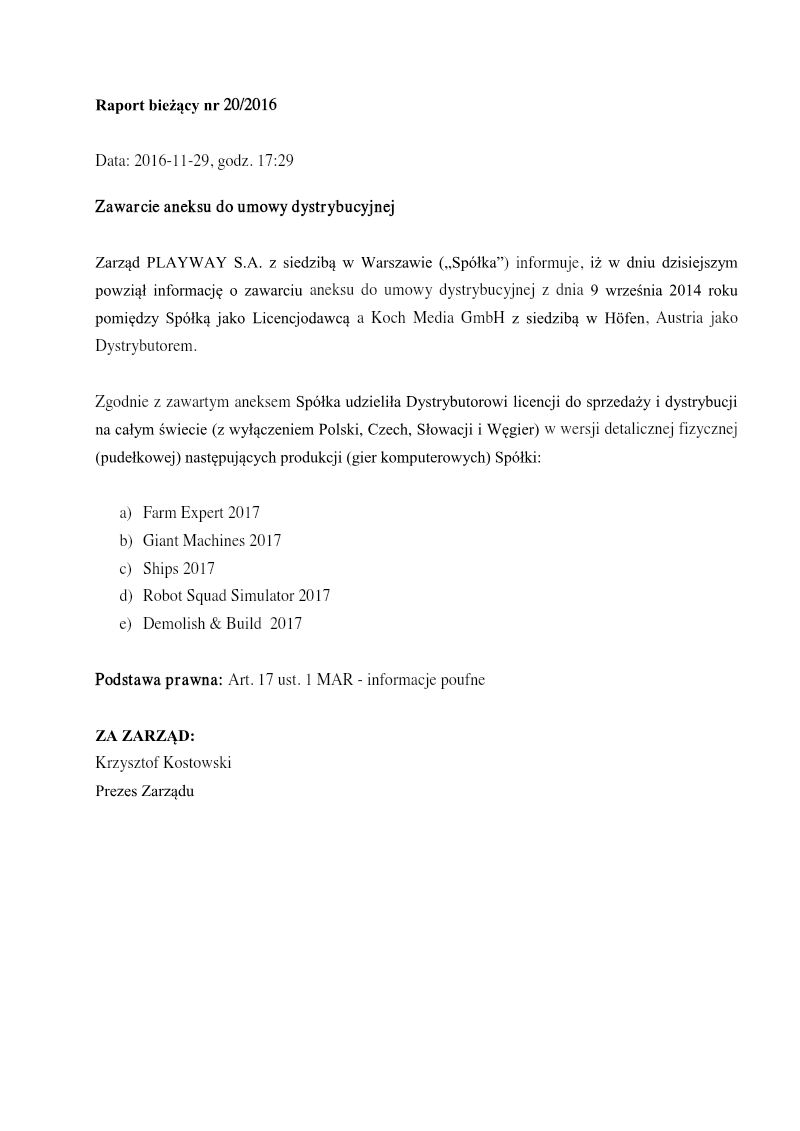
PlayWay · 2016
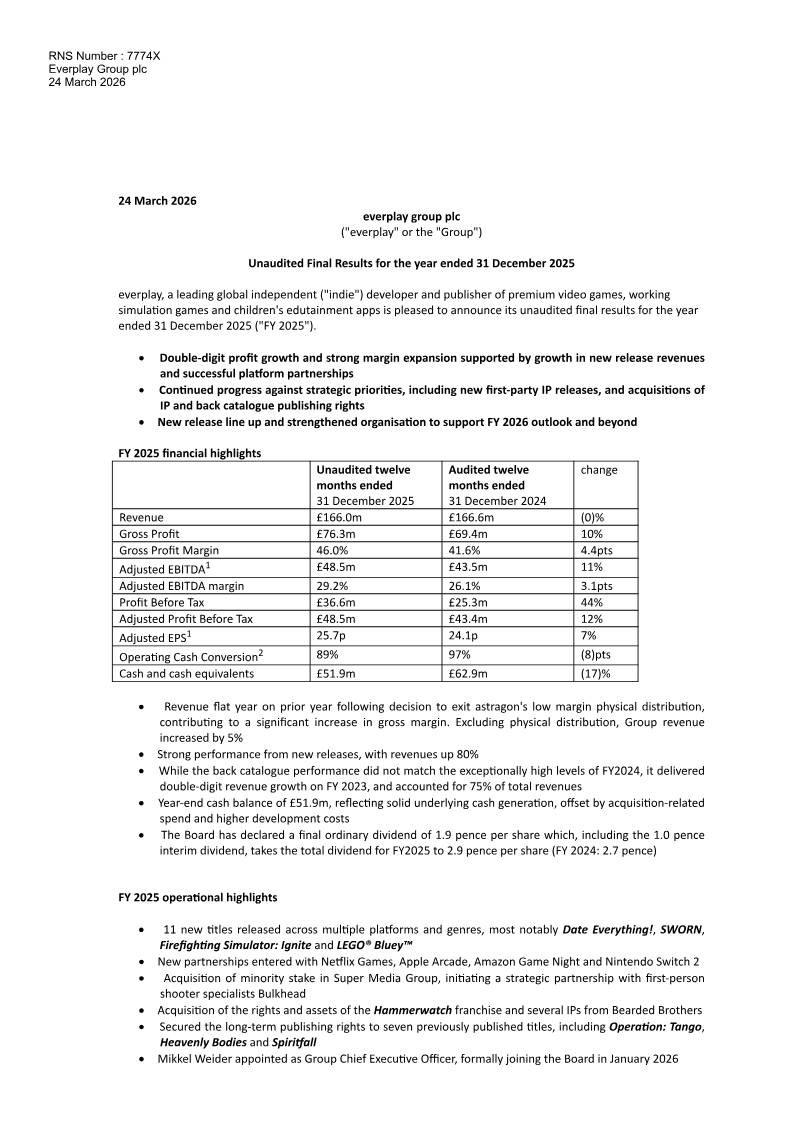
Everplay Group · 2026
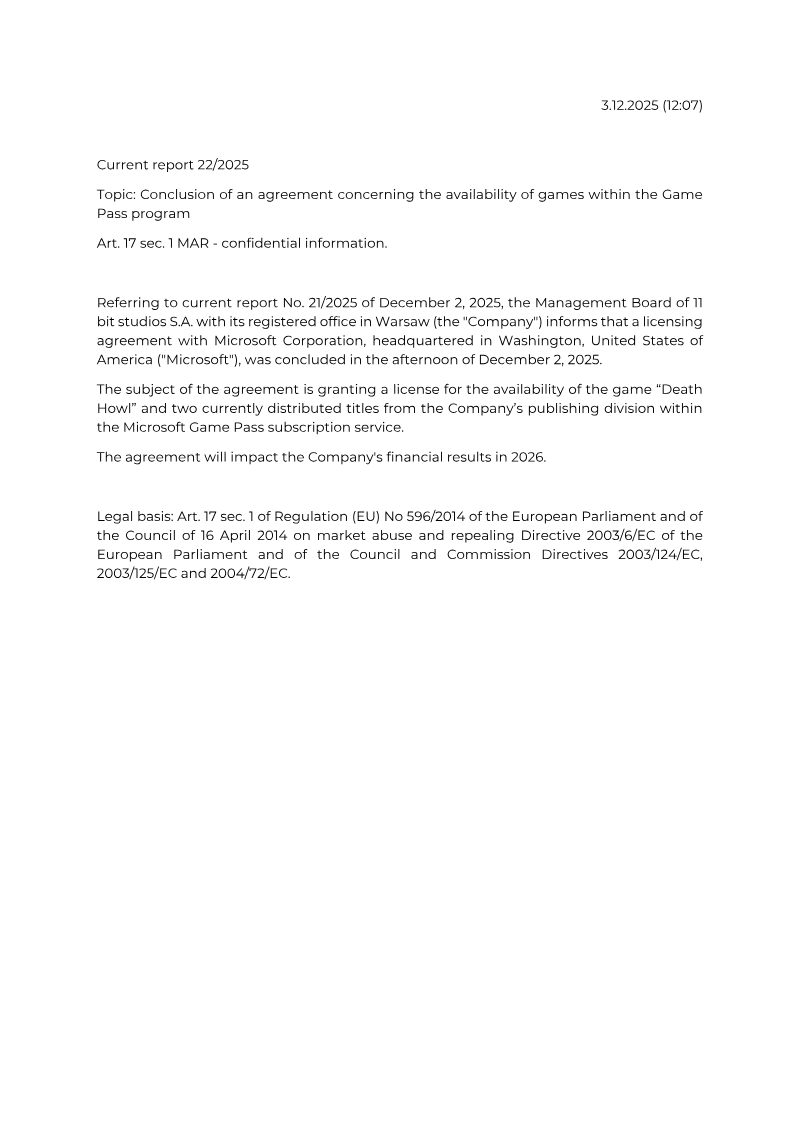
11 bit studios · 2025
PCF Group · 2025
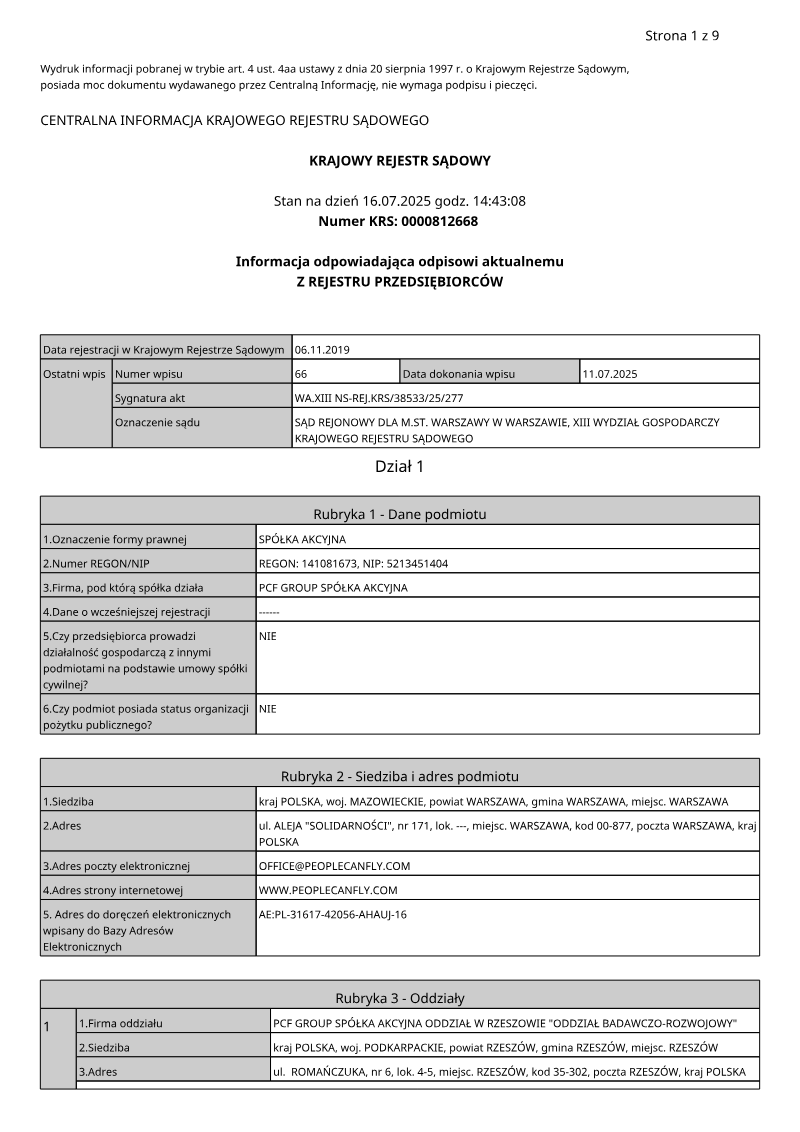
Centralna Informacja Krajowego Rejestru Sądowego · 2025
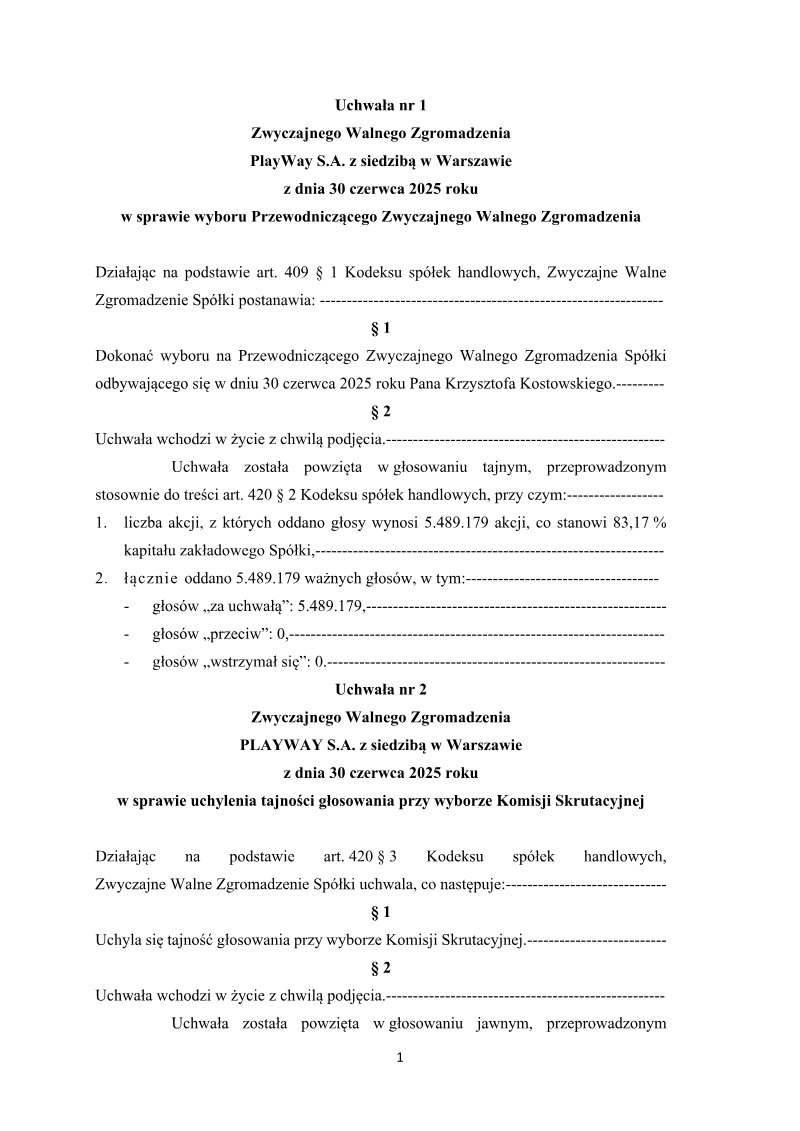
PlayWay · 2025
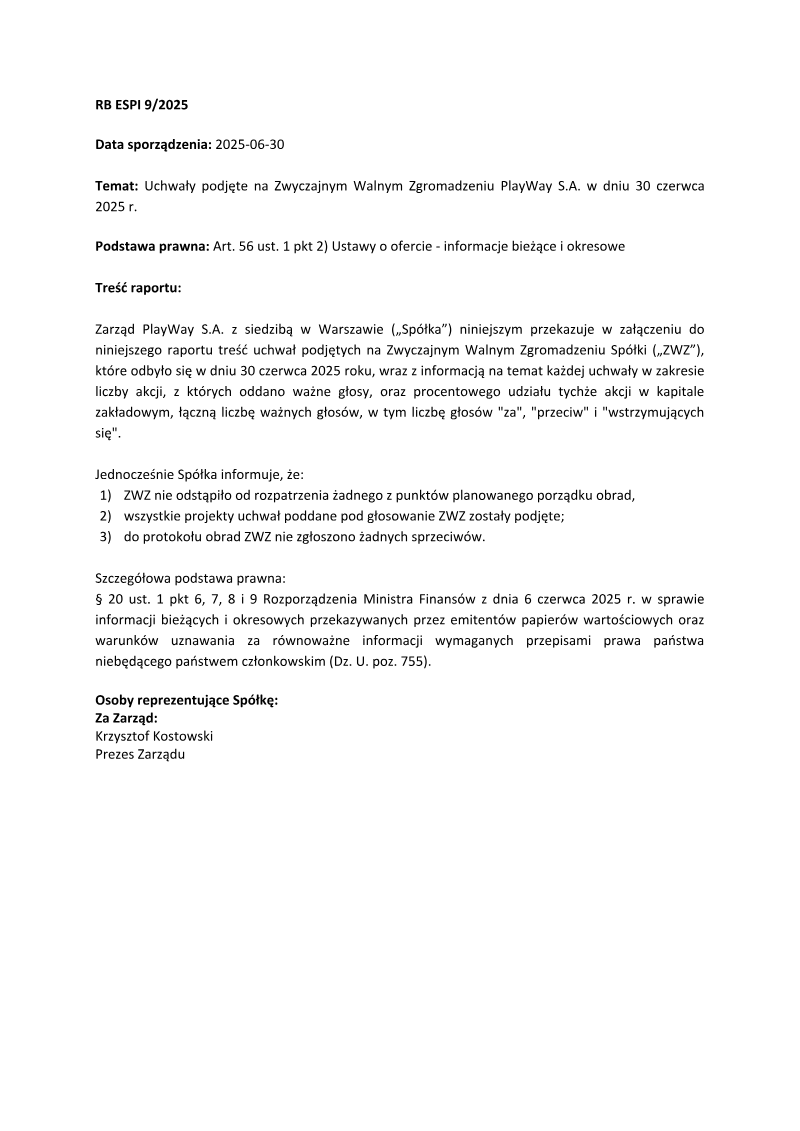
PlayWay · 2025
PlayWay · 2025