FinancialKoei Tecmo
Financial Highlights for the Fiscal Year Ending March 2013 (FY2012)
20132 pages~3 min full read
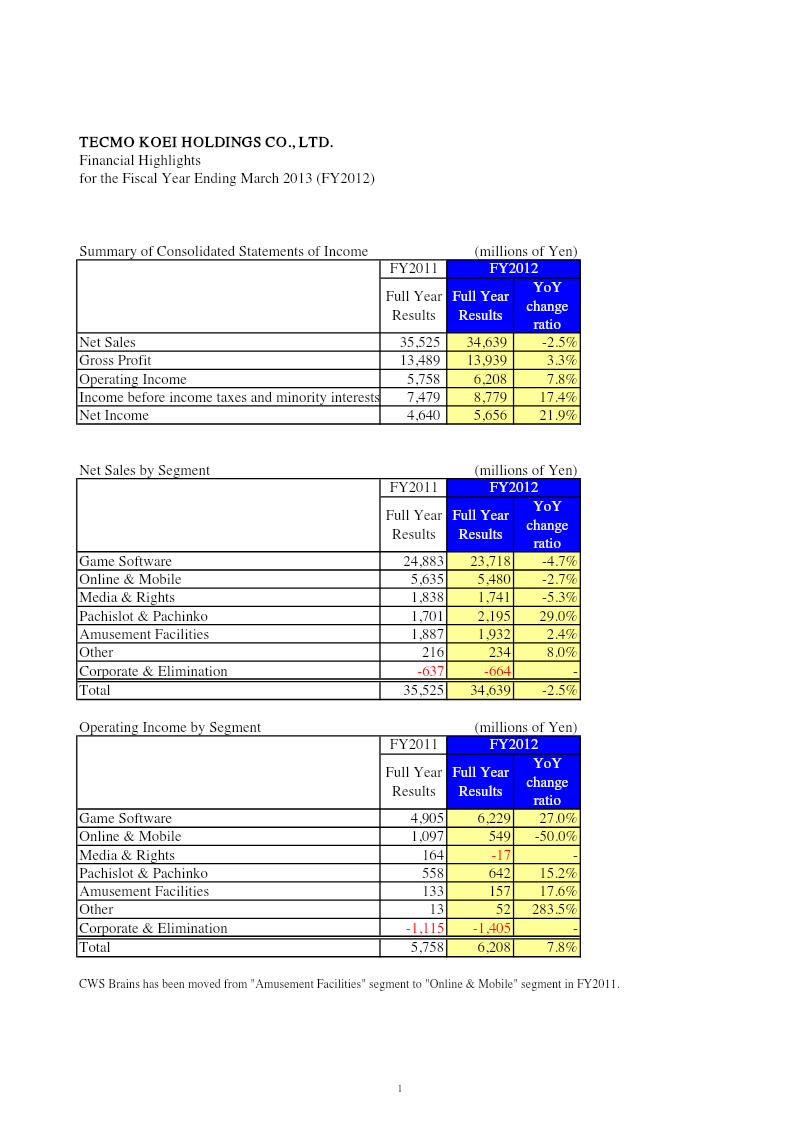
Tecmo Koei Holdings achieved significant profitability growth during the fiscal year ending March 31, 2013, despite a slight contraction in overall revenue. Net sales decreased by 2.5% to 34.6 billion yen, yet the company realized a 7.8% increase in operating income and a substantial 21.9% rise in net income, which reached 5.6 billion yen. This divergence between top-line revenue and bottom-line profit suggests improved operational efficiencies and a more profitable product mix within the core business segments.
The game software division remains the primary revenue driver, contributing 23.7 billion yen. While sales in this segment fell by 4.7%, its operating income surged by 27%, indicating higher margins on software titles. Conversely, the online and mobile segment experienced a sharp 50% decline in operating income, falling to 549 million yen. The pachislot and pachinko segment emerged as a high-growth area, with sales increasing by 29% and operating income rising by 15.2%. Other smaller segments, such as amusement facilities, showed modest growth, while the media and rights division posted a small operating loss.
The corporate balance sheet strengthened considerably over the twelve-month period, with total assets expanding from 80.7 billion yen to 95 billion yen. This growth was largely fueled by a significant increase in investment securities, which rose from 33.7 billion yen to 45.3 billion yen, and a doubling of cash and time deposits. Shareholders' equity improved to 82.4 billion yen, supported by a recovery in accumulated other comprehensive income, specifically a swing from unrealized losses to gains on securities. These financial results reflect a period of consolidation and asset growth for the Japanese publisher, characterized by robust software profitability and a diversifying revenue base.
Koei Tecmo · 2025
Koei Tecmo · 2025
Koei Tecmo · 2025
MIXI, Inc. · 2025
MIXI, Inc. · 2025
Koei Tecmo · 2025

Koei Tecmo · 2025
Koei Tecmo · 2025

Koei Tecmo · 2025
Koei Tecmo · 2025
Koei Tecmo · 2024

Koei Tecmo · 2024
Capcom · 2026
Capcom Co. · 2026
Capcom · 2026
Sony Group Corporation · 2026

Square Enix · 2026
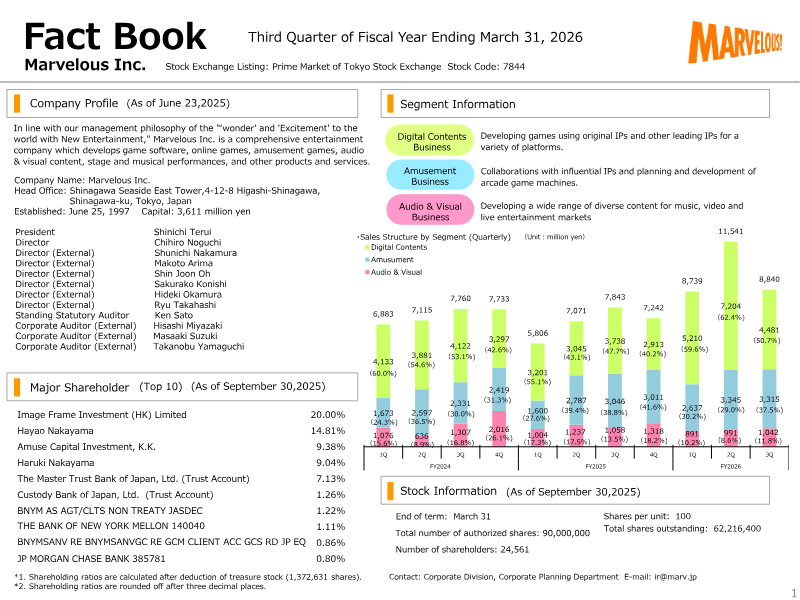
Marvelous · 2026
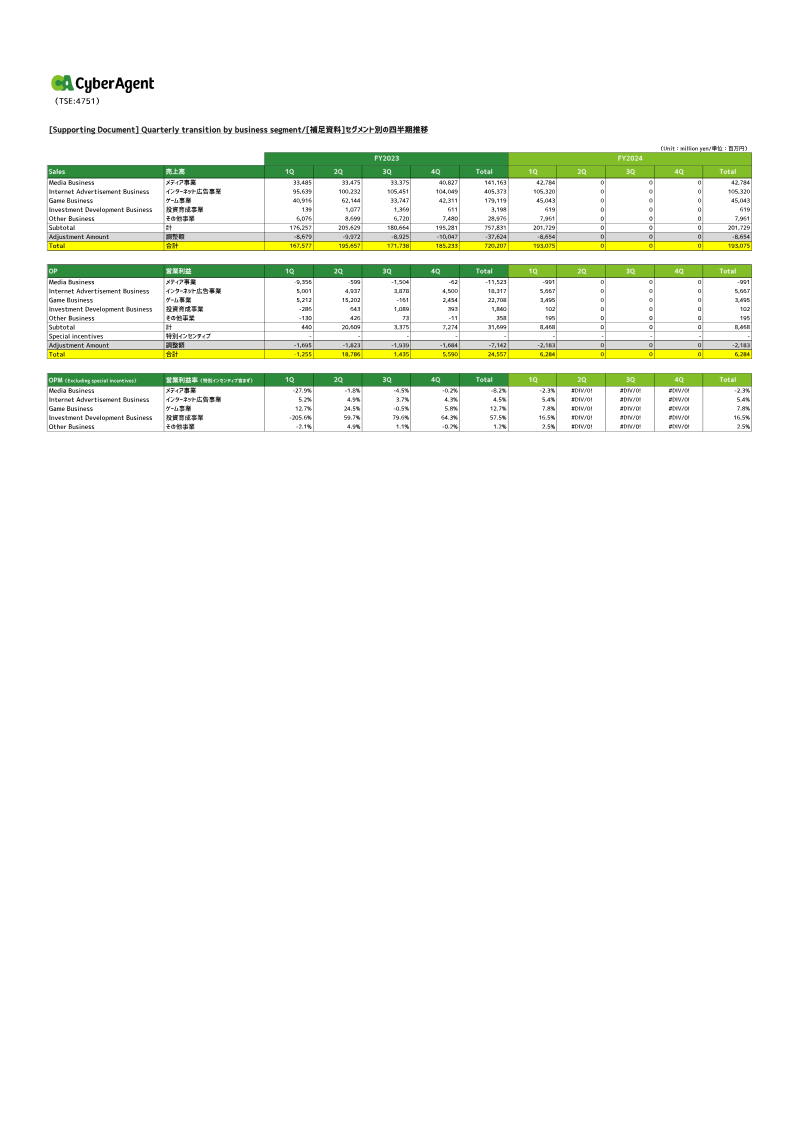
CyberAgent · 2026
Square Enix · 2026
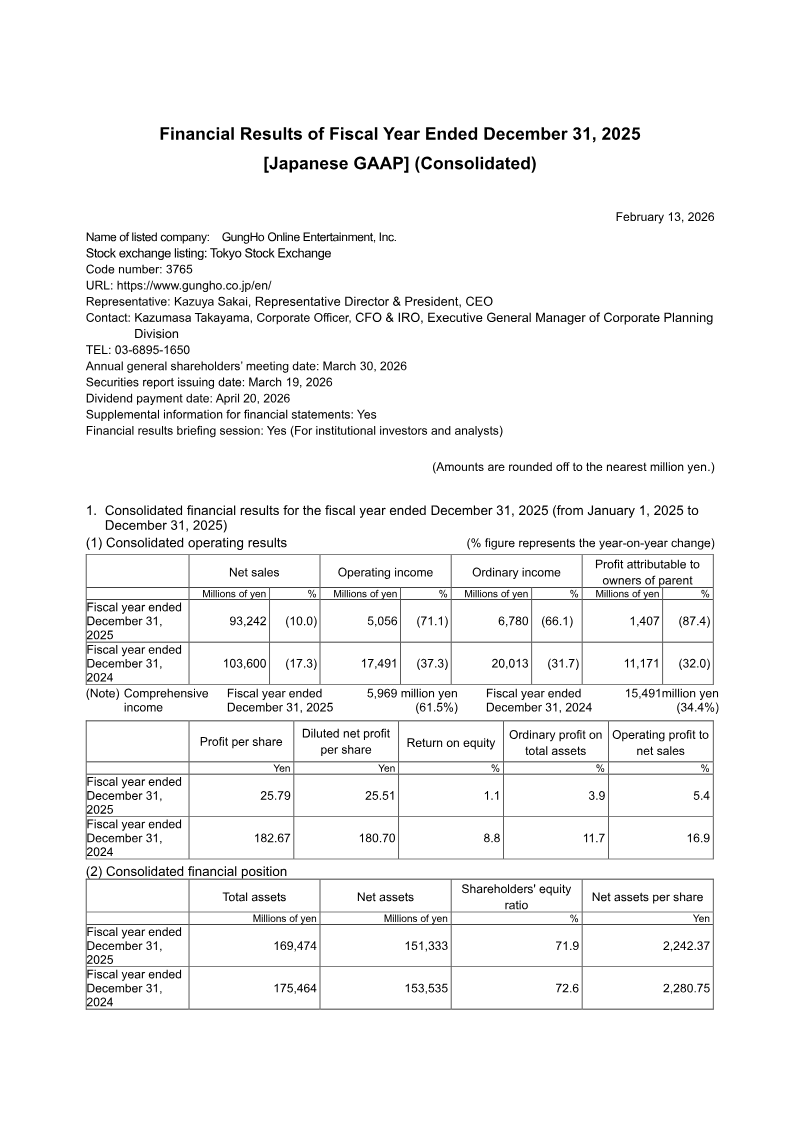
GungHo Online Entertainment · 2026
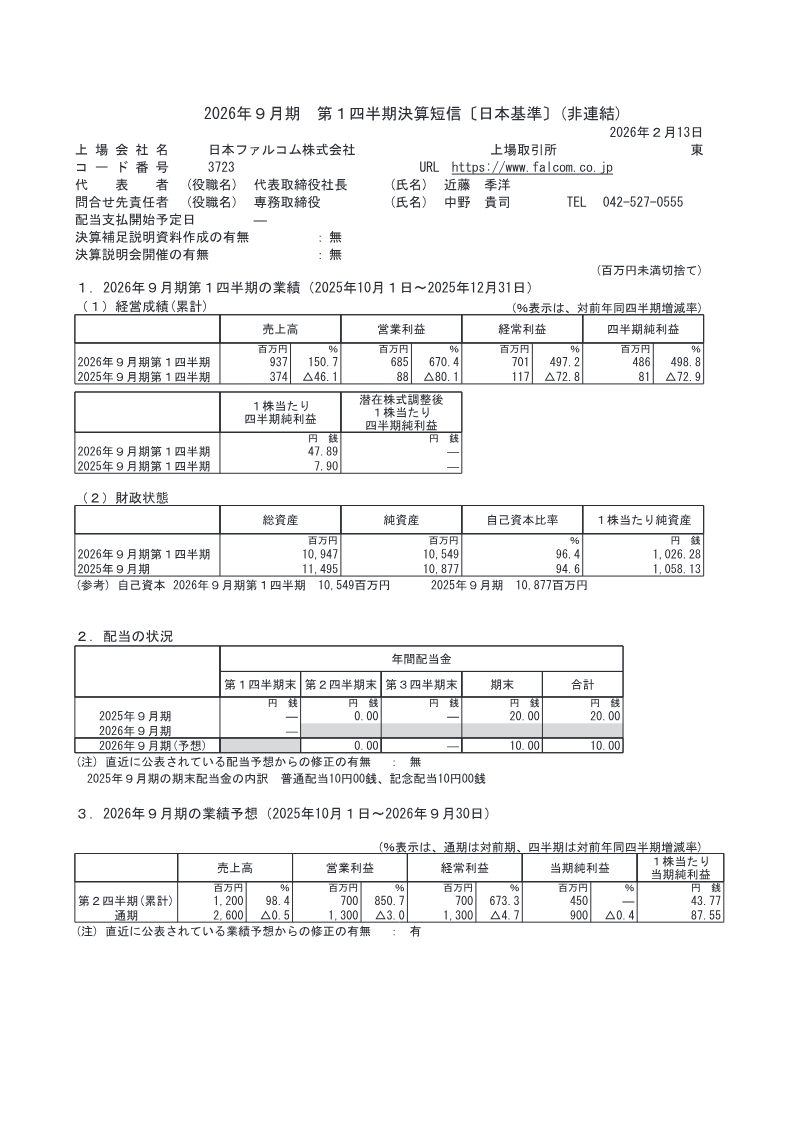
Nihon Falcom Corporation · 2026
Sega Sammy Holdings · 2026
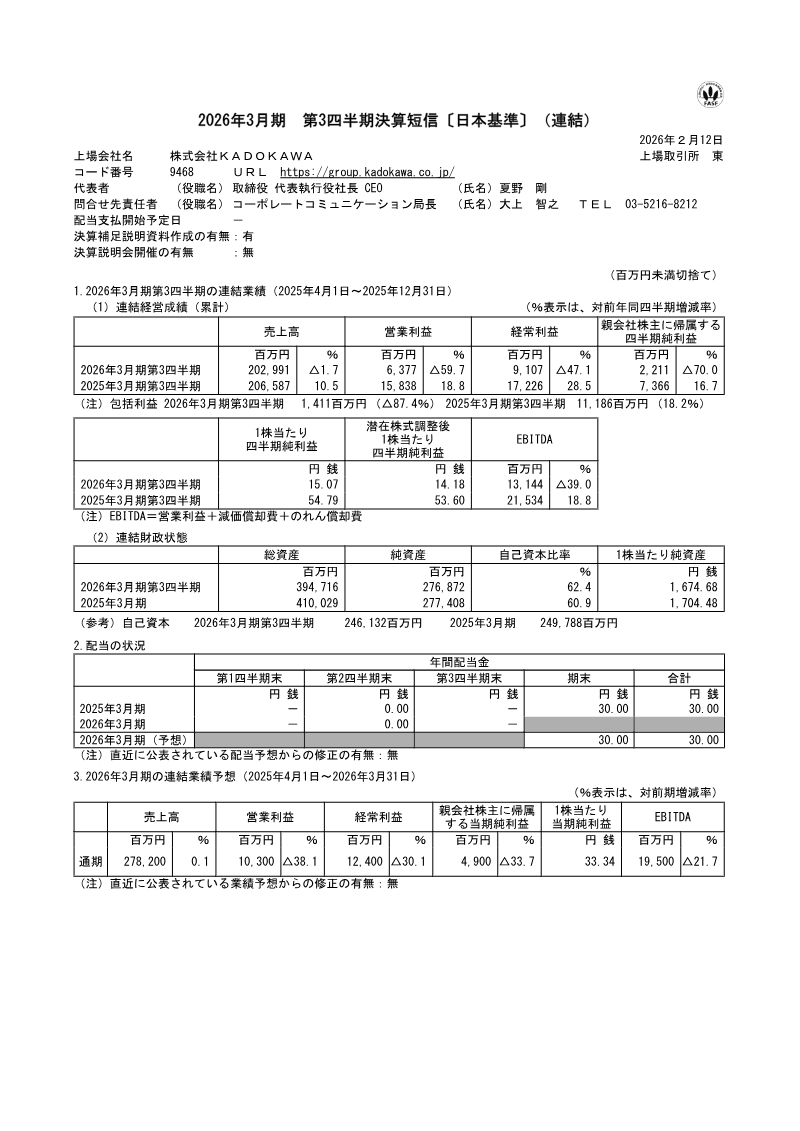
Kadokawa Corporation · 2026