Uppsala University
Organization2 reports
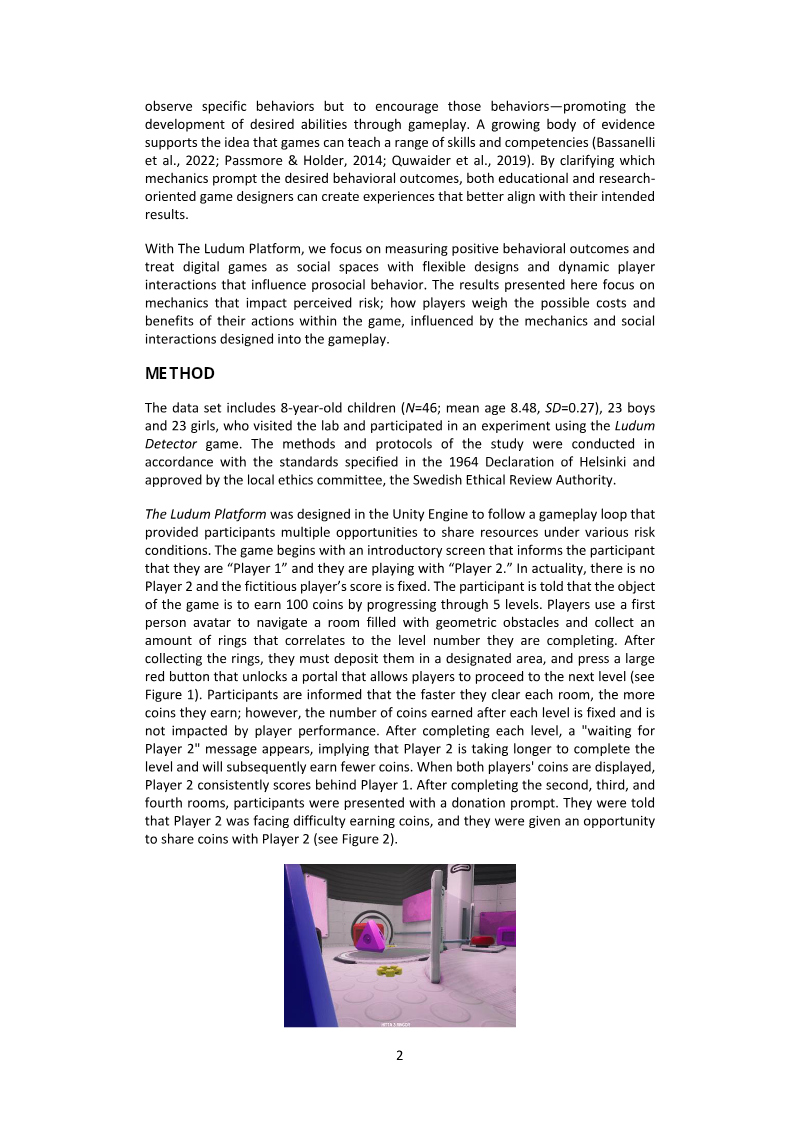
2 reports, presentations and talks by Uppsala University in the Game Industry Library, the newest “The Ludum Platform: Exploring the Impact of Game Design on Prosocial Behavior in Children's Digital Play” (2025).
Documents
Whitepaper7 pages
The Ludum Platform: Exploring the Impact of Game Design on Prosocial Behavior in Children's Digital Play
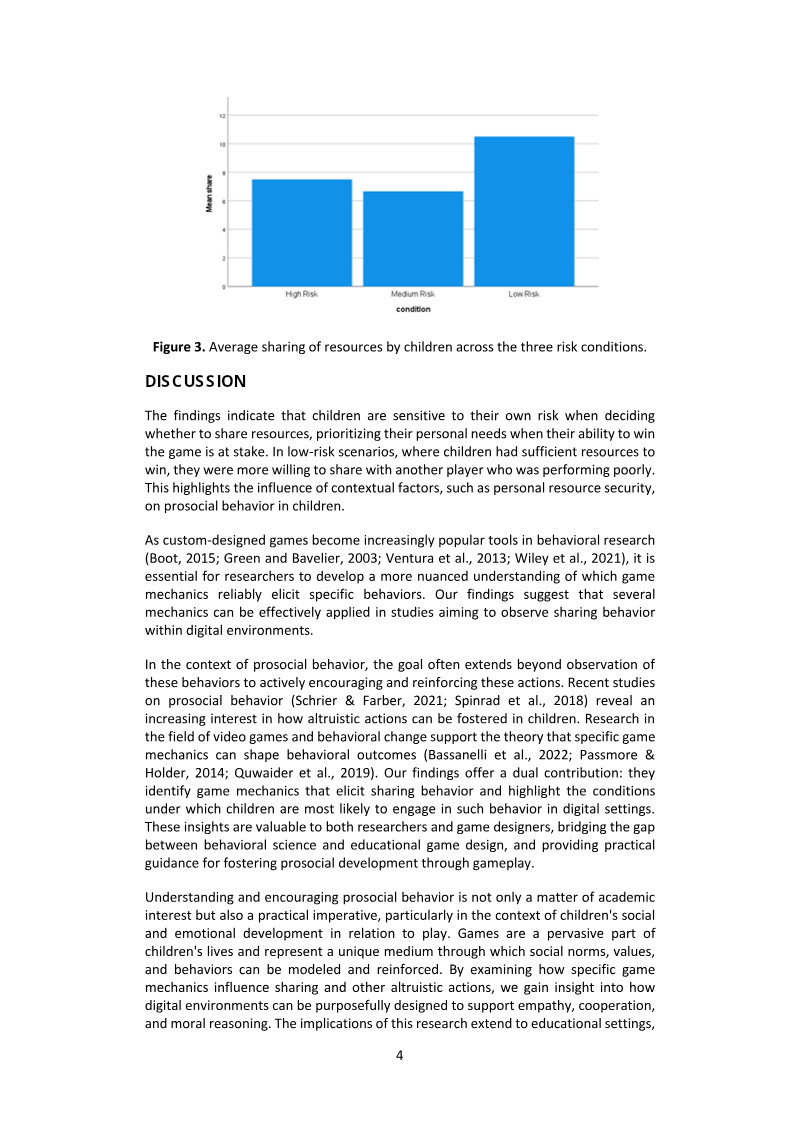
This study examines how perceived personal risk shapes resource sharing among children in a custom-built digital game, The Ludum Detector, which is part of the broader Ludum Platform project.
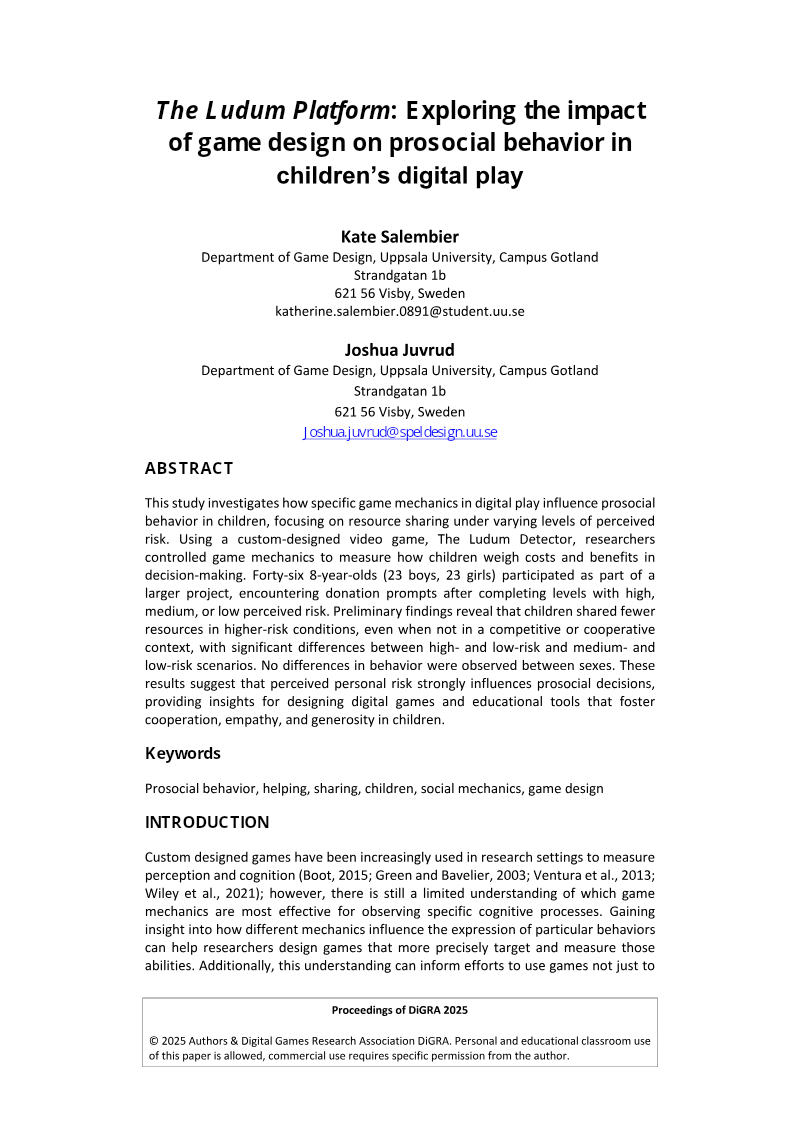
- Children share fewer resources in a digital game as their personal risk rises: in a 46-child study of 8-year-olds, sharing differed significantly between high-risk and low-risk conditions (p = .015) and between medium-risk and low-risk conditions (p = .002).
- The authors conclude that children prioritize personal security, and that resource sufficiency is a strong contextual driver of prosocial decisions in digital settings.
- No significant differences in sharing emerged between boys and girls, suggesting similar responses to risk across sexes.
Uppsala UniversityJul 2025
Whitepaper3 pages
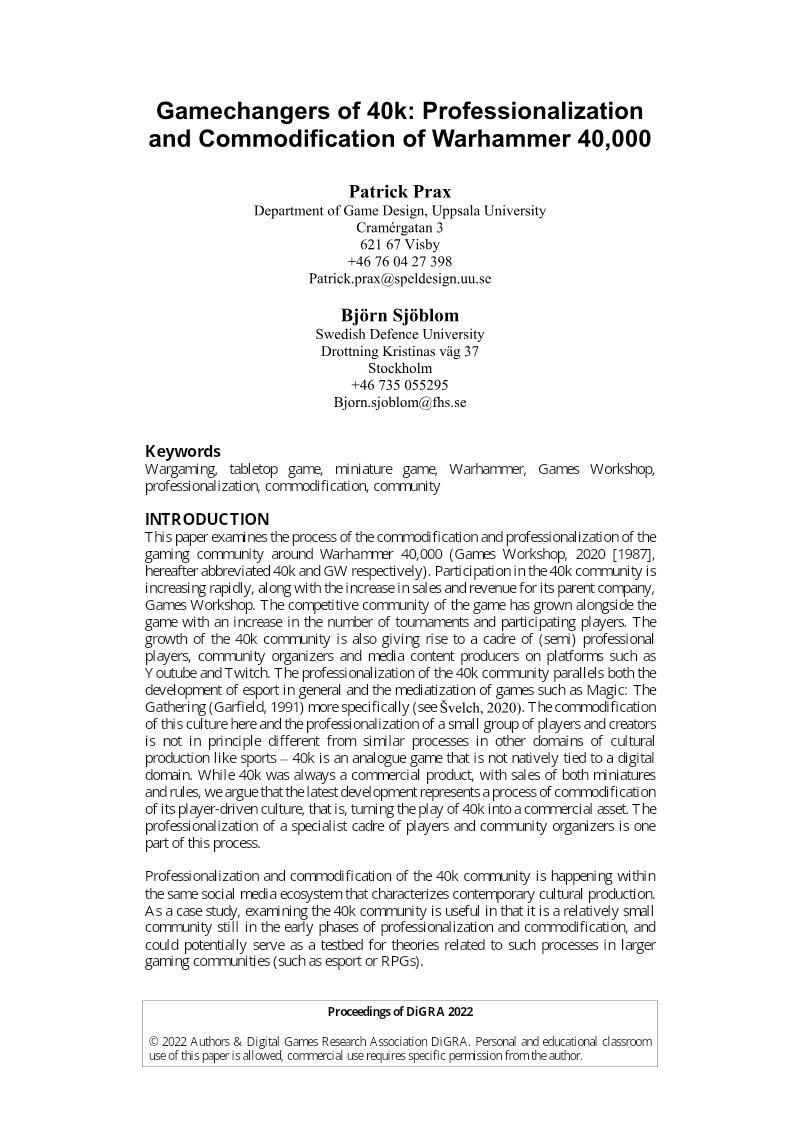
Gamechangers of 40k: Professionalization and Commodification of Warhammer 40,000
This paper examines how the Warhammer 40,000 tabletop wargaming community is undergoing professionalization and commodification, with players, organizers, and content creators increasingly turning their hobby into paid work.
- The paper argues that Warhammer 40,000's competitive community is professionalizing and commodifying, with players, organizers, and content creators increasingly turning their hobby into paid work, alongside rising sales and revenue for parent company Games Workshop.
- With the 2020 edition's unified ruleset, Games Workshop absorbed much of the competitive community's previously self-organized work on alternative rulesets, sometimes at the explicit request of community leaders.
- The authors interpret this absorption as the community actively participating in the commodification of play, consolidating the player base while reducing community control over how the game is played.
Uppsala UniversityJan 2022