University of Victoria
2 reports, presentations and talks by University of Victoria in the Game Industry Library, the newest “It Was Easy to Know What I've Done Wrong: Designing Systems for Transparency and Accountability for Improved Toxicity Moderation in Online Games” (2026).
Documents
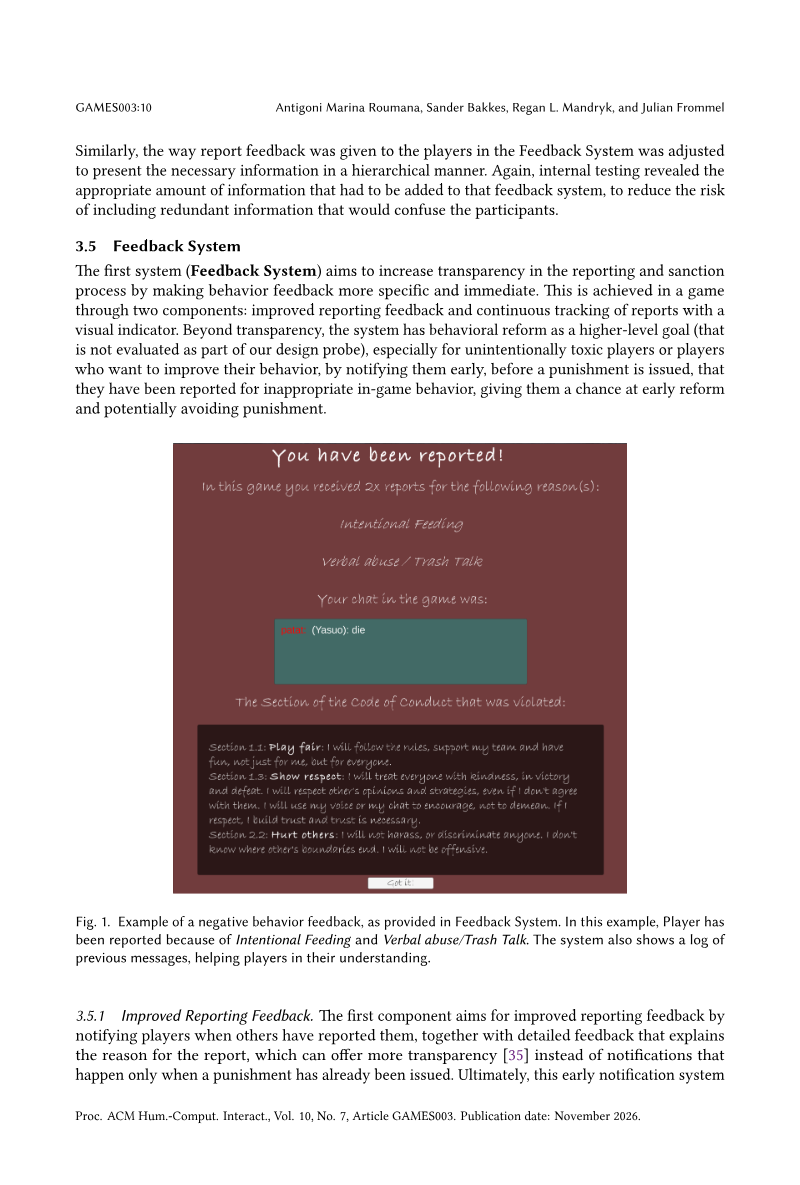
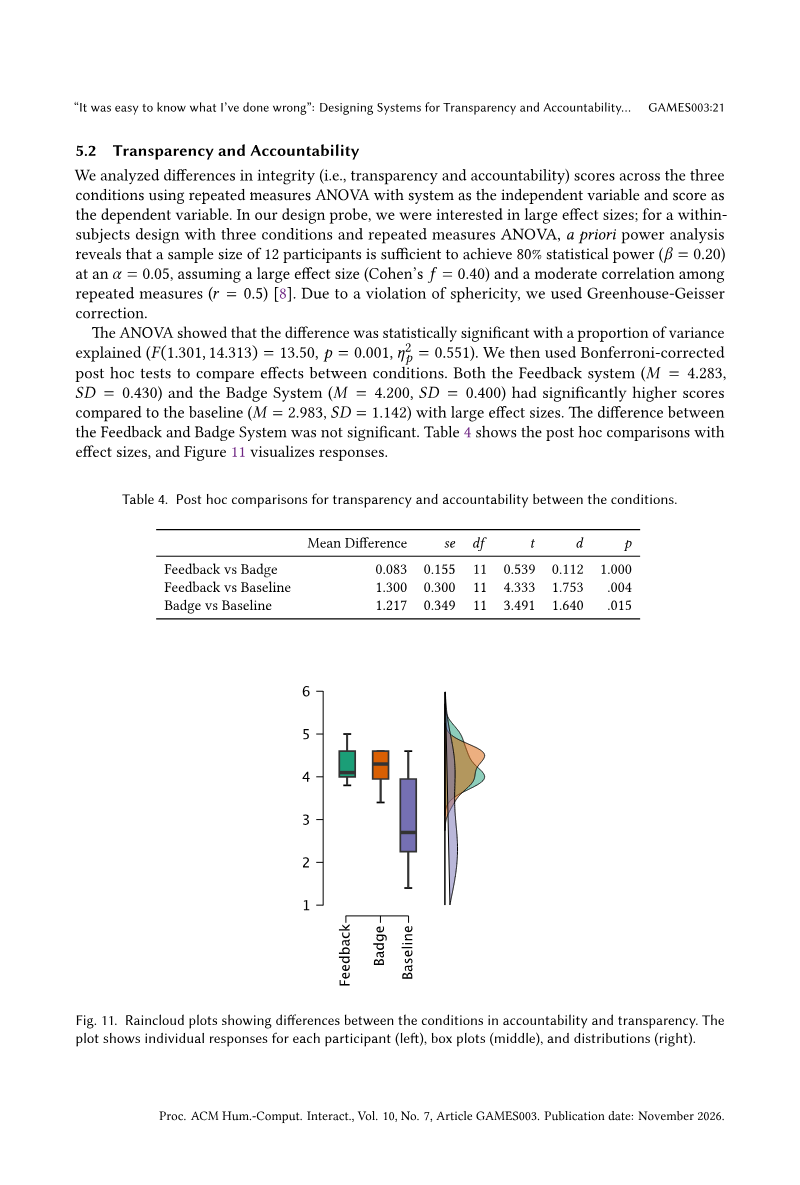
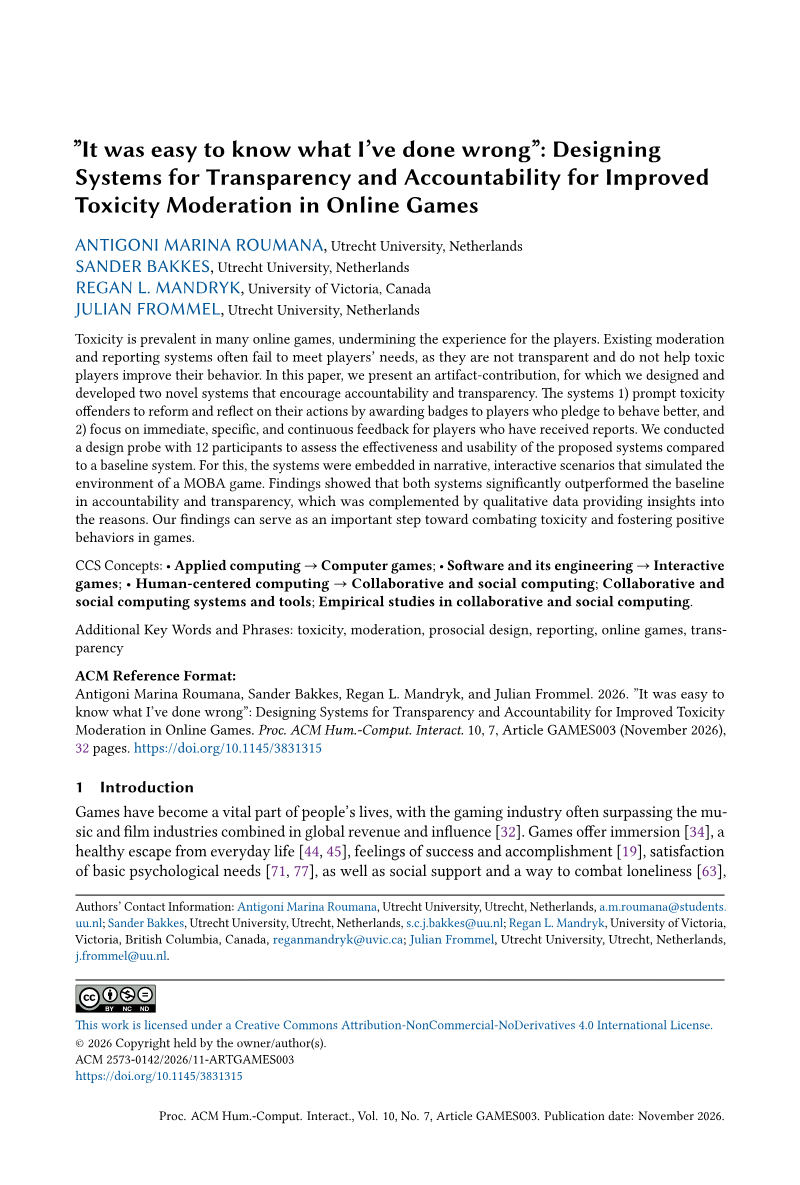
It Was Easy to Know What I've Done Wrong: Designing Systems for Transparency and Accountability for Improved Toxicity Moderation in Online Games
"It was easy to know what I've done wrong": Designing Systems for Transparency and Accountability for Improved Toxicity Moderation in Online Games ANTIGONI MARINA ROUMANA, Utrecht University, Netherlands SANDER BAKKES, Utrecht University, Netherlands REGAN L. MANDRYK, University of Victoria, Canada JULIAN FROMMEL, Utrecht…
- Current game moderation systems are often perceived as opaque and reactive, focusing on punitive measures like permanent bans rather than providing the specific feedback necessary for players to reform their behavior.
- A study of 12 participants evaluating two novel moderation systems—a feedback-focused system and a badge-based system—found that both significantly outperformed current industry baselines in transparency and accountability.
- Providing immediate, specific feedback to reported players helps them understand exactly which actions violated community standards, which is more effective for behavior change than delayed or vague notifications.
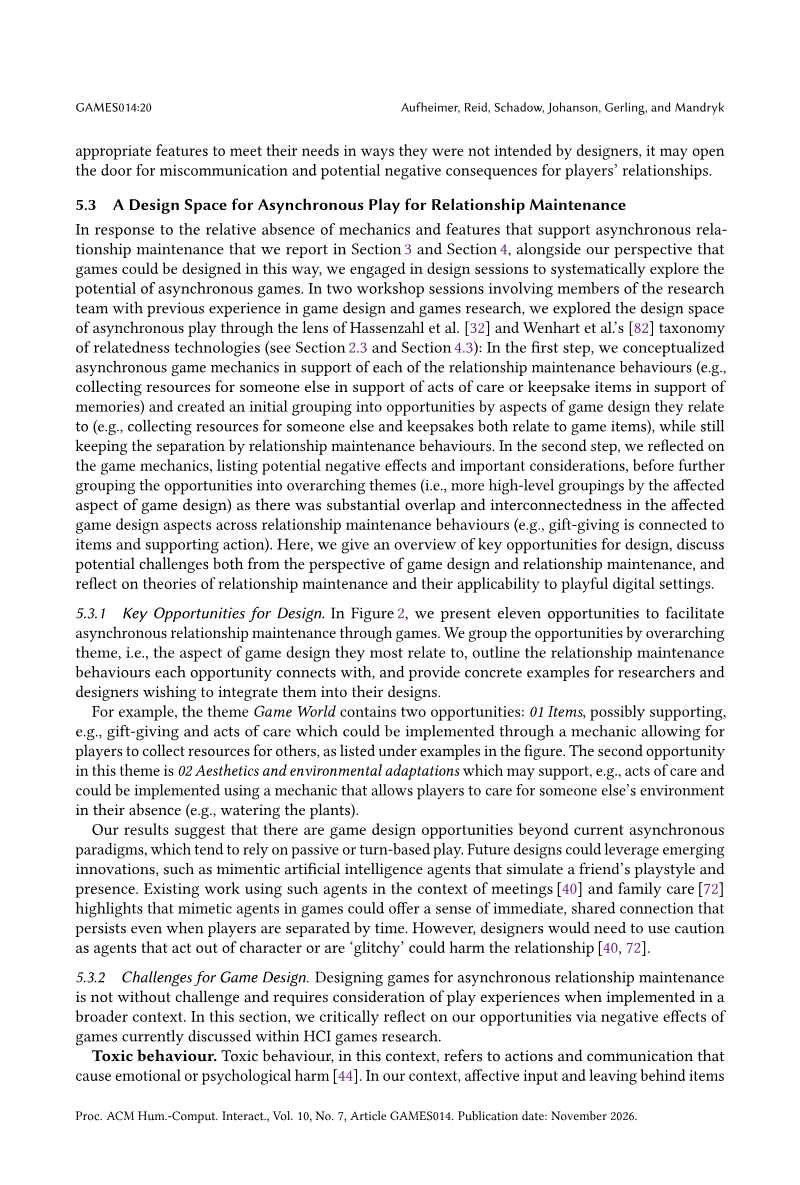
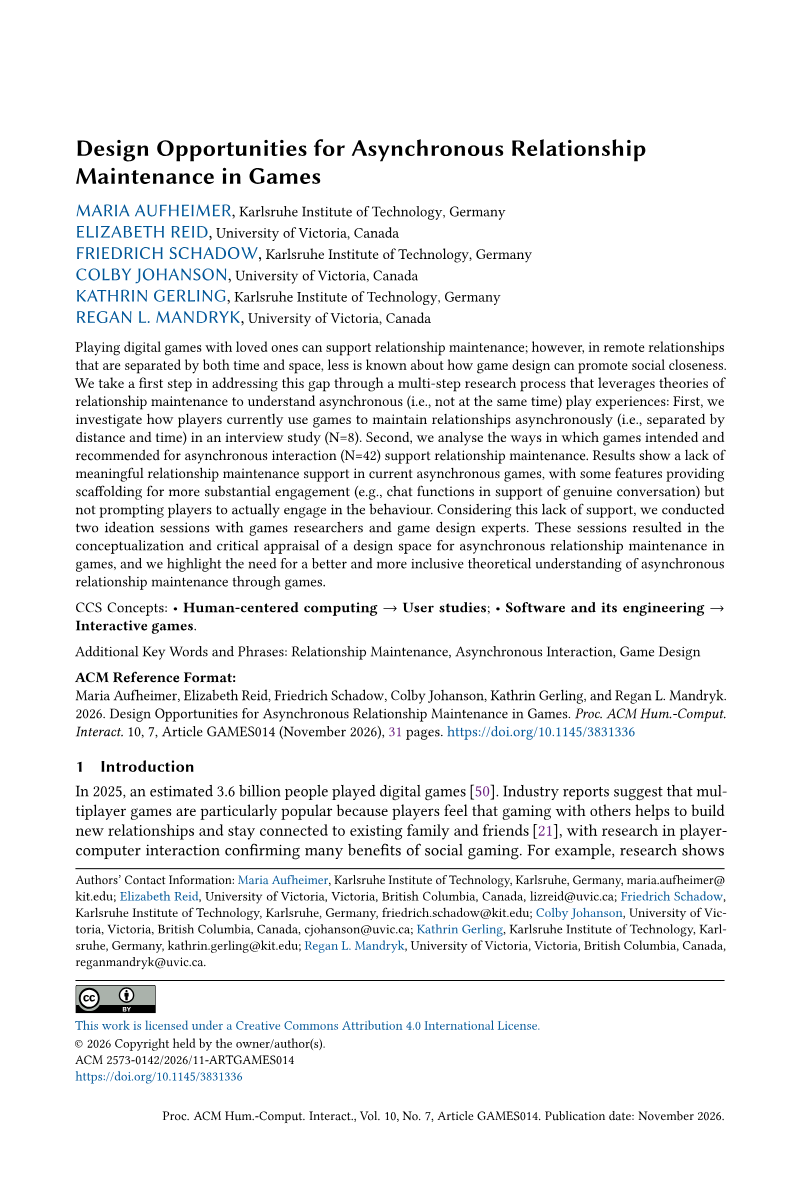
Design Opportunities for Asynchronous Relationship Maintenance in Games
Design Opportunities for Asynchronous Relationship MARIA AUFHEIMER, Karlsruhe Institute of Technology, Germany ELIZABETH REID, University of Victoria, Canada FRIEDRICH SCHADOW, Karlsruhe Institute of Technology, Germany COLBY JOHANSON, University of Victoria, Canada KATHRIN GERLING, Karlsruhe Institute of Technology, Germany…
- Games function as 'relatedness technologies' that enable users to foster intimacy and shared experiences without requiring simultaneous presence.
- Designers should prioritize low-pressure communication mechanics to support social connection for individuals separated by time or geography.
- Integrating shared goal-setting mechanics allows players to maintain engagement and build long-term relationship stability.
Do you work at University of Victoria? Get a free report of how these documents are read and cited here.