Parnassia Group
Organization1 report
1 document by Parnassia Group in the Game Industry Library, the newest “Personalization in Game Design for Healthcare: A Literature Review on its Definitions and Effects” (2016).
Documents
Whitepaper26 pages
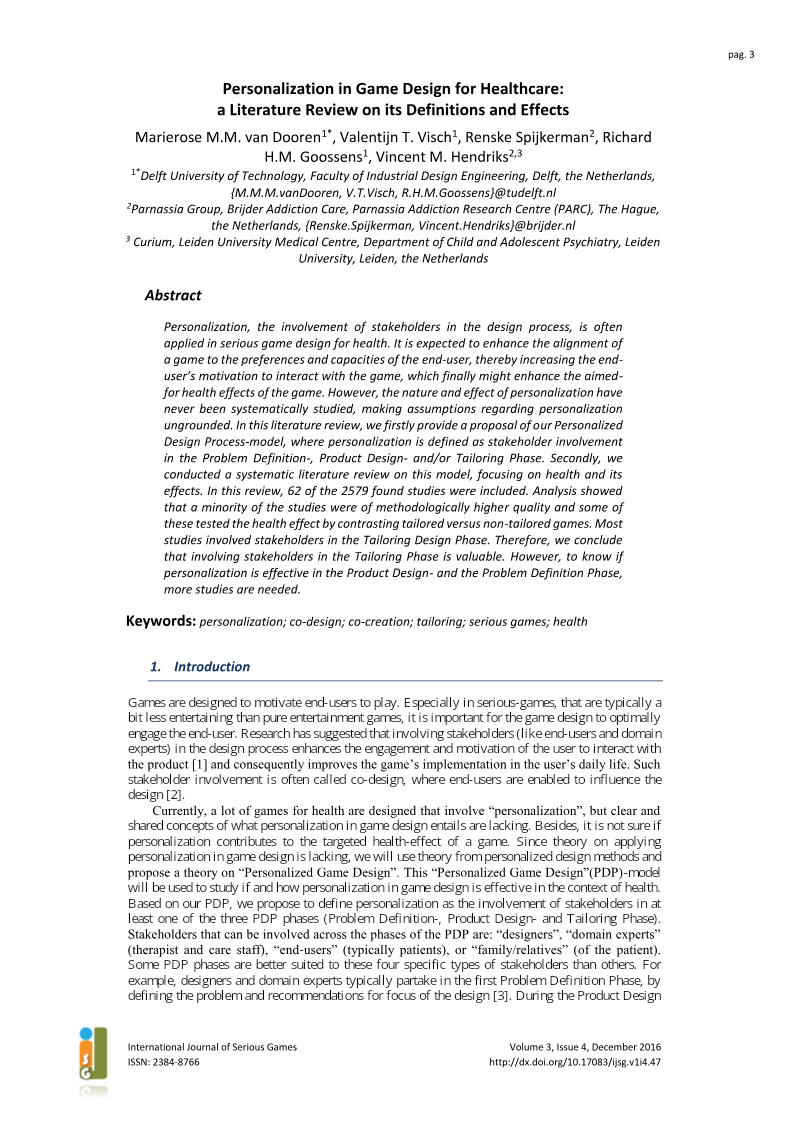
Personalization in Game Design for Healthcare: A Literature Review on its Definitions and Effects
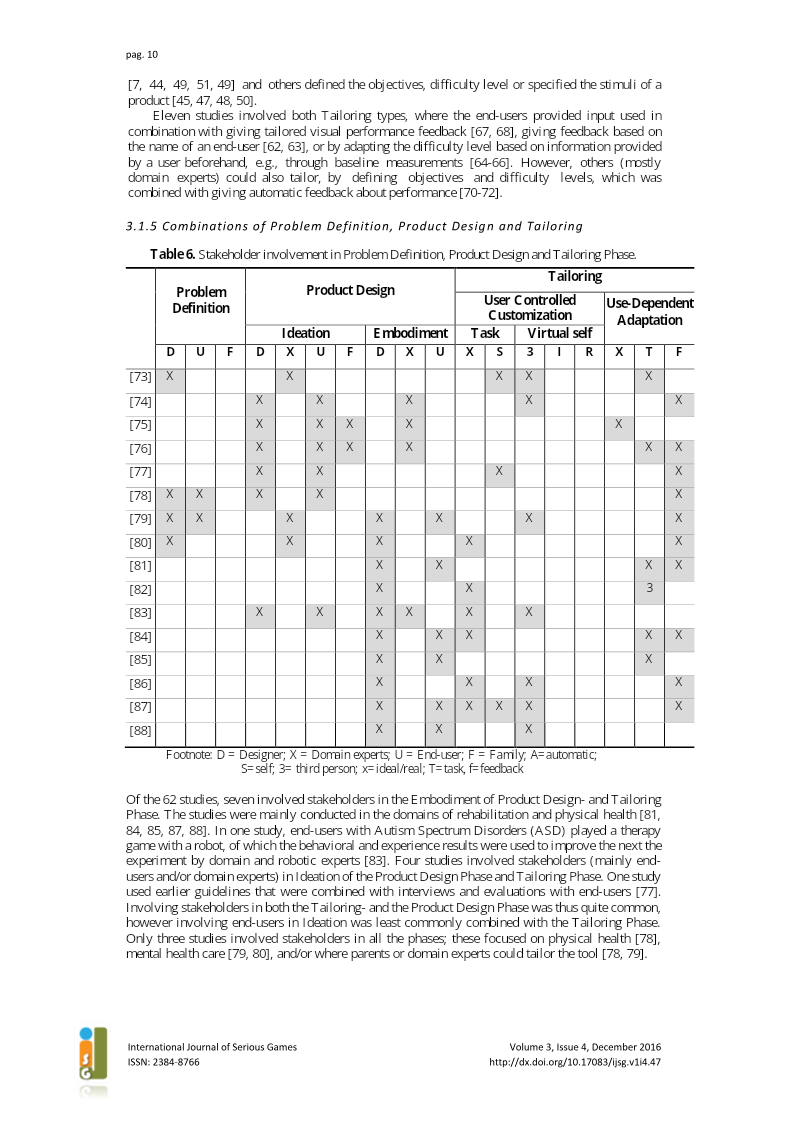
The Personalized Design Process model serves as a framework for integrating stakeholder involvement into the development of healthcare games, categorizing the lifecycle into three distinct phases: problem definition, product design, and tailoring.
- Personalization in serious games is defined as the active involvement of stakeholders—such as end-users, family, or domain experts—during the Problem Definition, Product Design, and/or Tailoring phases of development.
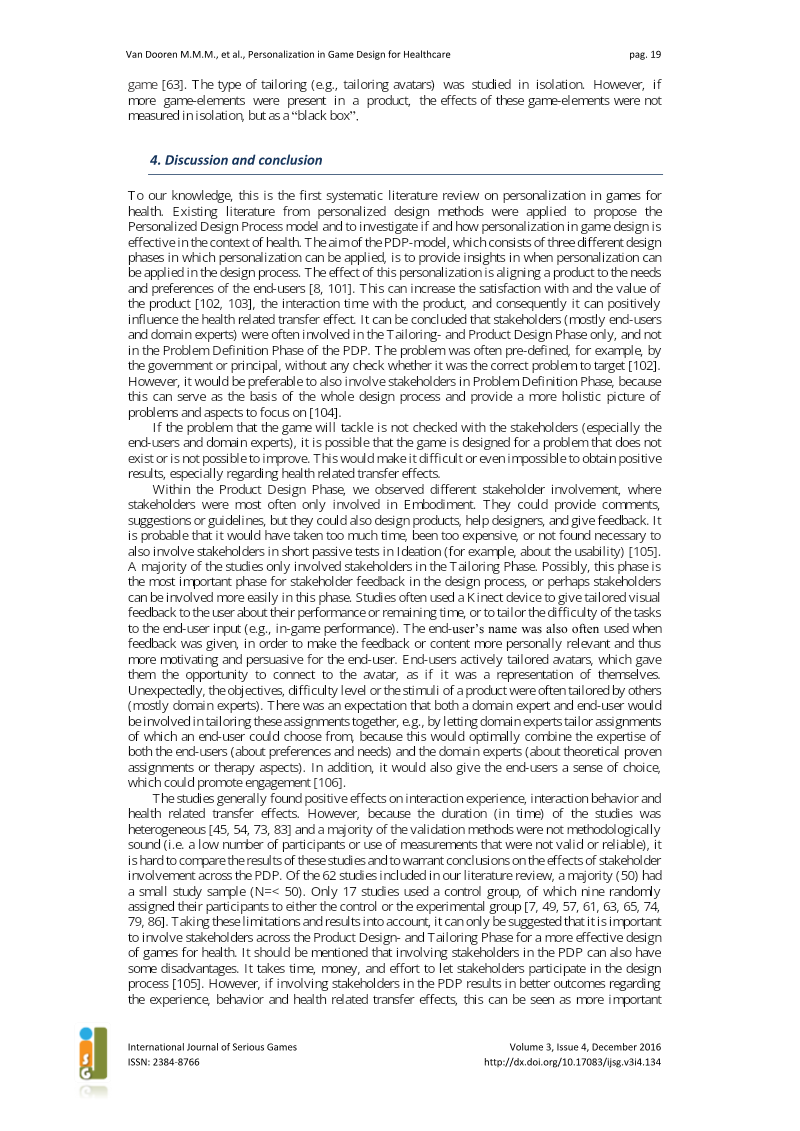
- A systematic review of 2,579 studies identified only 62 that met the criteria for stakeholder-involved personalization, indicating that the field lacks a standardized, evidence-based approach.
- Studies involving stakeholders in the Product Design phase frequently exhibit low methodological quality, though they report positive outcomes such as improved health knowledge, increased social interaction, and better feasibility.
International Journal of Serious GamesDec 2016