What percentage of game developers use each of the popular game engines?
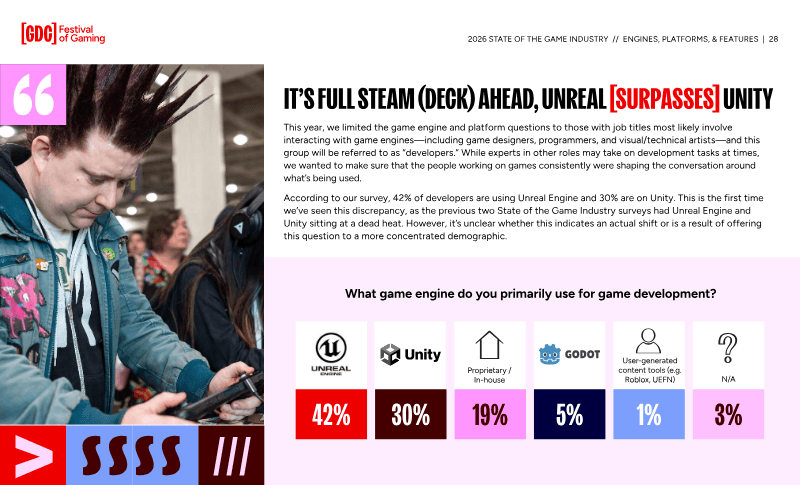
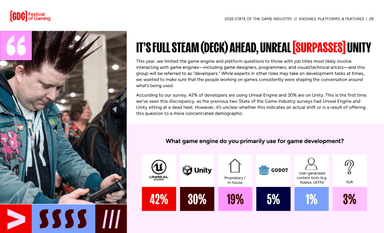
The game engine market is dominated by Unity and Unreal Engine, though usage percentages fluctuate significantly based on whether data measures developer sentiment, project usage, or released game titles. As of 2026, 42% of developers report using Unreal Engine, while 30% report using Unity 4.
Developer Usage Trends (2026)
According to the 2026 State of the Game Industry report, which surveyed game designers, programmers, and visual/technical artists, the primary game engines used for development are as follows:
| Game Engine | Usage Percentage (2026) |
|---|---|
| Unreal Engine | 42% |
| Unity | 30% |
| Proprietary / In-house | 19% |
| User-generated content tools (e.g., Roblox, UEFN) | 5% |
| N/A | 1% |
Source: GDC, 2026 4
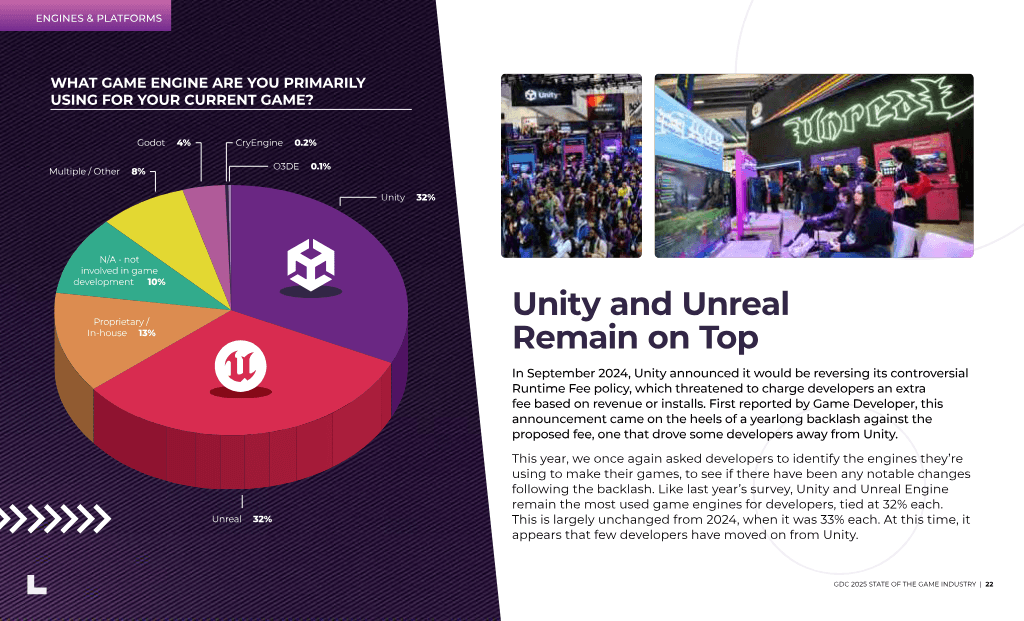
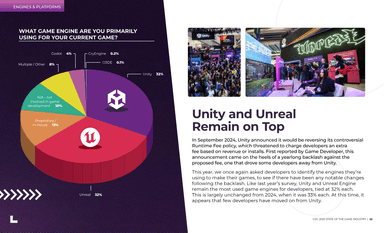
This represents a shift from the previous year. In the 2025 State of the Game Industry report, Unity and Unreal Engine were tied at 32% each 23.
Usage by Studio Type and Market Segment
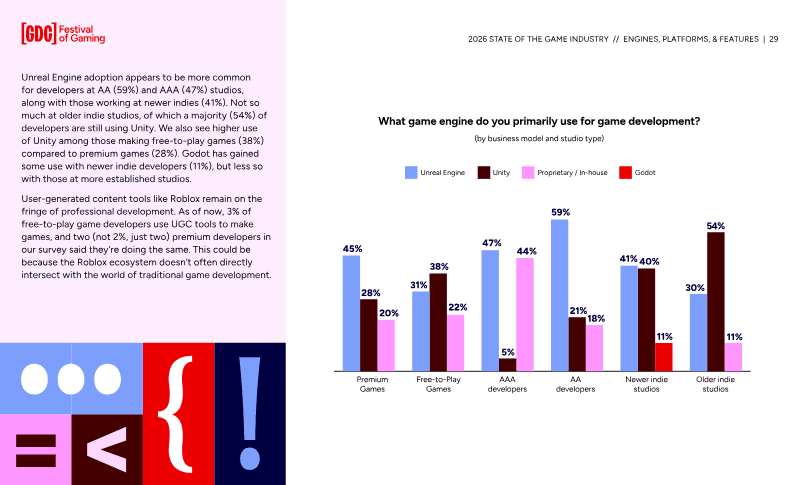
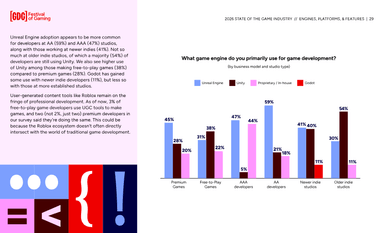
Engine preference varies significantly depending on the size and nature of the studio. Data from 2026 indicates that Unreal Engine is more prevalent in larger studios, while Unity maintains a stronger foothold in older indie studios and specific business models.
| Segment | Unreal Engine | Unity |
|---|---|---|
| AAA Studios | 47% | 28% |
| AA Studios | 59% | 31% |
| Newer Indie Developers | 41% | 30% |
| Older Indie Studios | 21% | 54% |
| Free-to-Play Games | 22% | 38% |
| Premium Games | 45% | 28% |
Source: GDC, 2026 60
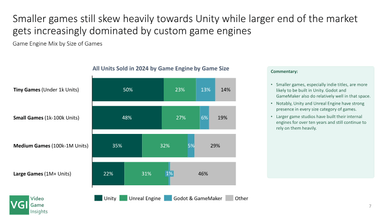
In terms of units sold on Steam in 2024, Unity remains the most common choice for smaller titles, while larger titles rely more heavily on proprietary engines 72.
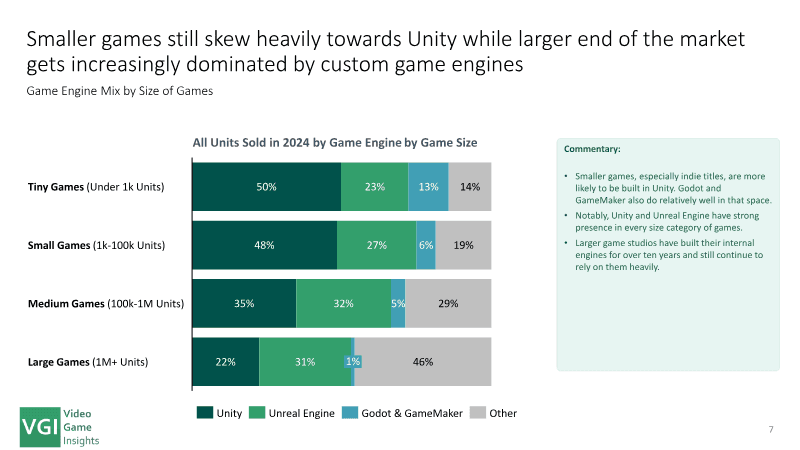
| Game Size (Units Sold) | Unity | Unreal Engine | Godot & GameMaker | Other |
|---|---|---|---|---|
| Tiny (<1k) | 50% | 23% | 13% | 14% |
| Small (1k-100k) | 48% | 27% | 6% | 19% |
| Medium (100k-1M) | 35% | 32% | 5% | 29% |
| Large (1M+) | 22% | 31% | 1% | 46% |
Source: Video Game Insights, 2025 72
Regional and Cross-Industry Perspectives
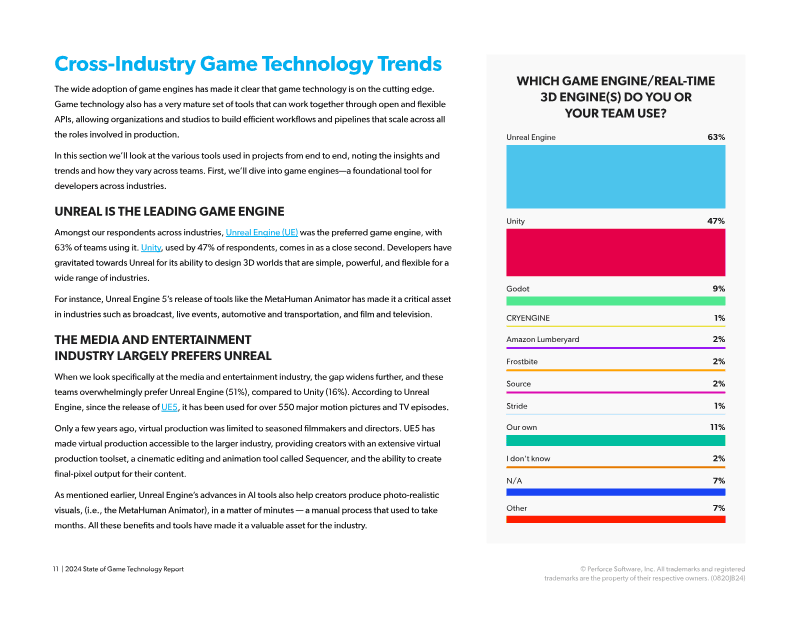
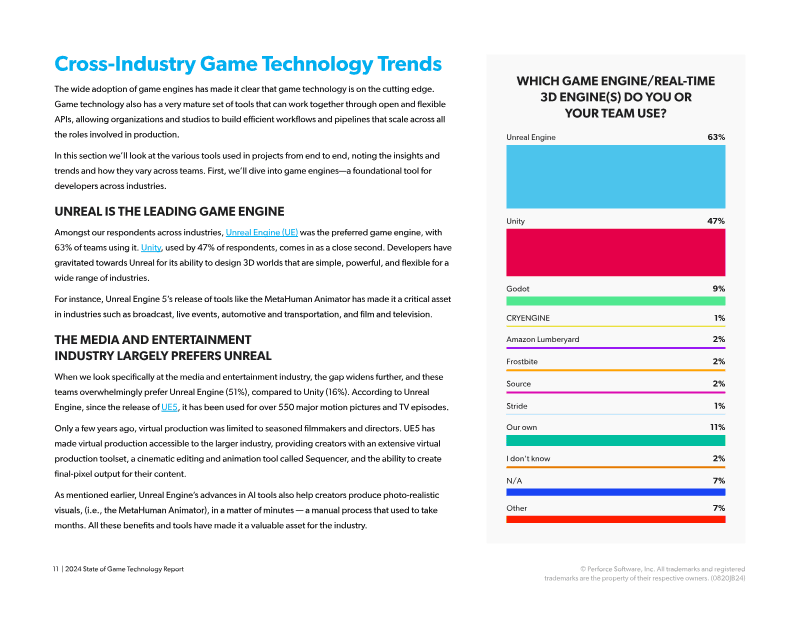
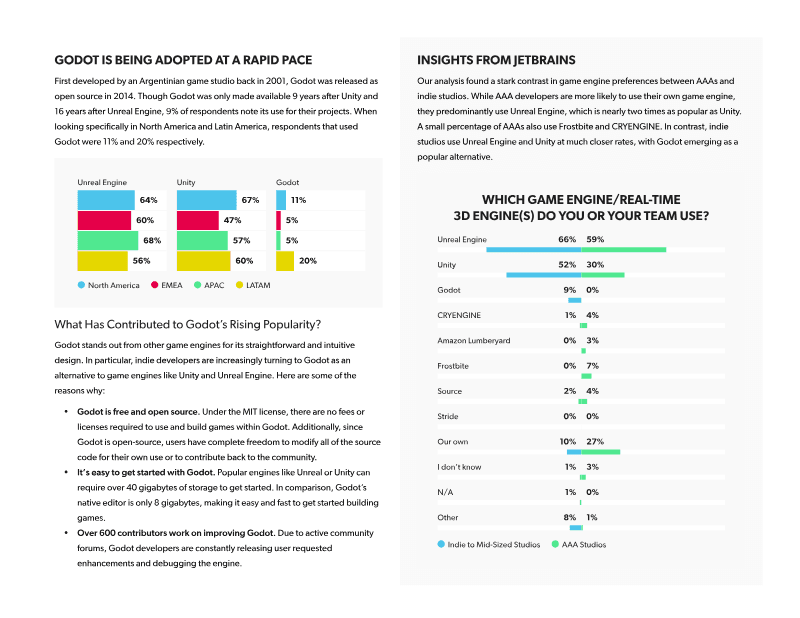
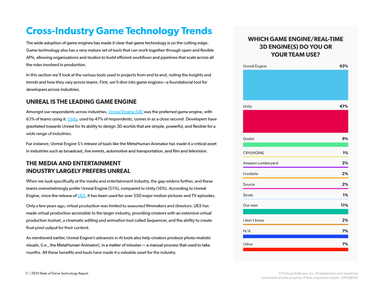
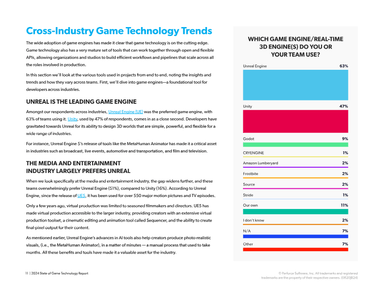
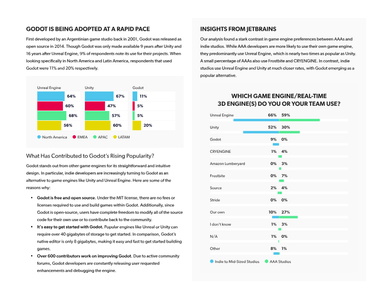
Engine adoption also varies by region and industry. Perforce’s 2024 cross-industry report, which includes non-gaming sectors, found higher adoption rates for Unreal Engine compared to Unity among its respondents.
- Cross-Industry Usage (2024): Unreal Engine was used by 63% of teams, followed by Unity at 47%, and Godot at 9% 1218.
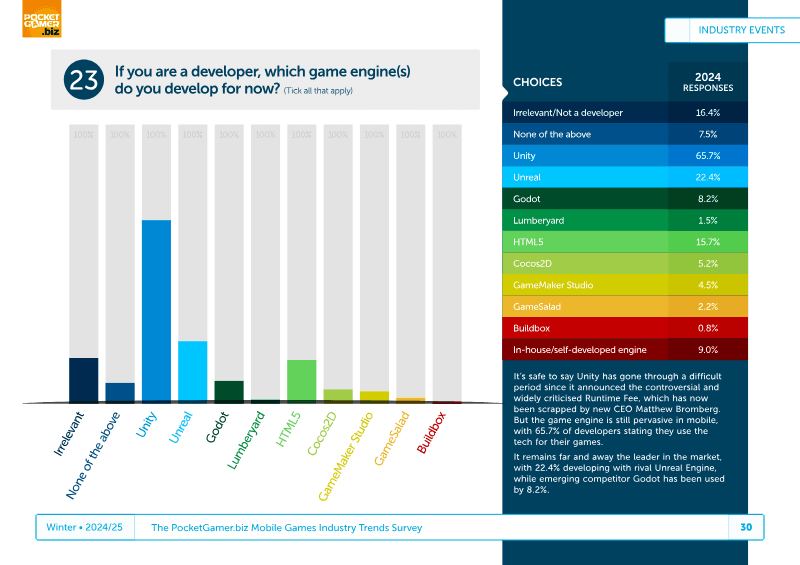
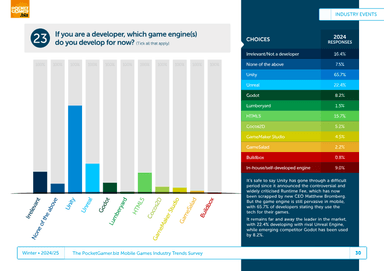
- Mobile Games (2025): In the mobile sector, Unity remains the leader, with 65.7% of developers stating they use the technology, compared to 22.4% for Unreal Engine and 8.2% for Godot 14.
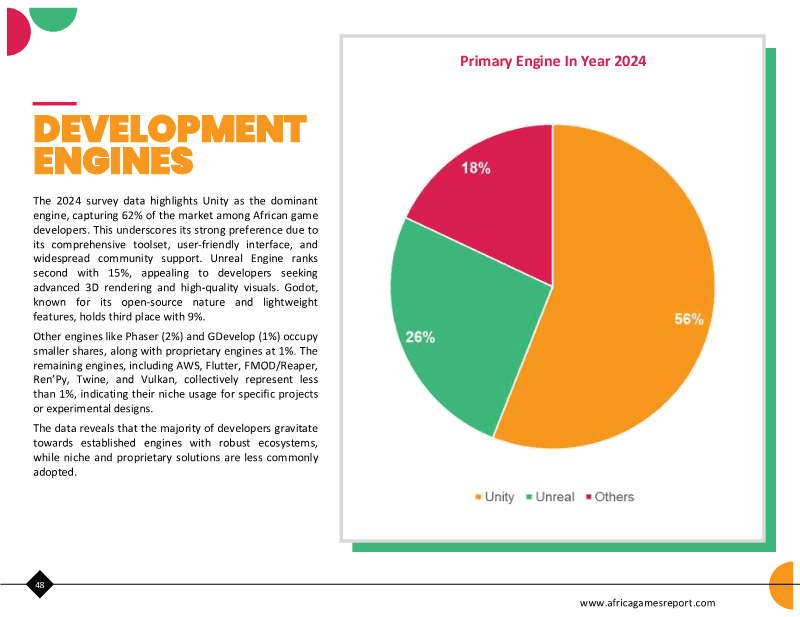
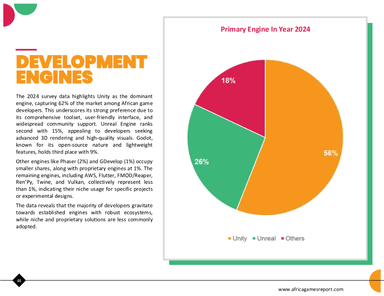
- Africa (2025): Unity is the dominant engine among African game developers, capturing 62% of the market, followed by Unreal Engine (15%) and Godot (9%) 8.
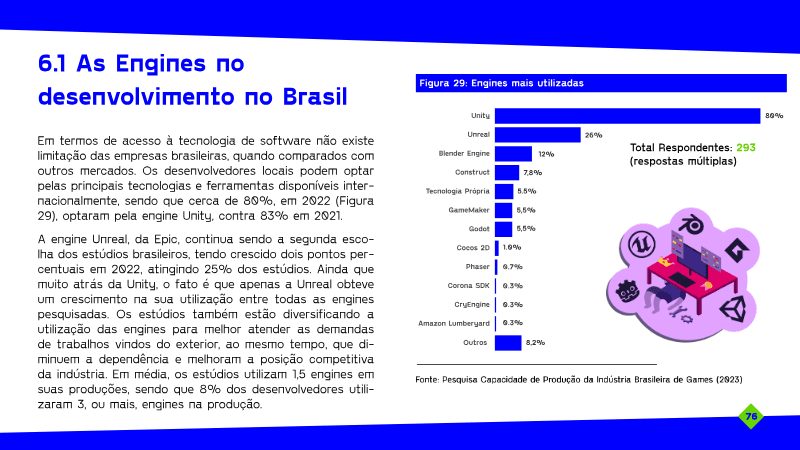
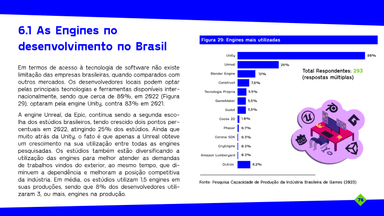
- Brazil (2023): Unity was used by 80% of developers, while Unreal Engine was used by 26% 28.
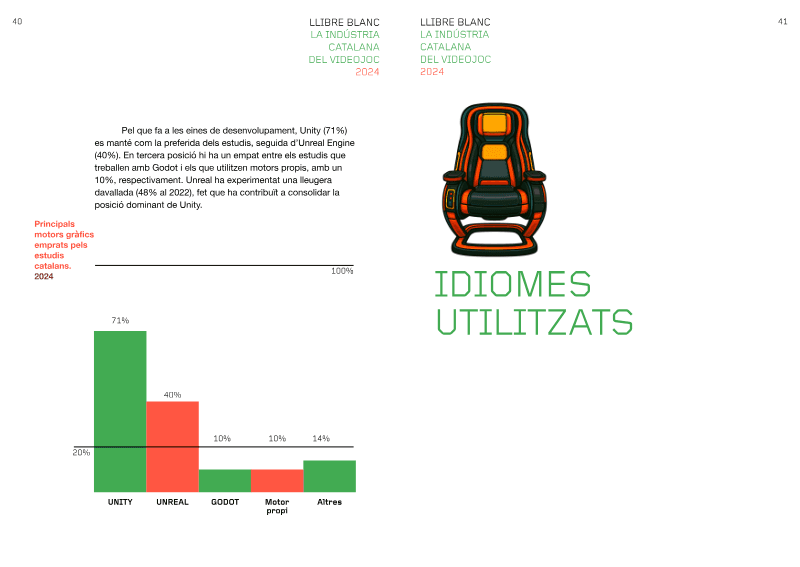
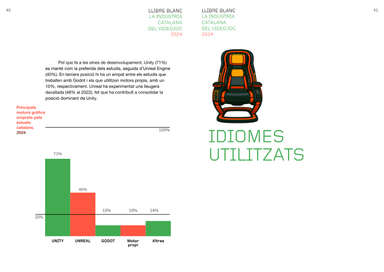
- Catalonia (2024): Unity is the preferred engine for 71% of studios, followed by Unreal Engine (40%), and Godot (10%) 33.
Factors Influencing Engine Choice
Developers cite various reasons for their engine choices, including accessibility, pricing, and community support.
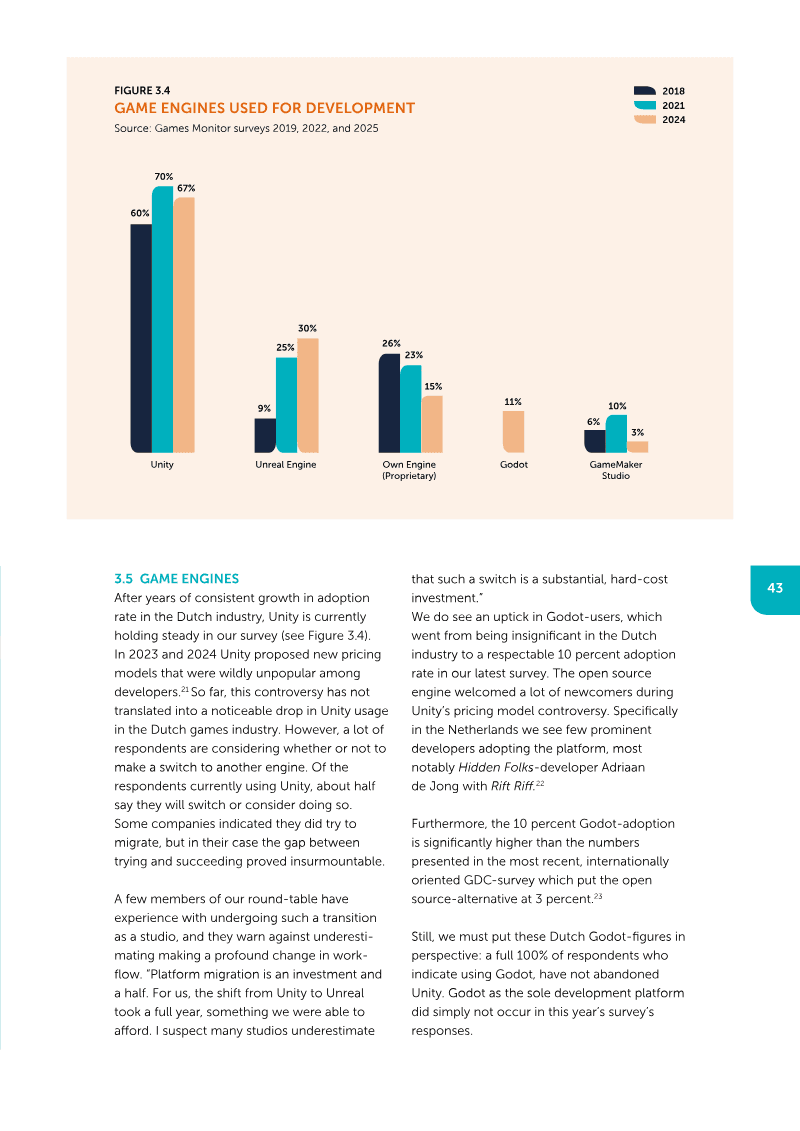
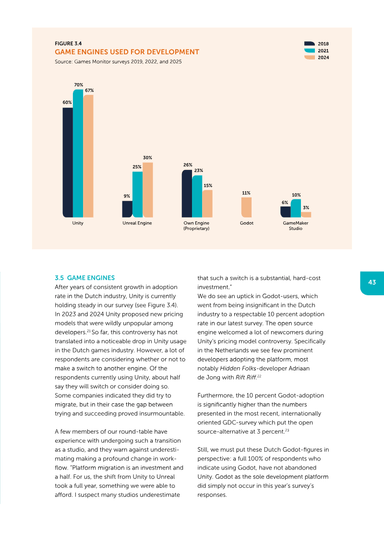
- Pricing and Policy: The 2023/2024 controversy surrounding Unity’s "Runtime Fee" policy led to significant backlash and prompted some developers to consider switching engines 2625. While some studios attempted to migrate, others found the transition process "insurmountable" or too costly 25.
- Godot's Growth: Godot has seen increased adoption as an open-source alternative. In the Dutch games industry, Godot adoption rose to 10% in 2024 25. In North America and Latin America, Godot usage was reported at 11% and 20% respectively in 2024 66.
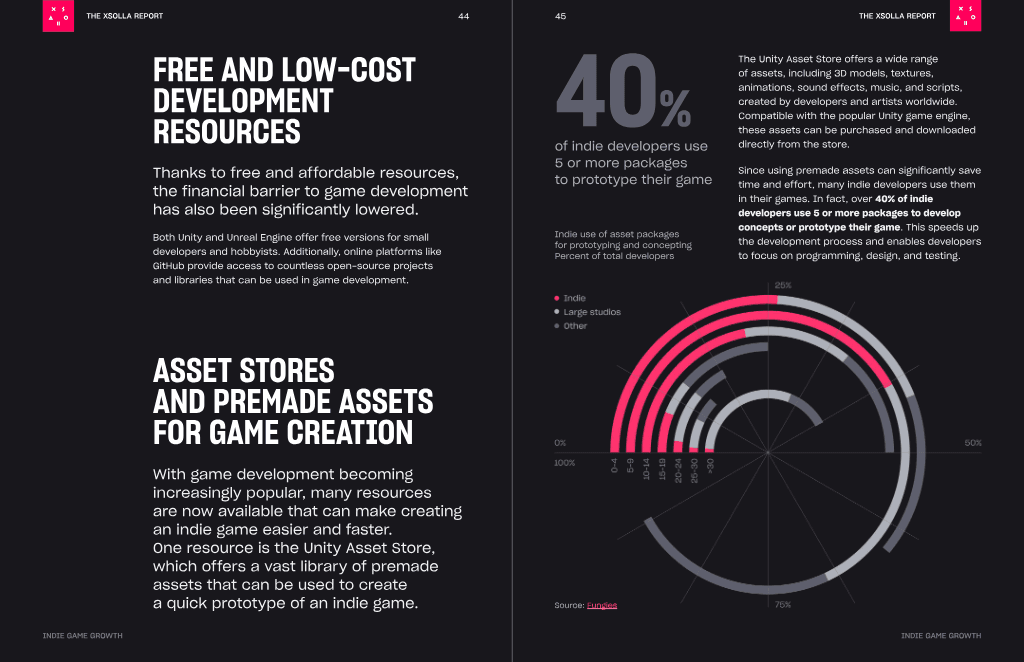
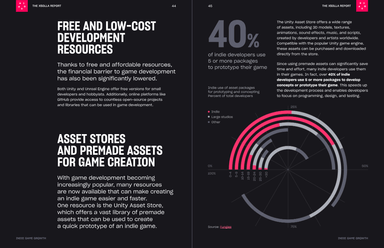
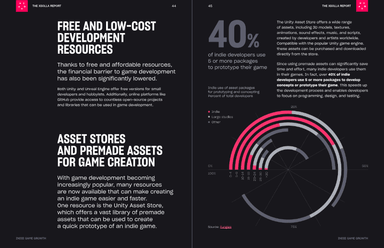
- Asset Stores: The availability of pre-made assets, such as those on the Unity Asset Store, is a significant factor for indie developers. Over 40% of indie developers use five or more asset packages to prototype their games 6571.
Sources (16)
Game Developer Survey 2025
Konvoy · Page 18
State of the Game Industry
GDC · Page 23
State of the Game Industry 2026
GDC · Page 28
Africa Games Industry Report 2025
Maliyo Games · Page 48
Perforce 2024 State of Game Technology Report
Perforce Software · Page 11
Mobile Games Industry Trends Survey: Winter 2024/25
PocketGamer.biz · Page 30
State of Game Technology Report 2024
Perforce · Page 11
Netherlands Games Monitor 2024
Dutch Games Association · Page 43
Pesquisa Nacional da Indústria de Games 2023
Abragames · Page 76
Llibre Blanc de la Indústria Catalana del Videojoc 2024
Direcció General d’Innovació i Cultura Digital · Page 21
State of the Game Industry 2026
GDC · Page 29
The Xsolla Report: State of Play – Summer Edition 2024
Xsolla · Page 23
Perforce 2024 State of Game Technology Report
Perforce Software · Page 12
State of Play: Xsolla Report
Xsolla · Page 23
The Big Game Engine Report: End of the Era of In-House Engines
Video Game Insights · Page 7
The Big Game Engine Report: 2025
VG Insights · Page 9
Have your own question about the games industry?
Ask the library — synthesized answers with citations from hundreds of industry reports.
Ask the library