Back to report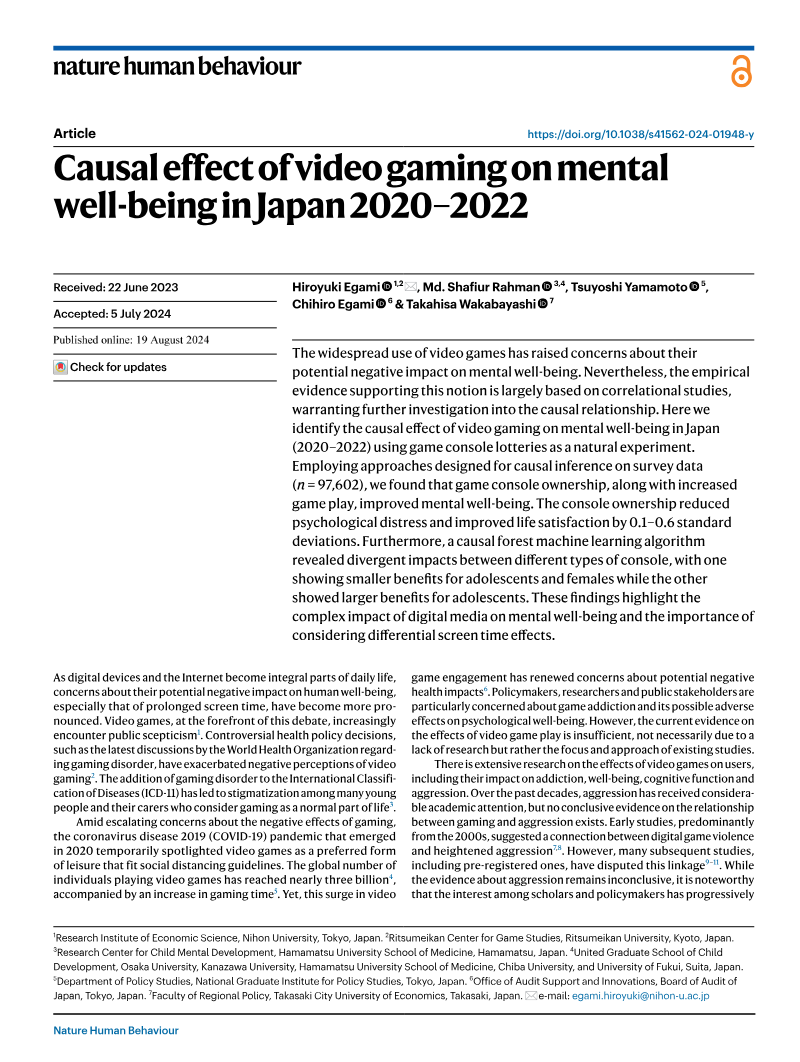
Key Insights
Causal Effect of Video Gaming on Mental Well-Being in Japan 2020–2022
Springer Science and Business Media LLC~74 min full read
- 01
Winning a gaming console lottery during the 2020–2022 Japanese supply shortages reduced psychological distress by 0.1 to 0.6 standard deviations, establishing a positive causal link between gaming and mental well-being.
- 02
The positive impact of video games on mental health and life satisfaction follows a threshold effect, with benefits beginning to decline after three hours of daily play.
- 03
Nintendo Switch ownership provides the most pronounced well-being improvements for adolescents and female users, while the PlayStation 5 yields stronger benefits for adult males and dedicated gamers.
- 04
The study utilized data from over 97,000 respondents to isolate the effects of gaming from self-selection bias, effectively challenging prior correlational research that linked gaming to negative mental health outcomes.
- 05
The observed psychological benefits were likely amplified by the COVID-19 pandemic environment in Japan, where gaming functioned as a critical tool for digital engagement and stress mitigation during periods of social isolation.
- 06
Advanced statistical methods, including instrumental variable causal forests and propensity score matching, confirm that moderate video game consumption serves as an effective intervention for improving psychological health.
That's the gist.
Dive into the full report for the data, charts, and sources behind these takeaways.
Read the full report