INESC-ID
Organization2 reports
2 reports, presentations and talks by INESC-ID in the Game Industry Library, the newest “Exploring Compatible Interaction Preferences with a Puzzle Video Game” (2025).
Documents
Whitepaper26 pages
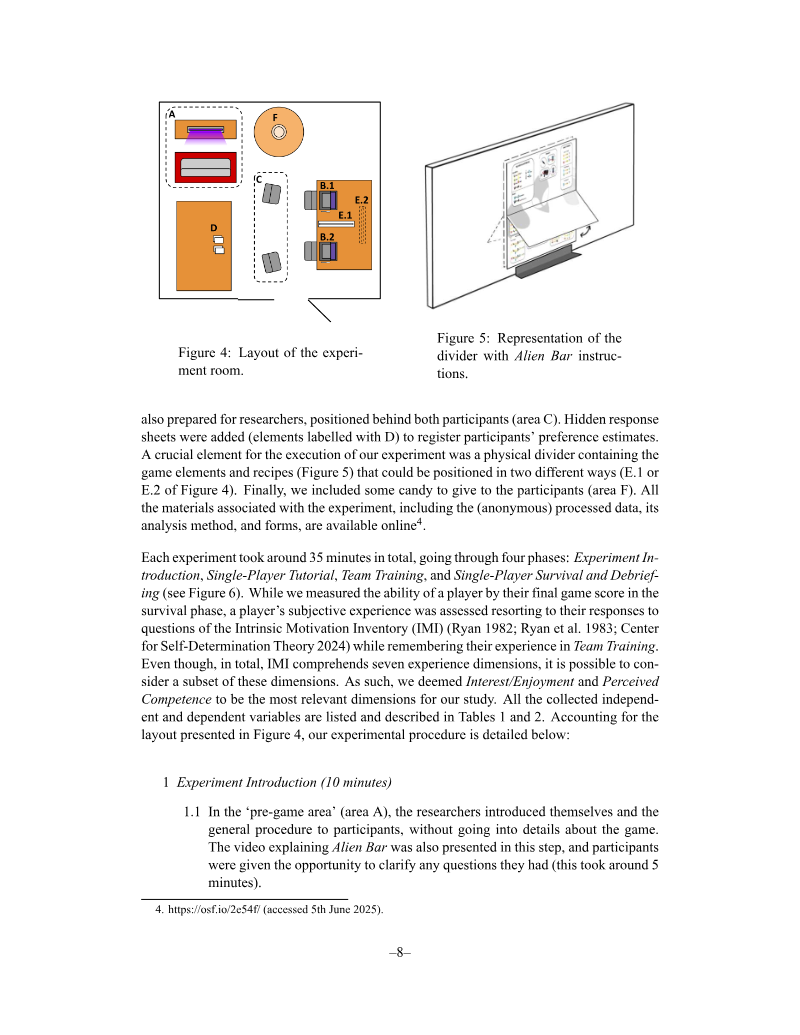
Exploring Compatible Interaction Preferences with a Puzzle Video Game
This study examines whether pairing players with complementary interaction preferences improves teamwork in Alien Bar, a cooking puzzle game, arguing that task-directed preferences, modeled along Focus (self versus others) and Challenge (facilitate versus complicate), have been understudied relative to personality-based…
- Thirty-one pairs (62 participants) played Alien Bar, a cooking puzzle game, through a roughly 35-minute four-phase procedure, testing whether complementary task-directed interaction preferences improve teamwork.
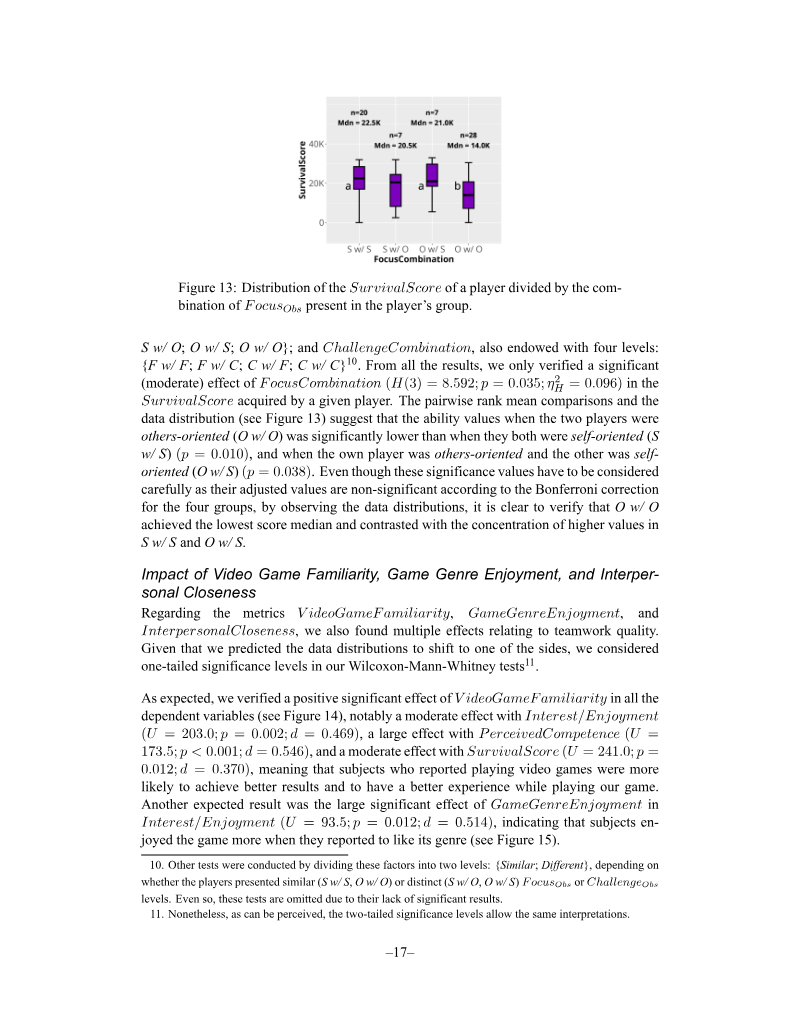
- Self-Challenger players achieved the strongest survival outcomes and helped their partners succeed, while Others-Facilitator players reported elevated perceived competence and Others-oriented pairings showed lower ability.
- Only one pairwise comparison, against Others-Facilitator partners, survived Bonferroni correction, so most of the preference effects should be treated as tentative.
DiGRAJun 2025
Whitepaper14 pages
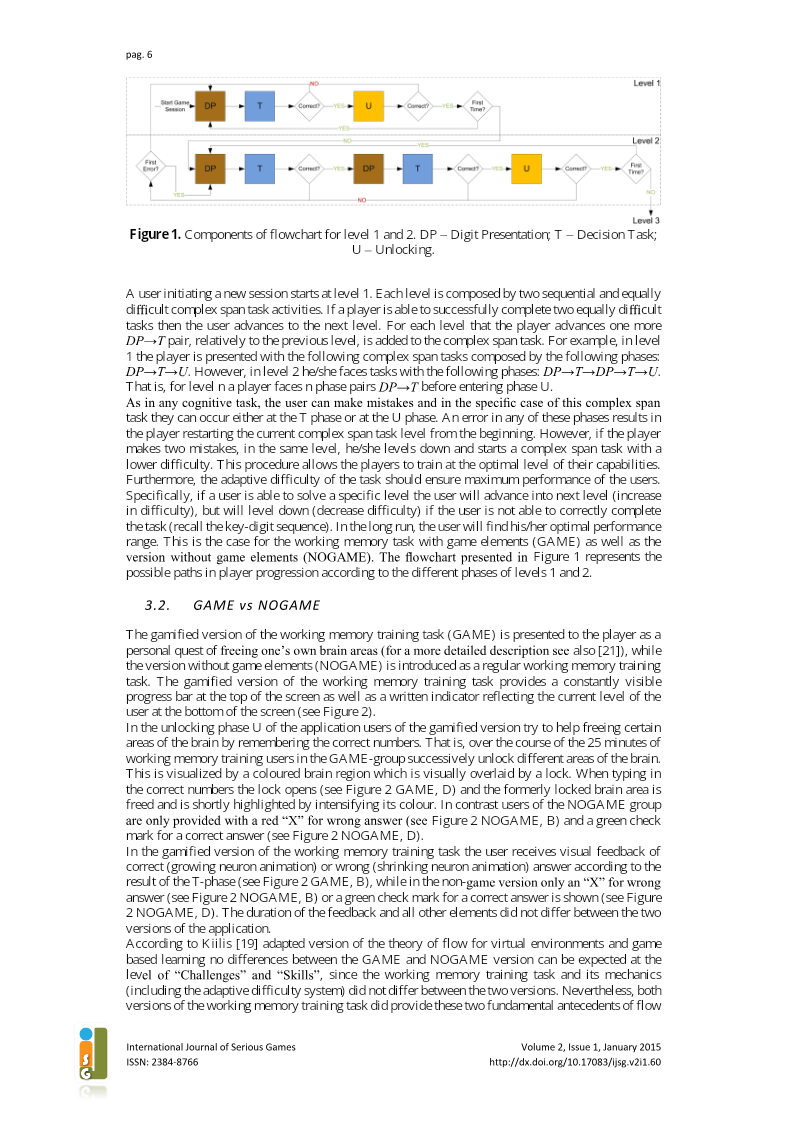
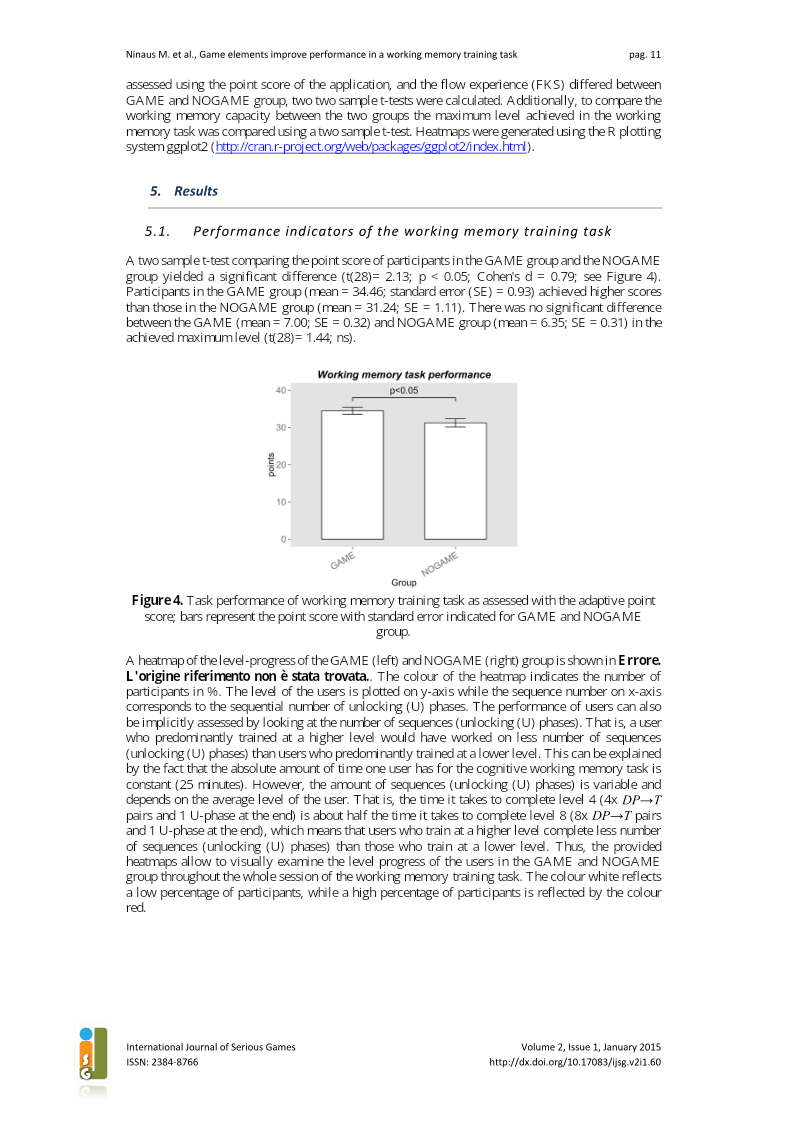
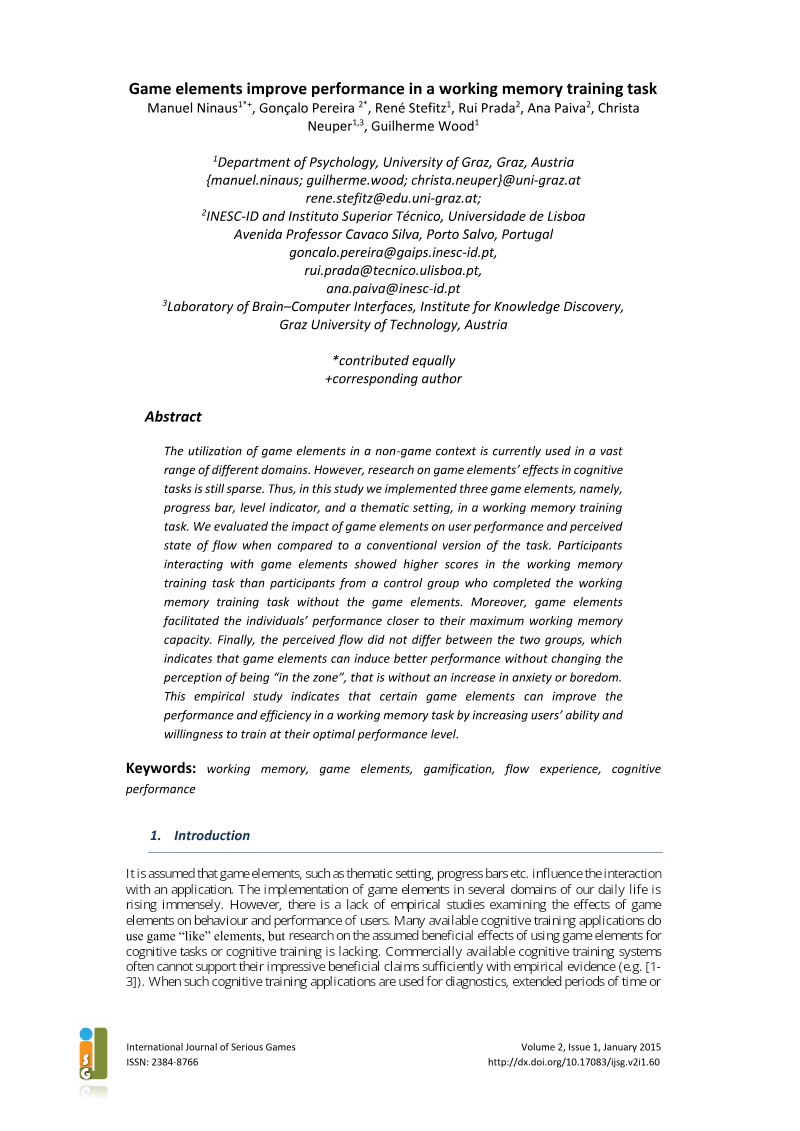
Game Elements Improve Performance in a Working Memory Training Task
Integrating game elements into cognitive training tasks significantly enhances user performance and operational efficiency.
- Gamification elements such as progress bars and level indicators significantly increase user performance and operational efficiency in working memory training tasks.
- The integration of game mechanics encourages participants to utilize their maximum working memory capacity more effectively than conventional, non-gamified training methods.
- Gamification acts as a performance catalyst for objective output without fundamentally altering a user’s maximum cognitive capacity.
International Journal of Serious GamesFeb 2015