ReportGREE
Supplementary Explanation: FY 2020 Third Quarter GREE Results
1 pages~1 min full read
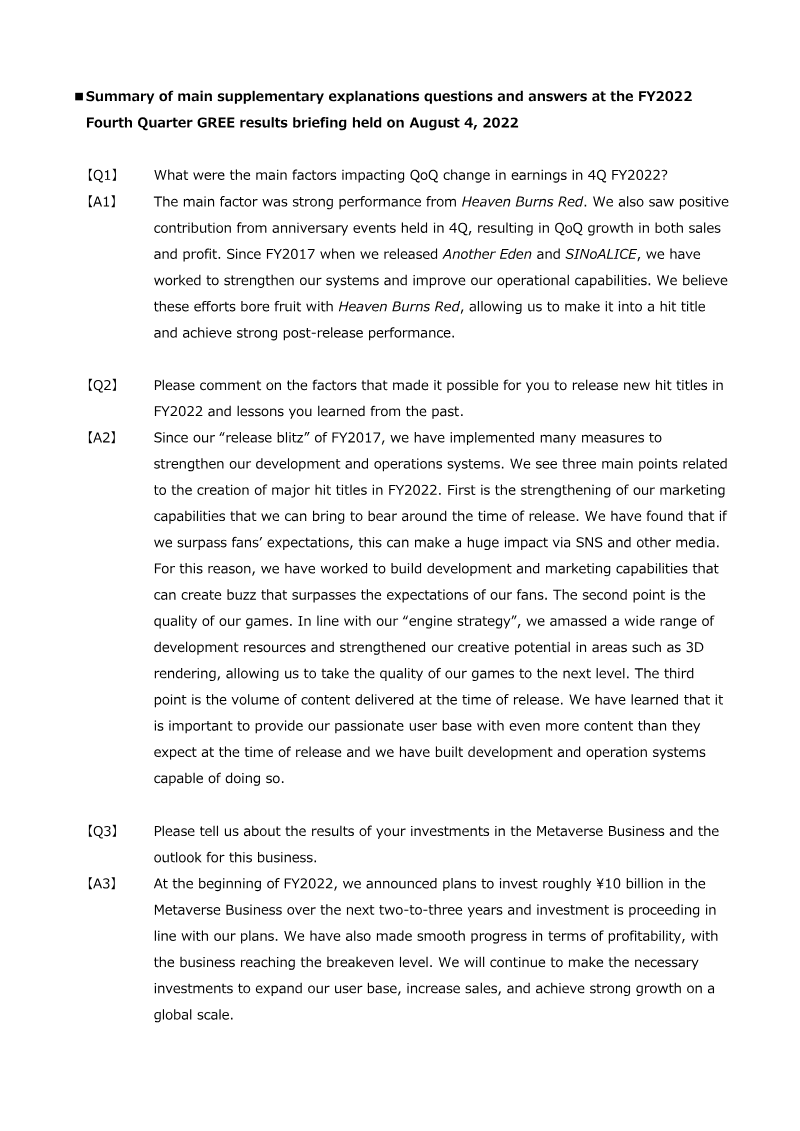
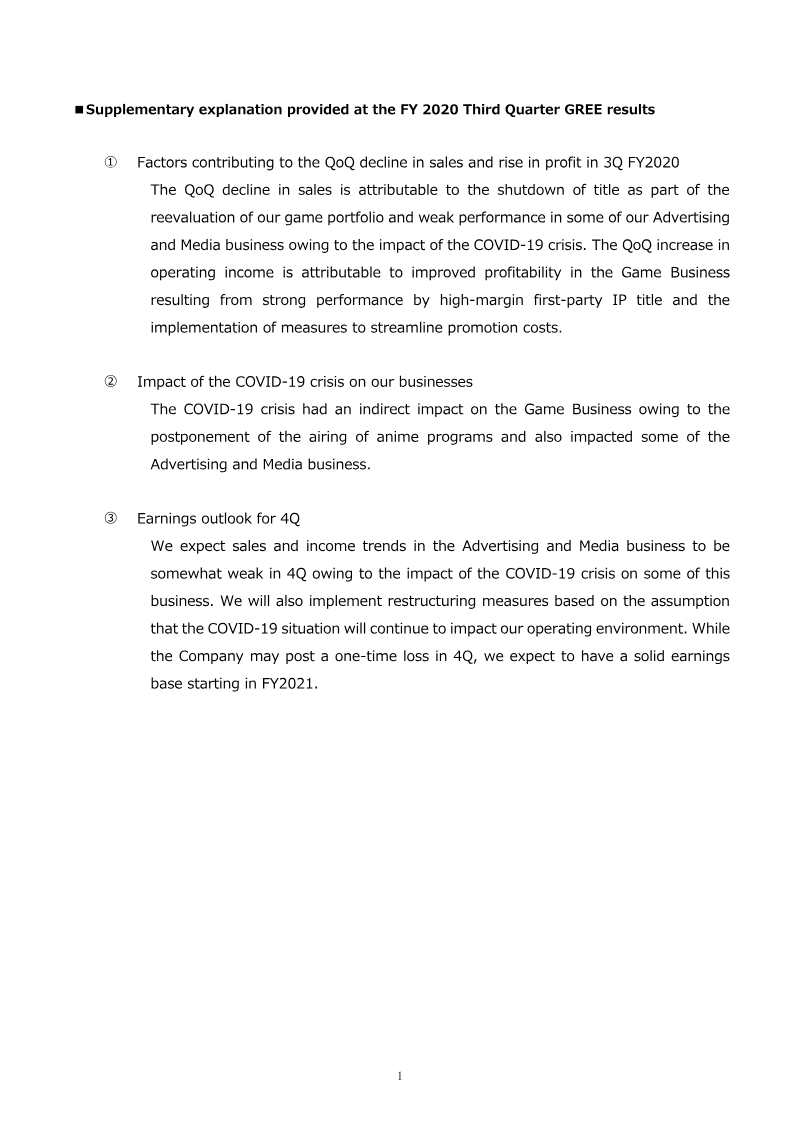
GREE reported a quarter-over-quarter sales decline in Q3 FY 2020, driven by a strategic shutdown of underperforming game titles and weak performance in the Advertising and Media segment.
Operating income increased during Q3 despite lower sales, primarily due to the strong performance of high-margin first-party IP titles and reduced promotional spending.
The COVID-19 pandemic negatively impacted the Advertising and Media business and caused indirect disruptions to the Game Business, including the postponement of anime broadcasts.
Management projects continued weakness in the Advertising and Media segment through Q4 FY 2020 due to the ongoing effects of the pandemic.
The company is implementing restructuring measures in Q4 that may result in a one-time loss, with the objective of establishing a stable earnings base starting in FY 2021.
GREE’s performance in the third quarter was defined by a portfolio reevaluation and cost-management initiatives focused on its Japan-centric operations.
The supplementary explanation clarifies the financial performance of GREE for FY 2020 third quarter. It attributes the quarter‑over‑quarter decline in sales to a strategic shutdown of certain titles during a portfolio reevaluation and weaker results in the Advertising and Media segment, both influenced by the COVID‑19 pandemic. Conversely, operating income rose because high‑margin first‑party IP titles performed strongly and promotional costs were streamlined.
The COVID‑19 crisis is noted to have indirectly affected the Game Business through postponed anime broadcasts and directly impacted the Advertising and Media business. For the fourth quarter, GREE projects continued weakness in sales and income within the Advertising and Media segment due to ongoing pandemic effects. The company plans restructuring measures under the assumption that COVID‑19 will persist, acknowledging a potential one‑time loss in Q4 but expressing confidence in establishing a solid earnings base from FY 2021 onward.
The explanation covers Japan‑centric operations, focusing on game and media revenues for the fiscal year ending 2020. It relies on internal financial data, portfolio reviews, and cost‑management initiatives to explain performance shifts. The narrative emphasizes strategic adjustments in response to market disruptions, projecting a recovery trajectory beginning with the next fiscal year.